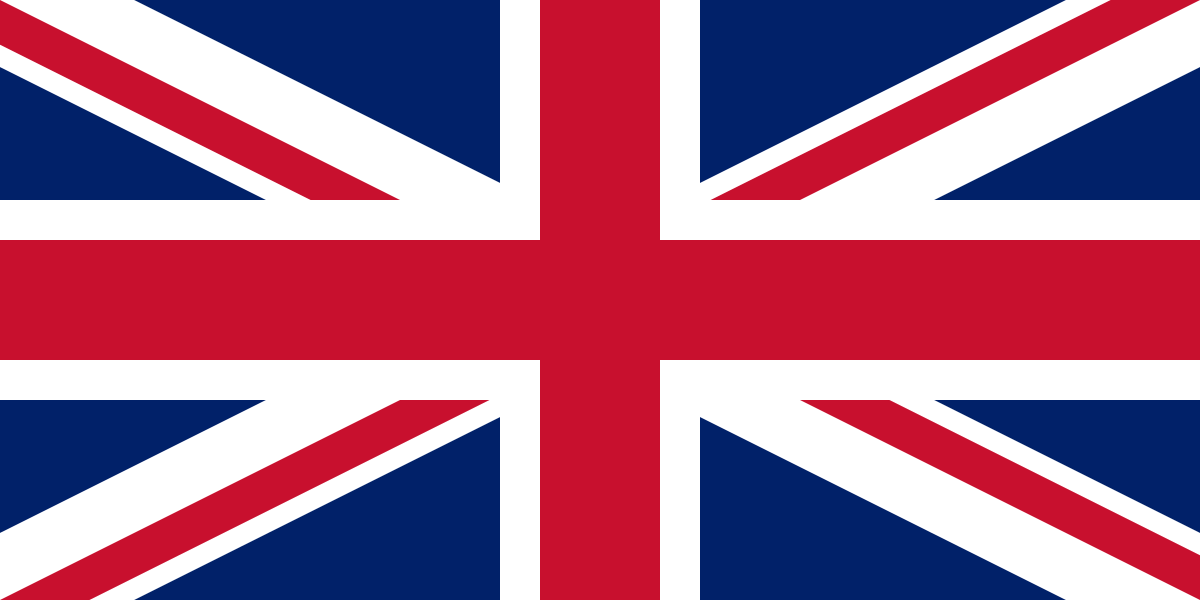
The flag of United Kingdom
Union Flag · since 1801
 Back to United Kingdom
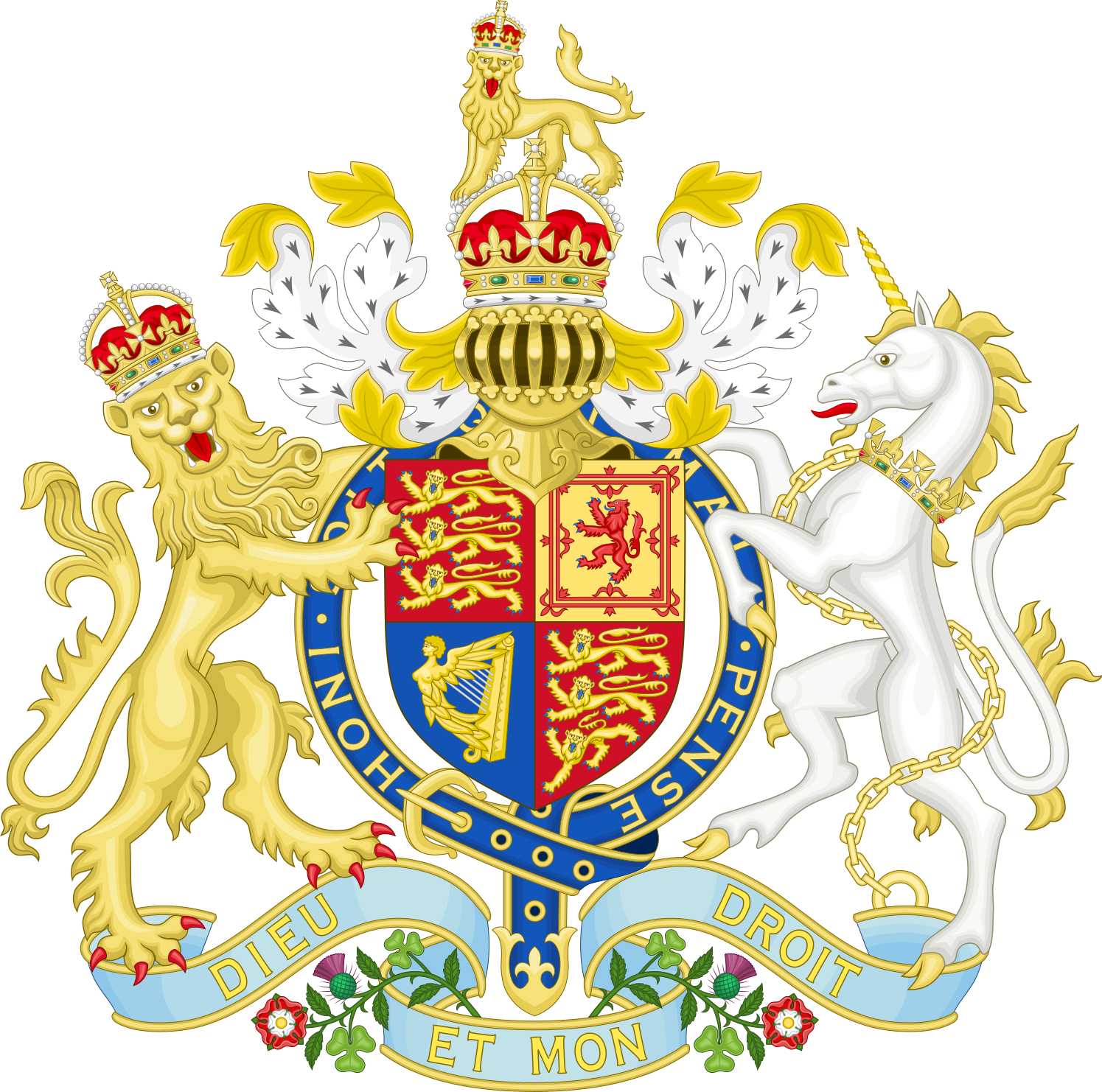
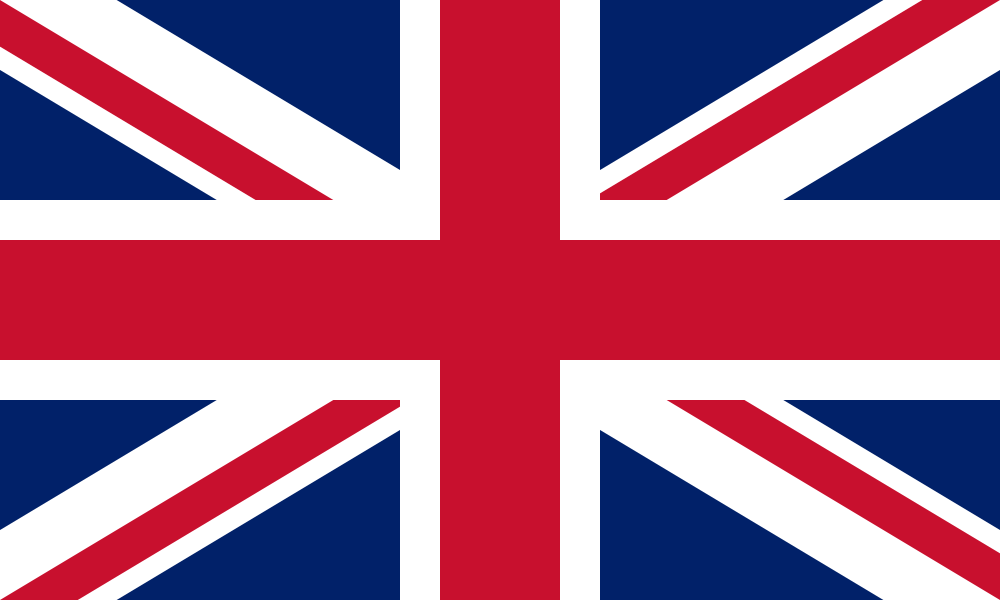
Three crosses laid over one another on blue: the red cross of Saint George for England, the white saltire of Saint Andrew for Scotland and the red saltire of Saint Patrick for Ireland. The first union of crosses dates from 1606 and the present design from 1 January 1801. No law has made it the national flag; it became one by precedent, and it is also called the Union Jack.
At a glance
- Adopted
- 1801
- Proportion
- 1:2
- Colours
- Earlier flags
- 2
- Designer
- 1
The colours
The colours of the flag of United Kingdom, in the order it has them
- 0128.5%
Blue
azureThe field
- HEX
#012169- RGB
1 33 105- CMYK
100 85 5 22- Pantone
280 C
- 0233.5%
White
argentThe saltire of Saint Andrew and the borders of the red crosses
- HEX
#FFFFFF- RGB
255 255 255- CMYK
0 0 0 0
- 0338%
Red
gulesThe cross of Saint George and the saltire of Saint Patrick
- HEX
#C8102E- RGB
200 16 46- CMYK
2 100 85 6- Pantone
186 C
No law gives these codes. HEX and RGB are the colour this site draws the flag in; CMYK, Pantone and RAL are the values most often published for it.
Construction
How the flag is drawn
A blue field with the white saltire of Saint Andrew and the red saltire of Saint Patrick counterchanged, the red edged in white, and over both the red cross of Saint George with a white border.
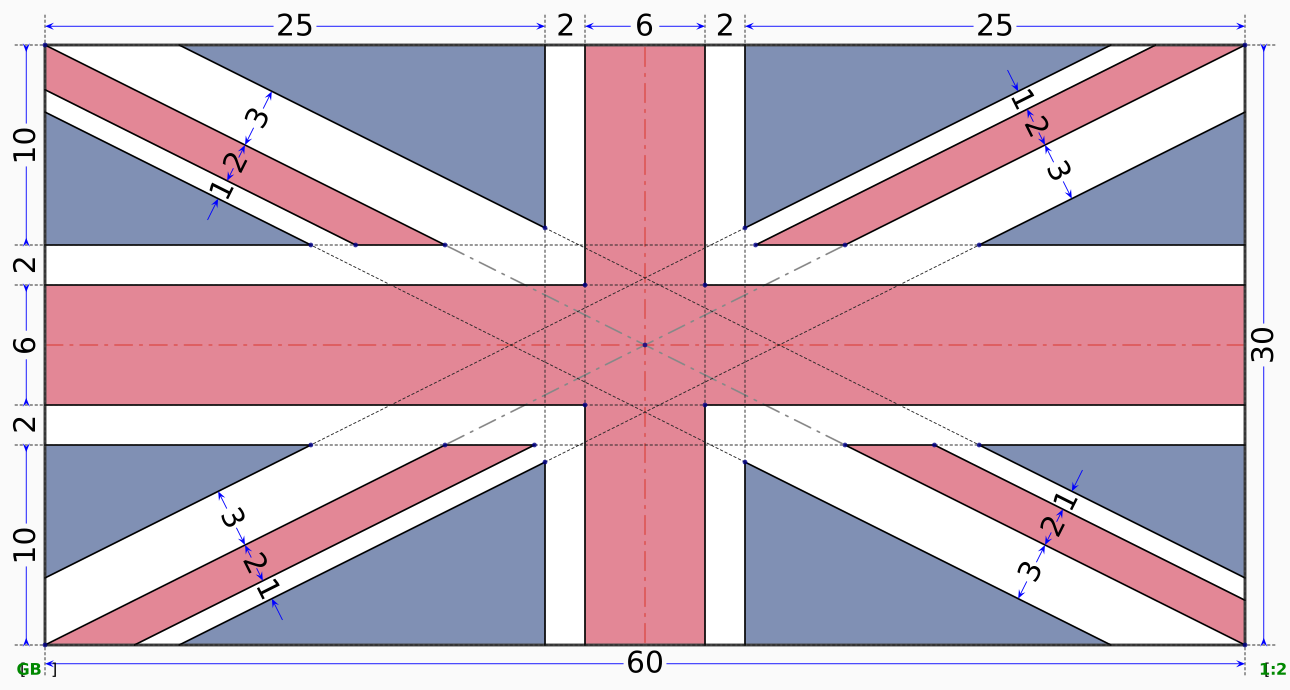
- Cross of Saint George
- Red, 1/5 of the flag's height wide, with a white border 1/15 of the height
- Saltire of Saint Andrew
- White, 1/5 of the height wide, showing on either side of the red saltire as bands of 1/10 and 1/30 of the height
- Saltire of Saint Patrick
- Red, 1/15 of the height wide, offset by 1/30 of the height so that the red always follows the white clockwise
- Other ratios
- 3:5 on land, as the College of Arms and the Flag Institute recommend; the crosses keep their widths relative to the height
- Right way up
- The broad white of Saint Andrew above the red of Saint Patrick in the upper hoist quarter
Other forms
- 3:5 flag
- The same design at 3:5, the usual ratio on land and the one the British Army flies at its flag stations on specified days.
- Red Ensign
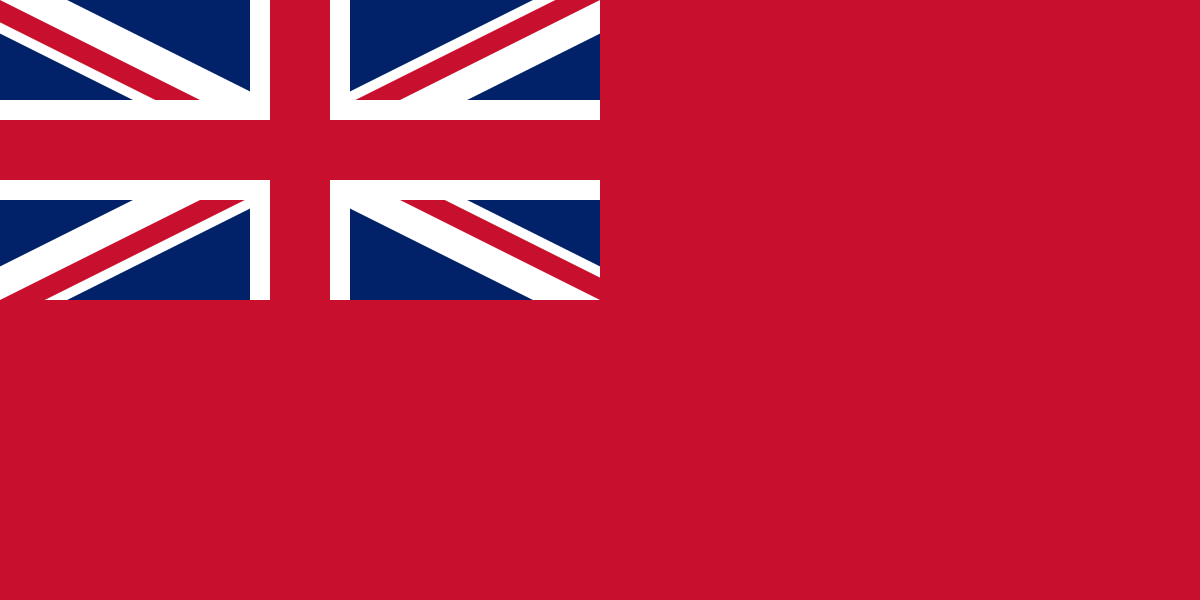
- A red field with the Union Flag in the canton, flown by merchant and private vessels. The White Ensign is flown by naval ships and the Blue Ensign by others with special permission.
- King's Colours
- The Great Union defaced with a regiment's battle honours, at 4:3.
Meaning
What each part stands for
- The three crosses
- Saint George for England, Saint Andrew for Scotland and Saint Patrick for Ireland, now Northern Ireland. The saltire of Saint Patrick comes from the arms of the FitzGerald family rather than directly from the saint
- No Welsh element
- Wales was treated as part of the Kingdom of England when the first union flag was made in 1606
- The offset saltires
- The Irish saltire is set slightly lower at the hoist so that the cross of Saint Andrew takes seniority, because the union with Scotland came first
- The dark blue
- Traced to the Blue Ensign of the Royal Navy's historic Blue Squadron; dark shades lasted longer on maritime flags
Who drew it
- College of Arms
- Prepared the 1801 design for the approval of George III
History
How the flag of United Kingdom got here
- 1606
The first union flag
12 Apr 1606 → 1 Jan 1801
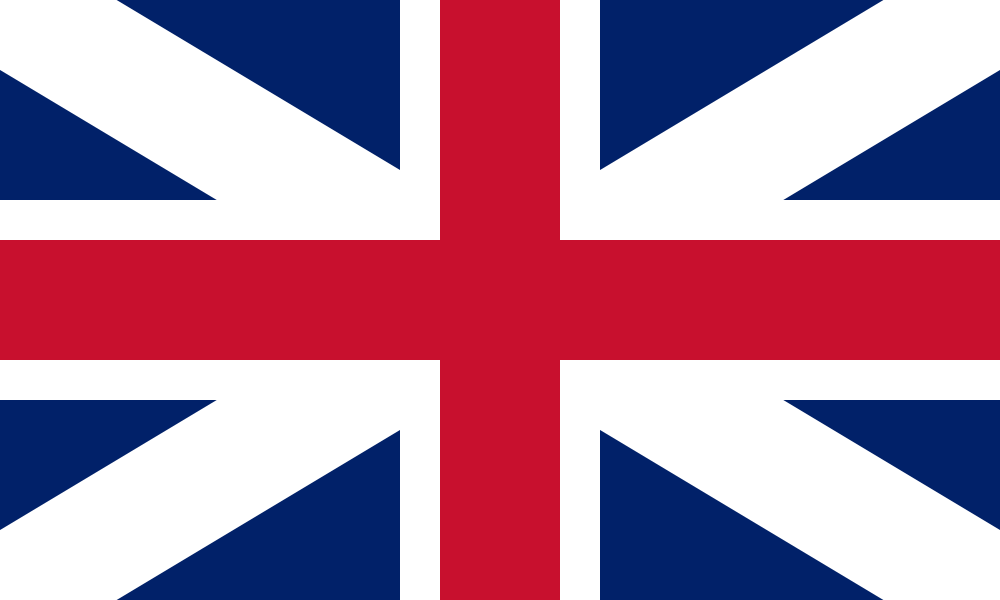
The cross of Saint George over the saltire of Saint Andrew on blue, for ships of both kingdoms. Charles I restricted it to the royal ships in 1634. After the Acts of Union 1707 it became the ensign armorial of the Kingdom of Great Britain and was taken up by land forces as well. The Protectorate added the arms of Ireland from 1658 to 1660.
- 1606
The Scottish variant
1606 → 17 Apr 1707
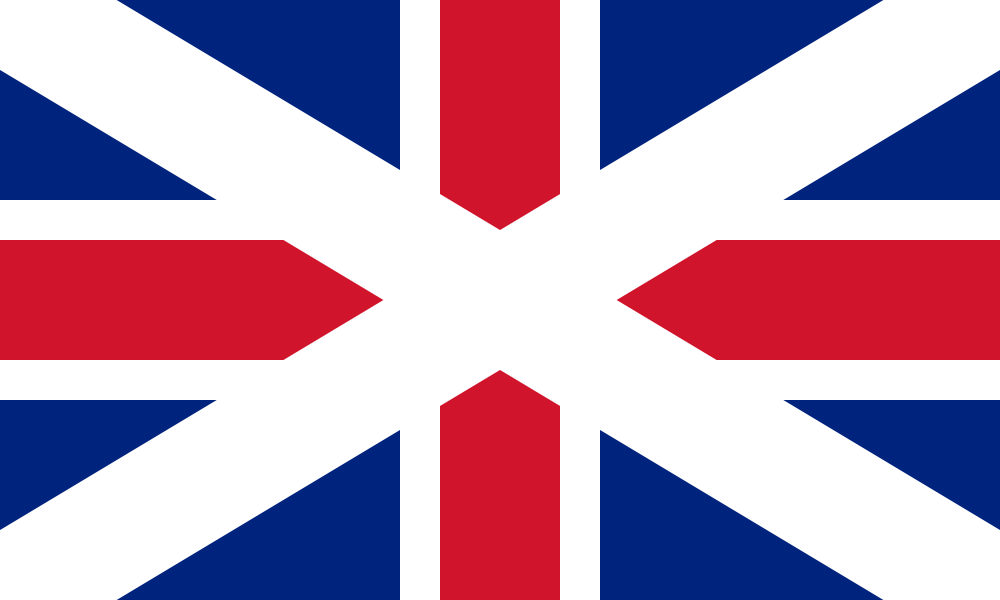
Scottish shipowners complained that the English cross obscured the Scottish one, and some Scottish vessels flew an unofficial version with Saint Andrew's saltire uppermost. It was among the designs put to Queen Anne in April 1707, and she chose the original.
- 1801
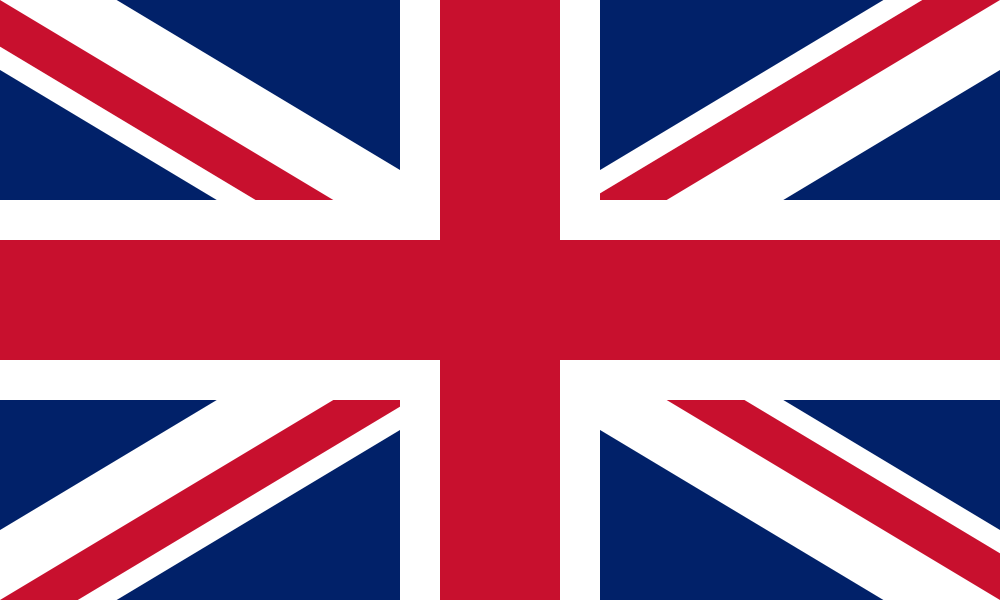
The Union Flag of 1801In use
1 Jan 1801 → today
The union with Ireland added the saltire of Saint Patrick. The flag was not changed when the Irish Free State left in 1922; the Home Secretary said on 7 December 1922 that no new regulations would be issued.
The law
What defines it, and who flies it
- 12 April 1606
Royal proclamation of James VI and I
Joined the crosses of Saint George and Saint Andrew for ships of both kingdoms to fly at the main top.
- 5 November 1800
Order in Council
Illustrated the new flag of the United Kingdom of Great Britain and Ireland following the Act of Union 1800.
- 1 January 1801
Royal proclamation of George III
The blazon: azure, the saltires of Saint Andrew and Saint Patrick quartered per saltire and counterchanged argent and gules, the latter fimbriated of the second, surmounted by the cross of Saint George of the third, fimbriated as the saltire. Gives no drawing and no shades.
- 1995
Merchant Shipping Act 1995
Makes it an offence to fly the plain Union Flag, other than the pilot jack, from a British ship.
- 2000
Flags Regulations (Northern Ireland) 2000
Set the days the flag flies on government buildings in Northern Ireland, when it flies at half-mast and how it is shown with other flags.
In use
Any British subject may fly it on land; there are no national rules on its use and no law against desecrating it
Government guidance encourages government buildings to fly it all year round and requires it on set days, among them Commonwealth Day, the King's official birthday and Remembrance Sunday
On Saint Andrew's Day in Scotland it flies only where a building has a second pole, so that the Saltire is not lowered
Flown at half-mast from the announcement of the death of the sovereign, except on Proclamation Day, or on the sovereign's command
Flown as a jack at the bow of commissioned warships at anchor or alongside
In the order of precedence it follows the Royal Standards and comes before the flags of the host nation, other countries and the Commonwealth
Related flags
The flags it is confused with or comes from
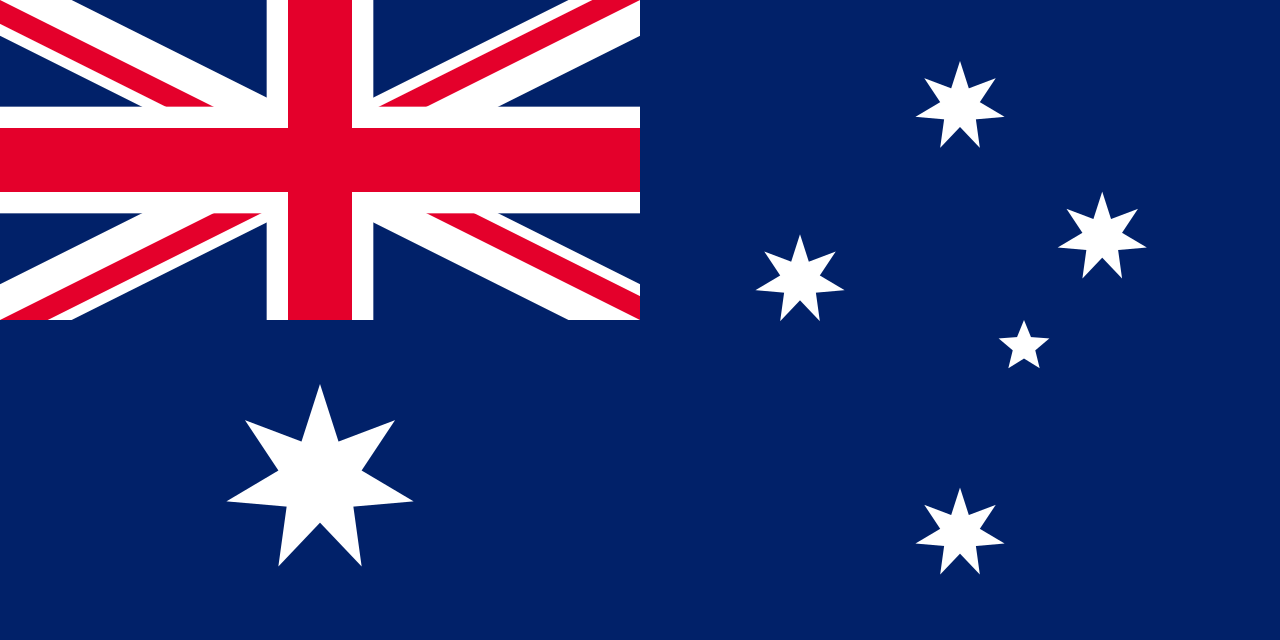 Australia
- One of four independent states that carry the Union Jack in the canton of their national flag.
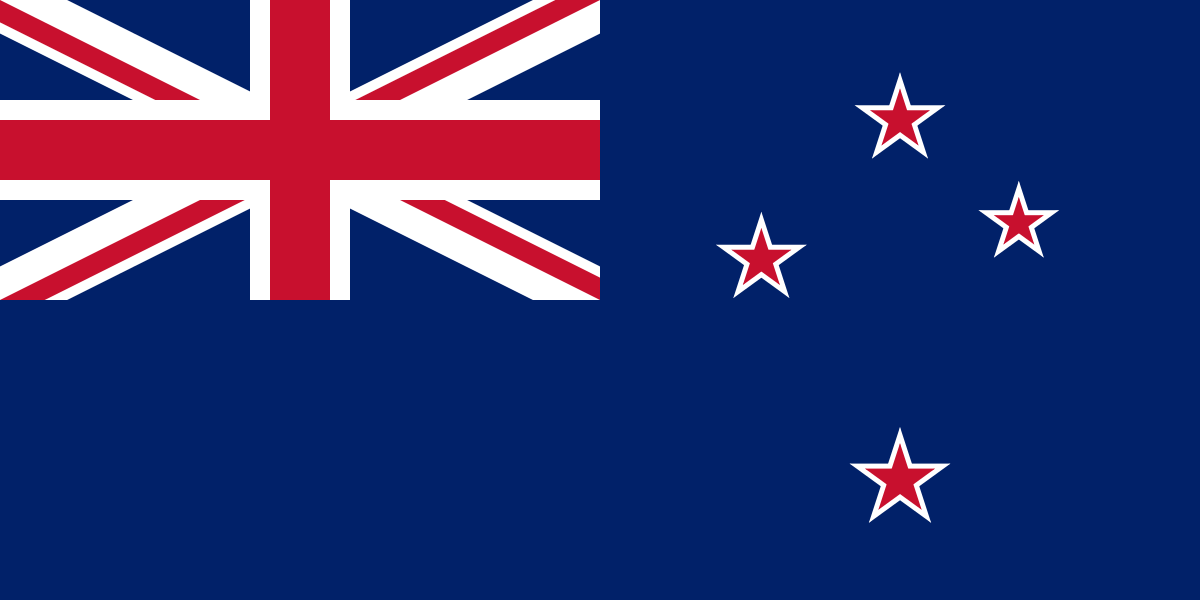 New Zealand
- Carries the Union Jack in the canton. A referendum in 2016 kept the flag, with 56.6% voting for the status quo.
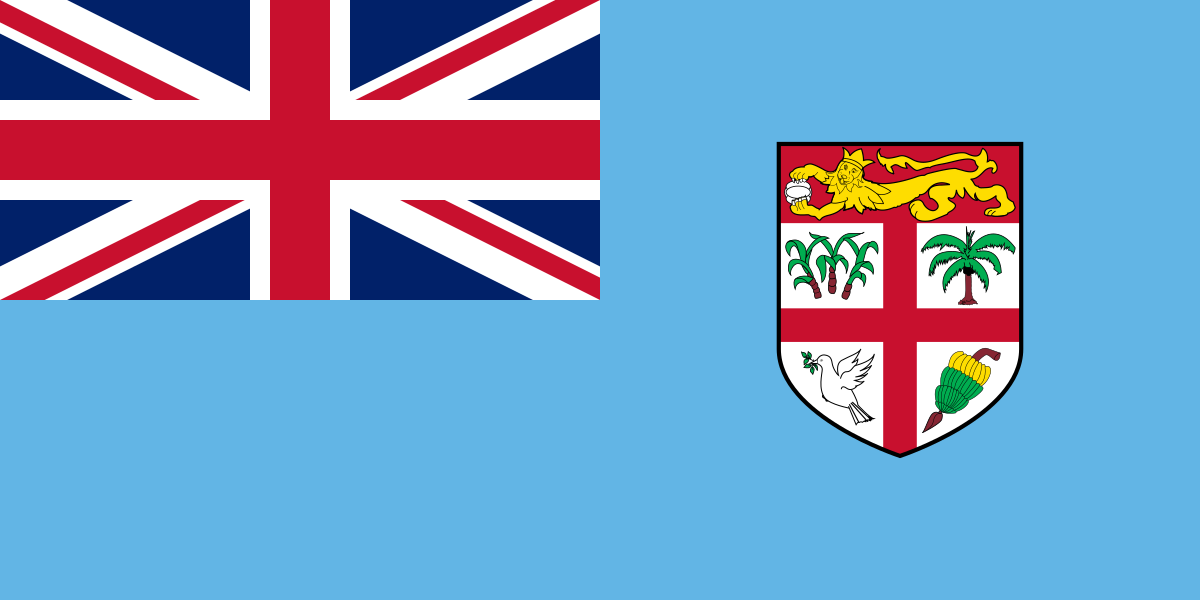 Fiji
Fiji- Carries the Union Jack in the canton. A plan announced in 2015 to remove it was dropped the next year.
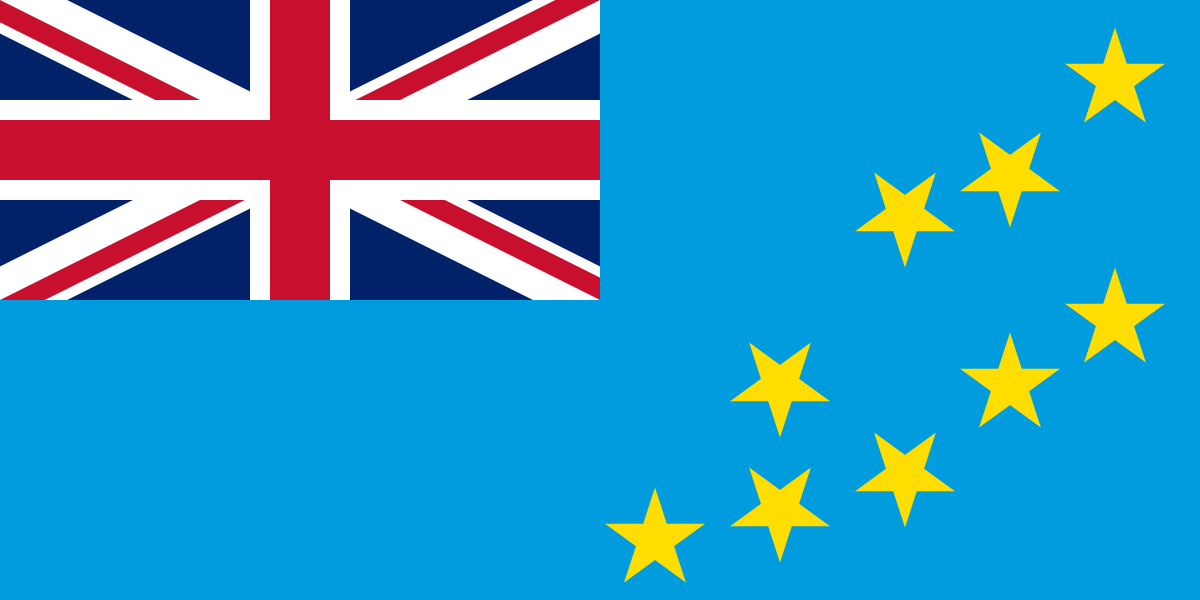 Tuvalu
- One of four independent states that carry the Union Jack in the canton of their national flag.
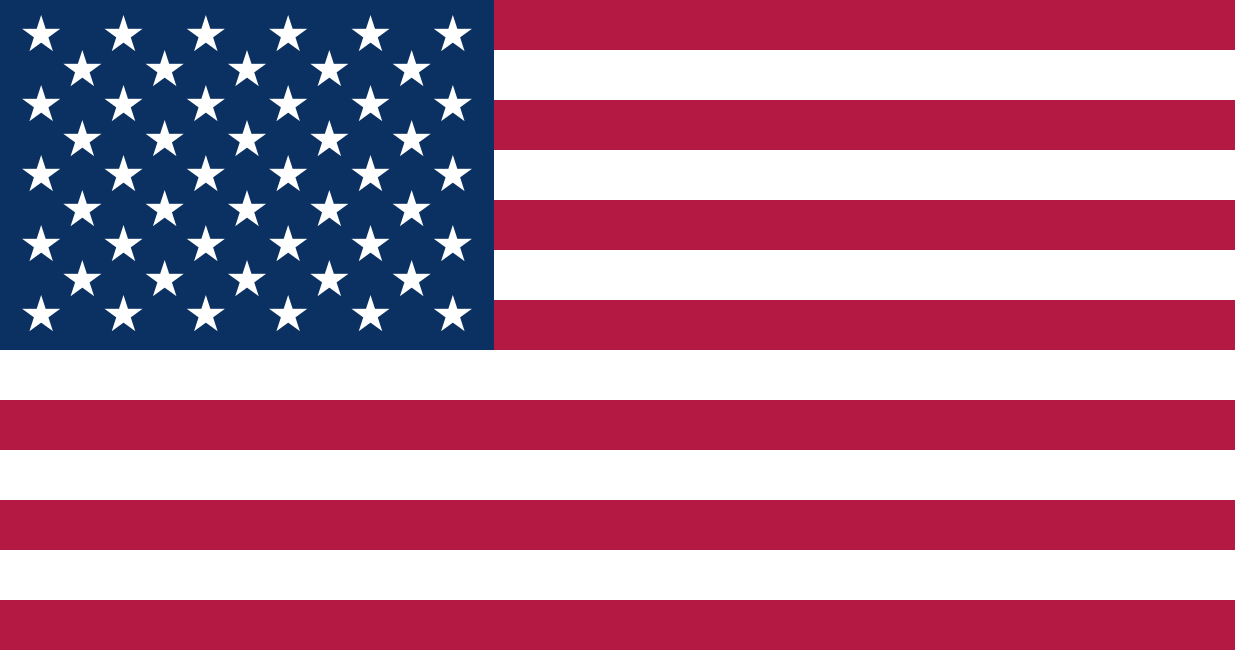 United States
- The pre-1801 union flag formed the canton of the Continental Union Flag, flown from July 1776 to June 1777.
Coat of arms
The arms of United Kingdom