The flag of Greece
Γαλανόλευκη · since 1978
 Back to Greece
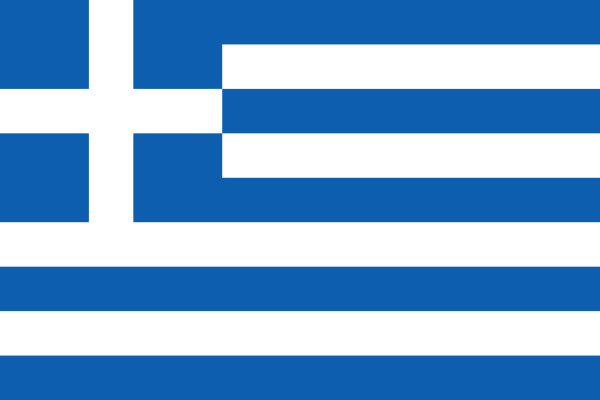
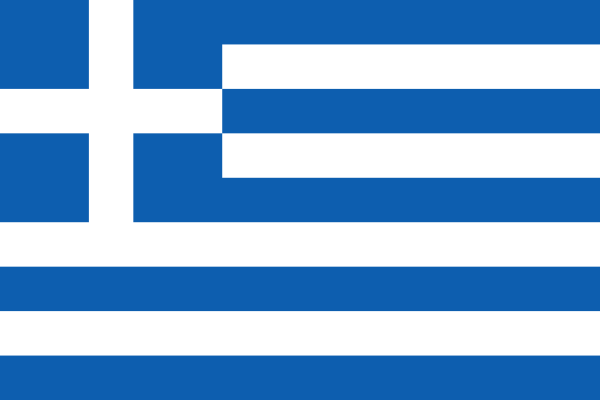
Nine horizontal stripes of blue and white with a white cross on a blue square in the upper hoist corner. The design was laid down in 1822 as the flag for use at sea, beside a plain cross flag for use on land, and the two swapped places more than once before Law 851/1978 made the striped flag the only national flag. The law calls the blue cyan and has never fixed its shade.
At a glance
- Adopted
- 1978
- Proportion
- 2:3
- Colours
- Earlier flags
- 7
The colours
The colours of the flag of Greece, in the order it has them
- 0156.5%
Blue
κυανόςThe five outer and alternate stripes, the canton
- HEX
#0D5EAF- RGB
13 94 175- CMYK
100 60 0 5- Pantone
286 C
- 0243.5%
White
The four inner stripes, the cross
- HEX
#FFFFFF- RGB
255 255 255- CMYK
0 0 0 0
No law gives these codes. HEX and RGB are the colour this site draws the flag in; CMYK, Pantone and RAL are the values most often published for it.
Construction
How the flag is drawn
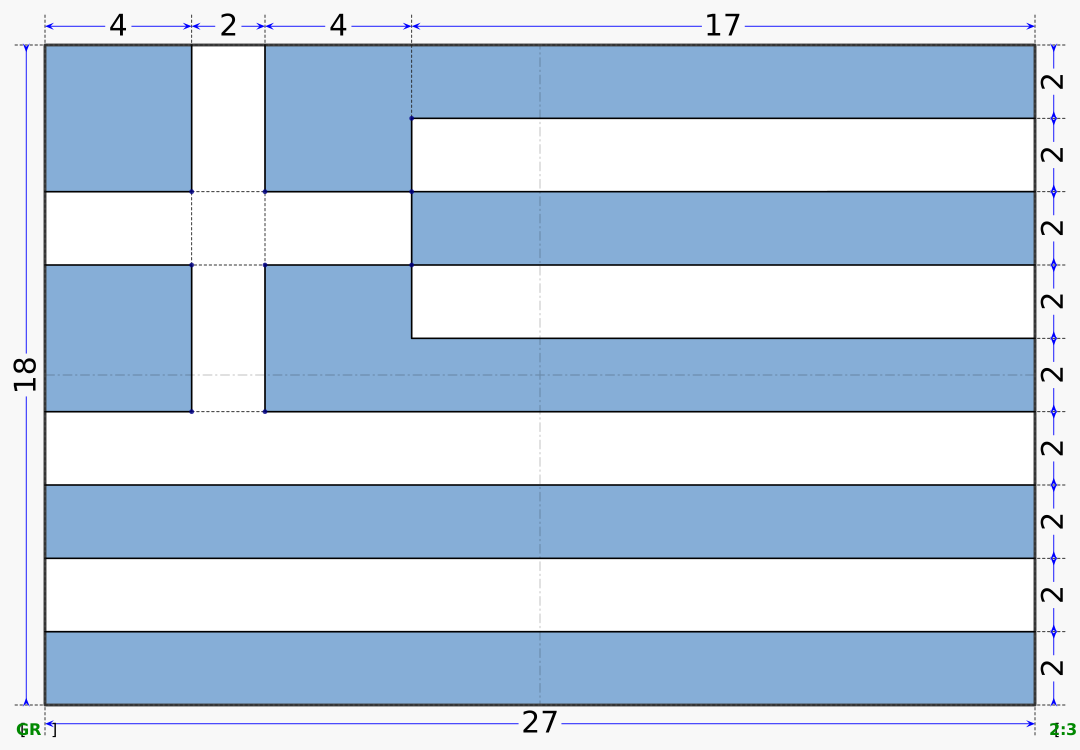
Nine horizontal stripes of equal width, five blue and four white, blue at top and bottom; in the upper hoist corner a blue square bearing a white Greek cross that runs to its edges.
- Stripes
- Nine of equal width, five cyan and four white, so that the top and bottom stripes are cyan
- Canton
- A blue square in the upper hoist corner
- Cross
- White, a Greek cross running to the edges of the canton
- Shade of blue
- Not fixed by law. The law's word, κυανός, can mean cyan or simply blue, and the shade is left to flagmakers
Other forms
- Vertical flag
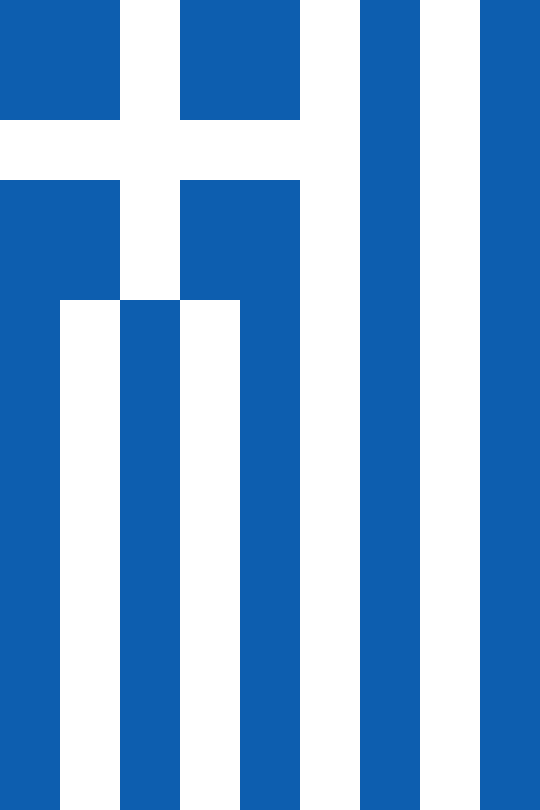
- Hung with the canton on the left as the spectator sees it.
- Army war flag
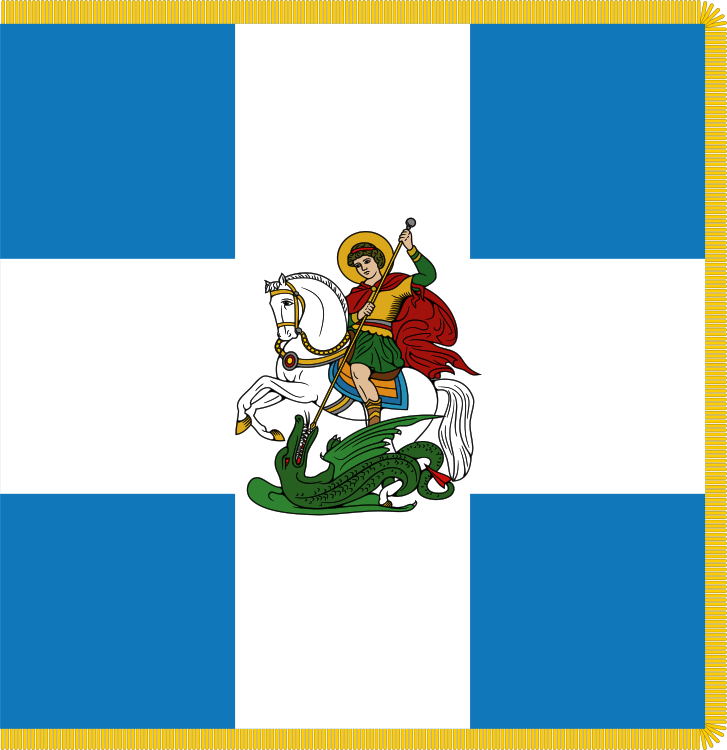
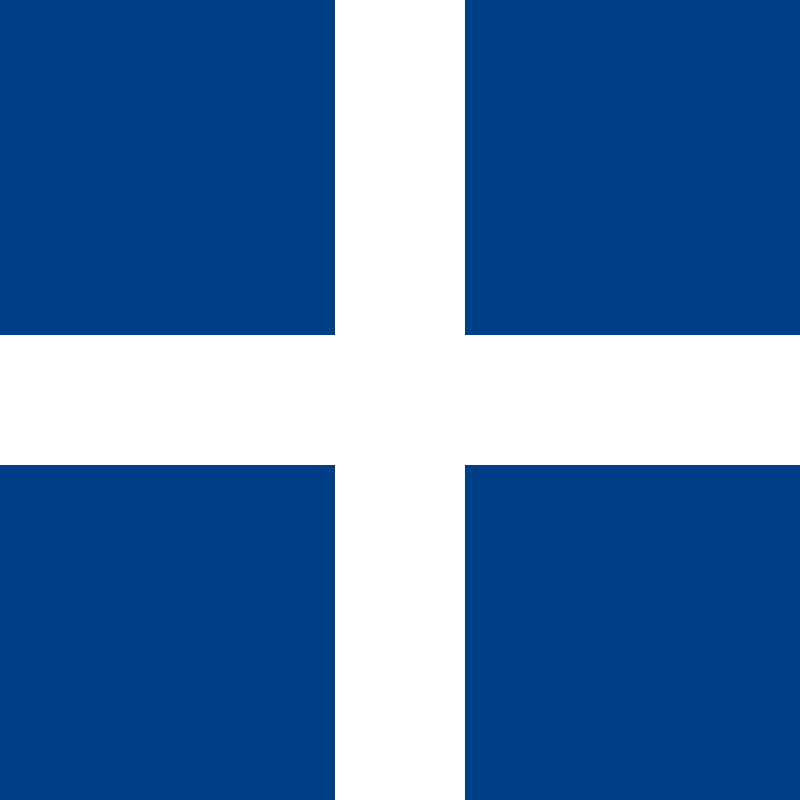
- Square, a white cross on blue with Saint George at the centre. The Air Force flag shows the archangel Michael instead.
- Naval jack
- The plain white cross on blue, also the base pattern for naval rank flags.
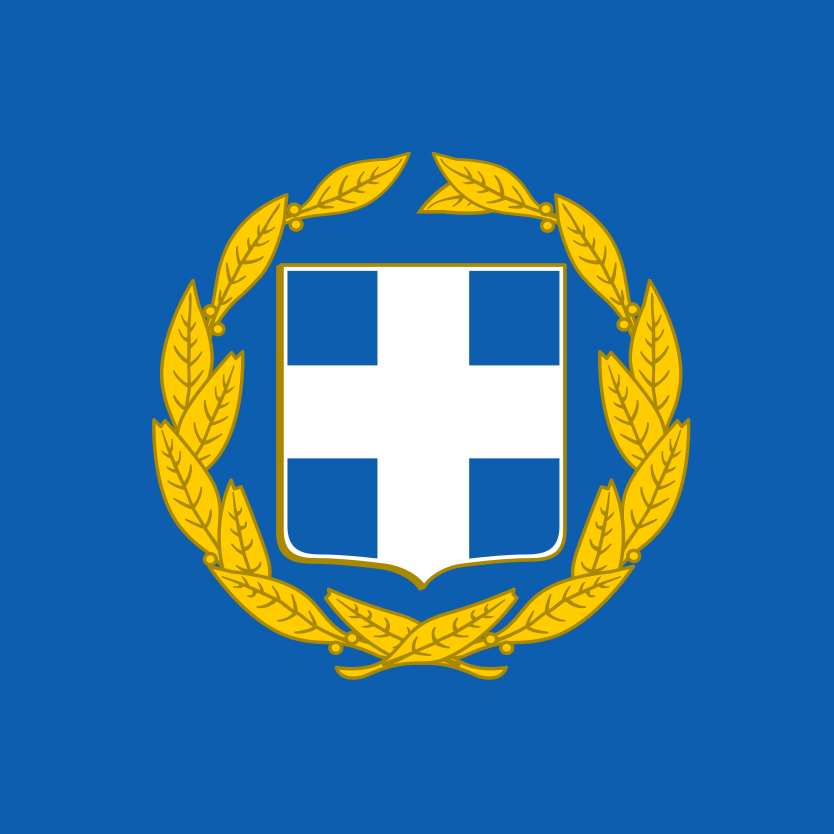
- Flag of the president
- Prescribed by Presidential Decree 274/1979.
Meaning
What each part stands for
- Nine stripes
- No official meaning. The popular reading is the nine syllables of Ελευθερία ή Θάνατος, "Freedom or Death": five blue stripes for Ελευθερία and four white for ή Θάνατος
- Blue and white
- Commonly read as the sea and the spume of the waves, or the sky and the sea. No official explanation has been given
- Cross
- Orthodox Christianity, already prominent on the revolutionary flags of 1821
History
How the flag of Greece got here
- 1822

The civil ensign of the revolution
15 Mar 1822 → 30 Jun 1828
Merchant ships flew a blue flag with a blue cross on a white canton, until Ioannis Kapodistrias gave them the striped naval ensign in recognition of their part in the war.
Image: Traced by User:Stannered, CC BY-SA 3.0
- 1822
The land flag
15 Mar 1822 → 28 Dec 1863
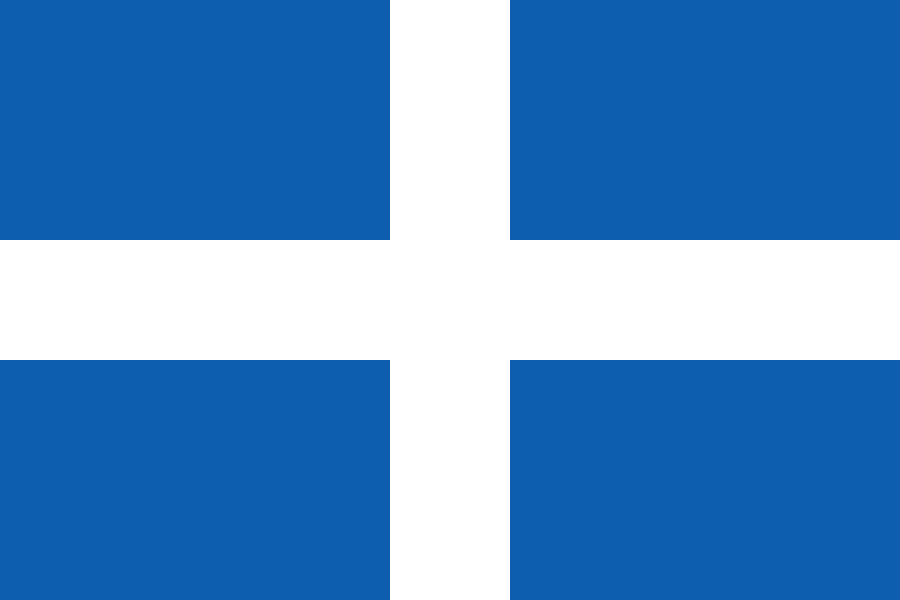
A plain white cross on blue, chosen over the more popular blue cross on white for reasons that are not recorded. The striped flag was the naval ensign beside it. From 1833 King Otto's military flags carried his Bavarian arms at the centre of the cross.
- 1863
The crown
28 Dec 1863 → 25 Mar 1924
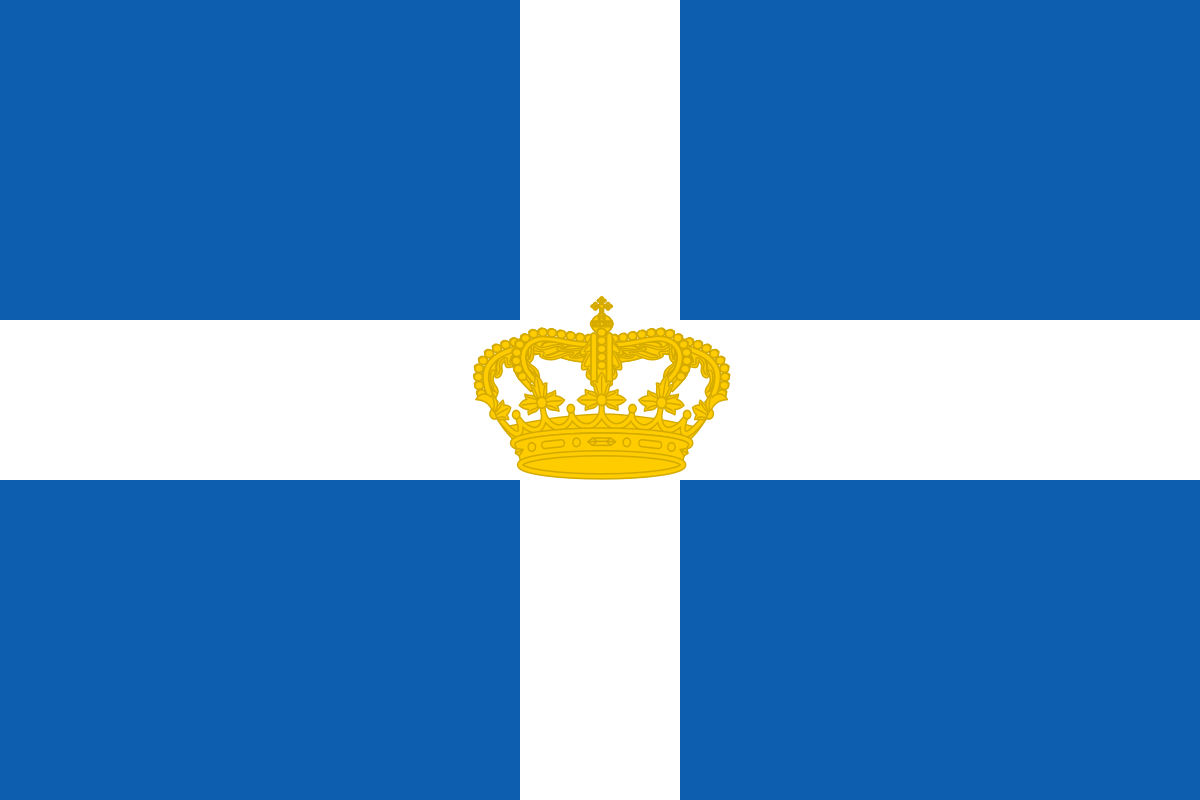
A royal decree under George I put a crown at the centre of the cross in place of the arms. From 31 May 1914 the flag with the crown was the state flag, and private citizens flew the striped sea flag.
- 1924
The Second Hellenic Republic
25 Mar 1924 → 7 Nov 1935
The crowns were removed from all flags. On 20 February 1930 the proportions were set at 2:3, with the arms of the cross one fifth of the flag's width.
- 1935
The crown restored
7 Nov 1935 → 18 Aug 1969
The 1914 decree came back with the monarchy. During the occupation of 1941 to 1944 the flag was forbidden, and it became a symbol of the resistance.
- 1969
The sea flag as sole national flag
18 Aug 1969 → 7 Jun 1975
Under the military dictatorship the striped flag became the only national flag, and on 18 August 1970 its ratio changed to 7:12. The crown stayed on flags at ministries, embassies and public buildings until the monarchy was abolished in 1973.
- 1975
The land flag as sole national flag
7 Jun 1975 → 22 Dec 1978
After the restoration of democracy, Law 48/1975 and Presidential Decree 515/1975 made the plain cross the only flag of Greece, at sea as well.
- 1978
The Blue-and-WhiteIn use
22 Dec 1978 → today
Law 851/1978 made the striped flag the sole national flag again, at 2:3, and abolished all earlier provisions. The plain cross is still seen in unofficial use and on the army's war flags.
The law
What defines it, and who flies it
- 15 March 1822
Decree No. 540 of the Provisional Government
Laid down the patterns after the First National Assembly at Epidaurus chose blue and white: a plain white cross on blue for land, the nine stripes with the cross in the canton for the navy, and a blue flag with a blue cross on a white canton for merchant ships.
- 22 December 1978
Law 851/1978, Regarding the National Flag, the War Flags and the Emblem of the President of the Republic
Makes the striped flag the sole national flag at 2:3, and sets where and when it is flown, the pole, half-mast and the uses that are forbidden.
- 1979
Presidential Decree 274/1979
Prescribes the flag of the president.
- 1998
Presidential Decree 201/1998
Requires respects to be paid to the flag on 17 November.
In use
The national flag on land, and the civil, state and naval ensign at sea
At the Presidential Palace, the Parliament, ministries, embassies, consulates, schools, military camps and on ships, it flies from 8am until sunset on a white mast topped by a white cross on a white sphere
Civilians may fly it on days set by the interior ministry and at sporting and similar events
Flown on 25 March, 28 October and 17 November, on regional holidays in the regions that keep them, and at half-mast on days of national mourning
It may not be written on, used to cover a statue, hung from a window or balcony without a mast, or used commercially or as a logo
On a coffin the canton lies to the right of the head
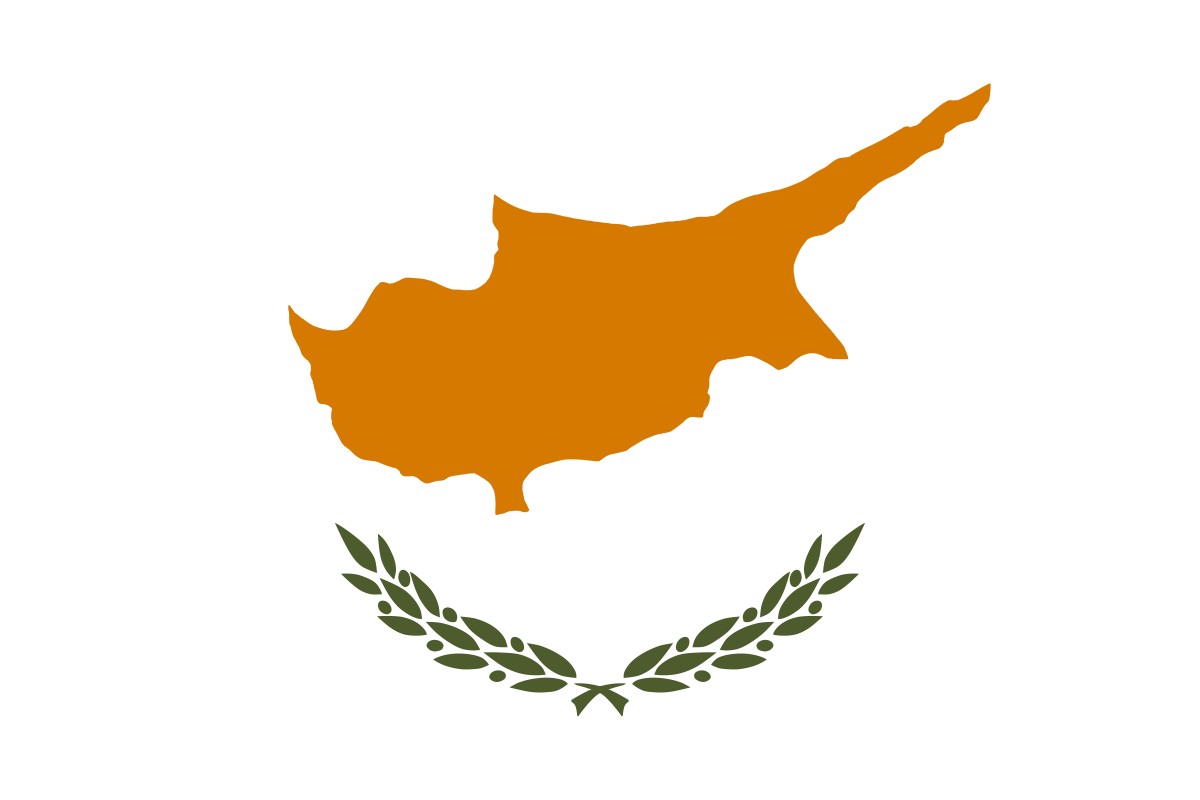
Under the Constitution of Cyprus it may be flown there beside the flag of Cyprus
Related flags
The flags it is confused with or comes from
 Cyprus
- The Constitution of Cyprus lets the Greek flag be flown beside the flag of Cyprus.
Coat of arms
The arms of Greece