The flag of Azerbaijan
Azərbaycan Respublikasının Dövlət Bayrağı · since 2013
 Back to Azerbaijan
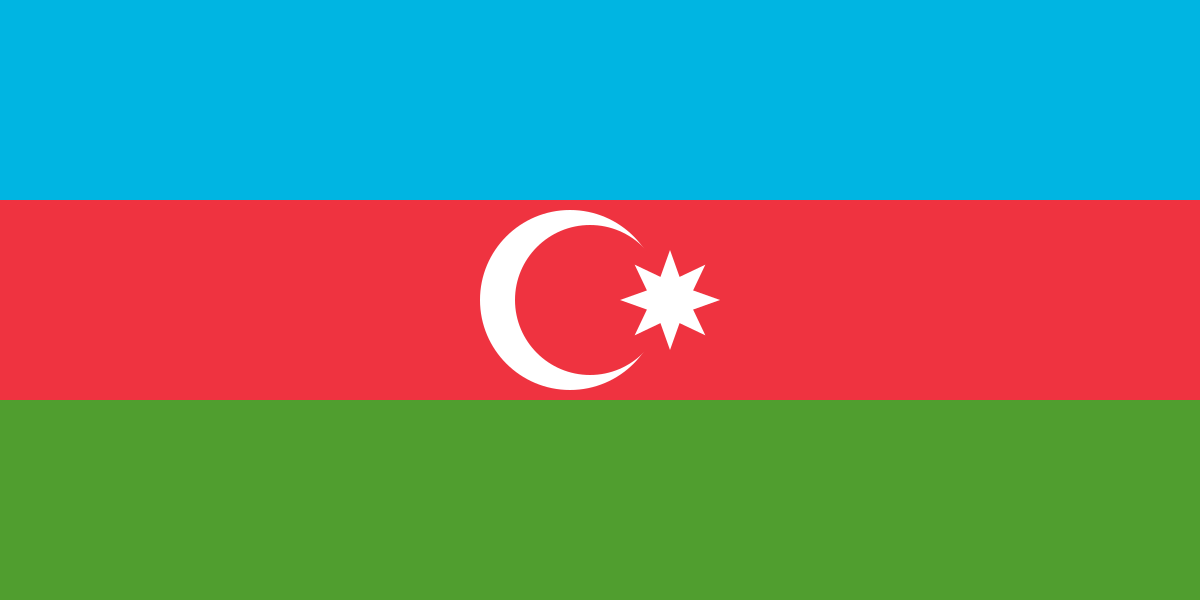
Three equal horizontal stripes of blue, red and green, with a white crescent and eight-pointed star in the centre of the red. The Azerbaijan Democratic Republic adopted it on 9 November 1918 to stand for Turkic identity, modernity and Islam; the Soviet republic banned it, and it was restored on 5 February 1991. A constitutional law of 2018 fixed its colours in Pantone.
At a glance
- Adopted
- 1991
- Proportion
- 1:2
- First hoisted
- 1918
- Colours
- Earlier flags
- 6
- Designer
- 1
The colours
The colours of the flag of Azerbaijan, in the order it has them
- 0134.2%
Blue
maviTop stripe
- HEX
#00B5E2- RGB
0 181 226- CMYK
100 20 0 11- Pantone
306 C- RAL
5012
- 0231.5%
Red
qırmızıMiddle stripe, behind the white crescent and star
- HEX
#EF3340- RGB
239 51 64- CMYK
0 79 73 6- Pantone
Red 032 C- RAL
3018
- 0334.2%
Green
yaşılBottom stripe
- HEX
#509E2F- RGB
80 158 47- CMYK
49 0 70 38- Pantone
362 C- RAL
6018
No law gives these codes. HEX and RGB are the colour this site draws the flag in; CMYK, Pantone and RAL are the values most often published for it.
Construction
How the flag is drawn
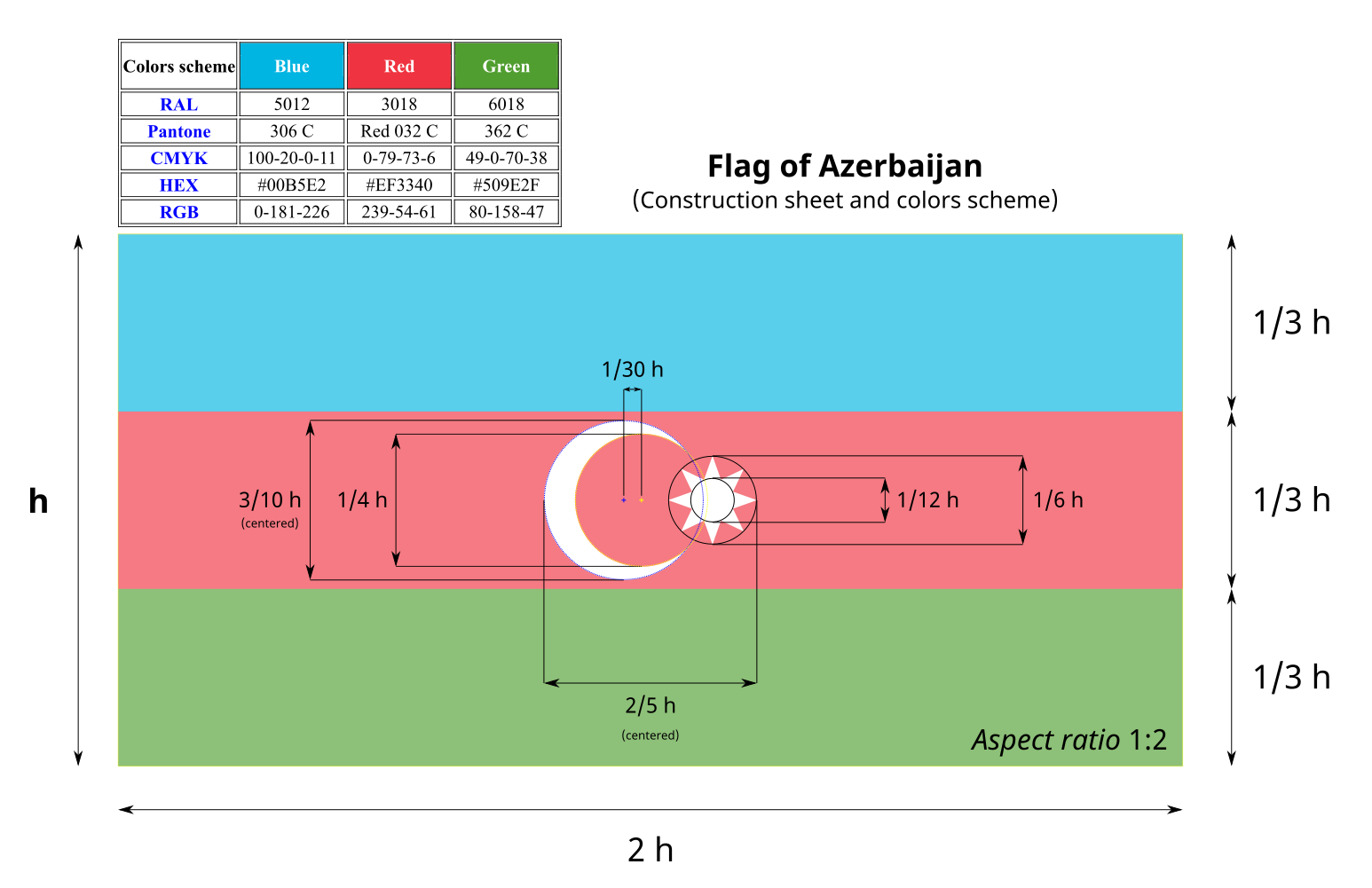
Three horizontal stripes of equal width, blue over red over green, with a white crescent and a white eight-pointed star in the centre of the red stripe, the crescent's tips facing the star to its right.
- Stripes
- Three, each one third of the height
- Crescent and star
- In the centre of the red stripe, on both sides of the flag. The outer circle of the crescent and the red circle inside it both meet the diameter of the star
- Star
- Eight points. Its diameter is 1/6 of the flag's height, and the circle inscribed in it 1/12
Other forms
- Vertical flag
- Hung on a wall without a staff, the flag is turned so that the green stripe is on the left as seen from the front.
Meaning
What each part stands for
- Blue
- The Turkic origin of the Azerbaijani people
- Red
- The wish to build a modern society and to develop democracy
- Green
- Belonging to Islamic civilisation
- Crescent and star
- Carried over from the first flag of 1918, itself taken from the old Ottoman flag. There is no agreed meaning for the eight points: Fatali Khan Khoyski linked them to the eight letters of Azerbaijan in the Arabic script, others to eight Turkic peoples
Who drew it
- Ali bey Huseynzade
- Credited by the vexillologist Whitney Smith with the flag; its colours follow his formula Turkify, Islamize, Europeanize, first published in 1907
History
How the flag of Azerbaijan got here
- 1918
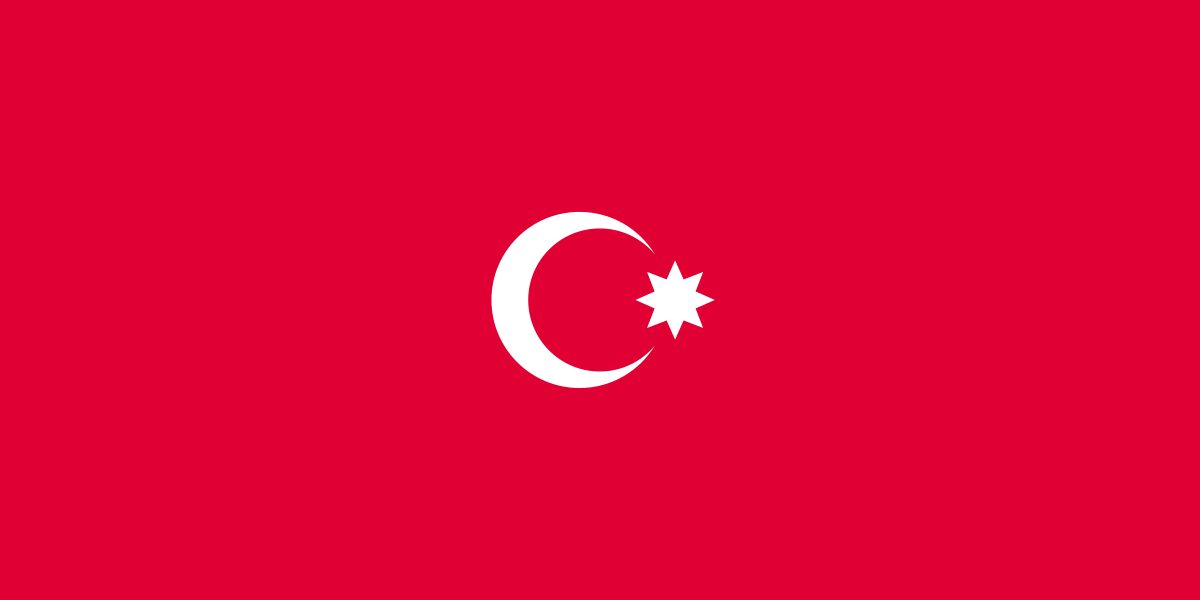
The first flag
21 Jun 1918 → 9 Nov 1918
A white crescent and eight-pointed star on red, adopted by the government of the Azerbaijan Democratic Republic less than a month after independence. It was almost the same as the Ottoman flag before 1844, and was soon questioned for representing only Turkism.
Image: Zscout370, CC BY-SA 3.0
- 1918
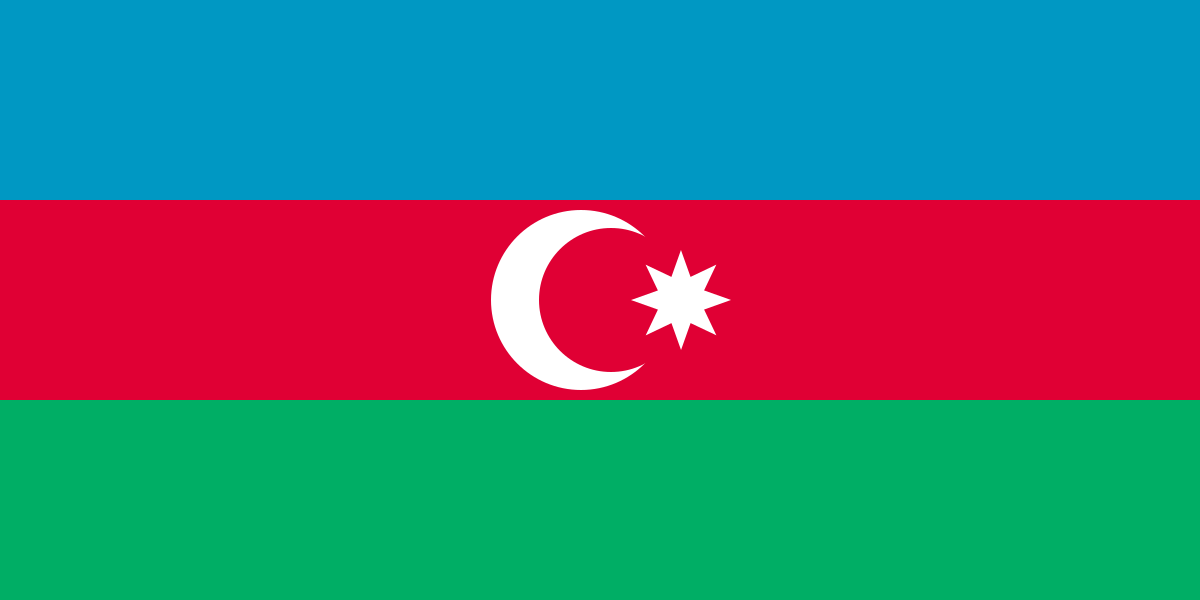
Azerbaijan Democratic Republic
9 Nov 1918 → 28 Apr 1920
The government approved the tricolour on a report by Fatali Khan Khoyski, and it was raised over the parliament at its opening on 7 December 1918. After the Red Army took Baku it was lowered outside the parliament on 3 May 1920, and emigrant organisations kept it in use abroad.
- 1920
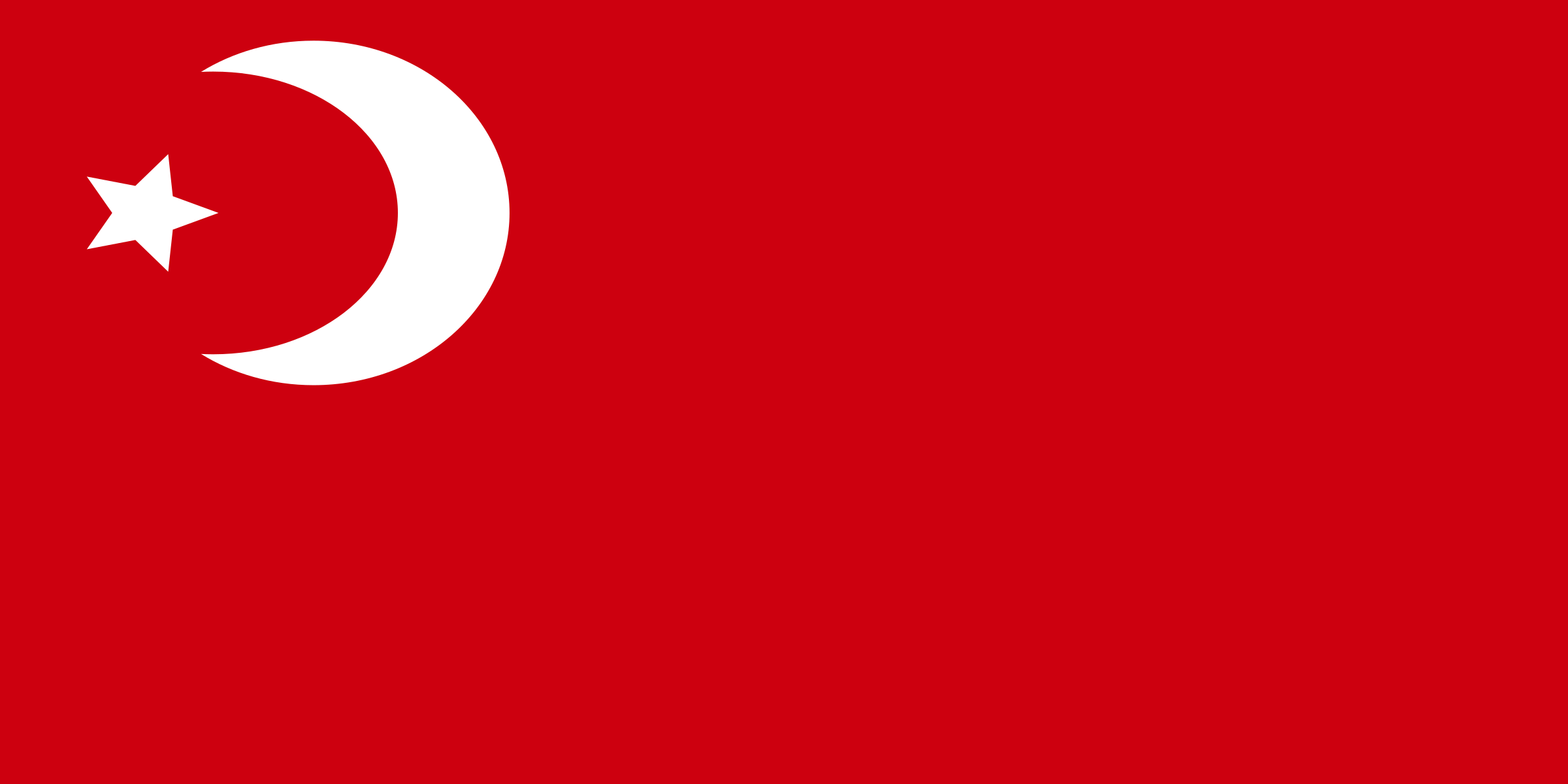
Soviet Azerbaijan
28 Apr 1920 → 19 May 1921
The first, unofficial Soviet flag, used from the Soviet capture of Baku. The tricolour was banned.
- 1921
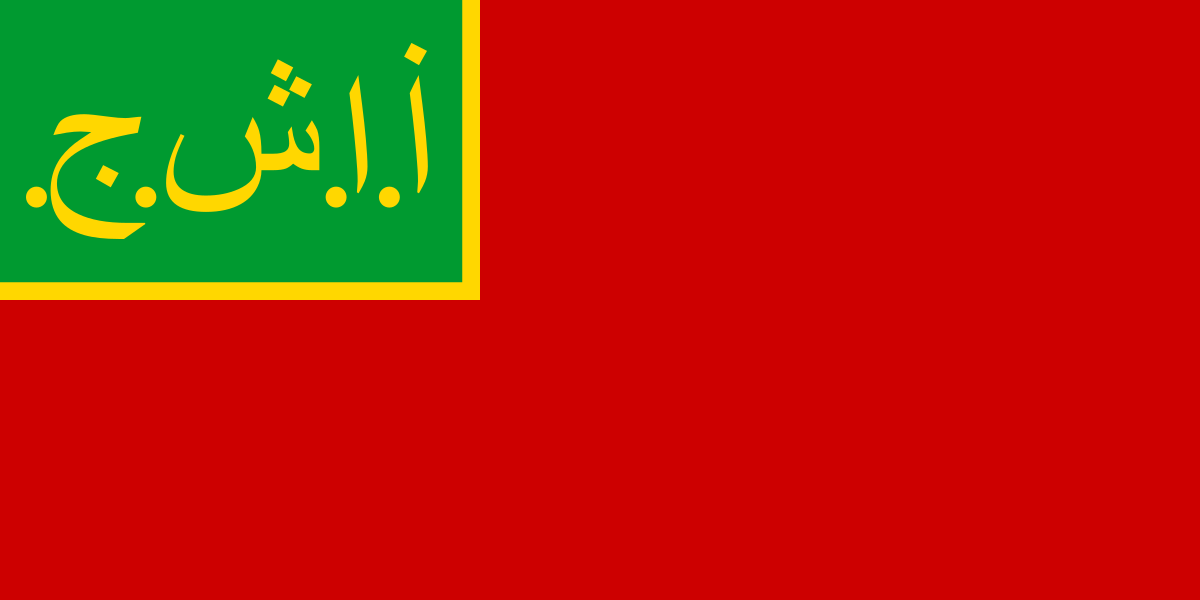
Red flags with lettering
19 May 1921 → 7 Oct 1952
The first constitution of the Azerbaijan SSR gave it a red flag with the initials of the republic in Arabic script. Eight Soviet flags followed one another, most differing only slightly.
- 1952
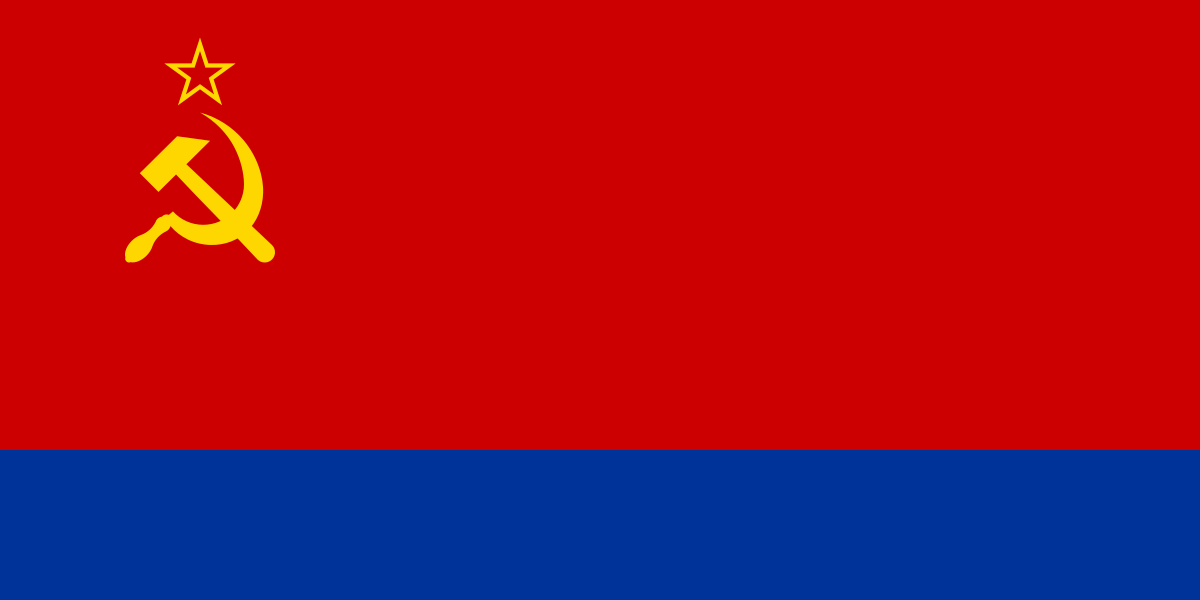
The blue band
7 Oct 1952 → 5 Feb 1991
The Soviet flag with a blue band along the bottom, a quarter of the height, and a gold hammer and sickle under a red star at the hoist, in the proportion 1:2. In 1956 a protester raised the tricolour over the Maiden Tower in Baku.
- 1991
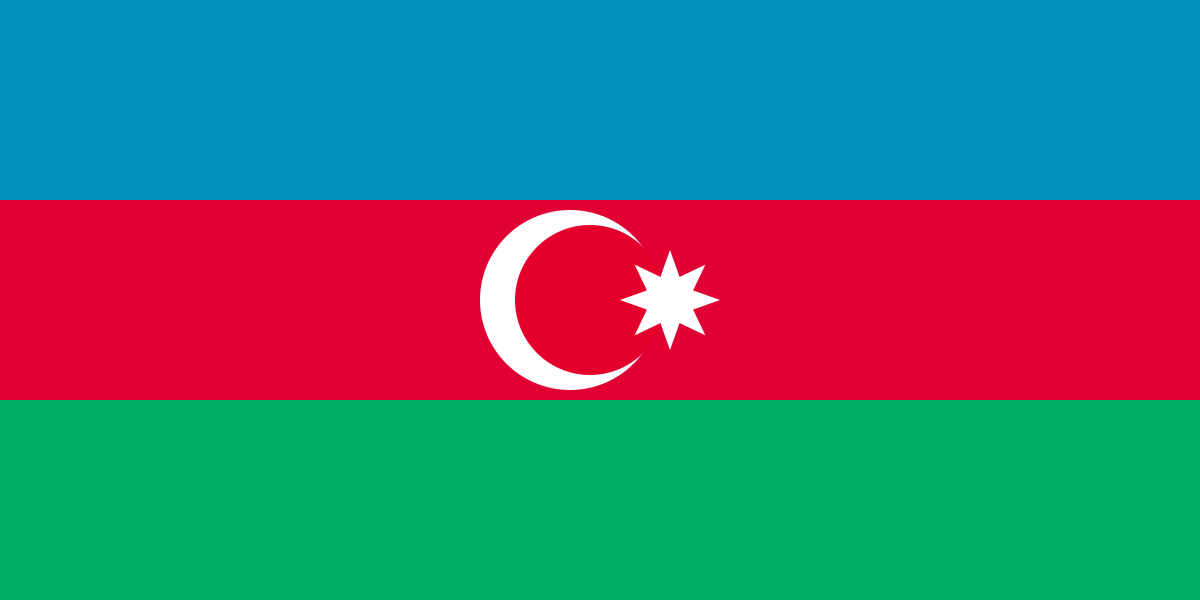
The tricolour restored
5 Feb 1991 → 22 Oct 2013
The tricolour was flown in the demonstrations of the late 1980s and adopted by Nakhchivan on 17 November 1990. The Supreme Soviet restored it as the state flag on 5 February 1991, with slightly different colours and at 1:2.
- 2013
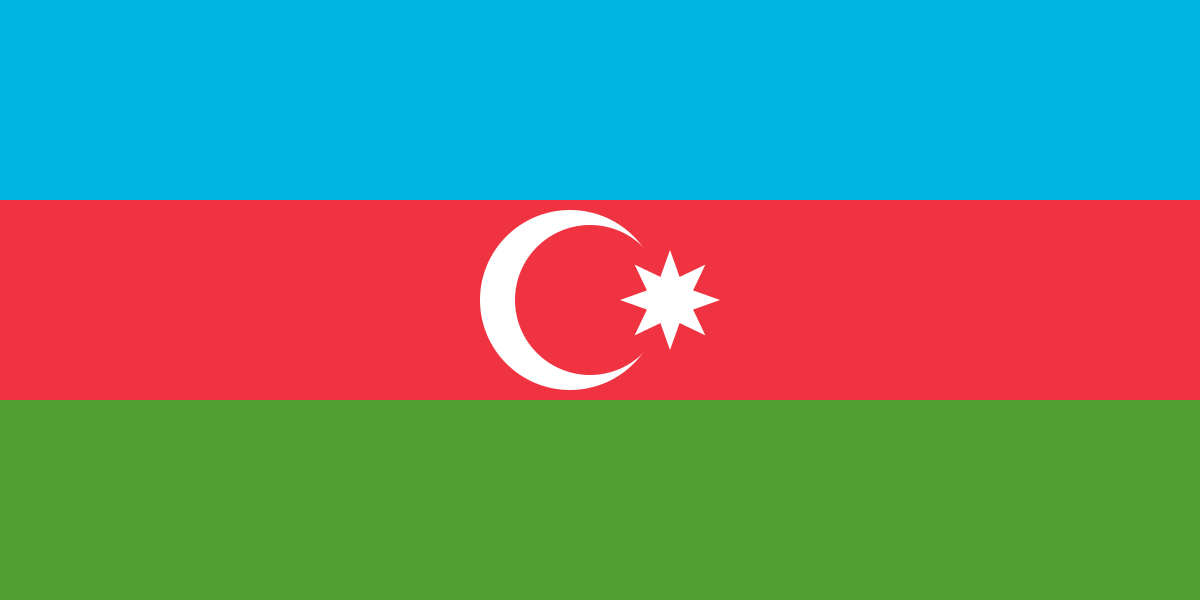
The colours revisedIn use
22 Oct 2013 → today
An amendment of 2013 to the law on the flag's use revised the colours, and the constitutional law of 2 November 2018 fixed them in Pantone.
The law
What defines it, and who flies it
- 5 February 1991
Law on the State Flag of the Republic of Azerbaijan
Adopted by the Supreme Soviet, declaring the tricolour the state flag. Its construction sheet sets the size of the crescent and star.
- 12 November 1995
Constitution of the Republic of Azerbaijan, Article 23
Three horizontal stripes of equal width, blue, red and green, with a white crescent and eight-pointed star in the middle of the red stripe on both sides. Width to length 1:2.
- 8 June 2004
Law No. 683 on the rules for the use of the State Flag, Article 2
Where the flag is flown permanently and when. Amended on 1 September 2005 and on 22 October 2013.
- 2 November 2018
Constitutional Law No. 1331-VQK on the adoption of the description of the State Flag
The crescent's tips face the star to its right. Sets the colours at Pantone 306 C, Red 032 C and 362 C.
In use
Flown permanently on the presidential palace, the National Assembly, the Cabinet of Ministers, the higher courts, the central and local executive authorities, the Central Bank, the Central Election Commission, the bodies of Nakhchivan and border crossings
Flown on diplomatic missions and consulates and the residences of their heads, under diplomatic protocol
Flown by ships in the Azerbaijani registers, and by foreign ships alongside their own in Azerbaijani waters and ports
Raised at military units and on naval vessels on public holidays, at the military oath, when an award is presented and when they are on foreign territory
Desecration of the flag is a crime under Article 324 of the Criminal Code
State Flag Day is 9 November, a non-working day since 2009
Related flags
The flags it is confused with or comes from
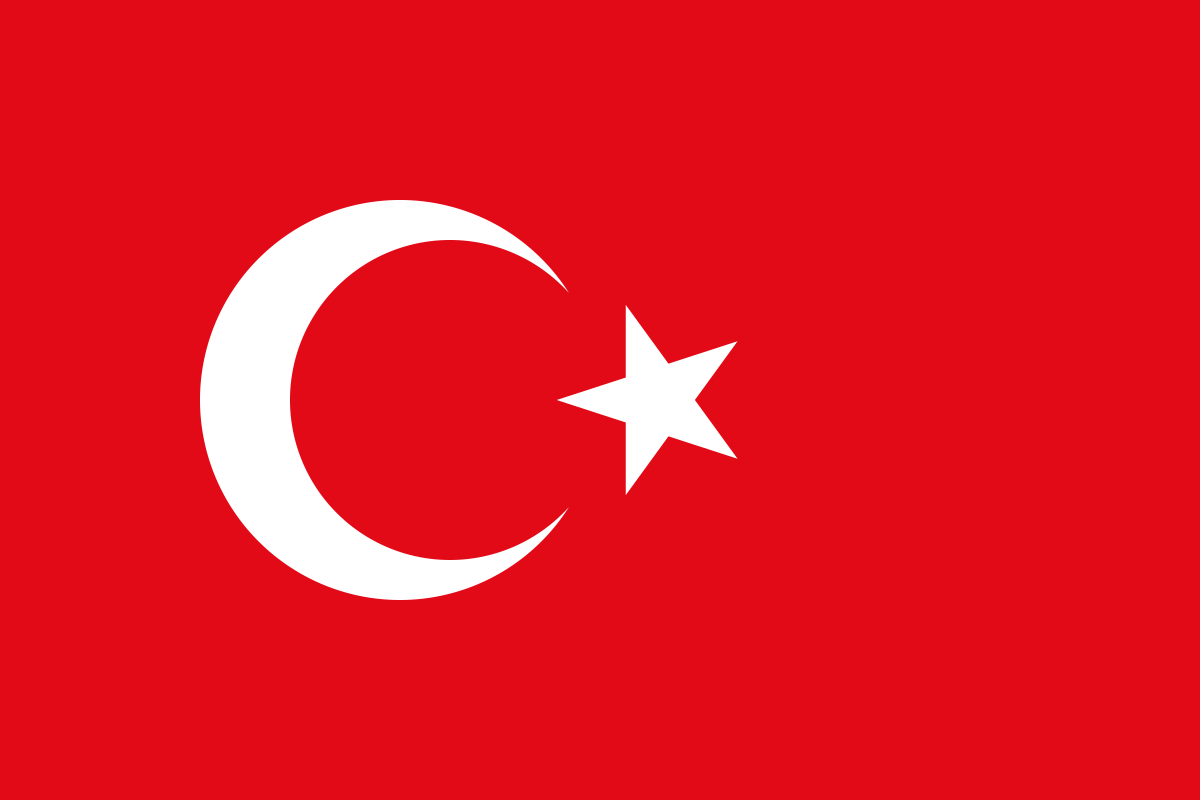 Türkiye
- The white crescent and eight-pointed star come from the Ottoman flag, and the first flag of 1918 was almost identical to it.
Coat of arms
The arms of Azerbaijan