The flag of Isle of Man
Brattagh Vannin · since 1932
 Back to Isle of Man
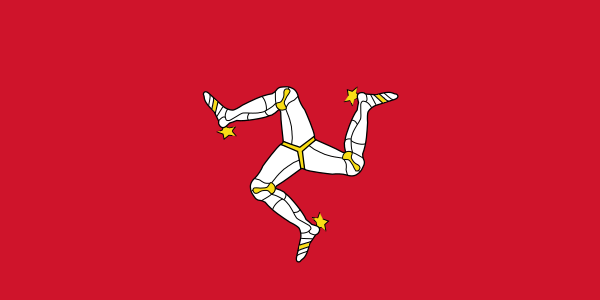
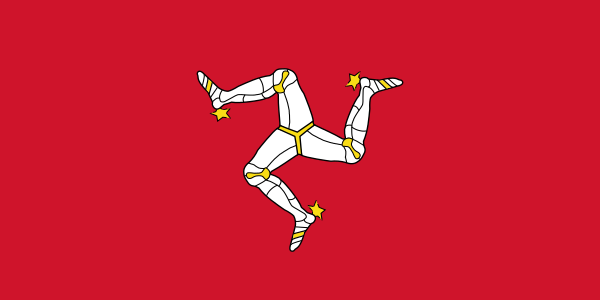
A red flag with the three legs of Man at the centre: three armoured legs with golden spurs, joined at the thigh and bent at the knee. It is a banner of the Manx arms, which go back to the 13th century, and has been the island's official flag since 1 December 1932. Since 1968 the legs have run clockwise.
At a glance
- Adopted
- 1932
- Proportion
- 1:2
- Colours
- Earlier flags
- 2
The colours
The colours of the flag of Isle of Man, in the order it has them
- 0197.3%
Red
jiargThe field
- HEX
#CF142B- RGB
207 20 43- CMYK
0 90 79 19- Pantone
186 C- RAL
3028
- 022.7%
White
baneThe armoured legs
- HEX
#FEFEFE- RGB
254 254 254- CMYK
0 0 0 0
No law gives these codes. HEX and RGB are the colour this site draws the flag in; CMYK, Pantone and RAL are the values most often published for it.
Construction
How the flag is drawn
A red field with a triskelion at the centre: three legs in white armour with golden spurs, joined at the thigh and bent at the knee, running clockwise, with one leg planted at the bottom.
- Direction
- Clockwise: the feet run to the viewer's right, and the top right foot faces right
- Balance
- One leg planted directly at the bottom
- Both sides
- The flag is double-sided, so that the legs run the same way whichever side is seen
- Other ratios
- Also made at 3:5, and shown at 2:3 on the government's website
Other forms
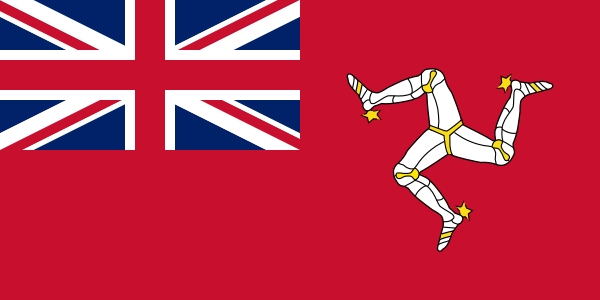
- Civil ensign
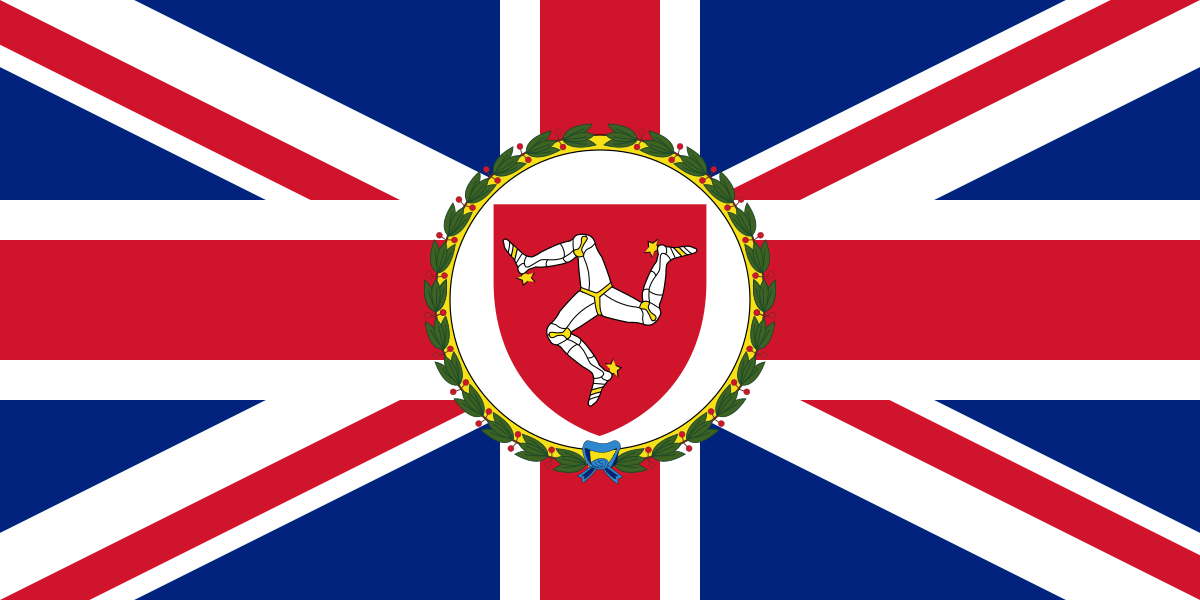
- A red ensign with the Union Flag in the canton and the three legs off centre towards the fly, approved by royal proclamation on 27 August 1971.
- Flag of Tynwald
- The flag of the island's legislature, flown outside the Legislative Buildings since 1971.
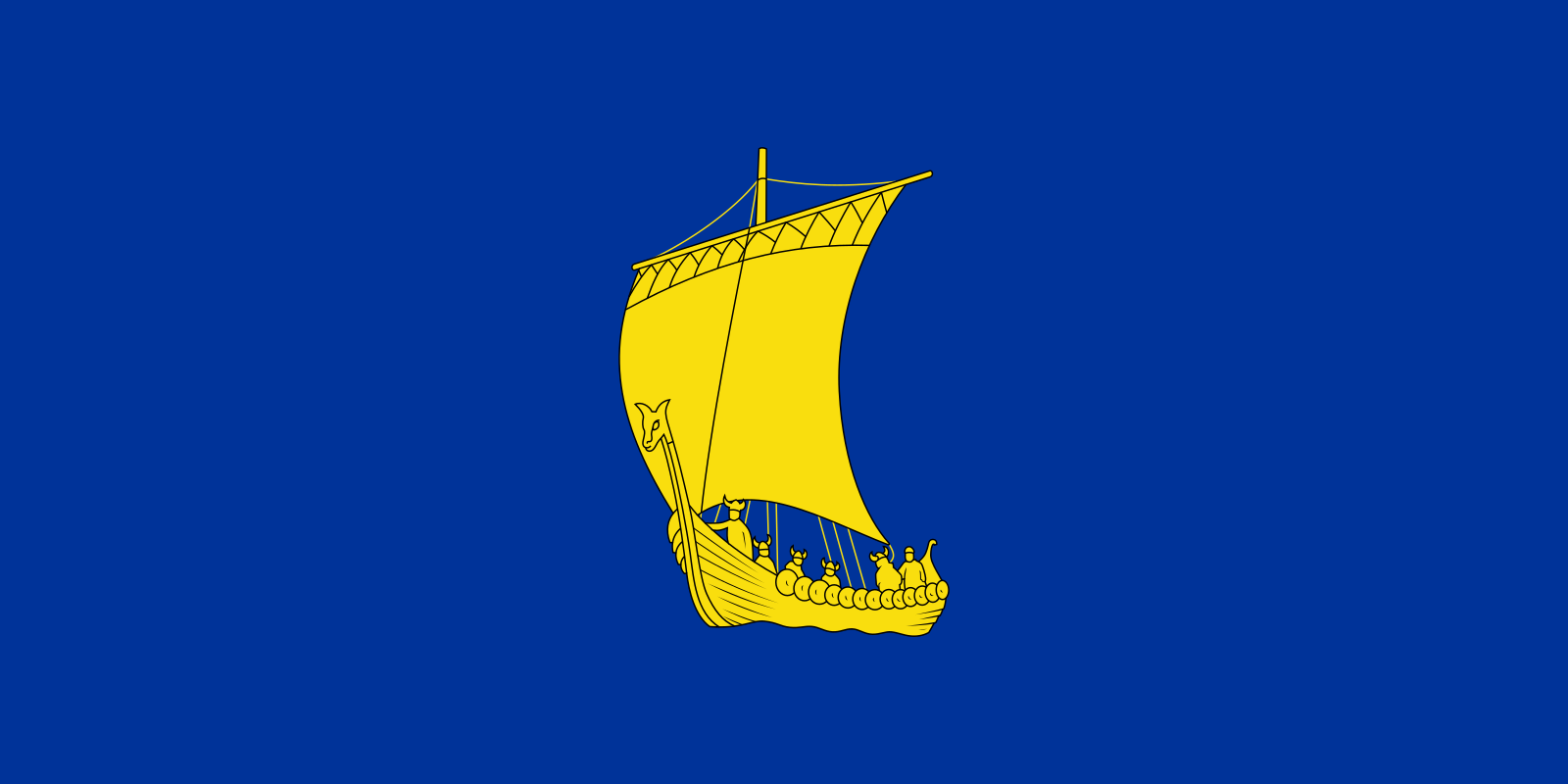
- Standard of the Lieutenant Governor
Meaning
What each part stands for
- Three legs
- Ny tree cassyn, an ancient symbol used by the Mycenaeans and the Lycians and long associated with Sicily. It appears on Man in the last third of the 13th century, possibly marking the change from the Crovan dynasty to the Scottish kings in 1265, and was kept after English rule began in 1346
- Direction of the legs
- No meaning was attached to either direction before 1968. In Norse mythology, as reported by Znamierowski, the triskelion stood for the movement of the sun through the heavens
History
How the flag of Isle of Man got here
- Undated
The legs at sea
Undated → 4 Mar 1889
The Manx flag began to appear on the island's merchant ships in the mid-19th century, but the Board of Trade and the Admiralty required the Red Ensign instead. In October 1888 the barque Lady Elizabeth of Castletown entered Dunkirk with the three legs in yellow on the red of the Red Ensign, and the British consul asked whether this was allowed.
- 1932
The legs anticlockwise
1 Dec 1932 → 9 Jul 1968
The flag was officially adopted between 1928 and 1932; sources differ on the date. Before 9 July 1968 the legs were usually drawn running anticlockwise, and both directions were in use.
- 1968
The legs clockwiseIn use
9 Jul 1968 → today
Steps to standardise the flag in July 1968 set the legs running clockwise, the direction used on the first Manx postage stamps in 1958, with one leg planted at the bottom. Both versions can still be found on the island.
The law
What defines it, and who flies it
- 4 March 1889
Admiralty decision
Reversed the earlier refusal under Section 105 of the Merchant Shipping Act 1854 and let Manx merchant ships fly the flag of the Isle of Man.
- 27 August 1971
Royal proclamation
Approved the civil ensign and confirmed the use of the flag.
In use
The civil and state flag of the Isle of Man
Flown by Manx merchant ships from the mid-19th century, and permitted to them from 1889
Related flags
The flags it is confused with or comes from
 Italy
Italy- The flag of Sicily, an Italian region, carries a similar triskelion, and the Manx symbol may have come from it.
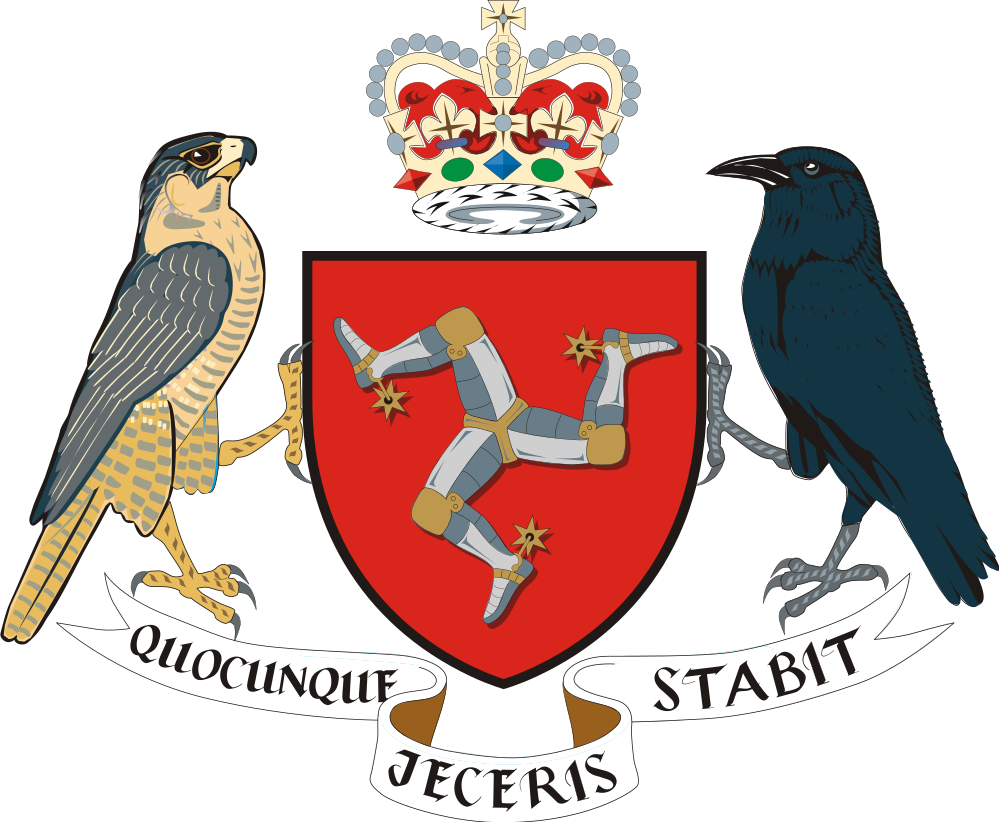
Coat of arms
The arms of Isle of Man