The flag of Georgia
საქართველოს სახელმწიფო დროშა · since 2004
 Back to Georgia
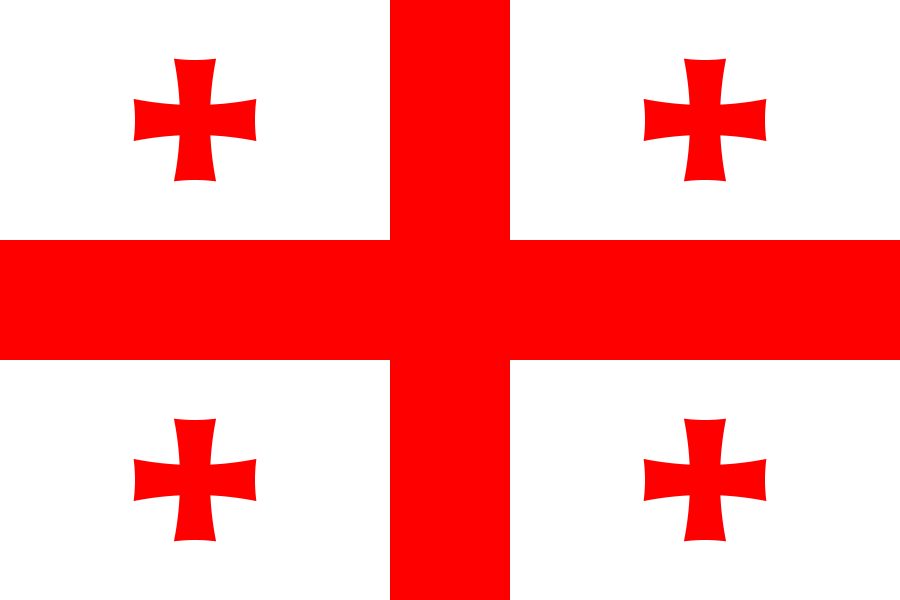
A white flag with a large red cross and a smaller red bolnur-katskhuri cross in each quarter, known as the five-cross flag. Portolan charts of 1339 and 1367 show a white flag with five red crosses over Tbilisi. The design returned in the national revival after 1991, was the emblem of the opposition in the Rose Revolution, and became the state flag by law on 14 January 2004.
At a glance
- Adopted
- 2004
- Proportion
- 2:3
- First hoisted
- 21:00
- Colours
- Earlier flags
- 4
The colours
The colours of the flag of Georgia, in the order it has them
- 0164.5%
White
თეთრიThe field
- HEX
#FFFFFF- RGB
255 255 255- CMYK
0 0 0 0
- 0235.5%
Red
წითელიThe large cross and the four small crosses
- HEX
#FF0000- RGB
255 0 0- CMYK
0 100 100 0- Pantone
2347 C- RAL
3028
No law gives these codes. HEX and RGB are the colour this site draws the flag in; CMYK, Pantone and RAL are the values most often published for it.
Construction
How the flag is drawn
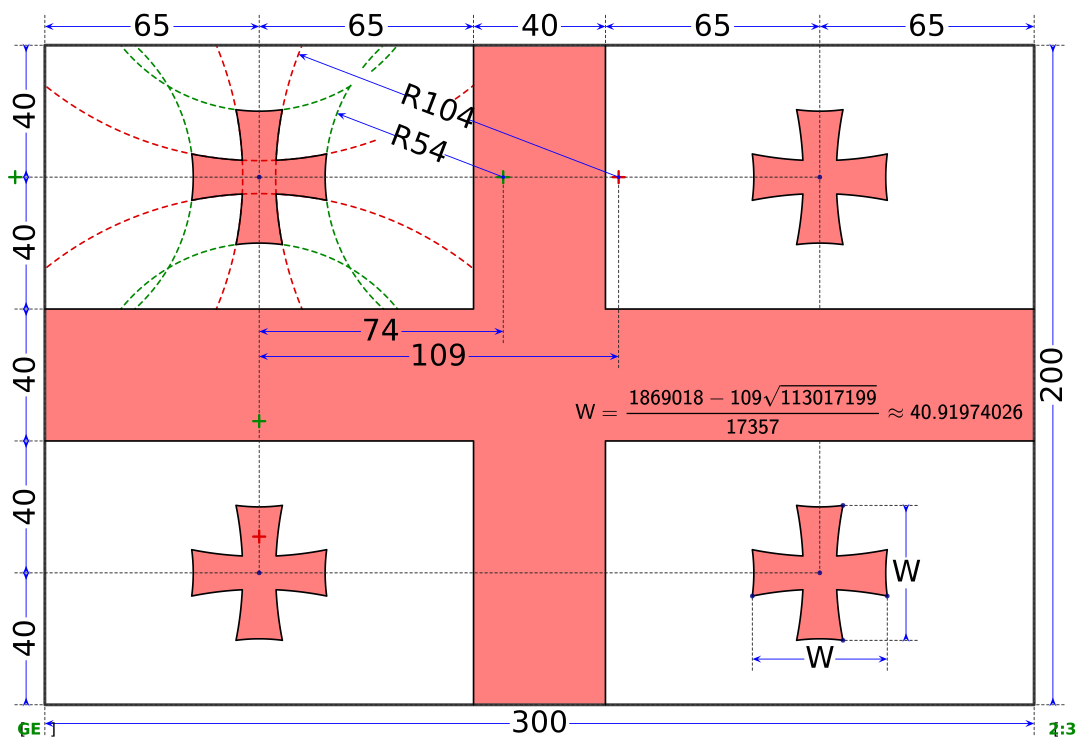
A white rectangle with a large red cross in the centre touching all four edges. In each of the four quarters stands a red bolnur-katskhuri cross, a cross with arms that flare in curves.
- Large cross
- Red, straight-armed, reaching all four sides of the flag
- Small crosses
- Four bolnur-katskhuri crosses of the same red, one centred in each quarter, each drawn inside a square of side 0.4
- Arms of the small crosses
- Traced with arcs of radius 0.54 since 2018. The 2004 decree gave 0.56, which drew crosses too small for their square
- Colour
- One red, given in the decree as #FF0000
Other forms
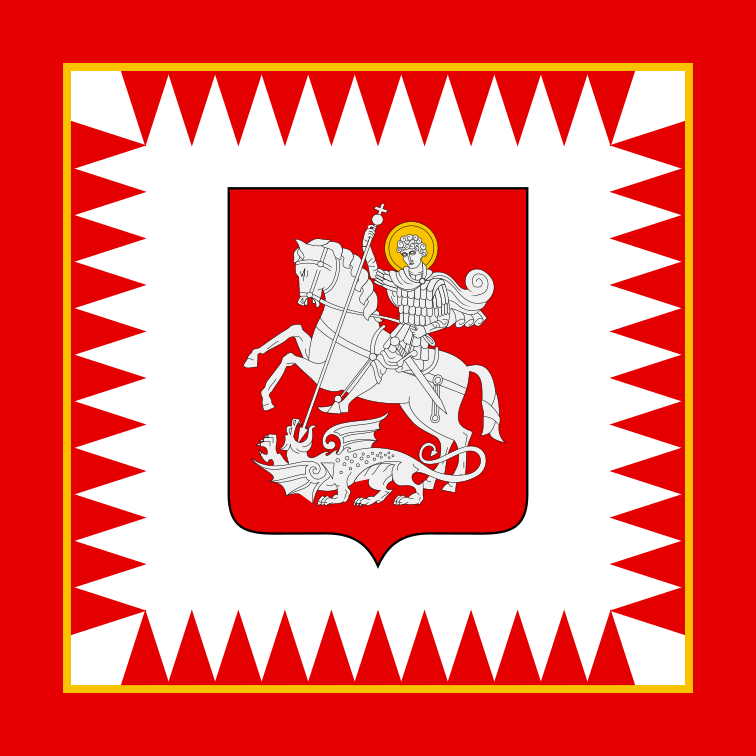
- Presidential standard
- A square flag, the standard of the President of Georgia.
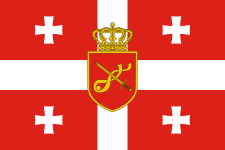
- Flag of the Armed Forces
- The flag used by the Georgian Armed Forces; the Coast Guard and the defence command have their own flags and standards.
Meaning
What each part stands for
- Five crosses
- Christ and the four Evangelists; sometimes read as the Five Holy Wounds
- The Jerusalem cross
- The pattern of a large cross with four small ones first appears in heraldry on the arms of the crusader Godfrey of Bouillon in 1099 and came to stand for the Holy Sepulchre and Jerusalem. The Georgian scholar Giorgi Gabeskiria suggests it was added under George V in the 14th century, when Georgians founded monasteries in the Holy Land
- White and red
- In heraldry white stands for innocence, purity, holiness and wisdom, and red for courage, justice and love
History
How the flag of Georgia got here
- 1339
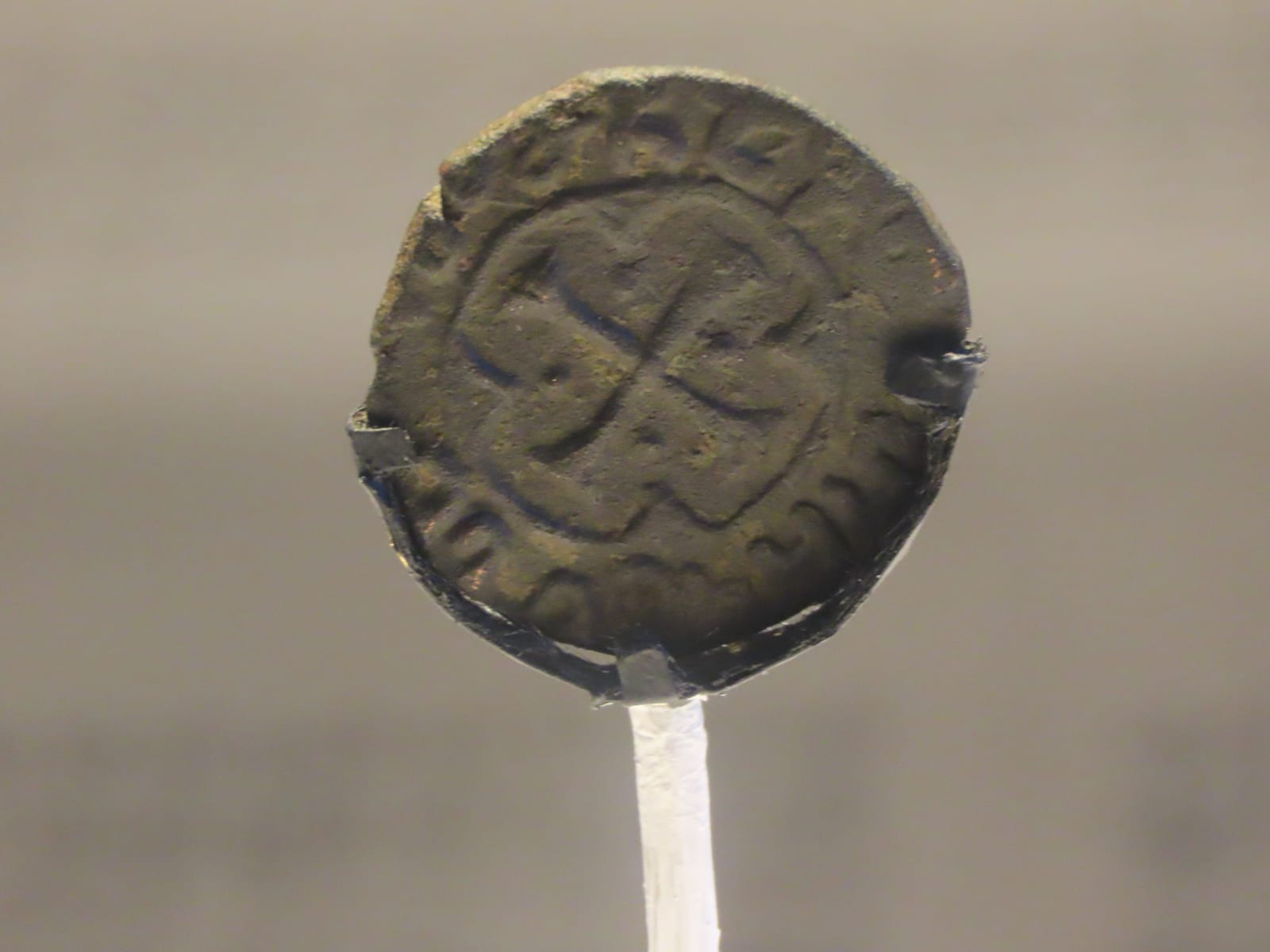
The five-cross flag of the Kingdom of Georgia
1339 → 1490
Earlier Georgian kings are said to have carried a single red cross on white. The Dulcert portolan of 1339 shows a five-cross flag over Tbilisi and Sukhumi, a Franciscan atlas of about 1345 to 1350 describes a white cloth with five red crosses, and the Pizzigano chart of 1367 shows it over Tbilisi. A coin of David IV found in 2021 carries a five-cross composition, according to the State Council of Heraldry.
- 1918
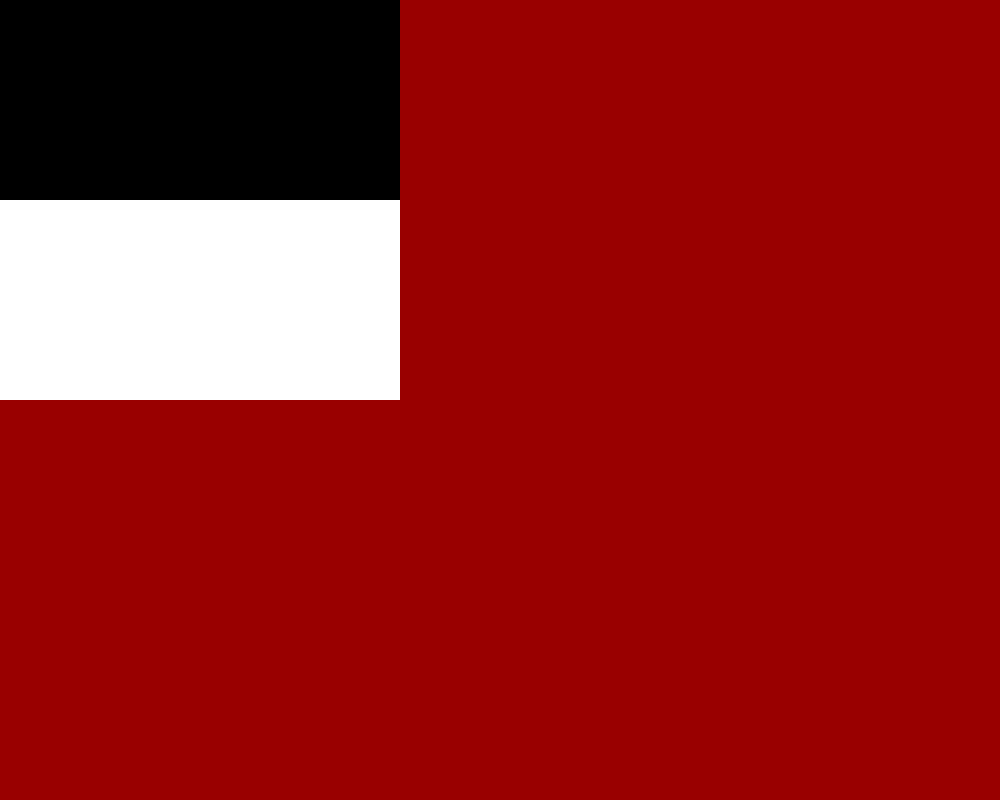
The Democratic Republic of Georgia
26 May 1918 → 20 May 1921
Designed by the sculptor Iakob Nikoladze, who won the national competition, and first raised at a rally in Kutaisi on 25 March 1917: a dark red field with black and white bands in the canton. A law of 10 September 1918 set the proportion at 2:3. The revolutionary committee abolished it by decree on 20 May 1921.
Image: Vector version: Giorgi Balakhadze . Original: Iakob Nikoladze, CC BY-SA 4.0
- 1921
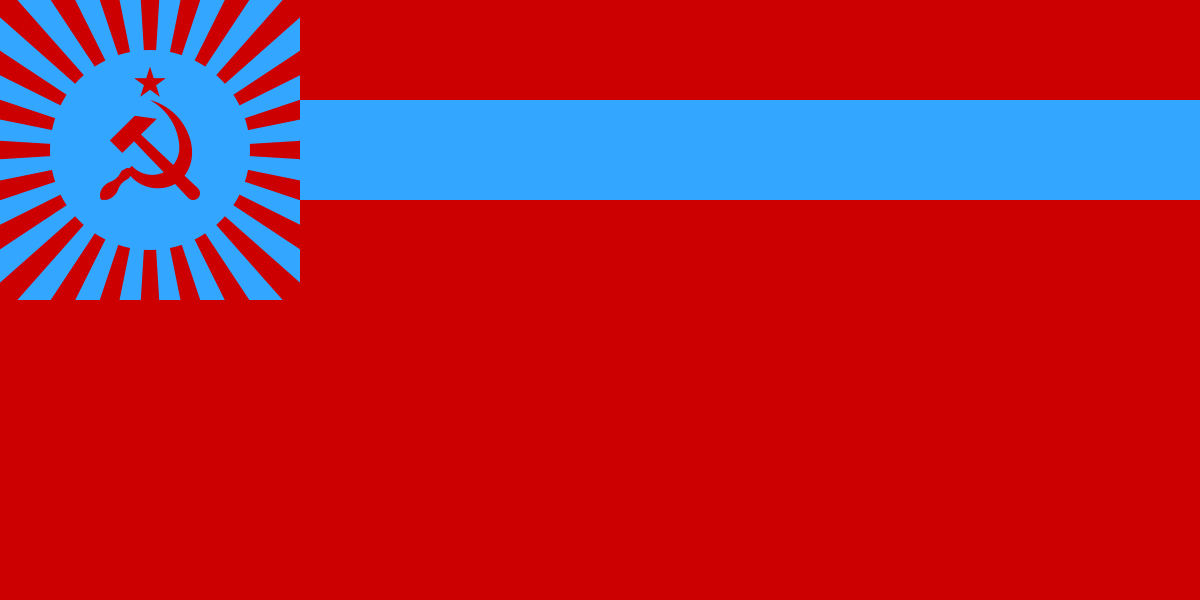
The Georgian SSR
20 May 1921 → 14 Nov 1990
Variants of the red Soviet flag, first with the republic's name and from 1951 with a hammer and sickle and a star in a blue sun, and a blue bar across the top.
- 1990

The flag of 1918 restored
14 Nov 1990 → 14 Jan 2004
The Supreme Council elected in October 1990 restored the flag of the Democratic Republic. It came to be linked with the violent years after the Soviet collapse. Parliament voted for the five-cross flag in 1999, but the change was not signed into force.
- 2004
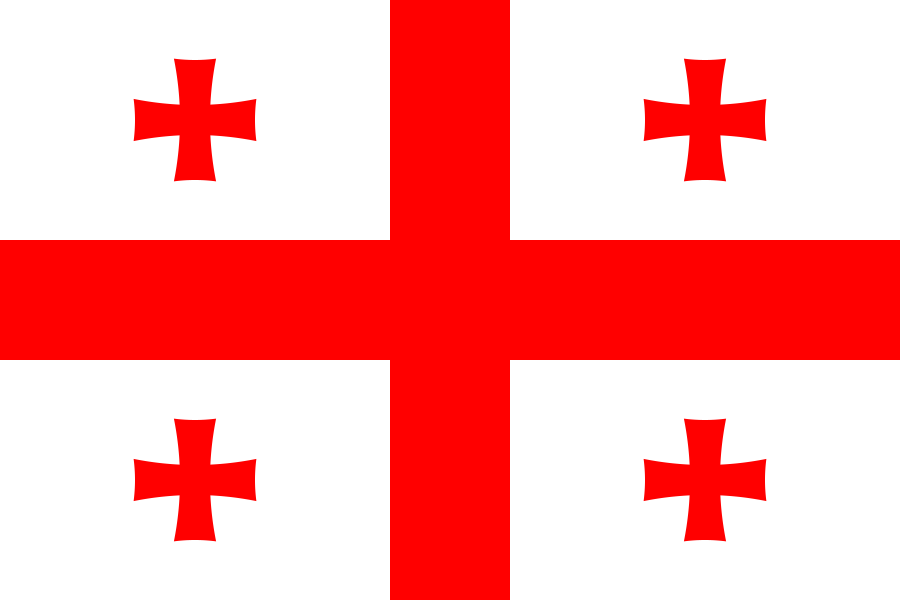
The five-cross flagIn use
14 Jan 2004 → today
Used by the national revival movement from the 1990s and by the opposition in the Rose Revolution, it was adopted by parliament on 14 January 2004 and fixed in detail by a presidential decree of 25 January. The law of 2018 corrected the drawing of the small crosses.
The law
What defines it, and who flies it
- 14 January 2004
Organic Law of Georgia on the State Flag of Georgia
Describes the flag, makes it the only version of the state flag, forbids any other flag being used as the state flag, and sets its use and protection. Leaves the dimensions and exact image to a presidential decree.
- 25 January 2004
Decree of the President of Georgia No. 31
Sets the standard dimensions and exact construction in two supplements, obverse and reverse, with the colour given as #FF0000, and states that the colours shall not be changed.
- 14 November 2018
Law on the state symbols
Brought the flag, arms and anthem under one law and corrected the construction of the small crosses. In force from 16 December 2018.
In use
Flown permanently on the President's residence, parliament, the executive, the Constitutional Court, the Supreme Court and the buildings of central, regional and local government
Flown on Georgian embassies and missions abroad, and on sea vessels registered in Georgia
Flag Day is 14 January, the day the law was passed, first celebrated in 2012
Coat of arms
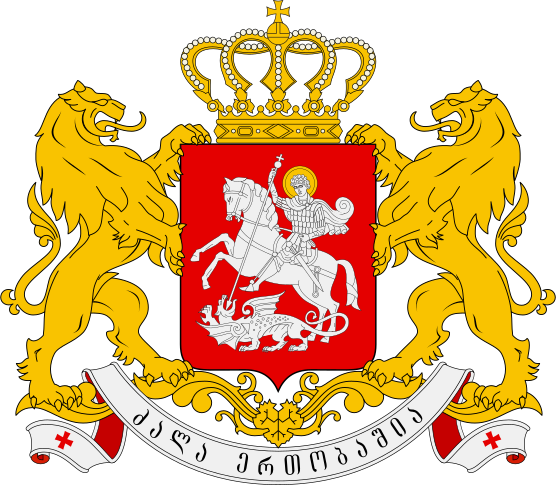
The arms of Georgia