Travelling in El Salvador: a country visited from next door
3 066 words · 14 min · updated 2026-10-04
 Back to El Salvador
A visit to family or friends is the commonest reason tourists give for coming to El Salvador, cited by 41% of those counted in the first quarter of 2026 against 39% who came for leisure. Most of them come by road from the two countries next door: Guatemala sent 424,296 tourists in those three months, the United States 328,260 and Honduras 201,717, and 63% of the quarter's tourists crossed in by road against 37% through the single international airport. The beach trade that the government promotes under the Surf City brand sits on the only coast the territory has, the Pacific.
In short
- Tourists, January to March 2026
- 1,114,915, up 43% on 2025
- Tourists from Guatemala
- 424,296 in the first quarter of 2026
- Arrivals by road
- 63% of tourists, first quarter of 2026
- Main reason for the trip
- Family or friends, 41% in early 2026
- Average stay
- 5.5 nights, first quarter of 2026
- Rainy season
- May to October
- Currency
- US dollar since 1 January 2001
- Border area
- CA-4, 90 days across four countries
Who comes to El Salvador and why
The figures come from the tourism statistics bulletin of the Salvadoran Tourism Corporation, Corsatur, which builds them from surveys of visitors at the land borders, the ports and the airport and from the records of the migration directorate. The bulletin sorts arrivals into three kinds. A tourist stays at least one night, an excursionist leaves within 24 hours, and a visitor is either of the two.
Where the tourists live
In the first quarter of 2026 the bulletin counted 1,114,915 tourists and 153,451 excursionists. Tourists were up 43% on the same months of 2025 and 176% on the same months of 2019, while excursionists were down 7% and 21% against the same two years. The day trip has been shrinking while the overnight stay has nearly trebled.
| Country of residence | January to March 2019 | January to March 2025 | January to March 2026 |
|---|---|---|---|
| Guatemala | 124,767 | 230,100 | 424,296 |
| United States | 135,499 | 299,618 | 328,260 |
| Honduras | 77,205 | 115,626 | 201,717 |
Guatemala made up 38% of tourists in that quarter, the United States 29%, Honduras 18% and everywhere else 15%. Next on the bulletin's list came Nicaragua with 42,278, Canada with 20,904, Costa Rica with 18,293 and Mexico with 14,263. By region, Central America and the Caribbean supplied 700,570 tourists, 63% of the quarter's total, and North America 363,427, or 32%. Europe sent 24,317 and South America 20,411, about 2% each.
The growth in the quarter came mostly from the two neighbours. Arrivals from Guatemala were 84% above the first quarter of 2025 and those from Honduras 74% above it, against 10% for the United States, and in the first three months of 2025 the United States had still been the larger source.
What brings them in
Asked the main reason for the trip, 41% of tourists in the first quarter of 2026 said they were visiting family or friends. Leisure came to 39%, business to 7% and everything else to 13%, a remainder that includes 3% travelling for medical treatment and 2% for religious reasons.
The bulletin counts by nationality, and on that count 95% of the quarter's tourists were foreign nationals and 5% were Salvadorans resident abroad, nine in ten of them living in the United States. That 5% came to 60,296 people in the first quarter of 2026, against 71,446 in the same months of 2019, a fall of 16% while foreign arrivals grew by 216%. The bulletin does not say how many of the foreign nationals who came to see relatives were born in El Salvador or hold a second passport.
Tourists in the quarter stayed an average of 5.5 nights and spent an average of US$140 a person a day, and international tourism brought in US$871,431,148 in foreign exchange over the three months. Traffic also runs the other way. Salvadorans made 629,861 trips abroad in the same quarter, 536,989 of them with at least one night away.
How the visitor count has grown since the peace
The record begins two years after the civil war ended. In 1994 some 181,000 tourists visited, bringing in US$28.8 million. Corsatur was created three years later, and in 1997 the count reached 387,000 tourists and US$74.7 million. Tourism put US$424.7 million into the economy in 2004. A Ministry of Tourism was then set up to direct policy for the sector, and the Tourism Act of 2005 gave tax incentives to new investment in it.
By the ministry's count 1.8 million tourists came in 2008, spending about US$720 million. That growth came from investment in local businesses and from Salvadorans living in the United States coming back to visit, and resort building had little part in it. Tourism contributed US$855.5 million to GDP in 2013, which was 3.5% of the total, and directly supported 80,500 jobs, 3.1% of employment, with a further 210,000 supported indirectly. A figure for 2019 puts tourism's contribution at US$2,970.1 million, 11% of GDP, with 317,200 jobs supported indirectly, and the source carrying both years does not say whether they were measured on the same basis.
The Wikipedia account of the industry attributes its earlier cycles of boom and bust largely to violent crime and dates the change to the crackdown on gangs in 2022. The Bertelsmann Transformation Index report of 2026 says the reduction in violence improved the investment climate, that the government has promoted coastal and surf destinations heavily under the Surf City brand, and that tourism revenue rose by 26% in 2023 with the number of visitors. The same report calls tourism a small sector of the economy. What the suspension of rights under the state of exception has meant for the country is set out in the politics article.
The Ministry of Tourism reported 2 million international visitors in the first half of 2025, with land crossings carrying more of them than the airport, and projected 4 million for the full year.
What a visitor meets at the border
Of the tourists who arrived in the first quarter of 2026, 63% came by road and 37% by air. Both routes had grown since the same months of 2019, air arrivals by 126% and road arrivals by 217%. The country has two neighbours, Guatemala to the north-west and Honduras to the north and east, and most of its visitors come from one of the two.
Which documents the land borders ask for
El Salvador belongs with Guatemala, Honduras and Nicaragua to the CA-4 agreement, under which a visitor may move between the four for up to 90 days in all. According to the British government's entry guidance as published in 2026, the 90 days start at the first entry into any of the four and do not restart at each border, immigration checks still take place at every crossing, and someone expelled from one of the four is excluded from the other three. British passport holders could then stay in El Salvador for tourism or business for up to 180 days without a visa, with a passport valid for six months after arrival, while Honduras required them to hold a visa despite the agreement.
How the airport and the roads connect
Monseñor Óscar Arnulfo Romero International Airport, about 40 kilometres south-east of San Salvador, handles the international flights. The Bertelsmann report of 2026 describes it as the country's sole airport and a modern hub for regional and international travel, and the paved highway network as reaching most regions. It records that the government has announced a second international airport and a high-speed rail network, and that no comprehensive feasibility studies had been carried out for either. Railways and roads link the capital with the three Pacific ports of Acajutla, La Unión and La Libertad.
Which money is accepted
The US dollar has been legal tender since 1 January 2001, when all formal accounting moved to dollars. The colón stopped circulating in 2004, though some shops still mark prices in both. Bitcoin became legal tender on 7 September 2021 under a law the Legislative Assembly passed on 9 June 2021 by 62 votes of 84.
Bitcoin had reached one beach before the law. In 2019 an American bitcoin advocate named Mike Peterson, who lived in the beach village of El Zonte, began distributing an anonymous donation of US$100,000 in bitcoin to local charities, on condition that the village adopt a circular economy built on it, and El Zonte became known as Bitcoin Beach. Media outlets later reported that bitcoin had not raised tourist revenue, while some businesses in El Zonte reported a 30% rise in trade from cryptocurrency tourists. An estimated 20% of businesses accepted bitcoin in 2022. Under a US$1.4 billion loan agreement with the International Monetary Fund in December 2024 the government removed the obligation on merchants to accept it, and the amendment to the law passed in February 2025. The economy article follows the dollar and the bitcoin law in full.
Why the beach trade sits on the Pacific
El Salvador lies wholly on the western side of the isthmus and has no Caribbean coast, so every beach in the country faces the Pacific. The coastal plain runs between one and 32 kilometres wide and is widest in the east, beside the Gulf of Fonseca. Near La Libertad the mass of the mountains pushes the lowland out and the slopes of the volcanoes come down directly to the sea, and that stretch is where the beach trade concentrates.
The beaches visited most often include El Tunco, Punta Roca, El Sunzal, El Zonte, La Costa del Sol, El Majahual and La Libertad itself, and El Tunco and El Sunzal are used for surfing. North American and European tourists mostly come for the beaches and the nightlife. The government brands the surf coast Surf City and has tied port and tourism projects to the name, and the hazards observatory of the environment ministry carries a Surf City page alongside its tsunami and oceanography services. El Salvador is to host the surfing competitions of the 2031 Pan American Games, with every other sport held in Asunción.
The state runs part of the coast itself. Public tourist, cultural and natural sites, 46 of them, received 2,360,469 visits in the first quarter of 2026. The Salvadoran Tourism Institute, ISTU, ran sites taking 42% of those visits, Corsatur 29%, the Ministry of Culture 25% and the environment ministry 4%. The bulletin's list of the busiest that quarter opens with the tourist complex at the port of La Libertad and continues with the Balboa and Puerta del Diablo natural parks and Sunset Park.
East along the coast, Jiquilisco Bay in Usulután is visited for the range of its wildlife. Mangrove forest lines parts of the shore, sea turtles nest along parts of it, and American crocodiles live in some of the coastal wetlands and estuaries.
How altitude sets the temperature
The observatory divides the country into three thermal zones by height. Between sea level and 800 metres the yearly average falls from 27 to 22 °C across the coastal plains and from 28 to 22 °C on the inland plains. Between 800 and 1,200 metres it runs 22 to 20 °C on the high plains and 21 to 19 °C on the mountain slopes. Above 1,200 metres it is 20 to 16 °C in the high valleys, and in the valleys and hollows above 1,800 metres it drops to between 16 and 10 °C. The highest ground is Cerro El Pital in Chalatenango, at 2,730 metres.
San Salvador stands at 682 metres. Its warmest monthly mean, about 34 °C, falls in March at the end of the dry season, and its coolest, about 17 °C, in January. The Pacific lowlands and the low middle valley of the Lempa average between about 25 and 29 °C a month, and the mountains above 1,460 metres between about 17 and 22 °C.
The year has two halves, named against the northern calendar. The rainy season from May to October is called invierno, winter, and brings almost all of the year's rain, generally in heavy afternoon thunderstorms off low pressure over the Pacific; the heavy rains are known as temporales. From November to April, verano, summer, the north-east trade winds bring air that has crossed the Caribbean and dropped its moisture on the mountains of Honduras, and it arrives dry, hot and hazy. In October and November the north-east winds sometimes turn into gusty nortes, carrying air from polar North America that has warmed crossing the Gulf of Mexico. The Pacific lowlands take about 1,700 millimetres of rain a year and the mountain ranges between 600 and 1,060 metres between 1,800 and 2,500. The geography article sets out why the rain comes from one ocean only.
Which volcanoes and forests a visitor can reach
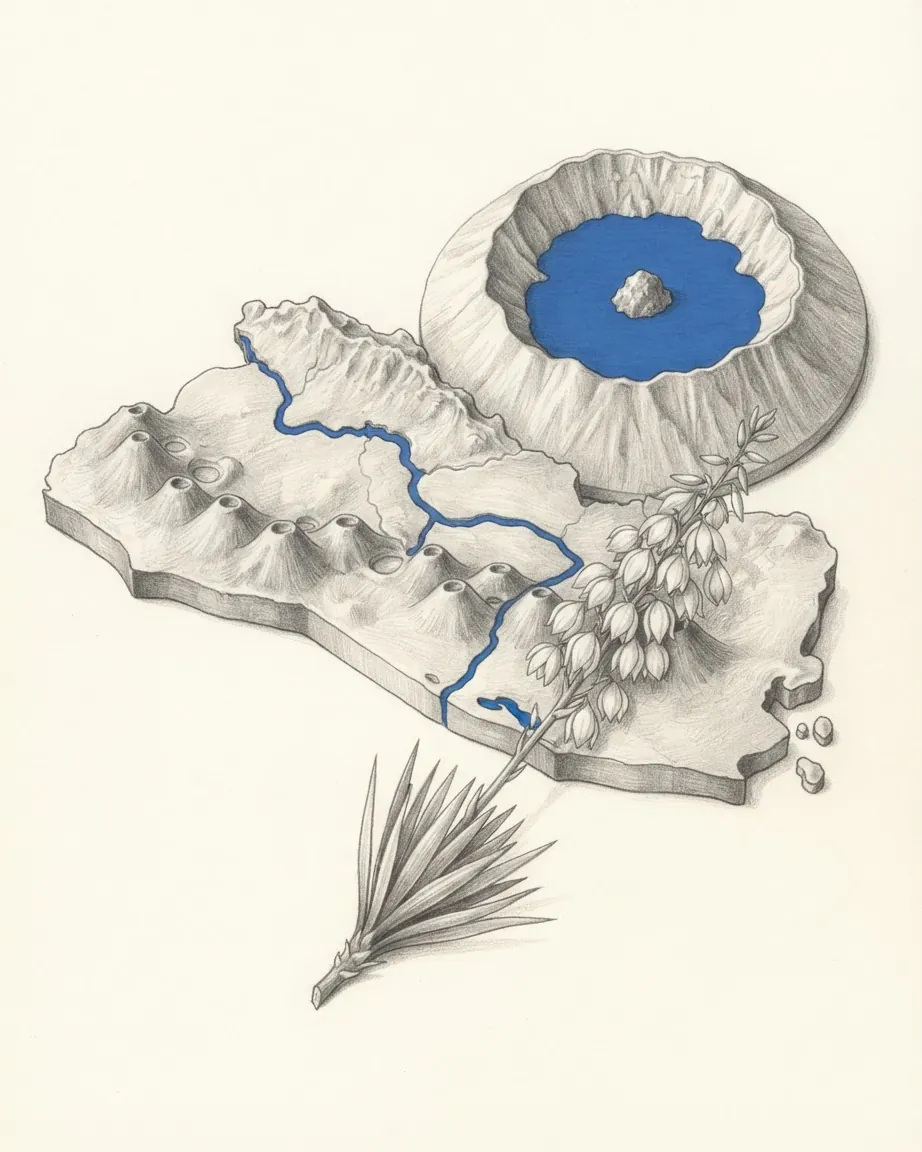
The observatory keeps six volcanoes under systematic watch: from west to east Izalco, Santa Ana, San Salvador, the Ilopango caldera, San Vicente and San Miguel. Cerro Verde National Park in the department of Santa Ana looks out over the Izalco cone, the Santa Ana volcano and Lake Coatepeque, and more than 127 species of birds have been recorded in the area.
Santa Ana stands at 2,381 metres. Its last eruption, on 5 October 2005, threw ballistic fragments up to 2.5 kilometres from the crater and put out 1.5 million cubic metres of ash, and the lahars that followed reached the shore of Lake Coatepeque. Izalco, the youngest volcano in the country, began to build in the eighteenth century and last erupted in 1966. San Miguel in the east last erupted on 29 December 2013, sending a column of ash 7.6 kilometres high, and the San Salvador volcano above the capital last erupted in 1917, building the Boqueroncito cinder cone. Webcams stream from Santa Ana and San Miguel.
The two crater lakes are flooded calderas. Britannica gives Lake Coatepeque 39 square kilometres and Lake Ilopango 100.
Where the forests are kept
El Imposible, south of the department of Ahuachapán on the Apaneca range, covers 3,130 hectares and takes its name from how hard it is to get into. The conservation body SalvaNatura manages it under an agreement with the environment authorities. Montecristo National Park in the north of Santa Ana department holds cloud forest of oak, pine and cypress, with howler monkeys, anteaters, white-tailed deer and pumas. The Trifinio forest is shared with Guatemala and Honduras.
How much of the country is protected depends on who is counting. The environment ministry told the Convention on Biological Diversity in its sixth national report that 24.83% of the territory was under some mechanism of protection or conservation. A study by the Friedrich Ebert Foundation, using figures the ministry released in June 2023, found 197 declared natural protected areas covering 0.61% of the country, and said 80% of them were private land. The difference lies in whether conservation areas, biosphere reserves, Ramsar sites and biological corridors count as protected territory.
Where the pre-Hispanic sites can be seen
More than 2,000 archaeological sites are known in El Salvador, mostly of Maya and Olmec cultures. Few are open to the public, and the reason given is the size of the country and how much of it is built over. Several sites about 1,400 years old have been found preserved under six metres of volcanic ash.
Joya de Cerén, in the department of La Libertad, was a farming community that an eruption of the Laguna Caldera volcano buried around AD 600, and UNESCO compares it to Pompeii and Herculaneum. What a visitor sees there is ordinary life: the pottery and the cultivated fields of a farming village in Central America at that date, left where its people put them down. UNESCO notes that the fragile remains need roofing and conservation work to survive. The history article places it in the long sequence of eruptions the country is built on.
Tazumal stands in Chalchuapa, in Santa Ana department. It was built in the early Classic period, around 260, by a culture that shares Mayoid elements with the Guatemalan highlands and the Copán valley and that has not been firmly identified. Its smaller structure, B1-2, is built in the talud-tablero style associated with the Nahua. Cihuatán, the pyramids of San Andrés, Quelepa and Tehuacán complete the list of sites the tourism record names.
What the capital's old centre holds
San Salvador was founded in 1525 by the conquistador Pedro de Alvarado and became the capital in 1839. The census of May 2024 counted 330,543 people in it.
Earthquakes have taken most of the old city. The colonial cathedrals were destroyed over the centuries and replaced in Modernist and Gothic styles, and most of the Streamline Moderne and early Modernist office and hotel buildings fell in the San Salvador earthquake of 1986 and the two earthquakes of January and February 2001.
The National Palace has been built twice. A first palace was built between 1866 and 1870 under Captain General Gerardo Barrios and burned to rubble on 19 November 1889. The present one was designed by the engineer José Emilio Alcaine and built between 1905 and 1911 under the direction of José María Peralta Lagos, with materials brought from Germany, Belgium, Italy and elsewhere. It has four main halls in red, blue, yellow and pink and 101 other rooms. The Blue Room and the rooms beside it were declared a national monument on 13 December 1974, and the whole palace on 10 July 1980.
Which dates fill the Salvadoran calendar
Holy Week comes first in the year's religious holidays. Maundy Thursday through Easter Sunday are official holidays and Holy Wednesday is a bank holiday. In August the capital holds the Celebrations of San Salvador, and in 2026 the 3rd and 5th of August were local holidays in San Salvador and the 6th a national one. The Ministry of Tourism expected 90,000 international visitors for the August festivities of 2025, 6% more than in the same period of 2024, and 2.6 million visits to public sites such as the historic centre of San Salvador.
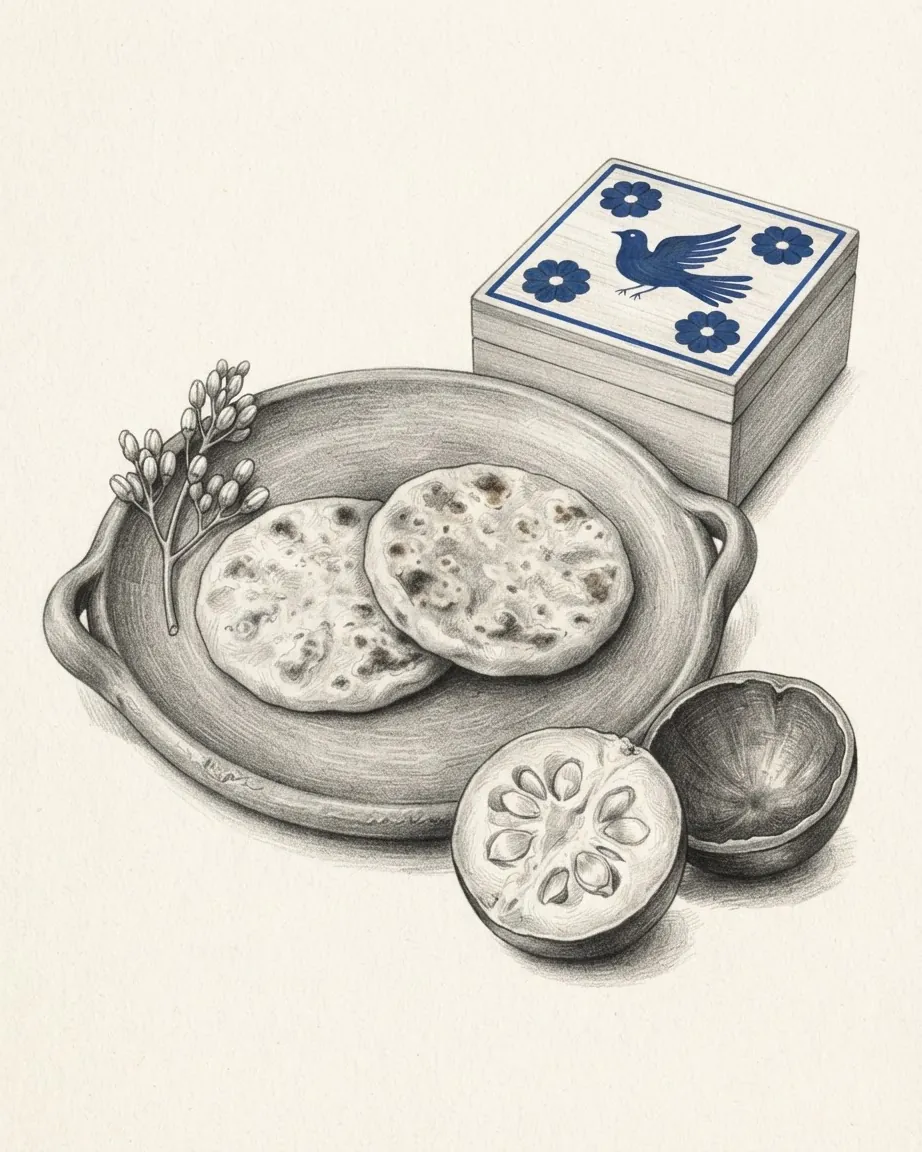
Independence is marked on 15 September and All Souls' Day on 2 November. The pupusa, made the national dish by Legislative Decree 655, has its own day on the second Sunday in November. In Nejapa teams throw balls of burning cloth at one another, a custom tied to an eruption of 1658 whose fire destroyed the town and drove its people out. Izalco marks the rising of 1932 every 22 January, with the support of the municipal authorities.
El Salvador ratified UNESCO's convention on intangible heritage on 13 September 2012, and in 2025 the Confraternity of flowers and palms became the one Salvadoran element on its lists. The culture article covers what the festivals and the food are made of.
Common questions
Questions about El Salvador
When does it rain in El Salvador?
From May to October, the season Salvadorans call invierno, winter. Almost all of the year's rain falls in those months, generally in heavy afternoon thunderstorms, and the longer storms are called temporales. November to April, verano, is dry, hot and hazy under the north-east trade winds. San Salvador's warmest monthly mean, about 34 °C, falls in March at the end of the dry season.
Do visitors need a separate entry for Guatemala and Honduras?
The four CA-4 countries, El Salvador, Guatemala, Honduras and Nicaragua, share a single allowance of up to 90 days that starts at the first entry and does not restart at each border. Immigration checks still take place at every crossing, and the British government's 2026 guidance notes that its own passport holders still needed a visa for Honduras.
Can bitcoin still be used to pay in El Salvador?
Bitcoin became legal tender on 7 September 2021, but under a loan agreement with the International Monetary Fund in December 2024 the government removed the obligation on merchants to accept it, and the amending law passed in February 2025. An estimated 20% of businesses accepted bitcoin in 2022. The US dollar has been legal tender since 1 January 2001, and the colón stopped circulating in 2004.
Where do El Salvador's tourists come from?
In the first quarter of 2026, 38% came from Guatemala, 29% from the United States and 18% from Honduras, and 63% of all tourists entered by road. The commonest reason given was visiting family or friends, at 41%, with leisure at 39%. Salvadorans resident abroad were 5% of tourists that quarter.
Which archaeological sites in El Salvador can visitors see?
Joya de Cerén, a farming village buried by an eruption of the Laguna Caldera around AD 600 and compared by UNESCO with Pompeii, has the fullest description in the UNESCO record. Tazumal in Chalchuapa dates from the early Classic period, around 260, and the pyramids of San Andrés, Cihuatán and Quelepa are among the other sites the tourism record names. More than 2,000 sites are known, though few of them are open to the public, because so much of a small country is built over.