An economy that spends dollars it cannot issue
3 028 words · 14 min · updated 2026-10-04
 Back to El Salvador
Bitcoin was made a second legal tender in El Salvador in September 2021, partly to carry home the dollars that Salvadorans abroad send, and between September 2021 and April 2022 it carried 1.9% of them. Those dollars are the money El Salvador spends and cannot issue, because it gave up the colón on 1 January 2001, and in 2023 remittances brought in a record 8.142 billion dollars, equal to 24% of output.
In short
- Currency
- United States dollar, legal tender from 1 January 2001
- Colón
- Official from 1892, out of circulation by 2004
- Remittances
- 8.142 billion USD in 2023, 24% of GDP
- Trade balance
- Deficit of 31.4% of GDP in 2022
- Bitcoin as legal tender
- 7 September 2021 to February 2025
- Public debt
- Peak of 88.9% of GDP in 2024
- Average growth
- 2.1% a year, 2000 to 2024
- Informal work
- About two-thirds of workers, BTI 2026
What El Salvador gave up with the colón
The colón was the official currency of El Salvador from 1892. From 1993 through 2000 it was pegged at about 8.75 to the United States dollar, and on 1 January 2001 the Monetary Integration Act made the dollar legal tender. All wages, prices, accounts and transactions were converted, and the colón notes were taken out of circulation over the following years. By 2004 the colón had stopped circulating altogether. It remains a legal currency on paper, and the notes are held by the Central Reserve Bank.
The decision was taken from a position of some strength. An IMF study of the change, by Andrew Swiston and published in 2011, records that inflation was low and stable when it was made, the economy was growing, public and external debts were manageable and the banking system was solid. Net international reserves stood at 1.8 billion dollars in December 1999, and the government undertook the conversion with that buffer in hand. The case argued for it at the time was tighter links to the United States economy, more foreign investment and more trade.
What the country surrendered was monetary policy. With no currency of its own, El Salvador has no exchange rate to adjust and no way of setting its own interest rates, and the value of the money in Salvadoran pockets is tied to the United States Federal Reserve. Any response to a downturn has to come through the budget, and the budget is constrained in its own way: any international financing needs a two-thirds majority in the legislature.
Inflation followed the American pattern closely once the dollar arrived. It rose from 3.47% in 2021 to 7.2% in 2022, driven by global food and supply chain prices, and moderated to about 4.0% in 2023. The Bertelsmann Transformation Index, in its 2026 report, describes dollarization as tying Salvadoran inflation closely to that of the United States economy.
Displeasure with the change has largely disappeared over time, though the question resurfaces as a political tool when elections approach. Some shops still mark prices in both colones and dollars.
How the dollar changed interest rates and banks
The measurable gain was cheaper borrowing. Under the peg, the gap between interest rates on colón instruments and on otherwise identical dollar instruments averaged more than 5 percentage points, and colón rates peaked at 16 to 18% in early 1996. That gap was the price of the risk that the peg might break. Dollarization removed the risk by making exit expensive, and the 2011 IMF study simulated what rates would have been had the peg stayed in place from 2001 to 2009. Its answer was that lending and deposit rates at Salvadoran commercial banks ran 4 to 5 percentage points lower under the dollar.
Set against the seigniorage the state no longer collects, the profit a central bank makes from issuing currency, the study put the net saving at ½% of GDP a year for the private sector and ¼% for the public sector. Lower rates made credit for houses and cars easier to obtain in the years after the switch. The same study found that United States monetary policy passed through to Salvadoran bank rates more strongly under the dollar than it had under the peg, and that much of the remaining gap over American rates was explained by how markets judged Salvadoran public finances and the soundness of its banks.
Who owns the banks now
The dollar also changed who owns the banks. With no currency to issue, the Central Reserve Bank cannot provide liquidity to a bank in trouble, and the foreign parent companies of local banks take on part of that responsibility. In the decade before the BTI 2026 report the country's main banks were bought by transnational groups, a sale the BTI 2026 report attributes partly to dollarization. As of October 2022 four banks holding 72% of all deposits between them were owned by corporations registered in Colombia, Panama and Honduras. Eight other banks shared the rest, among them a government-owned mortgage bank.
The loan book has stayed sound on the measures supervisors publish. The Superintendent of the Financial System reported a non-performing loan ratio of 2.1% in December 2024, and total outstanding debt in the banking sector of 15.8 billion dollars, 5% more than a year earlier. The IMF's Executive Board judged the system healthy after its 2023 consultation, and cautioned against rising exposure to government debt and eroding liquidity buffers. There are no currency or exchange controls, because there is no domestic currency to control.
Where the dollars come from
A dollarized country has to earn or receive the dollars it spends, and El Salvador buys far more from abroad than it sells. In the IMF's figures, the trade balance was a deficit of 31.4% of GDP in 2022. Net transfers from abroad came to 24.0% of GDP in the same year, and the current account deficit that remained was 8.3%. The pattern is older than the dollar: in 1999 the trade deficit was already offset by foreign aid and remittances, then estimated at 1.35 billion dollars for the year.
The series the sources give runs as follows.
| Period | Remittances | Share | Measure |
|---|---|---|---|
| 1999 | 1.35 billion USD | not stated | estimate for the year |
| 2005 | 2.9 billion USD | about 17.1% | of gross national product |
| 2006 | 3.32 billion USD | about 16.2% | of GDP |
| 2019 | nearly 6 billion USD | around 20% | of GDP |
| 2023 | 8.142 billion USD | 24% | of GDP |
| September 2025 to August 2026 | about 10.24 billion USD | not yet published | sum of preliminary monthly figures |
The last row adds up the Central Reserve Bank's own monthly series, which it marks as preliminary and revises each January for up to three years back. December 2025 brought in 961.12 million dollars, against 759.45 million in January 2026. The bank compiles the figure from banks, remittance companies, federations, telephone companies and digital wallets, and it estimates the cash carried by hand from surveys conducted in the United States.
Who sends the money and how it travels
In 2019, 2.35 million Salvadorans lived in the United States, and about a third of all households in El Salvador received remittances. The 2024 census asked a narrower question, whether a household member had emigrated permanently in the previous ten years, and 8.1% of households answered yes, against 7.9% for the comparable decade before the 2007 census. The share ran to 17.3% in Cabañas, 12.3% in San Vicente and 12.2% in La Unión, and to 6.3% in San Salvador. Households gave the search for work as the main reason for leaving, while family reunification rose to 19.8% of departures in 2024.
How the money travelled in 2024, according to the Central Reserve Bank:
| Channel | Share of remittances, 2024 |
|---|---|
| Money transfer companies | about 60% |
| Banks | about 35% |
| Couriers carrying cash | about 2% |
| The government's bitcoin company | less than 1.5% |
A considerable share still travels privately and informally, outside any of those channels.
What the money does at home
The effects run in both directions. The BTI 2026 report credits remittances with most of the fall in poverty and the narrowing of inequality since the war, because they reach households at the lower end of the income scale. Hometown associations of migrants send money for parks, churches, playgrounds and streets. Remittances also raise the price of houses, since relatives earning American wages can pay more for property than local buyers, and wage expectations have risen faster than productivity, which has drawn workers from Honduras and Nicaragua willing to take the prevailing wage. The same report describes remittances as a structural part of the economy that favours consumption of imported goods over productive investment inside the country.
Why bitcoin became legal tender and then stopped
Bitcoin had a Salvadoran trial run before it had a law. In 2019 an American bitcoin advocate living in the village of El Zonte began distributing an anonymous donation of 100,000 dollars in bitcoin to local charities, on condition that the village run a circular economy in the currency, and El Zonte became known as Bitcoin Beach. On 5 June 2021 the president announced a bill to make bitcoin legal tender, in an English-language video shown at a bitcoin conference in Miami, and argued that it would make remittances easier to send. The Legislative Assembly passed the Bitcoin Law on 9 June 2021 with 62 of its 84 deputies in favour, and it came into force on 7 September 2021.
The law required every business to accept bitcoin, exempted bitcoin transactions from capital gains tax and offered permanent residence to foreigners investing more than three bitcoin. The government set aside 150 million dollars to back it and offered 30 dollars in bitcoin to every person who signed up to its Chivo wallet. A poll by the Central American University in September 2021 found that 68% of Salvadorans disagreed with the decision, and a poll at Francisco Gavidia University in November 2021 found 91% preferring the dollar.
What the use figures showed
Use was low from the start and fell. The Central Reserve Bank found bitcoin carried 1.9% of remittances between September 2021 and April 2022, and 1.3% of remittances in 2023 travelled as cryptocurrency. The Salvadoran Chamber of Commerce found that 14% of businesses had made a bitcoin transaction between September 2021 and July 2022. A study by the National Bureau of Economic Research in the United States found that 61% of Chivo users stopped using the app once they had spent the sign-up bonus. In the surveys of the Instituto Universitario de Opinión Pública, the share of Salvadorans using bitcoin for transactions went from 25.7% in 2021 to 21% in 2022, 12% in 2023 and 8.1% in 2024.
The state bought on its own account. It held at least 1,801 bitcoin in January 2022, and by May 2024 a government Bitcoin Office reported 5,750, of which about 474 had been mined since September 2021 with geothermal power from the Tecapa volcano. The value swung with the market: bitcoin had lost 70% from its November 2021 high by June 2022, and by March 2024 the holdings stood at a 50% profit. A Bitcoin City at the foot of the Conchagua volcano was announced in November 2021 and the country's overseas bonds fell by 30% in December 2021. The one billion dollars of Volcano Bonds, half of them meant to fund it, were postponed in March 2022. In June 2022 about 50 bitcoin-related companies operated in El Salvador, with about 113 direct and 400 indirect jobs.
How the IMF loan ended it
The IMF urged El Salvador in January 2022 to drop bitcoin as legal tender, and its Executive Board repeated the point after its 2023 consultation, noting minimal use alongside high risks to financial integrity and fiscal sustainability. In December 2024, as the condition of a 1.4 billion dollar loan, the government agreed to reduce bitcoin purchases, end the obligation on merchants to accept it, stop taking taxes in it and wind down Chivo. The amendment to the Bitcoin Law passed in February 2025, and bitcoin's legal tender status ended with it. The BTI 2026 report notes that no public data exists on how much public money the experiment cost.
What El Salvador grew before it sewed clothes
The economy has turned on a single export more than once. In the 16th century Spanish authorities commercialised the cacao grown around Izalco, along with balsam from the coastal ranges of La Libertad and Ahuachapán, and revenue from cocoa had dropped sharply by 1590 under competition from other colonies. Indigo brought recovery in the 1700s and remained the main export into the 19th century, until synthetic dyes destroyed its market.
Coffee replaced it, and coffee needed the high volcanic ground that had been left to Indigenous communities. During the administration of Rafael Zaldívar, from 1876 to 1885, the sale of Indigenous communal land was authorised, and vagrancy laws pushed the displaced into seasonal work on the new plantations. Coffee made up 75 to 95% of exports by 1929, and the land and its profits were concentrated in the families known as the Fourteen Families. Export income halved between 1926 and 1932 when the Depression broke coffee prices, and after the 1929 collapse national income fell by half in a year, from 40 to 50 United States cents a day to 20 cents.
The agrarian reform that ended in 1990 transferred more than 22% of farmland to people who had worked it without owning it, and benefited at least 525,000 people. About 150,000 landless families were left without land when it closed. The constitution limits private landholdings to 245 hectares.
Farming is now a smaller part of the economy and a different one. In 2018 El Salvador produced 7 million tonnes of sugarcane, 685,000 tonnes of maize, 109,000 tonnes of sorghum, 93,000 tonnes of beans and 80,000 tonnes of coffee. Sugar is both exported and protected, with an import tariff of 26.1% in January 2025.
What Salvadoran factories and call centres sell abroad
Manufacturing accounted for 22% of GDP in 1999, and from 1993 the industrial sector added free zone assembly for export, the maquila, to its domestic production. Most of it is cutting and assembling clothes for export to the United States. The BTI 2026 report places most of the country's industrial activity in these offshore production zones, where workers are not unionised. El Salvador acceded to the Central America Free Trade Agreement with the United States in 2006, and the agreement supported investment in apparel just as the expiry of the Multi Fibre Arrangement in 2005 exposed the sector to Asian competition.
Opening to trade widened the gap the remittances fill. From 2000 to 2006 exports grew 19%, from 2.94 to 3.51 billion dollars, while imports rose 54%, from 4.95 to 7.63 billion, and the trade deficit doubled from 2.01 to 4.12 billion. El Salvador signed a free trade agreement with China in November 2022, and in January 2025 its simple average applied tariff stood at 6.0%.
Where the services and the power come from
The service side has its own link to emigration. Call centres serving North American customers have opened in El Salvador in the 21st century, staffed in part by a large English-speaking workforce of people deported from the United States. About two-thirds of the working population works in the informal sector, in the estimate of the BTI 2026 report, outside social security and outside any pension fund.
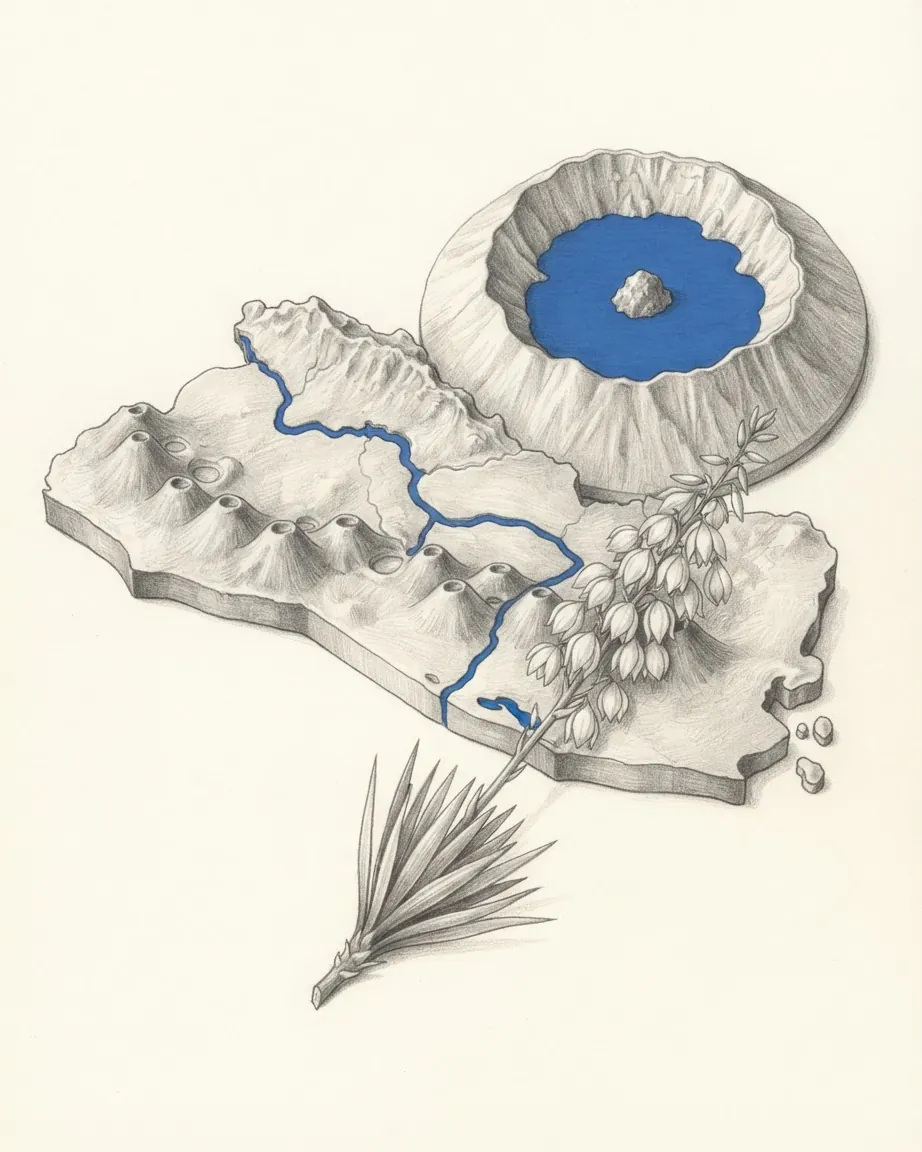
Volcanoes supply part of the electricity. In January 2021 hydroelectric plants supplied 28.5% of the power injected into the grid, geothermal plants 27.3%, biomass 24.4%, solar 10.6% and wind 3.6%.
Metal mining was banned in 2017 after years of local opposition, and the Legislative Assembly lifted the ban in December 2024. Metallic mining had contributed 0.3% of GDP between 2010 and 2015, according to the Central American Institute for Fiscal Studies. A Central American University survey found 67% of Salvadorans holding that a country already facing a water crisis is unsuitable for it.
How the Salvadoran state borrows without printing money
A government that cannot print money borrows or taxes. Value added tax was introduced at 10% in September 1992 and raised to 13% in July 1995, and it supplied about 52.3% of all tax revenue in 2004. Revenue reached 25.5% of GDP in 2024, in the World Bank's figures, while current spending reached 30.0%, and the overall deficit was 4.5% of GDP. Public debt peaked at 88.9% of GDP in 2024.
The pension system has been the main source of the fiscal imbalance. Retirement funds were handed to private managers in 1998, but the state kept paying the pensioners of the old system without the contributions that had funded them. In July 2017 the Supreme Court ruled unconstitutional a plan to take 500 million dollars from the private funds to cover them. In October 2022, 833,181 of the 3,674,873 people affiliated to the private funds were contributing, or 22.7%. A law of December 2022 raised the minimum pension from 300 to 400 dollars a month and gave the government instruments to borrow from the funds, which now hold a large part of their assets as government debt.
What the markets charged
The borrowing became expensive after 2020. The spread on Salvadoran sovereign bonds was 424 basis points in 2018 and 1,485 in 2022, in the IMF's figures. Moody's cut the rating from B3 to Caa1 in February 2021 and to Caa3 in May 2022, and raised it back to Caa1 in May 2024. A one billion dollar bond fell due in January 2023 amid fears of default, and it was paid. Three buybacks of sovereign debt followed between 2022 and 2024, and in February 2025 the IMF approved a 40-month Extended Fund Facility, the 1.4 billion dollar loan whose conditions ended bitcoin's legal tender status. The World Bank credits these steps with a sharp drop in sovereign spreads.
What the growth figures show
GDP grew at an average annual rate of 2.1% from 2000 to 2024, in the World Bank's estimate, held back by crime and structural constraints. Growth was 3.5% in 2023 and 2.6% in 2024, when floods in the first half of the year slowed construction. Official poverty fell 14 percentage points between 2000 and 2023, though it rose from 26.8% of the population in 2019 to 30.3% in 2023, and the Gini coefficient was 39.8 in 2023. Tourism revenue rose 26% in 2023 under a government campaign built on the surf coast, and the Ministry of Tourism counted 2 million international visitors in the first half of 2025. The BTI 2026 report attributes most recent growth to lower violence, consumption and real estate.
Common questions
Questions about El Salvador
Does El Salvador still use the colón?
No colón notes circulate. The United States dollar became legal tender on 1 January 2001 under the Monetary Integration Act, at the rate of about 8.75 colones that had held since 1993, and the colón had stopped circulating by 2004. It is still a legal currency on paper, and the withdrawn notes are held by the Central Reserve Bank. Some shops still show prices in both.
Can bitcoin still be used to pay in El Salvador?
Bitcoin stopped being legal tender with the amendment to the Bitcoin Law in February 2025, which ended the obligation on merchants to accept it and its use for paying taxes. The change was a condition of the 1.4 billion dollar IMF loan agreed in December 2024. Surveys found 8.1% of Salvadorans using it for transactions in 2024.
Which parts of El Salvador send the most emigrants abroad?
In the 2024 census, 17.3% of households in Cabañas had a member who had emigrated permanently in the previous ten years, against 8.1% nationally and 6.3% in San Salvador. San Vicente, La Unión and Morazán all stood above 12%.
Why did El Salvador need an IMF loan in 2025?
The government had large deficits, public debt near 88.9% of GDP in 2024 and reserves that had fallen below two months of imports in 2022, and with no currency of its own it could not print its way through a financing gap. The 40-month Extended Fund Facility approved in February 2025 came with conditions on fiscal consolidation, financial stability, governance and bitcoin. The World Bank reported a sharp fall in sovereign spreads afterwards.
Is metal mining allowed in El Salvador?
It was banned in 2017 after local opposition that had already blocked exploration in Chalatenango in 2005 and a gold mining licence at El Dorado in 2008. The Legislative Assembly lifted the ban in December 2024, citing estimates of gold reserves worth up to 3 trillion dollars, while a Central American University survey found 67% of Salvadorans considering the country unsuitable for metal mining because of its water shortage.