A national dish with a Nawat name and a language kept indoors
3 123 words · 14 min · updated 2026-10-04
 Back to El Salvador
The pupusa takes its name from the Pipil word pupushahua, and a legislative decree made it the national dish of El Salvador, with its own day on the second Sunday of November. The language that word comes from, Nawat, had perhaps 60 speakers in 2024 by the count of the linguist who runs its revitalisation programme, almost all of them in the town of Santo Domingo de Guzmán. What El Salvador kept of its indigenous inheritance is in its food and its place names, while the people who spoke the language behind them spent the decades after 1932 declining to say so in public. The census of 2024 found 68,148 Salvadorans, 1.2% of the population, willing to name themselves indigenous, against 0.2% in 2007.
In short
- Official language
- Spanish, under Article 62 of the constitution
- Surviving indigenous language
- Nawat, perhaps 60 speakers in 2024
- Self-identified indigenous
- 68,148 people, 1.2%, in the 2024 census
- National dish
- the pupusa, by Legislative Decree no. 655
- National Day of the Pupusas
- the second Sunday of November
- World Heritage site
- Joya de Cerén, a farming village buried around AD 600
- Intangible heritage
- the Confraternity of flowers and palms, inscribed 2025
- First Salvadoran saint
- Óscar Romero, canonised 14 October 2018
Where the pupusa and its name come from
A pupusa is a handmade tortilla of maize dough, or of rice dough, filled before it is cooked. The filling is a soft cheese such as quesillo, or chicharrón, or refried beans, or cheese with loroco, the flower bud of a vine native to Central America; pupusas revueltas add pork to the beans and cheese. The name comes from the Pipil word pupushahua. Where the dish began is disputed, and its presence in the territory is known to predate the Spaniards.
Legislative Decree no. 655 made the pupusa the national dish of El Salvador and set the second Sunday of November as the National Day of the Pupusas. Place names carry the same inheritance without any decree. The Pipil called their territory Kuskatan, a Nawat word meaning "The Place of Precious Jewels", which survives as Cuzcatlán and in the term Cuzcatleco for someone of Salvadoran heritage. In the east the place names are Lenca: Intipuca, Chirilagua, Lolotique.
The cooking that surrounds the pupusa is maize and beans first, as it was in the central basins for millennia before the conquest, when maize, beans and squash fed the communities whose ruins stand at Chalchuapa and Sihuatán. Casamiento is rice and beans cooked together. Yuca frita is fried cassava served with curtido, a pickled topping of cabbage, onion and carrot, and with pork rinds or pescaditas, fried baby sardines. Fried plantain with cream is a common breakfast in Salvadoran homes, emigrant homes in the United States among them, and alguashte, a powder of dried ground pepitas, goes into savoury and sweet dishes alike.
The drink is horchata, and the Salvadoran version is made from the ground seed of the morro, mixed with milk or water and sugar, which distinguishes it from the rice horchata of Mexico. It is drunk at any hour and usually beside a plate of pupusas or fried yuca. Ensalada is chopped fruit in fruit juice, and Kolachampan is a carbonated drink flavoured with sugar cane. RECIPESpec, the sibling catalogue of food, holds the dishes themselves.
The utensil matters as much as the dish. A comal is a circular clay griddle set over a wood fire to cook maize tortillas, and in Nahuizalco, in the department of Sonsonate, it is still made by hand. Both teachers at the town's Nawat preschool made comales for a living before the language programme hired them, Inter Press Service reported in May 2024, and the language they now teach and the griddle they used to make come from the same households.
What La Matanza did to dress and speech
On 22 January 1932 members of the Communist Party of El Salvador and Pipil peasants rose against the military government in the western departments. Pipil rebels led by Feliciano Ama took the town of Izalco on 23 January, and by the afternoon of 25 January the army had crushed the revolt. The killing that followed, La Matanza, took between 10,000 and 40,000 lives, most of them Pipil peasants and non-combatants. Ama was captured in Izalco on 25 January and lynched in a plaza there on 28 January. El Salvador: history sets the uprising inside the long contest over the coffee lands.
Some scholars describe the killings as an ethnocide, and the reason they give is the method. The army used indigenous appearance, dress and language to decide whom to kill, so the things that marked a person as Pipil became the things that could get a person killed. In the decades that followed, indigenous Salvadorans increasingly gave up their native dress and their languages for fear of further reprisals, and the killings took the majority of the Pipil-speaking population with them, which brought a near total loss of the spoken language.
The silence was a domestic arrangement, and the people who kept it describe it plainly. Elena López, born in Santo Domingo de Guzmán and 65 when Inter Press Service interviewed her in 2024, grew up speaking Nawat with her parents and grandparents, and she and her brothers and sisters never stopped speaking it among themselves, "but not with people outside the house". Outsiders discriminated against the family, she said, and treated them as Indians "in a derogatory way". Elsa Cortez, 43, who teaches beside her, said simply that the Pipil have always been looked down on.
Britannica's account of Salvadoran cultural life puts the consequence at the scale of the country. European culture predominates, it says, because indigenous traditions have been suppressed since the 1930s, and indigenous customs survive in villages such as Izalco and Nahuizalco, where pottery and textiles are still produced. The Wikipedia account of the culture adds the observation many authors make: since La Matanza indigenous Salvadorans have been very reluctant to describe themselves as such, in census declarations for example, or to be seen taking part in anything that might be read as indigenous.
The town where the revolt began keeps the date. Izalco commemorates the uprising every 22 January, with the support of the municipal authorities, and the speakers include people who lived through it and relatives of Ama. In 2010 President Mauricio Funes, opening the First Congress of Indigenous Peoples, apologised on behalf of the state to the indigenous communities "for the persecution and extermination of which they were victims during so many years".
How few people still speak Nawat
Three indigenous languages were still spoken in El Salvador in the twentieth century, according to the linguist Jorge Lemus: Lenca, Cacaopera and Nawat. The first two had disappeared by the middle of the century. Cacaopera was a Misumalpan language, related to Matagalpa and more distantly to Sumo and spoken in the department of Morazán, cut off from the rest of its family. Nawat is the one that remains.
Lemus directs the Náhuat/Pipil Language Revitalization Program at Don Bosco University and told Inter Press Service in May 2024 that perhaps 60 people still spoke it, against about 200 when he began working on it three decades earlier. Santo Domingo de Guzmán, in Sonsonate, holds 99% of them. The language is related to the Nahuatl of Mexico, which has more than a million speakers in the Central Valley, and Lemus is careful to say that the Náhuat of El Salvador is not the Nahuatl of Mexico, and that the spelling differs.
The 2024 census asked about second languages and recorded the scale from the other side. That year 7.6% of Salvadorans spoke a second language, up from 4.1% in 2007, and of those 90.5% named English and 0.2% named Nawat. Sonsonate accounted for 37.7% of the Nawat answers in 2024 and San Salvador for 25.9%.
The project Lemus runs is called Náhuat Cuna, and since 2010 it has taught the language by immersion to children aged three to five in Nahuizalco, on the reasoning that adults who learn it as a second language go on speaking Spanish and only children can grow up as native speakers. When Inter Press Service visited, the three-year-olds were introducing themselves by name and naming pictures: mistun for cat, qawit for tree, xutxit for flower. After two years the children go on to ordinary schools that teach in Spanish, and Saturday classes in grammar and writing keep them in contact with it. Fifteen teenagers, mostly girls, who started at the beginning of the project speak it fluently, and some teach it online.
The constitution gives the effort its footing. Article 62 makes Spanish the official language and obliges the government to watch over its teaching, and its second paragraph declares that the native languages spoken in the national territory form part of the cultural patrimony and shall be preserved, disseminated and respected. Lemus does not expect a revival on the scale of Basque or Hebrew, and his stated aim is narrower: to have 50 or 60 speakers in a few years' time, from a new generation.
Who the census counts as indigenous now
The census taken in 2024, the first in 17 years, asked Salvadorans whether they identified as indigenous, and 68,148 said yes, 1.2% of the population. The 2007 census had recorded 0.2%. The census report calls the increase significant. The question measured self-identification, so the rise counts the people willing to give the answer.
| Department | Indigenous, 2007 census | Indigenous, 2024 census |
|---|---|---|
| Morazán | 2.7% | 4.4% |
| Sonsonate | 0.4% | 2.2% |
| San Miguel | 0.2% | 1.8% |
| San Salvador | 0.2% | 1.2% |
| La Libertad | 0.1% | 1.0% |
| La Unión | 0.3% | 1.0% |
| Chalatenango | 0.0% | 0.5% |
| El Salvador | 0.2% | 1.2% |
The geography of the answer has moved as well as its size. In 2007 the largest share of people identifying as Lenca lived in Morazán, 34.2% of them; in 2024 San Miguel held 43.2% and Morazán 11.6%. People identifying as Nahua Pipil were concentrated in Sonsonate in 2007, 39.7% of the total, and in 2024 San Salvador held 31.6% of them against Sonsonate's 30.6%. The Kakawira, the people of Cacaopera, stayed in Morazán, which held 94.2% of them in 2007 and 88% in 2024. The census also recorded people identifying as Maya Chortí, Maya Pocomam, Xinca, Mixe and Alagüílac.
The indigenous population the census found is older than the country around it. Its most numerous age group in 2024 was 45 to 49, holding 8.1% of it, where the most numerous group in the population as a whole was 25 to 29, and the base of its pyramid is narrower. The same census counted 25,691 people identifying as Afro-descendant, 0.4% of the population, against 0.1% in 2007, and that group is young, with half of it aged 5 to 34.
Every figure here is contested from one side or the other, and the dispute is about what counts as being indigenous after 1932. The National Salvadoran Indigenous Coordination Council and the National Council for Art and Culture have put the number at approximately 600,000, about 10%, and indigenous organisations and academics have accused the state of denying that indigenous Salvadorans exist. The census measures self-identification, which is the thing La Matanza taught people to withhold.
The 1983 constitution, as amended, now carries the other half of that argument in its own text. Article 63 declares that El Salvador recognises the indigenous peoples and will implement measures to maintain and develop their ethnic and cultural identity, worldview, values and spirituality.
What Joya de Cerén kept of ordinary life
Around AD 500 an eruption of Ilopango buried the centre and west of the modern country under thick ash, and the area stood empty while the ash weathered into fertile soil. A farming village was then founded at Joya de Cerén, in the department of La Libertad, and not long afterwards, around AD 600, an eruption of the Loma Caldera buried it in turn. A bulldozer exposed a clay structure in 1976 during the building of grain silos, and excavation resumed in 1989, the year the state took ownership of the site.
The ash kept what tropical conditions normally destroy. The UNESCO description lists garden tools, bean-filled pots, sleeping mats, animal remains and religious items, preserved as carbonised material or as casts in the ash, with fields of young and mature maize, a garden of herbs, a henequen garden of agave, and guava and cacao trees. Eighteen structures have been identified and ten excavated: a community building beside a plaza, two dwellings, three storehouses, a kitchen and a sweat bath, with a religious building for communal festivities and another where a shaman practised. The houses are wattle and daub, which resists earthquakes, and the public buildings and the sweat bath are rammed earth.
What makes the site matter to a culture article is whose life it records. Most archaeology in Mesoamerica has studied rulers and elites, and Joya de Cerén is the daily life of Maya farmers, left where they put it down. UNESCO's statement treats it as a cultural symbol in El Salvador that links the past to the present. The maize in those fields and the beans in those pots are the dough and the filling of the national dish.
How the Catholic calendar shares belief with its rivals
The constitution guarantees the free exercise of all religions and, in Article 26, recognises the juridical personality of the Catholic Church, leaving the other churches to obtain recognition under the law. About half of Salvadorans are Roman Catholic, according to Britannica, and since the 1990s Evangelical Protestantism has made inroads, particularly among the poor, so that by the 2010s more than a third of Salvadorans were Protestant.
The Church carries the country's recent history in its own saints and martyrs. Óscar Romero, Archbishop of San Salvador, denounced the killing of civilians by government forces, was assassinated in 1980 and was canonised by Pope Francis on 14 October 2018, the first Salvadoran saint. The Jesuit priests and professors Ignacio Ellacuría, Ignacio Martín-Baró and Segundo Montes were murdered by the Salvadoran army in 1989, at the height of the civil war, and the international airport near San Salvador is named after Romero.
The public year is a Catholic one. Holy Week runs from Maundy Thursday to Easter Sunday as official holidays, with Holy Wednesday a bank holiday; All Souls' Day falls on 2 November, and Christmas Eve and New Year's Eve are holidays from noon. The Fiesta de San Salvador on 6 August, kept since the sixteenth century, marks the Transfiguration of Jesus Christ and celebrates Salvadoran identity, and the city of San Miguel holds its festivities every November in honour of its patron, Our Lady of Peace.
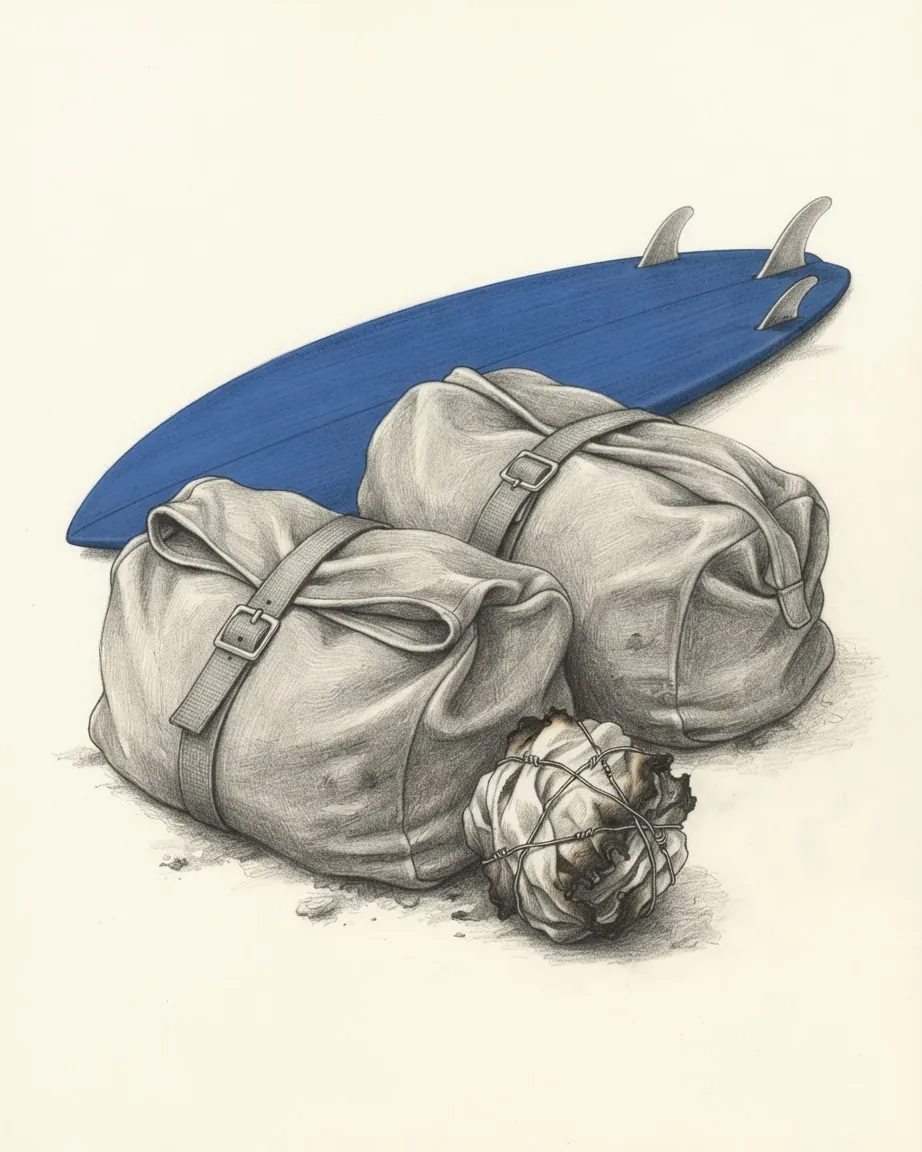
The local feasts are where the volcanoes come back in. The fiesta of the bolas de fuego sets two teams against each other throwing balls of burning cloth, and the explanation most often given for it is the eruption of 1658, whose balls of fire destroyed the town of Nejapa and sent its people fleeing. In 2025 UNESCO inscribed the Confraternity of flowers and palms on its Representative List of the Intangible Cultural Heritage of Humanity, the one Salvadoran element on any of its lists; El Salvador had ratified the convention on 13 September 2012.
Which arrivals shaped Salvadoran towns and trade
Arab migration to El Salvador began in the 1880s and ran into the 1920s, mostly from Palestine, especially the area of Bethlehem, and from Lebanon, with smaller numbers from Syria and Egypt. The country's population was 482,400 in 1879 and 1,168,000 by 1920. Many of the Lebanese arrivals were Maronite Catholics leaving Ottoman rule, and the communities they founded in San Salvador, San Miguel, Santa Ana, Santa Tecla, Usulután and La Unión were devoutly Christian. In 1939 the Arab community of San Salvador founded the Arab Youth Union Society.
Their descendants reached commerce, industry and construction, and then politics. In the presidential election of 2004 the winner, Antonio Saca, and his opponent, Schafik Handal, were both of Palestinian descent. In the Lebanese families most people, the younger generations especially, speak Spanish as a first language and Arabic as a second.
The larger movement went the other way. About a fifth of the population left during the civil war that began in 1981, by Britannica's estimate, in roughly equal numbers to neighbouring countries and to the United States, and most did not return. About 3.2 million Salvadorans lived outside the country in 2004, and by 2012 there were about 2.0 million Salvadoran immigrants and Americans of Salvadoran descent in the United States. In the 2024 census 8.1% of households reported a member who had emigrated in the previous ten years, against 7.9% in 2007, and family reunification was the reason given for 19.8% of departures in 2024.
The diaspora has its own names. Salvadoreño is the standard term, and Salvi, from Salvita, the affectionate diminutive of Salvador, was coined by the first generation of Salvadoran Americans born in the United States to parents who had escaped the war of the 1980s. Guanaco is the term of endearment inside El Salvador and has fallen out of use among Salvadoran Americans, who regard it as derogatory. Britannica describes Salvadoran society as increasingly Americanised by the return of Salvadorans from the United States.
What Salvadoran writers and musicians made
The spoken Spanish is Central American, with voseo: Salvadorans say vos for the familiar second person in place of tú. The informal vernacular is called Caliche. The writers include Francisco Gavidia, Salarrué, Claudia Lars, Alfredo Espino, Pedro Geoffroy Rivas, Manlio Argueta, José Roberto Cea and the poet Roque Dalton, whose poem "El Salvador será" opens with the promise that El Salvador will be a lovely and, without exaggerating, serious country.
Painting, ceramics and textiles are the principal artistic media. The style most identified with the country comes from the northern town of La Palma, where Fernando Llort began it and where artists still train and live. Its images are simple and brightly coloured, and they show birds, rabbits, turtles, flowers, trees, villagers and adobe houses. Lenca pottery, made by Lenca women, is a mark of that culture across the regions the Lenca occupied.
The music mixes indigenous, Spanish and African sources, and its repertoire includes religious songs for Christmas and the saints' days, danza, pasillo, marcha and canciones, often satirical or rural in theme. The instruments are the marimba and the tepehuaste, with flutes, drums, scrapers, gourds and guitars. The folk dance best known as Salvadoran is the Xuc, from Cojutepeque in Cuscatlán. Cumbia, salsa, merengue and reggaeton came in from abroad and are now ordinary radio.
The hammock is a household fixture across every social class, hung from doorways, porches and trees. The valley of San Salvador is called the Valley of the Hammocks, for the earthquakes that rock it, and Concepción Quezaltepeque has held a hammock festival every November since 1989. The earthquakes have also decided what the cities look like. The colonial cathedrals fell and were replaced in Modernist and Gothic styles, and the Streamline Moderne and early Modernist offices and hotels that remained collapsed in the San Salvador earthquake of 1986 and in the two earthquakes of January and February 2001.
Common questions
Questions about El Salvador
Why did so few Salvadorans call themselves indigenous for most of the twentieth century?
Because of La Matanza. After the uprising of January 1932 the army used indigenous appearance, dress and language to pick out whom to kill, and between 10,000 and 40,000 people died, most of them Pipil peasants. In the decades that followed, indigenous Salvadorans gave up their dress and their languages for fear of further reprisals, and many authors note a lasting reluctance to declare indigenous identity, in census answers for example.
How many people speak Nawat?
Perhaps 60, by the estimate Jorge Lemus of Don Bosco University gave in May 2024, against about 200 when he began working on the language three decades earlier. Almost all live in Santo Domingo de Guzmán in Sonsonate.
What is Salvadoran horchata made from?
The ground seed of the morro, mixed with milk or water and sugar. That distinguishes it from the horchata of Mexico, which is made from rice. Salvadorans drink it at any hour of the day, most often beside a plate of pupusas or fried yuca, and coffee is the usual morning drink.
Who are the Palestinian Salvadorans?
Descendants of Arab migrants who arrived between the 1880s and the 1920s, mostly from Palestine, especially the area around Bethlehem, and from Lebanon, and who settled in San Salvador, San Miguel, Santa Ana and other cities. The families were largely Christian. Their descendants built commercial, industrial and construction firms, and in the presidential election of 2004 both the winner and his principal opponent were of Palestinian descent.