Costa Rican culture: made on the coffee road, added to from the coasts
2 988 words · 14 min · updated 2026-10-04
 Back to Costa Rica
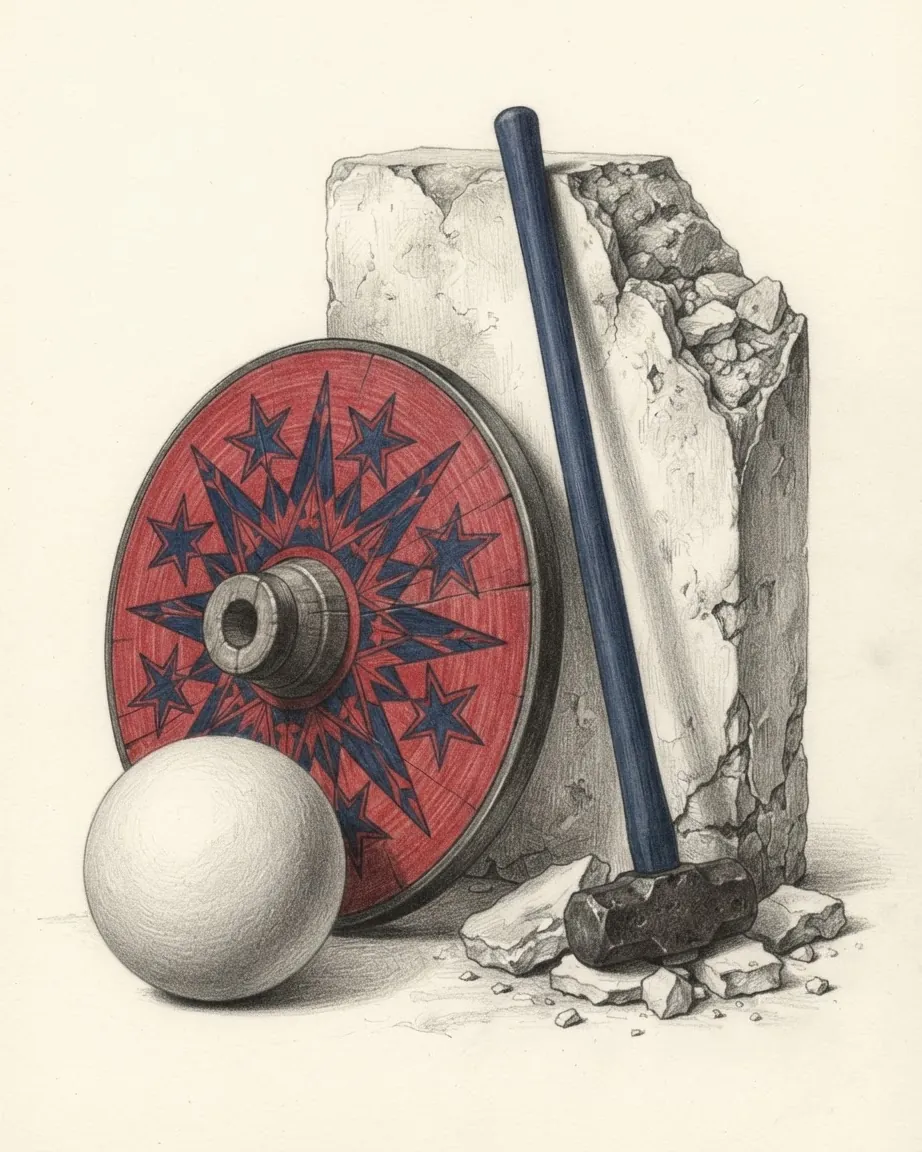
Each Costa Rican oxcart was built to make its own song, a chime struck by a metal ring against the hubnut of a spokeless wheel, and from the mid-nineteenth century those carts carried coffee from the Valle Central over the mountains to Puntarenas, a trip of ten to fifteen days. The painted carreta that served the coffee basin, where Costa Rica's national culture was put together, remains in UNESCO's description a strong symbol of the country's rural past. The basin holds more than half the population and is, in Britannica's words, the most predominantly Spanish region in its manner of living. Much of the rest arrived from the edges and on the basin's terms: the national dance from Guanacaste, an English Creole from Limón whose speakers were barred from the Valle Central until 1949, and the Chibchan languages of Talamanca.
In short
- Oxcart tradition
- UNESCO intangible heritage, inscribed 2008
- Coffee road
- Valle Central to Puntarenas, 10 to 15 days by cart
- Official language
- Spanish, Article 76 of the 1949 Constitution
- Other languages
- Mekatelyu in Limón; Bribri, Cabécar, Maleku and others
- State religion
- Roman Catholic, Article 75
- Education floor
- 8% of GDP, Article 78
- National dance
- Punto guanacasteco, from Guanacaste
- Breakfast dish
- Gallo pinto with Salsa Lizano
Why the oxcart became Costa Rica's craft
Coffee was first planted in Costa Rica in 1808 and had passed tobacco among the exports by the 1820s. It grew around the towns of the Central Plateau and left by road. Britannica dates a constant stream of oxcarts from the Valle Central to the Pacific ports to the 1840s, and the main road to Puntarenas was built in 1846. By the mid-1850s the coffee was going mainly to Britain.
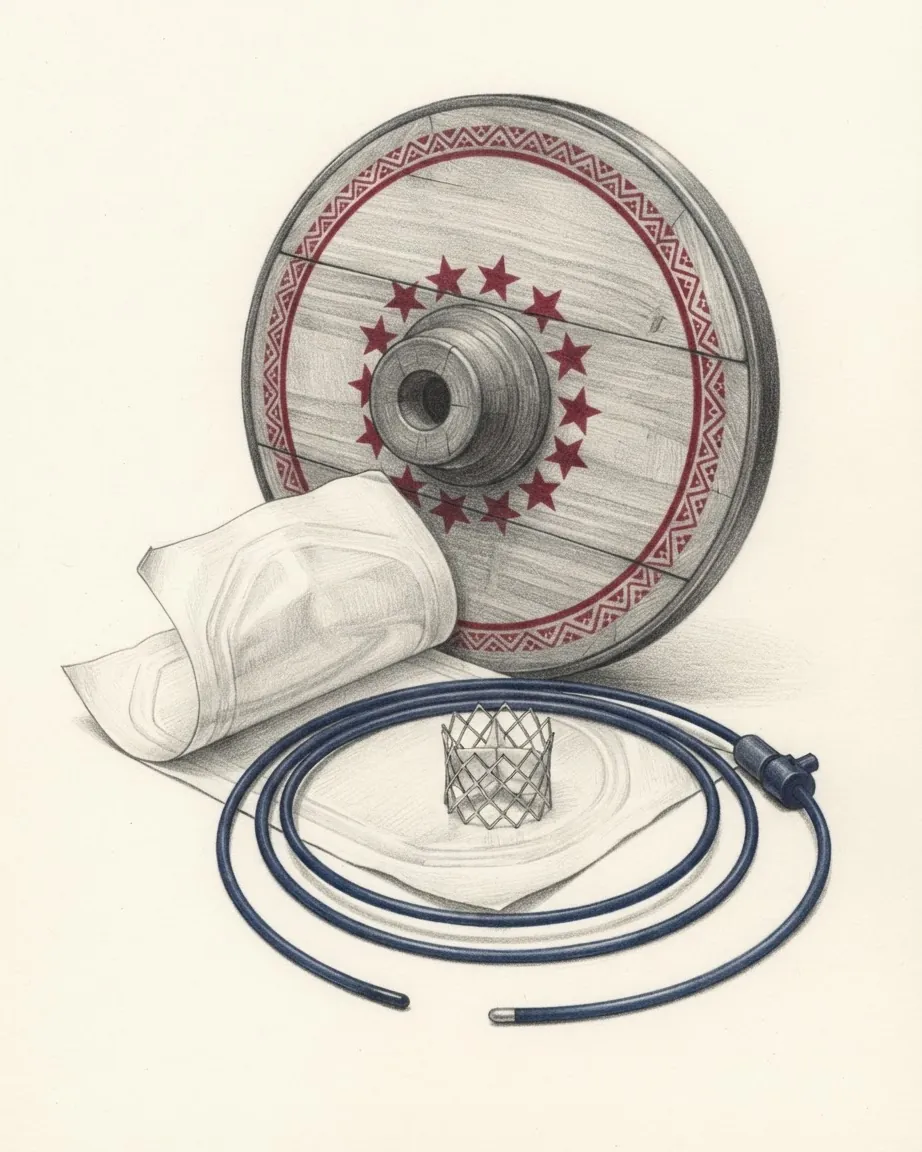
The cart that made the trip was specific to the route. Its wheels had no spokes, a design UNESCO describes as a hybrid between the solid disc used by the Aztec and the spoked wheel the Spaniards introduced, and the solid face cut through mud without sticking. The first carts were rough-hewn and rectangular, framed in cane and covered with rawhide tarps. For many families the cart was the only means of transport they owned, and it marked social standing.
How the carts were painted and tuned
Painting began in the early twentieth century, and at first it identified the driver. Each region had its own design, so a cart could be placed by the patterns on its wheels. By then flowers, faces and miniature landscapes had begun to appear beside the patterns of pointed stars. Each cart was made to produce its own chime as the metal ring struck the hubnut on a rough road, and once the cart had become a matter of individual pride, builders took the highest-quality woods to get the best sound.
Why the carts survive as celebration
Trucks and trains took over the haulage in most regions, and the carreta moved into parades and into religious and secular celebrations. UNESCO proclaimed the oxherding and oxcart traditions in 2005 and inscribed them on the Representative List of the Intangible Cultural Heritage of Humanity in 2008. Annual contests still reward the painters. The same inscription records the cost of the change of use: with no transport demand left, the number of artisans trained to build and decorate a cart has fallen sharply over recent decades. Sarchí, in Alajuela, sells oxcarts as souvenirs.
The coffee economy around the cart also produced its own calendar. The Agriculture and Livestock Ministry and the Costa Rican Coffee Institute run an annual National Coffee Day, at which one producer receives the Cup of Excellence and sells the winning lot by international auction. The cart has been read as moving from a symbol of Spanish colonisation to one of Costa Rican identity, and that is how it appears on holidays now.
How the Valle Central set Costa Rican speech
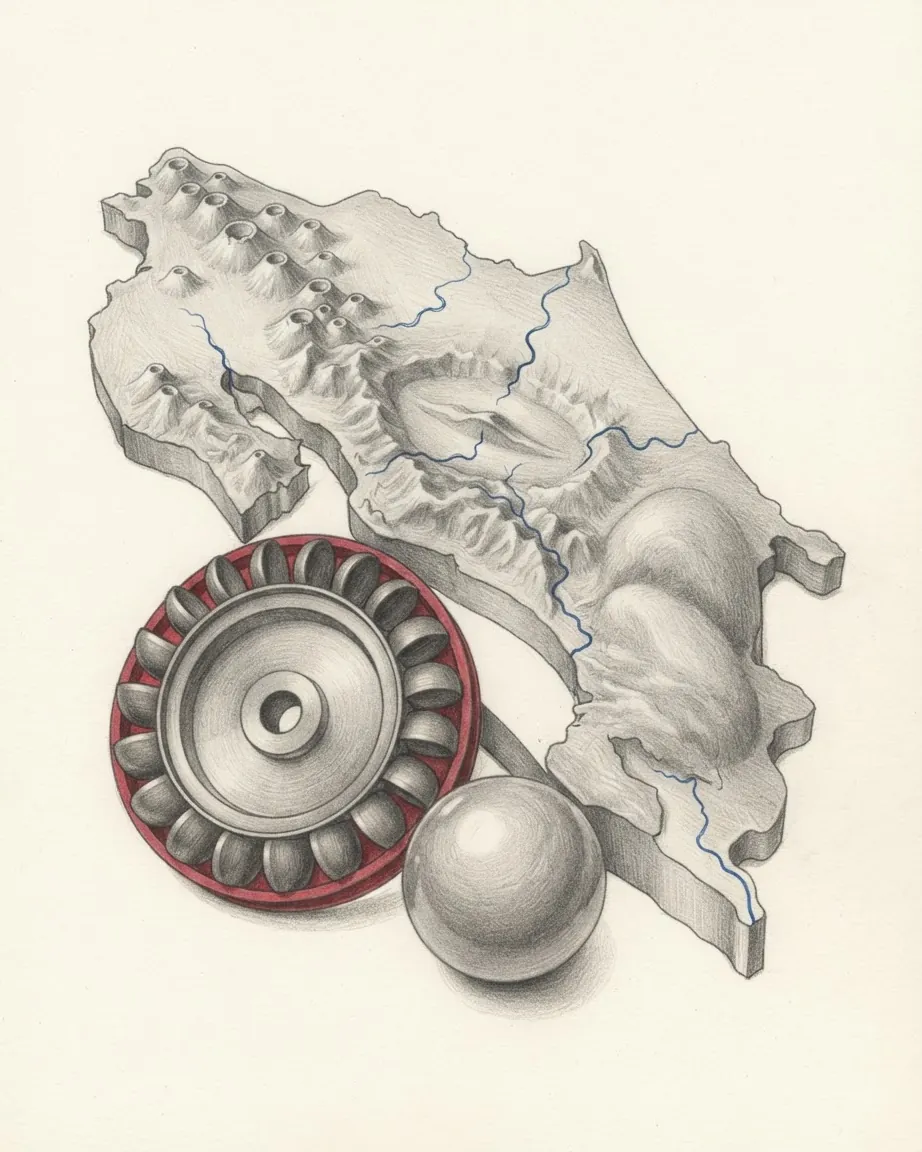
Britannica, in its entry revised in September 2026, puts more than half of Costa Rica's population in the Valle Central and calls it the most predominantly Spanish region in both its manner of living and its ancestry. That basin set the speech. Costa Ricans replace the diminutive ending -tito with -tico, and the habit gave them the name Ticos. Article 76 of the Constitution of 1949 makes Spanish the official language of the nation.
The phrase every visitor hears has a documented foreign origin. Pura vida, literally "pure life", is used as a greeting, a farewell, a word of thanks and the standard reply when someone asks how things are going. Víctor Manuel Sánchez Corrales of the University of Costa Rica traces it to a Mexican film, ¡Pura vida! of 1956, in which the actor Antonio Espino used the expression constantly and in places it did not belong. Costa Ricans took up the phrase in the same way, and dictionaries recorded it in the mid-1990s. It now works as an unofficial national motto.
Outside the basin the speech changes. In Guanacaste, Britannica notes, the Spanish is closer to Nicaragua's than to that of the Valle Central. On the Caribbean coast a second language entirely is in daily use, and in the Cordillera de Talamanca several more.
What Guanacaste gave Costa Rica's music and dance
The north-west came into Costa Rica by vote. On 25 July 1824 a second open town meeting in Nicoya decided to join the State of Costa Rica, after a first meeting on 4 July had declined. The record of that meeting lists trade, schools, security and public services among the reasons. Britannica dates the secession of Guanacaste from Nicaragua to 1825 and notes that the boundary stayed contested until a treaty of 1896. The annexation is a public holiday on 25 July.
The region brought a different population with it. Roughly one-tenth of Costa Ricans live in Guanacaste, descended from colonial Spaniards, indigenous people and Africans, and almost half the province's population is visibly mestizo, the result of generations of unions between Spanish colonists and Chorotega. The Nicoya Peninsula had marked the southern limit of Nahuatl cultural influence when the Spanish arrived in the sixteenth century. The centre and south of the country had Chibcha influences.
Most of what Costa Rica dances comes from this one province. The punto guanacasteco is widely treated as the national dance and stages courtship in three movements. At points the dancers stop so that one person can shout a bomba, a rhymed verse that may be memorised or made up on the spot, usually witty and often racy. The music behind it is built on a rhythm called tambito and a genre called punto, of which the punto guanacasteco and the sancarleño of San Carlos in Alajuela are the two named examples. The guitar accompanies most folk dancing, and the marimba was made the national instrument.
Guanacaste also eats differently. The north-west leans hard towards corn: large tortillas filled with cheese, corn snacks and other dishes made from maize.
How Limón's Creole culture was kept apart
The Caribbean province took its present population from the railway. In the 1870s the government contracted the American businessman Minor C. Keith to build a line from San José to the port of Limón, completed in 1890, and the labour came largely from Jamaica. Italians, Chinese workers and convicts from the United States worked on it as well; in 1873 the Atlantic Railroad imported 653 Chinese indentured labourers. Keith was paid in land, which he planted with bananas, and the West Indian workers who built the line also worked the plantations.
Their descendants speak Spanish and an English-based Creole, called Limonese Creole by Britannica and Mekatelyu in Costa Rica, close to Jamaican English. For decades the law confined them to the coast. Britannica records that residence laws restricted Black Costa Ricans to the Caribbean side, that a law of 1935 barred banana plantation owners on the Pacific coast from employing "coloured" workers, and that those restrictions lasted until 1949, when the government allowed Black residents of Limón to travel, enter the Valle Central and become citizens. The same entry, revised in 2026, says discrimination is still present and that the community remains isolated from the national culture.
The 2011 census counted 1.1% of Costa Ricans as Black or Afro-Caribbean and 6.7% as mulatto, and the 2022 census recorded each ethnic or racial identity separately for the first time since 1927. The state added a public day for this population in 2021: 31 August is the Day of the Black Person and Afro-Costa Rican Culture. In the kitchen the difference is one ingredient, since the Caribbean side cooks its rice and beans in coconut milk.
Who lived here before the coffee road
Britannica puts the indigenous population before the Spanish conquest at about 400,000, a number the conquest cut sharply, along with disease and slave raiding. The Wikipedia history counts as many as twenty distinct societies at the time of contact. In 2011 the census counted over 104,000 indigenous people, 2.4% of the population, and IWGIA names eight peoples: the Huetar, Maleku, Bribri, Cabécar, Brunka, Ngäbe, Bröran and Chorotega.
Where the Chibchan languages are still spoken
Bribri, Cabécar, Maleku, Boruca and Térraba belong to the Chibchan family. Some have several thousand speakers, and Teribe and Boruca each have fewer than a thousand. Article 76 of the Constitution, beside making Spanish official, commits the state to maintain and cultivate the national indigenous languages. The Bribri and Cabécar live in the Cordillera de Talamanca, and Britannica notes that the communities on the Caribbean side of southern Talamanca have kept their separate ways, including animist religion.
The land is the dispute. IWGIA's report for 2023 counts 24 indigenous territories covering 3,344 square kilometres, almost 7% of the national territory, and notes that this is the area stated in the decrees that created them. It records 52.3% of the Bribri territory at Kekoldi and 88.4% of the Huetar territory at Zapatón as occupied by non-indigenous people, and cites research finding 29% of the Maleku territory in Maleku possession. Indigenous Law 6172 of 1977 set out how such land was to be protected and recovered, and IWGIA says it has never been implemented. In two rulings of 29 June and 9 October 2022, the Constitutional Chamber held that land acquired inside a territory after 1977 by non-indigenous buyers had been acquired in bad faith and was void. A draft law on indigenous autonomy published in 1994 had still not been debated in 2022.
What the Diquís stone spheres record
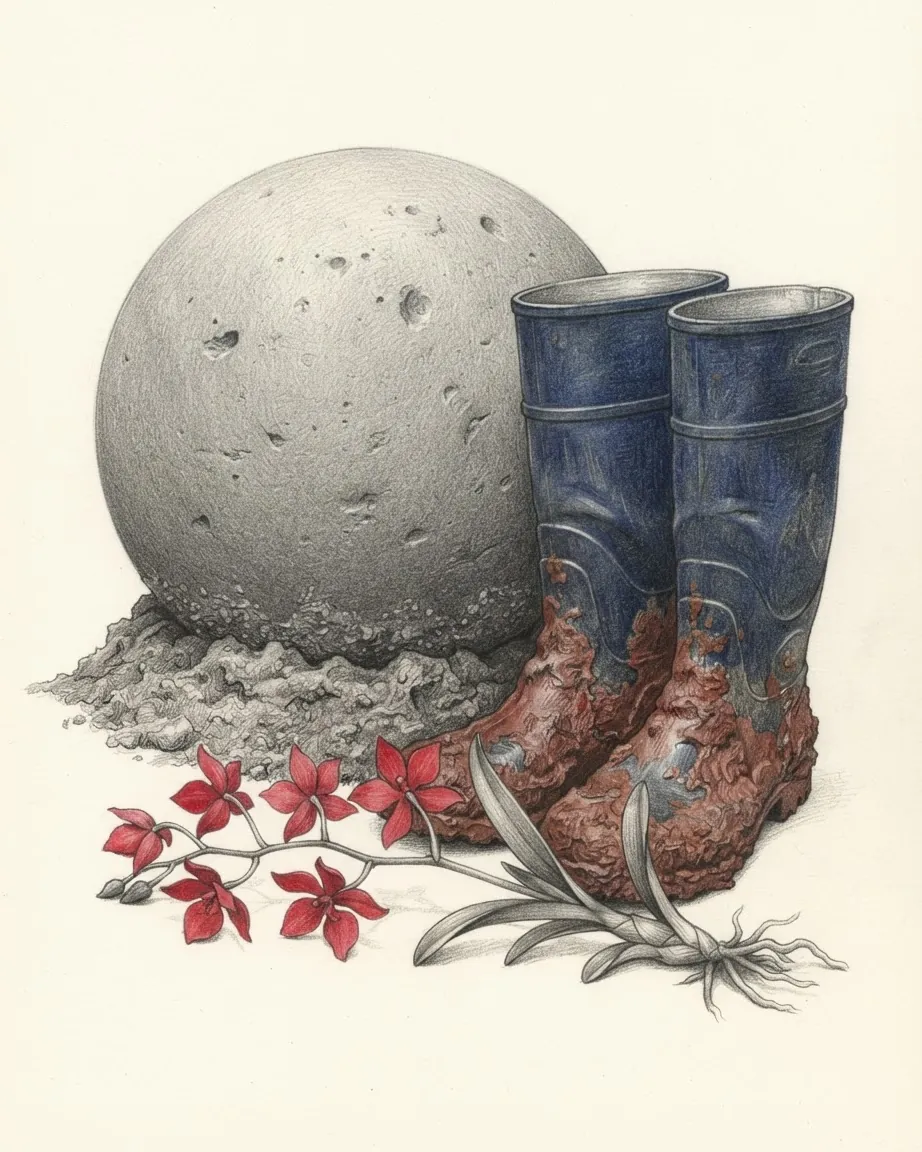
Four sites in the Diquís Delta, Finca 6, Batambal, El Silencio and Grijalba-2, preserve the settlements of chiefdoms that lived there between AD 500 and 1500: mounds, paved areas, burials and a collection of stone spheres between 0.7 and 2.57 metres in diameter. Their meaning, use and method of manufacture remain largely unexplained. They survived the looting that took most of Costa Rica's archaeological sites because thick layers of sediment kept them buried for centuries, and Finca 6 still holds spheres in linear arrangements. UNESCO lists the four sites as a World Heritage property. The gold and jade of the same pre-Columbian world are held in San José, in the Pre-Columbian Gold Museum of the Central Bank and the Jade Museum of the National Insurance Institute.
How Costa Rica's constitution fixes church and school
Article 75 of the Constitution of 1949 makes the Roman Catholic, Apostolic religion the religion of the state, which contributes to its upkeep, and protects the free exercise of other beliefs. The arrangement has a nineteenth-century history behind it. Britannica records that in the last decades of that century the Jesuits were expelled for some years, cemeteries were secularised and public schools expanded, while the constitution of 1871 already allowed religious toleration.
How surveys count the faithful
The share of Catholics has fallen in successive surveys. A University of Costa Rica survey of 2007 found 70.5% identifying as Catholic. Latinobarómetro in 2017 found 57% Catholic, 25% evangelical Protestant and 15% with no religion, and a University of Costa Rica survey of 2018 found 52%, 22% and 17%. The Basilica of Our Lady of the Angels stands in Cartago, and its feast on 2 August is a day off employers must give, unpaid.
What the state promised the classroom
The school is written into the same document with numbers attached. Article 78 makes preschool and general education compulsory and free in the public system, and sets public spending on state education, universities included, at no less than 8% of gross domestic product a year. A transitional clause let spending fall short of that floor in fiscal years before 2014, provided the share never dropped below the previous year's. Article 84 gives the University of Costa Rica independence in its own government and calls it an institution of higher culture.
The date compulsory schooling began depends on who is counting. Britannica dates free compulsory public education to 1886, the year public schools, a museum and a national library were founded. The national brand strategy announced in October 2023 lists free and compulsory primary education among its milestones and dates it to 1869. When the army was abolished in 1949, it was said that the army would be replaced with an army of teachers. Five public universities now operate, among them the University of Costa Rica, the Technological Institute and the Universidad Nacional.
Election day is a national holiday, parties run caravans to the polling stations, and supporters decorate cars, houses and livestock with ribbons in their party's colours.
What Costa Ricans eat from breakfast to Sunday
The day starts with gallo pinto, "spotted rooster", a name that has nothing to do with the ingredients. It is black beans and white rice spiced with cilantro, onion, garlic, salt and Salsa Lizano, a local condiment. It is eaten with eggs and sometimes with natilla, a sour cream. Fried plantain and corn tortillas or bread are common beside it. Gallo pinto is a common dish in Nicaragua as well.
The casado is a single plate of black beans, rice, meat, fried plantain and one or more sides, which can be pasta salad, green salad, fried eggs, potatoes, spaghetti or barbudos, green beans in egg batter. The meat is chicken, beef or fish. Olla de carne is the weekend dish: meat and large pieces of vegetable boiled into a corn broth, eaten from a bowl with the vegetables and rice on separate plates. Arroz con pollo and tamales complete the everyday list. The tamal and the other corn dishes are the part of the kitchen traced to the indigenous inhabitants.
The regional variations follow the same lines as the speech and the dance. Coconut milk goes into the rice on the Caribbean coast. In the north-west corn and cheese dominate.
Who wrote and painted Costa Rican culture
The visual arts began with imported portraitists. Early in the nineteenth century wealthy families paid visiting European painters for portraits, and the techniques of oil painting, drawing and sculpture reached local artists once some of those painters, Bigot, Henry Etheridge and Santiago Paramo among them, settled in the country. Their pupils included José María Figueroa, Faustino Montes de Oca and Felipe Valentini. By the end of the century a generation with a more national subject matter had appeared, Ezequiel Jiménez, Wenceslao de la Guardia and Enrique Echandi among them.
Women have taken a large part in every Costa Rican literary movement. Carmen Lyra's subject matter and perspective made her a revolutionary figure, and Yolanda Oreamuno and Eunice Odio belong to the same record. Aquileo J. Echeverría wrote Concherías and Manuel González Zeledón wrote La propia. Carlos Luis Fallas wrote Marcos Ramírez and Mamita Yunai, and Joaquín Gutiérrez wrote Cocorí, Puerto Limón and Manglar, the second of them named for the Caribbean port.
The state runs the institutions. The Ministry of Culture, Youth and Sports has directorates for culture, visual arts, scenic arts, music, heritage and the library system, and it runs the National Symphony Orchestra and the Youth Symphony Orchestra. The National Theatre, the Popular Theatre Melico Salazar, the National Centre of Arts and Culture and the National Museum are all in San José.
Which days the Costa Rican calendar keeps
Costa Rica keeps twelve national holidays, of which nine are paid. One of them belongs to a national hero who was a drummer boy. Juan Santamaría, from Alajuela, was killed at Rivas in Nicaragua in 1856 setting fire to the stronghold of the American filibuster William Walker, in a campaign for which about 10,000 men, roughly a tenth of the population, were levied. A museum in Alajuela carries his name. Another holiday, on 1 December, marks the abolition of the army in 1948.
When the national holidays fall
| Date | Holiday | What it marks |
|---|---|---|
| 11 April | Juan Santamaría Day | The drummer boy killed at Rivas in 1856 |
| 25 July | Annexation of Nicoya | Nicoya's vote to join Costa Rica in 1824 |
| 2 August | Our Lady of the Angels | The feast of the Cartago basilica, unpaid |
| 15 August | Mother's Day | Also the Assumption of Mary |
| 31 August | Day of the Black Person and Afro-Costa Rican Culture | Kept since 2021 |
| 15 September | Independence Day | The Act of Independence of 1821 |
| 1 December | Army Abolition Day | The abolition of 1948, unpaid |
The Day of the Dead on 2 November is observed but is not a public holiday. Between 2020 and 2024 several holidays were moved to Mondays to encourage domestic travel, Juan Santamaría Day to 15 April in 2024 among them.
Where football and swimming fit
Football is the sport most Costa Ricans follow. The men's national team has played at five World Cups and reached the quarter-finals for the first time in 2014, and its best CONCACAF Gold Cup was a runner-up finish in 2002. Paulo Wanchope, who played for three Premier League clubs in the late 1990s and early 2000s, is credited with making Costa Rican football known abroad. The country hosted the FIFA U-20 Women's World Cup in 2022, after a postponement from 2020.
Costa Rica first entered the Summer Games in 1936. The sisters Silvia and Claudia Poll won the four Olympic medals the country has taken in swimming, one gold, one silver and two bronze.
Common questions
Questions about Costa Rica
Why are Costa Ricans called Ticos?
Because of a diminutive. Costa Rican Spanish often replaces the diminutive ending -tito with -tico, and Britannica records that habit as the source of the nickname. Ticos is now the ordinary word for the people of Costa Rica, used by Costa Ricans themselves, and the same entry notes that they use pura vida in everyday speech.
Where does the phrase pura vida come from?
From Mexico. Víctor Manuel Sánchez Corrales of the University of Costa Rica traces it to the Mexican film ¡Pura vida! of 1956, in which Antonio Espino used the expression constantly and in unlikely situations. Costa Ricans adopted it the same way, as a greeting, a farewell, a word of thanks and a reply to how someone is doing, and dictionaries recorded it in the mid-1990s. It now works as an unofficial national motto.
Does Costa Rica have a state religion?
Yes. Article 75 of the Constitution of 1949 makes the Roman Catholic, Apostolic religion that of the state, which contributes to its maintenance, while protecting the free exercise of other beliefs. The share of Catholics has fallen: a University of Costa Rica survey of 2018 found 52% Catholic, 22% Protestant and 17% with no religion, against 70.5% Catholic in the same university's survey of 2007.
What are the stone spheres of the Diquís?
Stone balls between 0.7 and 2.57 metres across, made by chiefdom societies in the Diquís Delta of southern Costa Rica between AD 500 and 1500. Four settlement sites holding them are a UNESCO World Heritage property. How they were made and what they were for remain largely unexplained, and they escaped looting because river sediment buried them for centuries.
Why did each oxcart sound different?
It was built to. A metal ring struck the hubnut of the wheel as the cart moved, and builders picked their woods for the chime it produced, so each carreta had its own song. Once the carts became a matter of pride, the sound mattered as much as the painted wheel, which at first told onlookers which region the driver came from.