Commonwealth of Independent States
Political · CIS
Eleven republics met at Alma-Ata on 21 December 1991, three weeks after the Soviet Union was declared dissolved. The declaration issued the same day holds that the Commonwealth of Independent States is neither a state nor a supra-state entity. Two of those founders never signed the charter adopted at Minsk on 22 January 1993, and both take part without being member states of it.
10 countries
- Armenia29,743 square kilometres on a high plateau, a diaspora of five million or more, and a constitution whose coat of arms shows a mountain across the border.
- Azerbaijan86,600 square kilometres between the Caucasus and the Caspian, with a capital built on an oil peninsula, a republic first proclaimed in 1918 and restored in 1991.
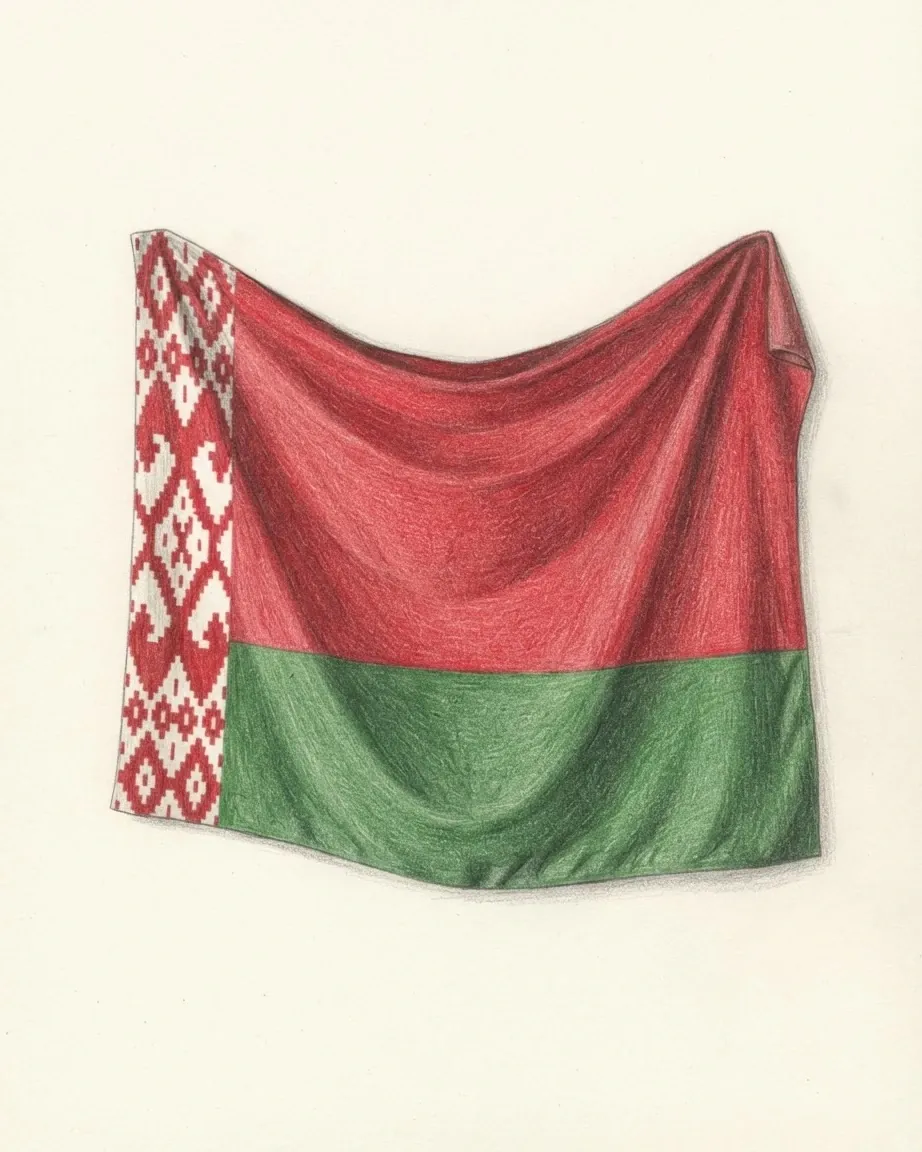
- Belarus9,056,080 people on 207,600 square kilometres as of 2026, independent since 1991 and bound to Russia by the Union State treaties of 1996 to 1999.
- KazakhstanҚазақстан
- KyrgyzstanКыргызстан
- Moldova2,409,207 residents counted in 2024 on the land between the Prut and the Dniester. Romania across one river, Transnistria across the other, and an EU bid since 2022.
- RussiaJoined 1991.
- TajikistanТоҷикистон
- TurkmenistanTürkmenistan
- UzbekistanOʻzbekiston
Common questions
Questions about CIS
Which countries are in the Commonwealth of Independent States?
The 10 countries filed here are the ones whose own records carry the membership. Ukraine signed the founding agreement of 8 December 1991 and the Alma-Ata Protocol but never the charter, and stopped taking part in the statutory bodies in May 2018. Georgia acceded in December 1993 and its membership ended on 18 August 2009. Turkmenistan appears on this list although it declared on 26 August 2005 that it takes part as an associate member.
Is Ukraine a member of the CIS?
Not under the charter. Ukraine signed the agreement of 8 December 1991 and the Alma-Ata Protocol of 21 December 1991, which is why the Executive Committee's own account calls it a founding and participating state and then adds that it is de jure not a member state: it never signed the charter adopted at Minsk on 22 January 1993. Participation in the statutory bodies stopped in May 2018, and Commonwealth agreements have been denounced one at a time since.
What is the difference between a founding state and a member state?
The agreement of 8 December 1991 and the protocol of 21 December 1991 created the Commonwealth and named its founders. The charter of 22 January 1993 created membership of it, and a founder that did not sign the charter did not become a member state. Ukraine and Turkmenistan are both in that position, and Turkmenistan added a further step on 26 August 2005 by declaring itself an associate member.
Does the Commonwealth have a parliament?
It has an assembly of national parliaments and no legislature. The chairs of seven parliaments signed the agreement creating the Interparliamentary Assembly at Alma-Ata on 27 March 1992, and a convention signed at Minsk on 26 May 1995 made it an interstate body in its own right. It sits in the Tauride Palace in Saint Petersburg, where it first met on 28 and 29 December 1992. The model laws it adopts have force only where a national parliament enacts them.
How does a country leave the CIS?
By giving twelve months' written notice, which is what the charter provides. Georgia notified on 18 August 2008 and left on 18 August 2009. The Parliament of Moldova voted on 2 April 2026 to denounce the founding agreement, the Alma-Ata Protocol and the charter together, and the withdrawal takes effect on 8 April 2027. A state that never ratified the charter has no membership to denounce and simply stops attending.
Is the Commonwealth the same thing as the Eurasian Economic Union?
No, and the member records show how far the two lists diverge. Armenia, Belarus, Kazakhstan, Kyrgyzstan and Russia are recorded in the Eurasian Economic Union, with joining dates between 29 May and 23 December 2014, and the same five plus Tajikistan in the Collective Security Treaty Organization from 1994. The Eurasian union runs a customs territory with a commission; the Commonwealth runs a register of treaties and a committee.
Sources
- О Содружестве Независимых Государств · Executive Committee of the CIS. The protocol of 21 December 1991, the charter adopted at Minsk on 22 January 1993, the statement that Ukraine and Turkmenistan are founding and participating states and de jure not member states, and Turkmenistan's declaration of 26 August 2005.
- About the Commonwealth of Independent States · Executive Committee of the CIS, English pages. The agreement of 8 December 1991, the charter of 22 January 1993, its registration with the United Nations on 24 May 1996, and the addresses at 17 Kirova Street in Minsk and on Sofiyskaya Embankment in Moscow.
- Единый реестр правовых актов и других документов Содружества Независимых Государств · Executive Committee of the CIS. The register of Commonwealth instruments, each act carrying its own list of signatures and ratifications.
- История Межпарламентской Ассамблеи государств участников СНГ · Interparliamentary Assembly of CIS Member Nations. The agreement of 27 March 1992 at Alma-Ata, the choice of Saint Petersburg, the sitting in the Tauride Palace on 28 and 29 December 1992, and the convention of 26 May 1995.
- Member States · United Nations. Admission dated 24 October 1945 for Belarus and Russia and 2 March 1992 for the other eight countries on this page.
- Commonwealth of Independent States · The twelve months' notice the charter requires, Georgia's notification of 18 August 2008, the end of Ukrainian participation in the statutory bodies in 2018, and the Moldovan vote of 2 April 2026 with its effect on 8 April 2027.