Benelux
Regional
What is left for a customs union whose members all sit inside the European Union? Article 350 of the EU treaties names Belgium, Luxembourg and the Netherlands and lets their regional union stand wherever its objectives are not reached by applying the treaties. The customs convention behind it dates from 5 September 1944. A trade mark still registers for all of them or none.

3 countries
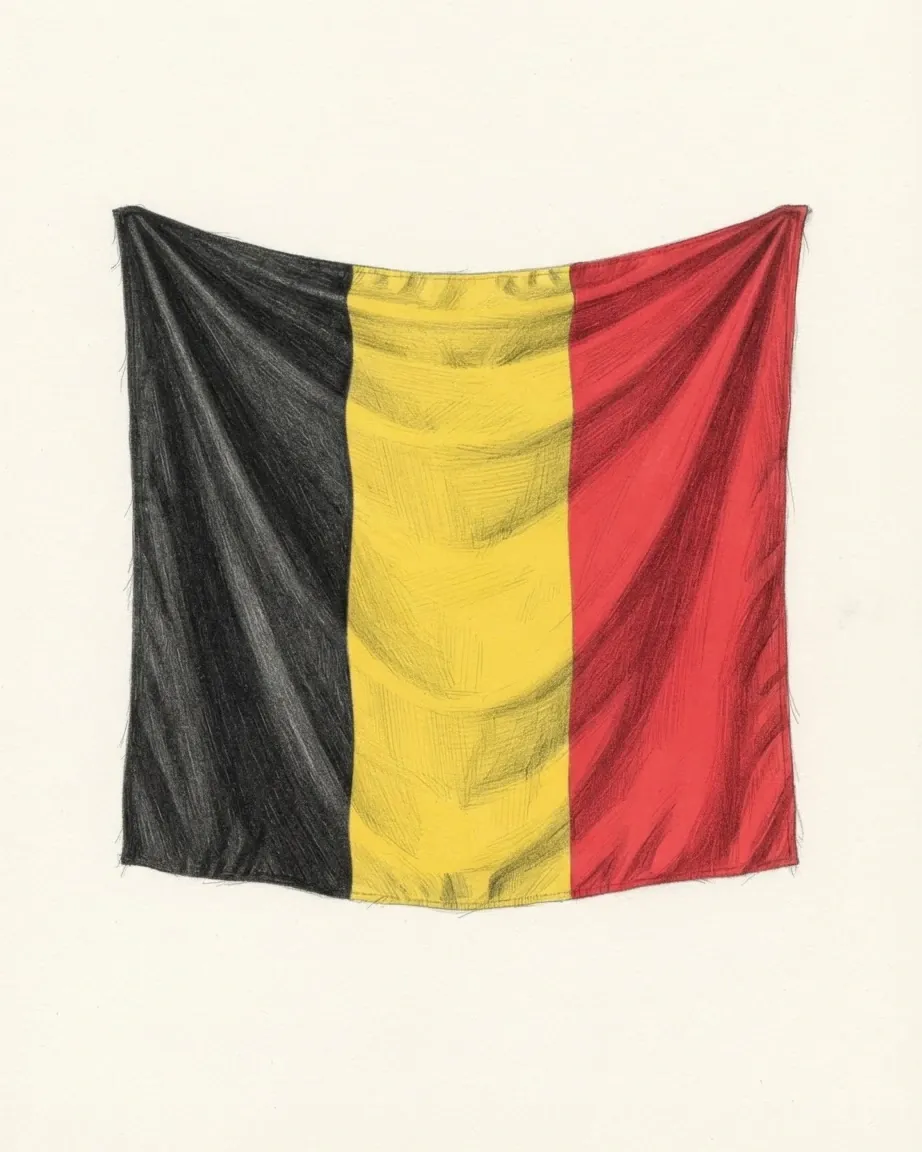
- Belgium11.8 million people on 30,688 square kilometres, three official languages and six governments. A federal structure built around a language border, and 16 heritage sites.
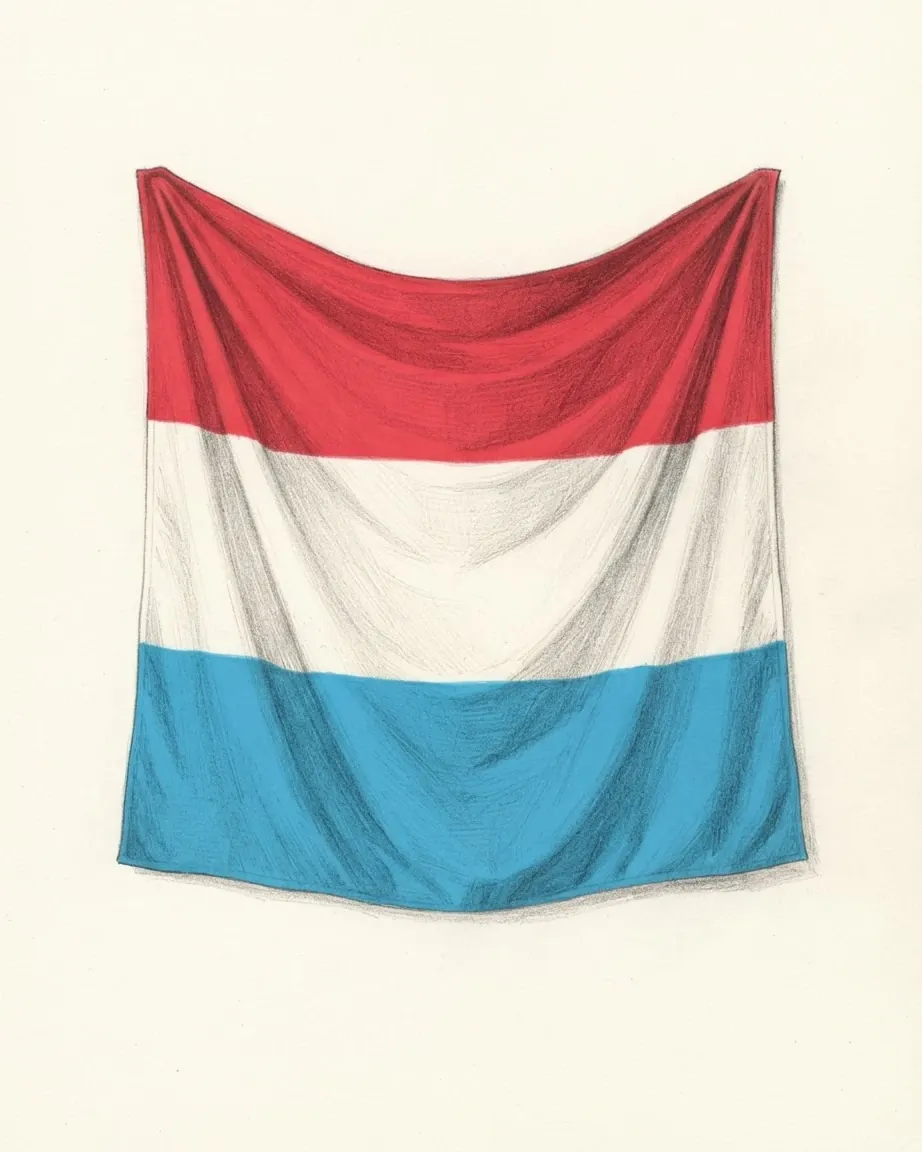
- Luxembourg681,973 residents in 2025, 47% of them foreign nationals, and 223,000 more crossing a border to work. A grand duchy of 2,586 square kilometres with three languages and 8.2 trillion euros of fund assets.
- Netherlands17.9 million people on 42,201 km2, a fifth of it water and much of the rest below sea level. What the Dutch earn from, how they are governed and what there is to see.
Common questions
Questions about Benelux
What is the Benelux?
A union of Belgium, Luxembourg and the Netherlands, running on a treaty concluded at The Hague on 17 June 2008 and in force since 1 January 2012. That treaty replaced the Treaty establishing the Benelux Economic Union of 3 February 1958, whose fifty year term ended on 31 October 2010, and it dropped the word Economic from the title because the work had spread into sustainable development and into justice and home affairs.
Why does the Benelux still exist inside the European Union?
Because the European treaties say it may. Article 350 of the Treaty on the Functioning of the European Union provides that the Treaties do not preclude the existence or completion of regional unions between Belgium and Luxembourg, or between Belgium, Luxembourg and the Netherlands, so far as the objectives of those unions are not attained by applying the Treaties. The Benelux treaty repeats the formula in its own Article 37 for the union between Belgium and Luxembourg.
Can a trade mark be registered for Belgium alone?
No. Under the Benelux Convention on Intellectual Property, signed on 25 February 2005 and in force from 1 September 2006, trade marks and designs are registered at the Benelux Office for Intellectual Property in The Hague for the whole Benelux territory. There is no separate Belgian, Luxembourgish or Dutch register to apply to.
Can a member leave the Benelux Union?
Article 39 of the treaty concludes it for an indefinite period and lets any party denounce it on three years' notice, counted from the day the Secretariat-General receives the notice. The same article withholds that right for the first ten years after entry into force, so the earliest date on which notice could be given was 1 January 2022.
Which languages does the Benelux Union work in?
Dutch and French, under Article 38 of the treaty. German is an official language of Belgium and of Luxembourg, and Luxembourgish is an official language of Luxembourg, and neither is an official language of the union's institutions.
Is the Benelux the same thing as the Schengen Area?
No, though one led to the other. A Benelux convention of 1960 moved control of persons to the outer frontier of the Benelux territory, and the agreement of 14 June 1985 that founded the Schengen Area was signed at Schengen in Luxembourg by Belgium, Luxembourg and the Netherlands together with France and Germany. Schengen now covers a far wider list of states and is governed by European Union law rather than by the Benelux treaty.
Sources
- Consolidated version of the Treaty on the Functioning of the European Union, Article 350 · EUR-Lex. The permission for regional unions between Belgium and Luxembourg, and between Belgium, Luxembourg and the Netherlands.
- Verdrag tot herziening van het op 3 februari 1958 gesloten Verdrag tot instelling van de Benelux Economische Unie · Benelux Union. The treaty text of 17 June 2008: the preamble and signature page, Article 35 on the title, 36 on territory, 37 on the Belgium and Luxembourg union, 38 on languages and 39 on duration and denunciation.
- Treaty instituting the Benelux Union · Treaty Database, Netherlands. Conclusion at The Hague on 17 June 2008 and entry into force on 1 January 2012.
- Verdrag tot instelling van de Benelux Economische Unie · Treaty Database, Netherlands. Conclusion at The Hague on 3 February 1958 and entry into force on 1 November 1960.
- Treaty concerning the establishment and statute of a Benelux Court of Justice · Treaty Database, Netherlands. Conclusion at Brussels on 31 March 1965 and entry into force on 1 January 1974.
- Agreement concerning the Benelux Interparliamentary Assembly · Treaty Database, Netherlands. Conclusion at Brussels on 20 January 2015 and entry into force on 1 August 2019.
- The Benelux · Government of Luxembourg. The customs convention signed in London on 5 September 1944, the customs union of 1 January 1948, and the composition of the Benelux Parliament.
- History of the Benelux · Benelux Union. The sequence from the convention of 1944 to the treaty in force from 2012.
- Benelux Convention on Intellectual Property (BCIP) · Benelux Office for Intellectual Property. Signature on 25 February 2005, entry into force on 1 September 2006, and registration for the Benelux territory as a whole.
- New Benelux police treaty to enter into force on 1 October · Government of the Netherlands. The treaty of 23 July 2018, the treaty of 8 June 2004 it replaces, and the commencement of 1 October 2023.
- Tractatenblad 2016, 196 · Official Gazette, Netherlands. The border treaty concluded at Amsterdam on 28 November 2016, the median line of the normalised Meuse between markers 45 and 49, and effect from 1 January 2018.
- Bilateral relations and regional cooperation · Ministry of Foreign and European Affairs, Luxembourg. The economic union with Belgium signed on 25 July 1921.