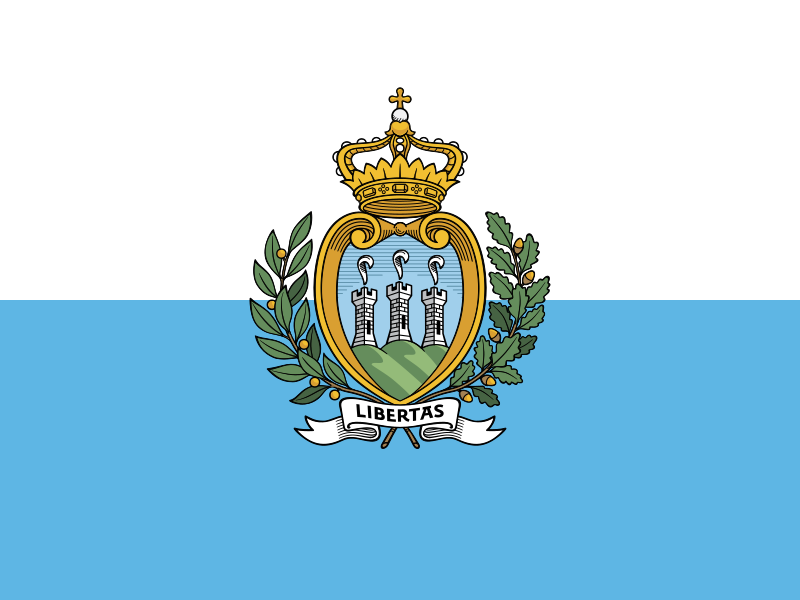
The flag of San Marino
Bandiera di San Marino · since 2011
 Back to San Marino
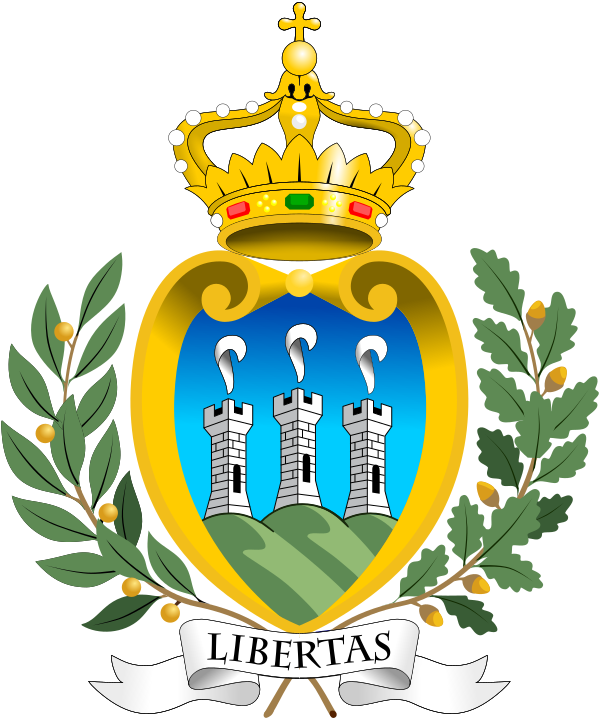
Two equal horizontal bands, white over light blue, with the national coat of arms in the centre: three towers on three peaks under a closed crown, in a wreath of oak and laurel, over a scroll reading LIBERTAS. The white and blue were in use from the early 19th century, but no law described the flag until 2011, when a constitutional law fixed its proportion of 3:4, its drawing and its colours.
At a glance
- Adopted
- 2011
- Proportion
- 3:4
- Colours
- Earlier flags
- 3
The colours
The colours of the flag of San Marino, in the order it has them
- 0150.6%
White
bianco bandieraUpper band
- HEX
#FFFFFF- RGB
255 255 255- CMYK
0 0 0 0
- 0249.4%
Light blue
celesteLower band
- HEX
#5EB6E4- RGB
94 182 228- CMYK
55 10 5 0- Pantone
2915 C
No law gives these codes. HEX and RGB are the colour this site draws the flag in; CMYK, Pantone and RAL are the values most often published for it.
Construction
How the flag is drawn
Two horizontal bands of equal height, white above and light blue below, with the national coat of arms centred horizontally: a light blue shield bearing three towers on three peaks, a closed crown above, an oak and a laurel branch around it, and a scroll with the word LIBERTAS below.
- Bands
- Two, of equal height
- Arms width
- 3/8 of the flag's length, the arms themselves in the proportion 5:6
- Arms position
- Centred horizontally, the centre of the cross on the crown 1/8 of the flag's length below the top edge
- 2:3 version
- Allowed internationally and at sporting events: the arms 1/3 of the length wide, the centre of the cross 1/6 of the height below the top edge
Other forms
- Civil flag
- The white and blue bicolour without the arms. It arose because private citizens were barred from using the arms; a later resolution allowed anyone to fly the flag with them. The 2011 law names only the official flag.
- Flags of the castelli
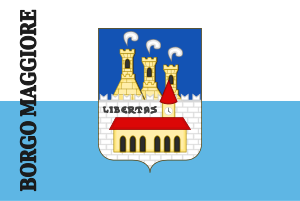
- Each of the nine castelli flies its own arms on the white and blue bicolour, its name meant to run vertically at the hoist, though unnamed flags are usual.

Meaning
What each part stands for
- Light blue
- The sky
- White
- Liberty, set above the sky
- LIBERTAS
- The motto on the scroll beneath the arms: freedom
History
How the flag of San Marino got here
- 1465
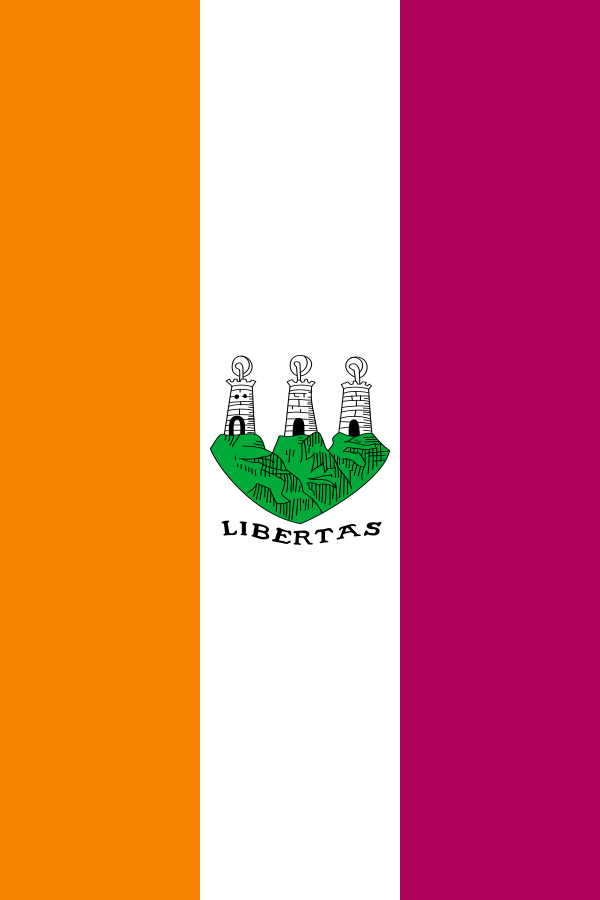
The battle standard
4 Sept 1465 → 1797
A receipt records cloth supplied for a standard in white, yellow and "alessandrino". Carlo Malagola reconstructed it in the late 19th century with purple; Verter Casali argued in 2011 for azure, which would tie it to the present flag.
Image: Oren neu dag, CC BY-SA 3.0
- 1797
The white and blue cockade
12 Feb 1797 → 1829
The Great and General Council adopted a white and dark blue cockade much like that of the French revolutionaries, the first documented use of the two colours.
- 1829
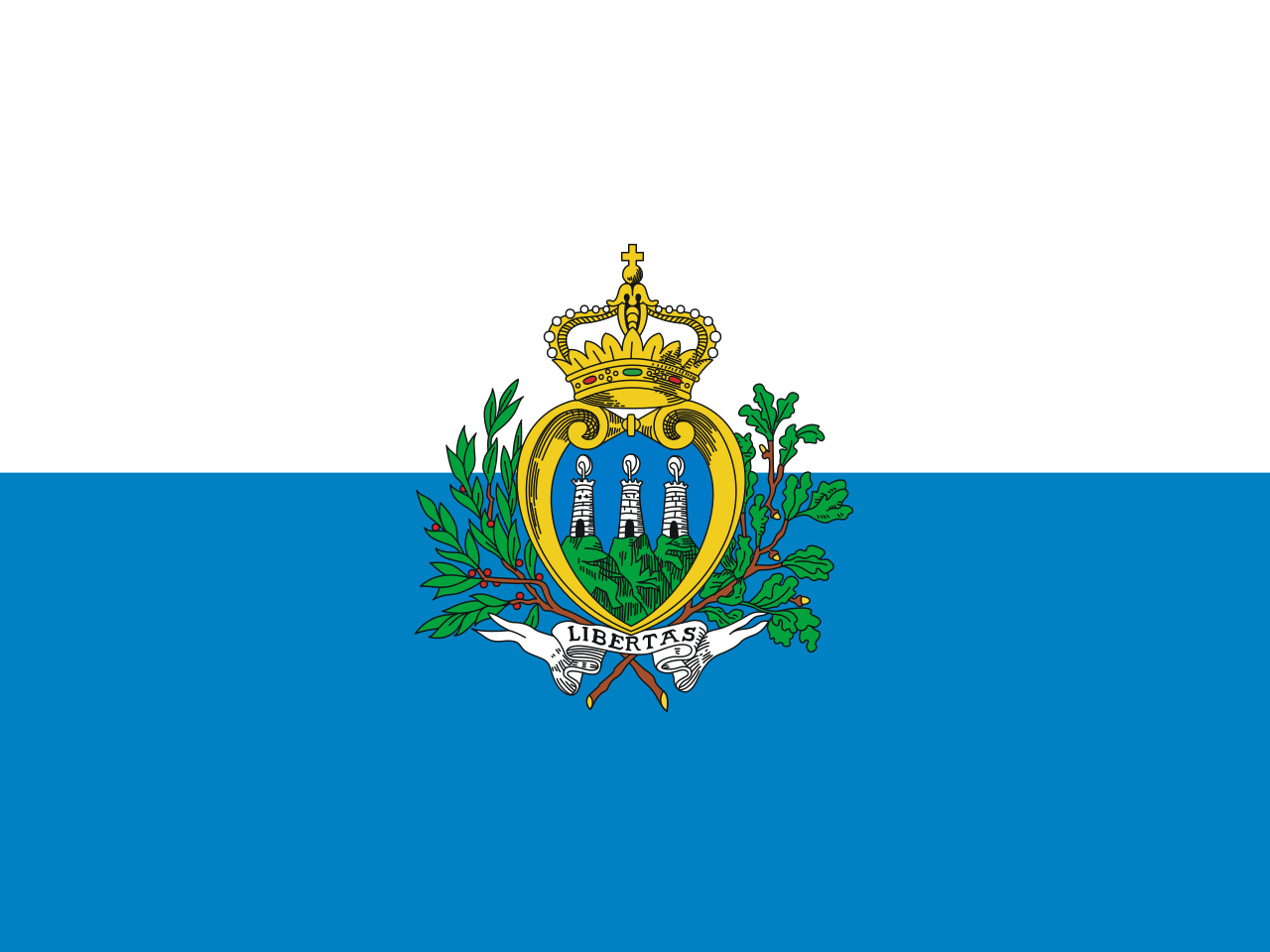
The unregulated flag
1829 → 9 Aug 2011
A white and blue flag was first raised on the Guaita tower in 1829. For almost 150 years no law set its form or its use.
- 2011
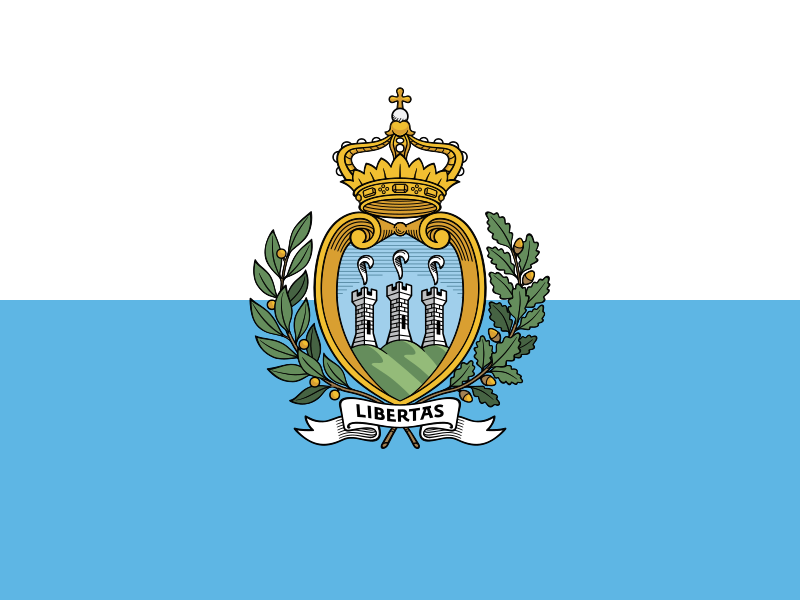
The standardised flagIn use
9 Aug 2011 → today
The constitutional law of 22 July 2011, in force from 9 August, fixed the 3:4 proportion, the drawing of the arms and the colours.
The law
What defines it, and who flies it
- 6 April 1862
Decree of the Consiglio Principe e Sovrano of 6 April 1862
Fixed the coat of arms. It does not mention the flag.
- 28 March 1997
Decree No. 40 of 28 March 1997
Gives each castello its own flag: its arms on the white and blue bicolour.
- 22 July 2011
Constitutional Law No. 1 of 2011 on the flag and official coat of arms of the Republic of San Marino
Fixes the proportions, the size and position of the arms, the colour codes and the use of the flag, with an annex of illustrations. In force from 9 August 2011.
In use
The ensign is identical to the state flag
The 2:3 proportion may be used abroad and at sporting events
Used as a flag of convenience
Coat of arms
The arms of San Marino