The flag of Malta
Il-Bandiera ta' Malta · since 1964
 Back to Malta
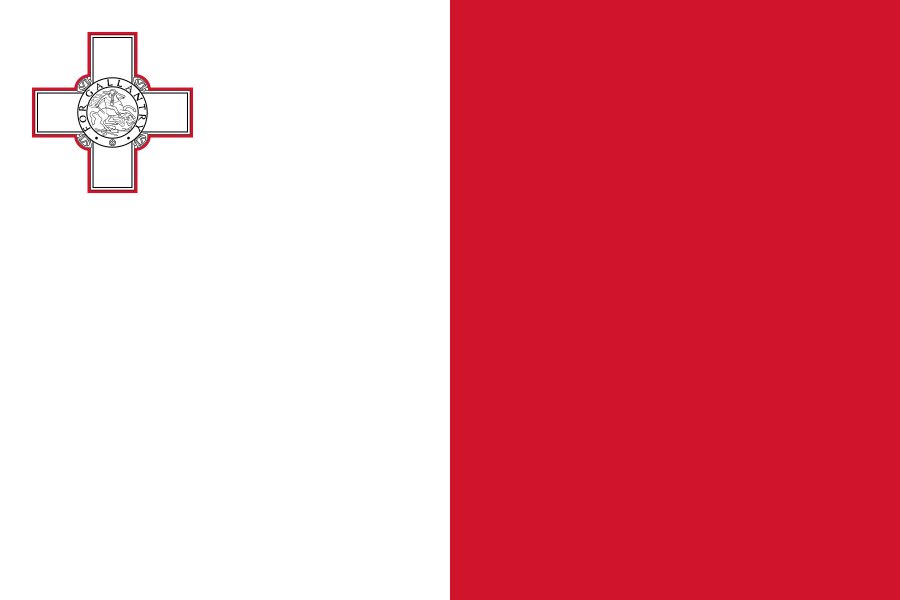
Two equal vertical stripes, white at the hoist and red in the fly, with the George Cross edged in red in the upper hoist corner. The white and red were in unofficial use long before British recognition; the cross, awarded to Malta in April 1942, was added on a blue canton in 1943 and given a thin red edge in place of the canton at independence on 21 September 1964. The cross carries the English words For Gallantry.
At a glance
- Adopted
- 1964
- Proportion
- 2:3
- Colours
- Earlier flags
- 6
The colours
The colours of the flag of Malta, in the order it has them
- 0149.3%
White
abjadHoist stripe
- HEX
#FFFFFF- RGB
255 255 255
- 0250.7%
Red
aħmarFly stripe and the edge of the George Cross
- HEX
#CF142B- RGB
207 20 43- CMYK
10 100 74 2- Pantone
186 C- RAL
3028
No law gives these codes. HEX and RGB are the colour this site draws the flag in; CMYK, Pantone and RAL are the values most often published for it.
Construction
How the flag is drawn
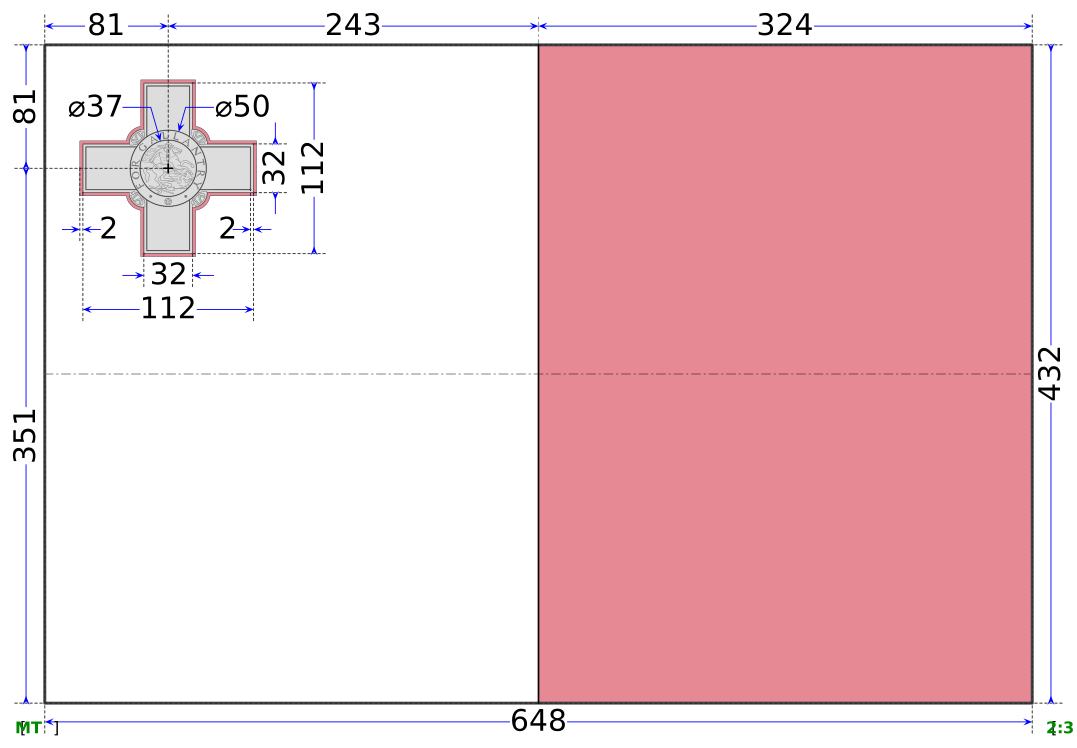
Two vertical stripes of equal width, white at the hoist and red in the fly, with a representation of the George Cross, edged in red, in the upper hoist corner of the white stripe.
- Stripes
- Two, vertical and of equal width, white at the hoist
- George Cross position
- Its centre 81 units from the hoist and 81 from the top edge
- Cross arms
- 32 units wide, not counting the red edge
- Red edge
- 2 units wide, around the cross
- Vertical flag
- The horizontal flag turned 90° clockwise, with the cross kept in the top left corner
Other forms
- Vertical flag
- Turned 90° clockwise, with the George Cross kept in the top left corner.
- Merchant flag
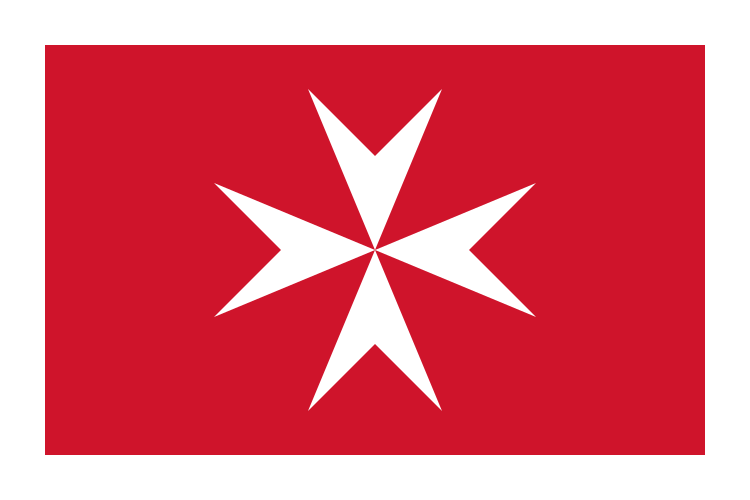
- A red field bordered in white with a white Maltese cross at the centre. Flown as the ensign of Maltese civil ships; it is not to be used as a courtesy flag.

Meaning
What each part stands for
- White and red
- Tradition gives them to Count Roger I of Sicily, who took the islands in 1090 or 1091 and is said to have torn a piece from his red and white chequered flag for the Maltese who fought for him. The story has been called a 19th-century myth; the white cross on red of the Knights of Malta is the more likely source
- George Cross
- Awarded to Malta by George VI on 15 April 1942 for its defence in the Second World War. In 1964 the blue canton behind it was replaced by a red edge so that it would appear less prominent
History
How the flag of Malta got here
- Undated
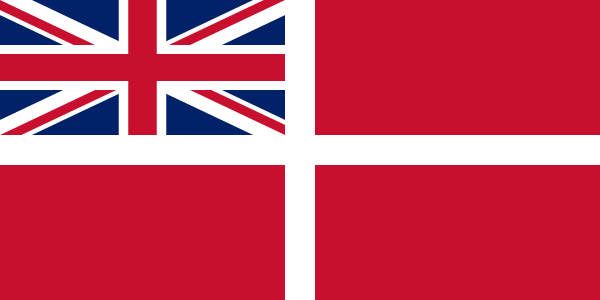
Crown Colony of Malta
Undated → 1875
A flag of the Crown Colony in the 19th century. The white and red standard was reportedly used by Maltese insurgents against the French occupation in September 1798.
- 1875
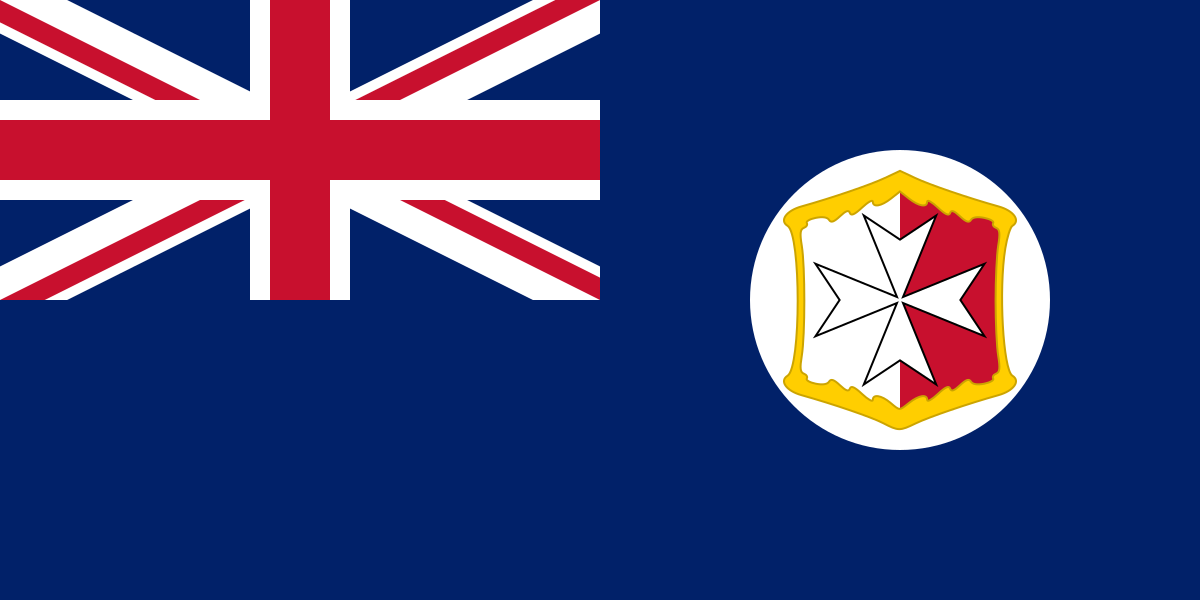
Crown Colony of Malta
1875 → 1898
The colony's flag from 1875.
- 1898
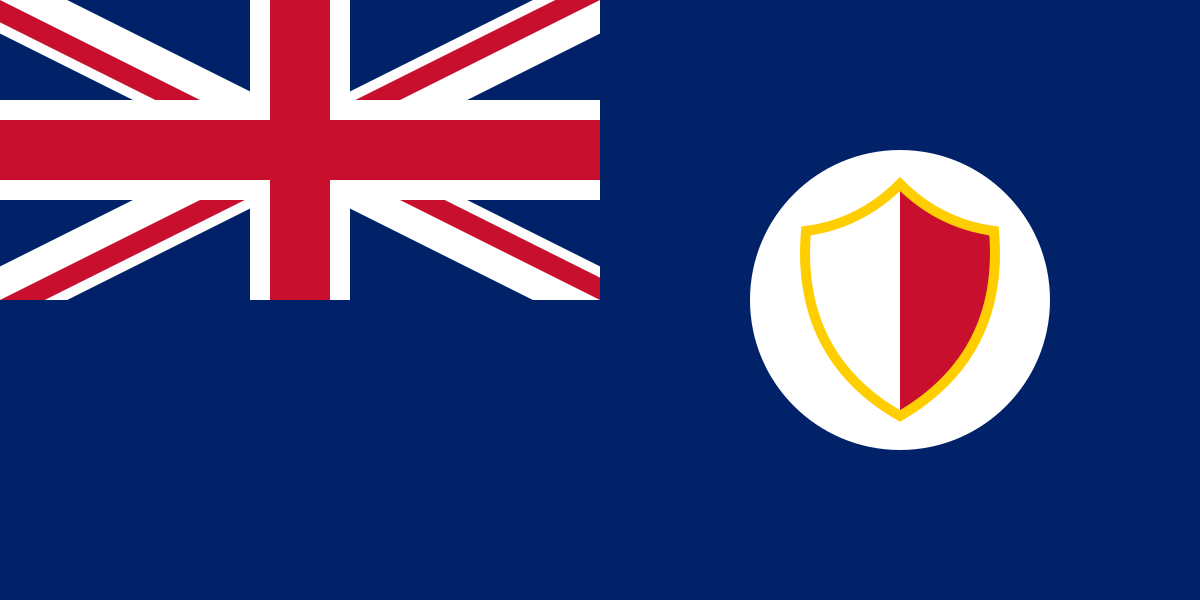
Crown Colony of Malta
1898 → 1923
The colony's flag from 1898.
- 1923
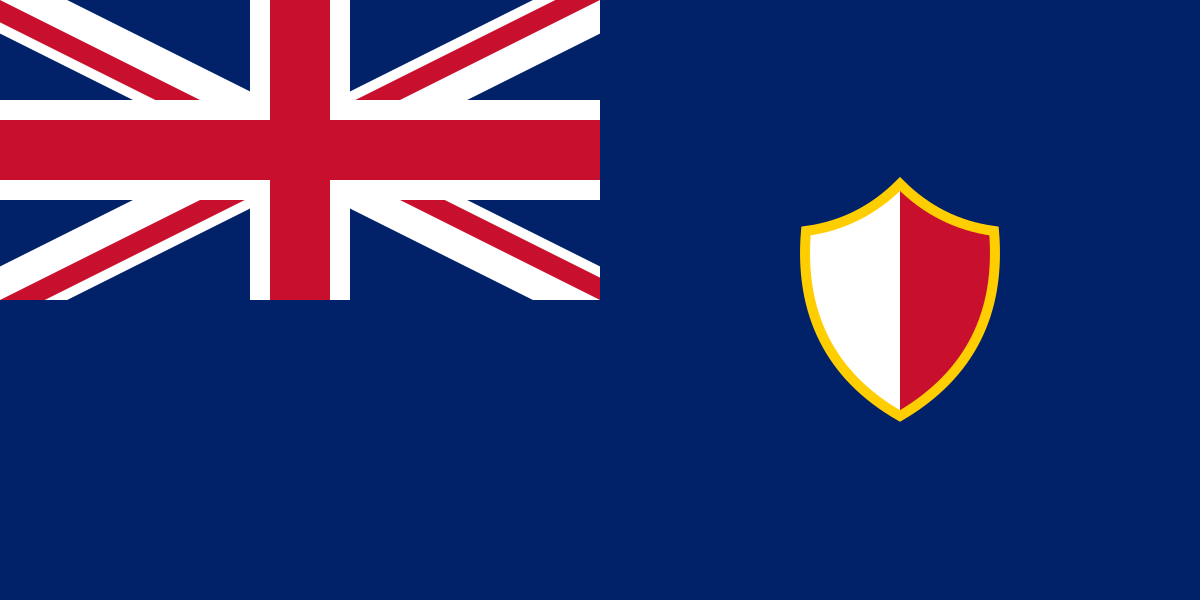
Crown Colony of Malta
1923 → 1943
The colony's flag from 1923.
- 1943
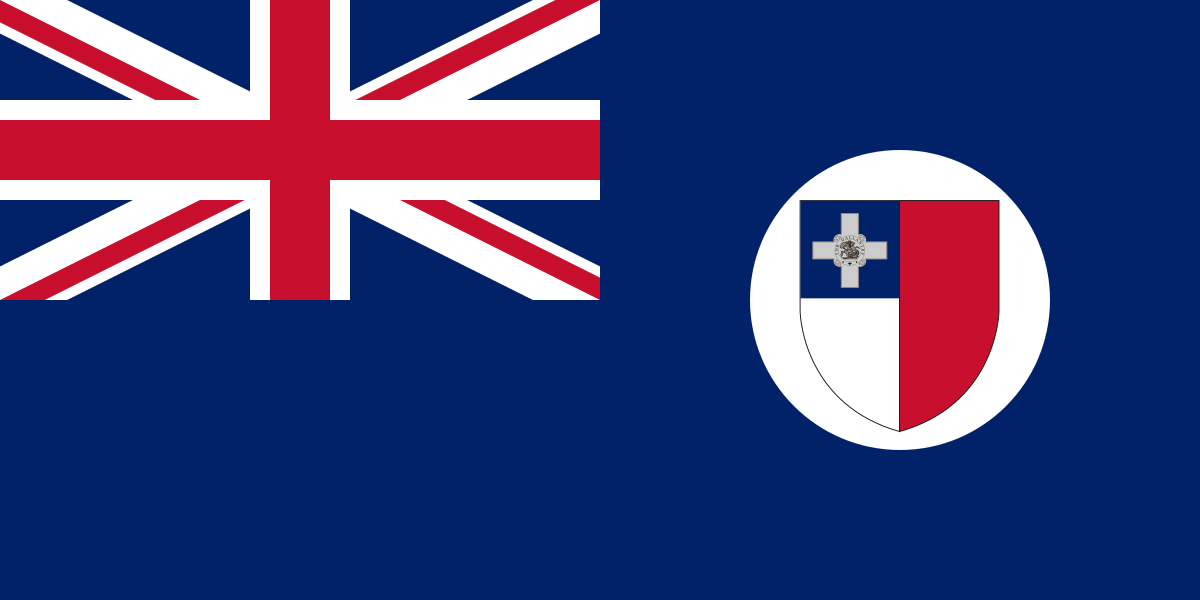
Crown Colony of Malta, with the George Cross
28 Dec 1943 → 21 Sept 1964
The colony's flag after the George Cross was officially added on 28 December 1943.
- 1943
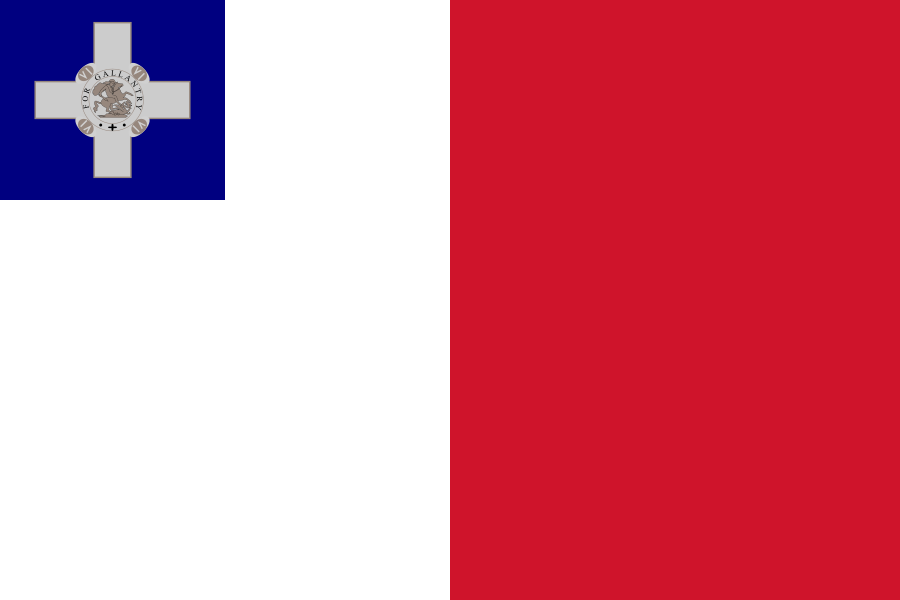
The bicolour with a blue canton
28 Dec 1943 → 21 Sept 1964
The white and red bicolour with the George Cross on a blue canton, used unofficially. The plain bicolour was in civil use before and after the Second World War, and Queen Elizabeth II approved it as an official flag of Malta on 9 November 1954 without any formal announcement.
- 1964
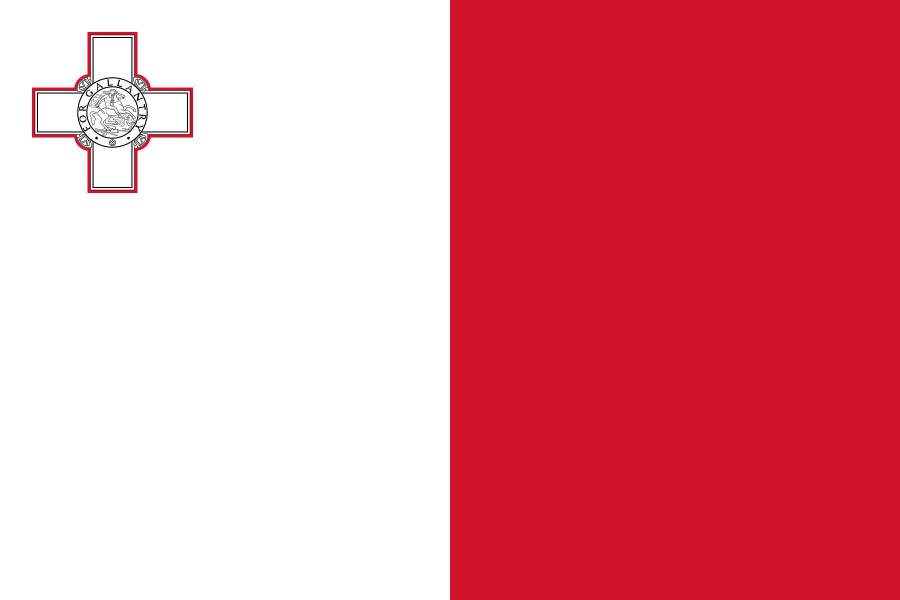
The flag of independent MaltaIn use
21 Sept 1964 → today
At independence the blue canton was removed and the George Cross given a thin red edge. A law of 1975 allowed the cross to be removed by a simple majority in Parliament; calls to remove it, in 2013 and 2019, have not changed the flag. In 1997 the plain bicolour was still flown in parts of the south of the island.
The law
What defines it, and who flies it
- 21 September 1964
Two equal vertical stripes, white in the hoist and red in the fly, with a representation of the George Cross edged with red in the canton of the white stripe; the breadth of the flag one and a half times its height.
- 25 July 1990
National Flag Graphical Specifications, Government Notice 517, Malta Government Gazette No. 15,310
The construction and the red, Pantone 186 C. Supplemented by OPM Circular 14/2004 of 5 April 2004.
- Undated
Emblem and Public Seal of Malta Act (Cap. 253)
Makes it unlawful to vilify or deface the flag, or to incorporate it in any design without the written authority of the Prime Minister.
- Undated
Merchant Shipping Act (Cap. 234)
Establishes the merchant flag as the national colours of Maltese civil ships.
In use
Flown from sunrise to sunset near the main administration building of every public institution when the weather permits, on schools during school days and at polling places on election days
Flown at half-mast on government buildings when the Office of the Prime Minister so instructs; crepe streamers may be added above it for mourning
Flown as the ensign of Maltese military vessels
Never flown with the George Cross at the bottom, except as a signal of dire distress
Coat of arms
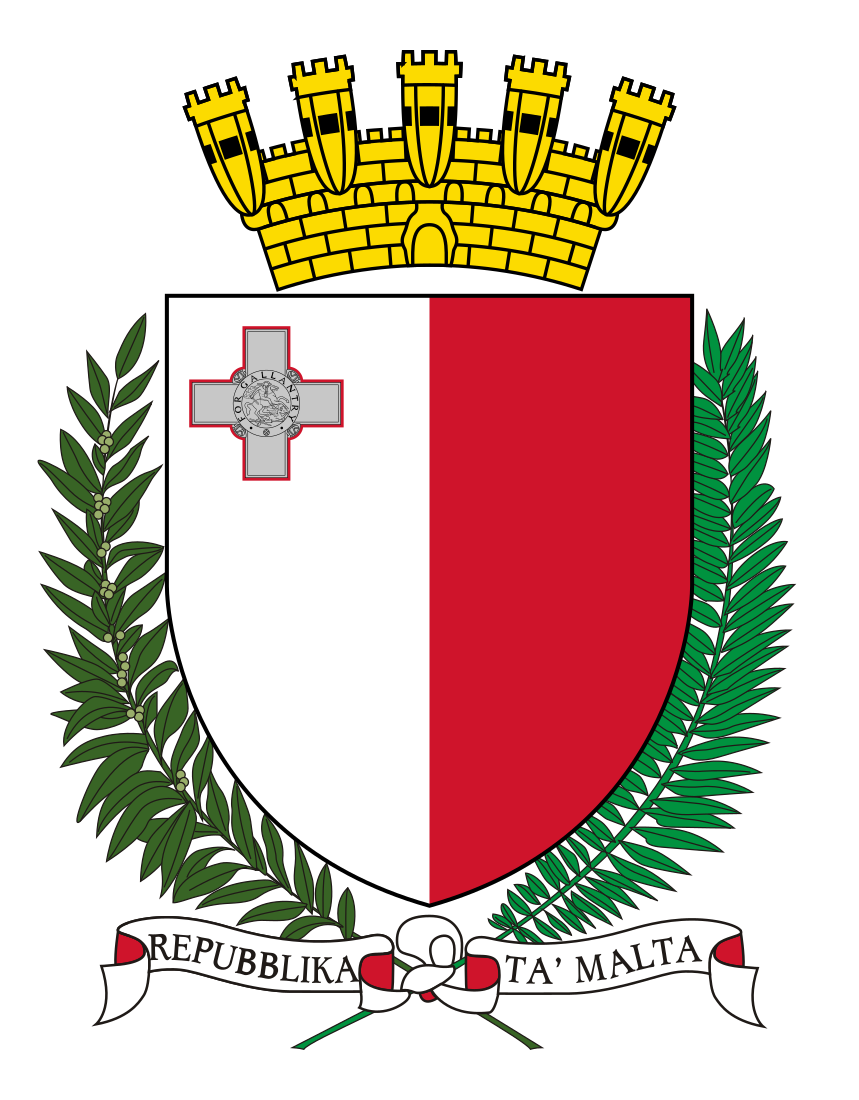
The arms of Malta