How Macau passed from a rented port to Chinese rule
2 067 words · 9 min · updated 2026-10-02
 Back to Macau
Portugal held Macau from 1557 until midnight on 20 December 1999, when China resumed the exercise of sovereignty under the Joint Declaration signed in 1987. For most of those 442 years the two governments did not agree on what Portugal held: a trading post that paid the Ming authorities a ground rent, a colony that stopped paying it in the 1840s, a perpetual occupation granted by treaty in 1887 and from 1979 a Chinese territory under Portuguese administration.
In short
- Portuguese settlement
- 1557, at a ground rent
- Rent stopped
- under Governor Ferreira do Amaral, 1846 to 1849
- Treaty of Peking
- signed 1 December 1887
- Organic Statute
- 17 February 1976
- Joint Declaration
- signed 13 April 1987, in force 15 January 1988
- Basic Law adopted
- 31 March 1993
- Handover
- 00:00, 20 December 1999
- World Heritage
- Historic Centre of Macao, inscribed 15 July 2005
Who governed Macau before the Portuguese came
The peninsula sat inside the Chinese administrative map long before it had a European name. When the Qin unified China in 221 BC, the area fell under Panyu County in the Nanhai Commandery. It passed to Dongguan Prefecture under the Jin dynasty, and in 1152, under the Southern Song, the Guangdong administration joined coastal parts of four counties into a new Xiangshan County that took it in. The Macao Yearbook, published by the government of the Special Administrative Region, opens its history chapter on these county lines, under the heading that Macao has been part of China since ancient times.
The settlement itself was small. Merchant ships running between Southeast Asia and Guangzhou used the coast for shelter, water and food from the fifth century, and in 1277 about 50,000 refugees fleeing the Mongol conquest settled along it. Fishermen from Guangdong and Fujian built the A-Ma Temple during the Ming dynasty to pray for safety at sea, and Mong Há, with what may be the oldest shrine in the territory, was the centre of Chinese life.
The names came in layers. Haojing, Oyster Mirror, is the earliest recorded in Chinese documents. The name Aomen first appears in 1564, in a memorandum to the Ming emperor by Pang Shangpeng describing two hills facing each other like the towers of a city gate. The earliest known record of the name Macau in a foreign language is a letter dated 20 November 1555, and the Portuguese spelling is traced to the waters around the A-Ma Temple.
How Portuguese traders came to stay at Macau
Portuguese ships reached the Pearl River estuary from Malacca. Jorge Álvares landed at Lintin Island in 1513 and set up a stone marker claiming it for King Manuel I. An embassy sent in 1517 under Tomé Pires was rejected by the Ming court, and when more Portuguese ships came to the trading island of Tamão in 1521 and 1522 they were driven off; the Portuguese lost two ships at Tamão and two more at Sincouwaan. Further defeats followed at Shuangyu in 1548 and near Dongshan in 1549.
The return was negotiated. After Portuguese ships helped the Cantonese authorities against coastal pirates, a Luso-Chinese agreement of 1554 secured a trading post. The Macao Yearbook and the Chinese Foreign Ministry both date the landing to 1553, when the Portuguese asked local officials for ground on which to dry goods soaked at sea, and both date the start of settlement to 1557. Wikipedia's history of the territory gives an annual rent of 500 taels of silver, about 20 kilograms, with ground rent payments beginning in 1573; the Yearbook gives around 1573 for the first rent paid to the Chinese government.
Chinese authority over the settlement was physical as well as legal. In 1574 the authorities built the Portas do Cerco across the strip of land joining the peninsula to the mainland, to limit contact between the local population and the Portuguese. Chinese residents stayed under Chinese law, and from the 1740s new construction had to be approved by a resident mandarin. In 1583 the Portuguese were allowed to form a Senate for their own community, on the understanding, in the Yearbook's words, that it recognised overall Chinese sovereignty and was not politically independent.
What Macau's merchants carried between China and Japan
The Portuguese were never numerous: about 900 in 1583, and 1,200 in a population of 26,000 in 1640. Their trade ran along three routes: to Goa and Lisbon by way of Malacca; to Manila and on to Mexico; and from Guangzhou to Nagasaki. The Nagasaki route paid most, because Chinese officials had banned direct trade with Japan in 1547 and the Portuguese carried Chinese silk one way and Japanese silver the other.
Missionaries followed the merchants. Jesuits arrived in the 1560s and Dominicans in the 1580s. Pope Gregory XIII created the diocese in 1576, and the Jesuits opened St. Paul's College in 1594. In 1587 Philip II, who held the Spanish and Portuguese crowns together, raised the settlement to the City of the Name of God.
The union of the crowns made Macau a Dutch target. In 1622 about 800 attackers landed and were driven off by 150 Portuguese and Macanese defenders and a large number of African slaves, and the next governor built the Guia Fortress. The trade did not survive the 1630s: Japan closed itself to Portuguese ships at the end of that decade, and the Dutch took Malacca in 1641, cutting the route to Goa. When Kangxi opened trade to every foreign country in 1685, Macau stopped being the only European entry into China.
How Portugal turned a rented port into a colony
The nineteenth century reversed the arrangement. A royal decree of 20 September 1844 made Macau, with Timor and Solor, an overseas province, and a decree of 1845 declared it a free port. Governor João Maria Ferreira do Amaral, who took office in 1846, stopped the rent, taxed the Chinese inhabitants, expelled the mandarins and in 1849 abolished the Chinese customs house. He was killed near the Portas do Cerco on 22 August 1849, and three days later a Portuguese force under Vicente Nicolau de Mesquita took the Chinese fort at Passaleão.
The territory grew across the water. Taipa was taken in 1851, and the occupation of Coloane began in 1864. A treaty signed at Tianjin in 1862 recognised Macau as a Portuguese colony but was never ratified, after the two sides fell out over the meaning of its ninth article.
The colony also had a darker trade. Between 1851 and 1874 about 215,000 Chinese labourers were shipped from Macau, mainly to Cuba and Peru, some of them entrapped through gambling debts and others kidnapped.
Why the treaty of Peking left sovereignty open
Portugal secured its treaty in 1887, with British diplomatic support. A protocol signed in Lisbon on 26 March and a treaty signed in Beijing on 1 December confirmed the perpetual occupation and government of Macau by Portugal, with a promise never to alienate Macau without China's agreement. The border with the mainland was left for a later convention and was never delimited.
The two governments read the result differently, and their accounts still differ. The Chinese Foreign Ministry writes that Portugal forced the Qing government to sign both documents after occupying Taipa and Coloane, and that the 1887 treaties allowed Portugal to stay and administer Macau. The Macao Yearbook records that the foreign ministry of the Kuomintang government notified Portugal in 1928 that it was abrogating the treaty; the English Wikipedia article on Macau records instead that the Kuomintang further affirmed Portuguese jurisdiction when the treaty was renegotiated that year. Paulo Cardinal, a former legal adviser to the Legislative Assembly, lists the characterisations Western scholars have offered under international law: a lease, a condominium, an internationalised territory, a community with sovereignty held by China and exercised by Portugal.
| Year | What the arrangement was called | By whom |
|---|---|---|
| 1557 | a settlement paying ground rent | Ming authorities |
| 1844 | an overseas province with Timor and Solor | Portuguese royal decree |
| 1887 | perpetual occupation and government | Sino-Portuguese treaty |
| 1951 | an overseas province of a single Portuguese state | Salazar government |
| 1976 | a territory under Portuguese administration | Organic Statute of Macau |
| 1979 | Chinese territory under Portuguese administration | Portugal and China |
How refugees and riots changed Portuguese Macau
Portugal stayed neutral in the Second World War, and Japan respected that neutrality up to a point. Refugees from Guangzhou and Hong Kong raised the population from about 200,000 to about 700,000 within a few years. In August 1943 Japanese troops seized the British steamer Sian in Macau waters, and the following month they installed Japanese advisers in place of an occupation. On 16 January 1945 American aircraft bombed the naval aviation hangar after learning that fuel was to be sold to Japan, and in 1950 the United States paid Portugal US$20,255,952 in compensation.
After 1949 the People's Republic declared the 1887 treaties unequal and left the question for later. The colony's economy changed: in 1962 the government gave the Sociedade de Turismo e Diversões de Macau the monopoly on all forms of gambling, and the Grand Prix, begun as a treasure hunt in 1954, became a motor race.
The decisive break came from the street. A dispute over a school extension in Taipa led to two days of rioting from 3 December 1966, the 12-3 incident, in which six to eight people were killed and hundreds injured. On 29 January 1967 Governor Nobre de Carvalho signed a statement of apology at the Chinese Chamber of Commerce, and the colonial government agreed to compensate local Chinese leaders and to ban Kuomintang activity. Wikipedia's account of Portuguese Macau dates the start of a de facto Chinese suzerainty to those riots.
How Portugal and China agreed on a handover date
The Carnation Revolution of 25 April 1974 committed Portugal to decolonisation, and it offered to return Macau. China declined, wanting to keep confidence in Hong Kong. Portugal withdrew its remaining troops on 31 December 1975, and on 17 February 1976 its parliament passed the Organic Statute, which called Macau a territory under Portuguese administration and dropped it from the national territory in the new constitution. When the two states opened relations on 8 February 1979, they agreed that Macau was Chinese territory under Portuguese administration and that its question would be settled by consultation.
Talks began in Beijing on 30 June 1986 and ran to four rounds. Portugal again offered 1987 and floated 2004 and 2007; China asked for 1997, the year of Hong Kong's return, and insisted on a date before 2000. They settled on 1999. The Joint Declaration was initialled on 26 March 1987 and signed on 13 April 1987 by Zhao Ziyang and Aníbal Cavaco Silva. It took effect on 15 January 1988 and fixed 20 December 1999 for the resumption of Chinese sovereignty, with Macau's existing systems to stay unchanged for 50 years.
What the transition settled before the handover
The Sino-Portuguese Joint Liaison Group held 37 plenary meetings. The Chinese Foreign Ministry names three problems it worked through: localising the civil service, localising the laws and the official status of the Chinese language. The National People's Congress adopted the Basic Law on 31 March 1993. Reporting to the United Nations Human Rights Committee in April 1997, Portugal's delegation noted that it had entered a reservation to the covenant's article on elections for Macau, because members of the Legislative Assembly were appointed or indirectly elected, and that the death penalty for civil crimes had not existed in Macau for 124 years.
A Selection Committee of 200 permanent residents chose Edmund Ho Hau Wah as the first Chief Executive on 15 May 1999. The Portuguese flag came down at the handover ceremony shortly before midnight on 19 December, and at 00:00 on 20 December the flags of the People's Republic and of the new region went up, after 442 years of Portuguese presence.
What has happened in Macau since the handover
The region ended the casino monopoly in 2002 and licensed foreign operators, and the Cotai reclamation between Taipa and Coloane became the site of new resorts from 2004. On 15 July 2005 UNESCO inscribed the Historic Centre of Macao, a group of 22 principal buildings and public spaces that record the old trading port, on the World Heritage List.
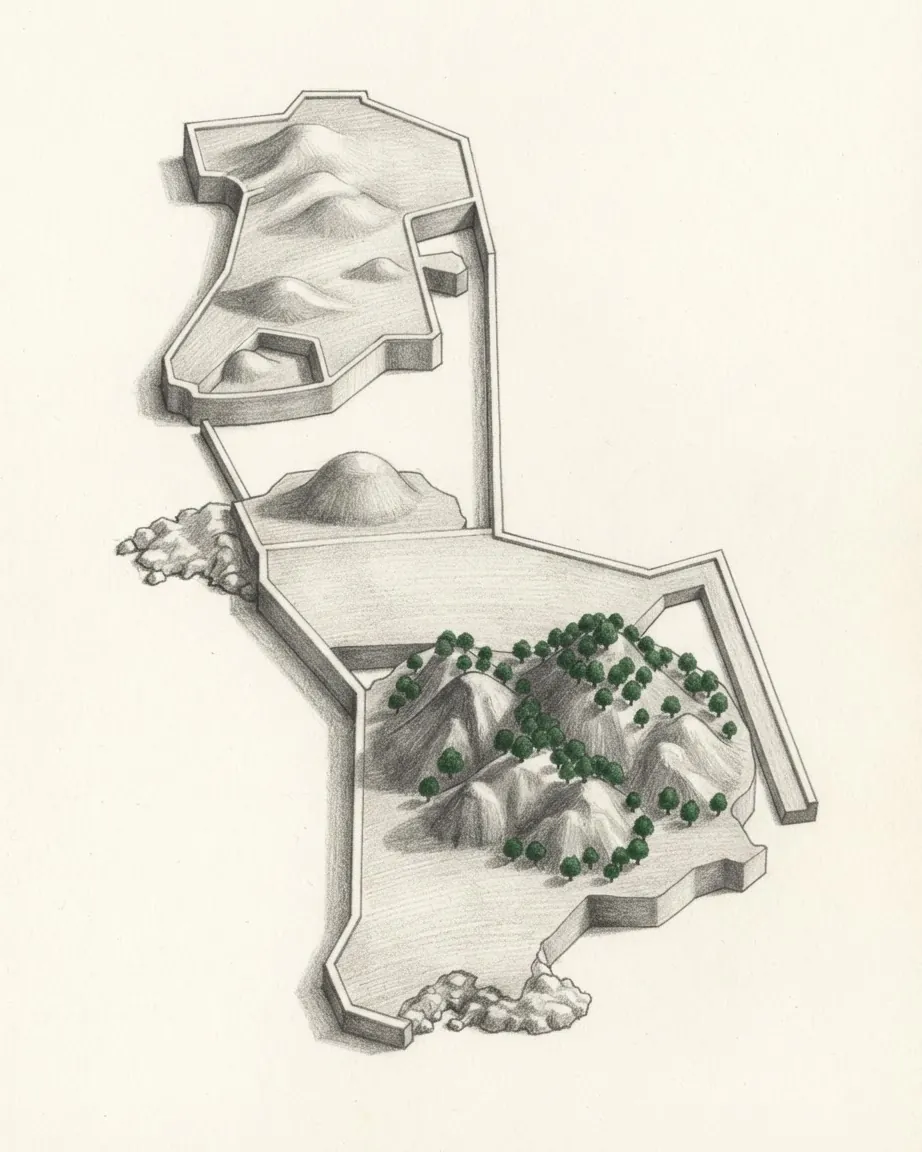
In 2015 the State Council redrew the region's borders, moving the land border north to the middle of the Canal dos Patos and adding 85 square kilometres of sea. Typhoon Hato struck in August 2017, killing 10 people and cutting power and water across the city for at least a day, and for the first time the People's Liberation Army garrison was deployed, with about 1,000 troops, to help clear up. The first line of the Light Rapid Transit opened on 12 December 2019.
Timeline
The dates in order
- 1513
- Jorge Álvares lands at Lintin Island in the Pearl River estuary.
- 1557
- The Portuguese settle at Macau, paying an annual ground rent in silver.
- 1583
- The Portuguese community is allowed to form a Senate.
- 1622
- A Dutch attack on the city is driven off.
- 1849
- Governor Ferreira do Amaral, who had stopped the rent and expelled the mandarins, is killed on 22 August.
- 1887
- The Treaty of Peking confirms Portugal's perpetual occupation and government of Macau.
- 1966
- The 12-3 riots begin on 3 December; the governor signs an apology on 29 January 1967.
- 1979
- Portugal and China open relations and call Macau Chinese territory under Portuguese administration.
- 1987
- The Joint Declaration is signed in Beijing on 13 April.
- 1999
- China resumes the exercise of sovereignty at midnight on 20 December.
- 2005
- UNESCO inscribes the Historic Centre of Macao on 15 July.
- 2017
- Typhoon Hato kills 10 people and the garrison is deployed for the first time.
Common questions
Questions about Macau
When did Portugal hand Macau back to China?
At midnight on 20 December 1999. The Portuguese flag was lowered shortly before midnight on 19 December at a ceremony in the garden of the Macao Cultural Centre, and at 00:00 the flags of the People's Republic and of the Macao Special Administrative Region were raised. The date was fixed by the Joint Declaration signed on 13 April 1987.
Did Portugal ever own Macau outright?
The two governments gave different answers. Portugal declared Macau an overseas province in 1844 and secured perpetual occupation and government by the Treaty of Peking in 1887. China's Foreign Ministry describes that treaty as forced on the Qing, and the Macao Yearbook records that the Kuomintang government notified Portugal in 1928 that it was abrogating it. From 1979 both sides used the phrase Chinese territory under Portuguese administration.
Why was Macau handed over in 1999 and not 1997?
During the talks of 1986 and 1987 China asked for 1997, the year of Hong Kong's return, and Portugal refused; Portugal suggested 2004 or 2007. China insisted on a date before 2000, and the two settled on 1999.
What was the 12-3 incident in Macau?
Riots that began on 3 December 1966, during the Cultural Revolution, after a dispute over a school extension in Taipa. Six to eight people were killed and hundreds injured. On 29 January 1967 the governor signed an apology at the Chinese Chamber of Commerce, and the colonial government agreed to compensate local Chinese leaders and ban Kuomintang activity in the territory.
How long did Portugal rule Macau?
The handover is counted as the end of 442 years of Portuguese presence, from the settlement of 1557 to 20 December 1999. The arrangement changed over that time: a trading post paying rent to the Chinese authorities until the 1840s, a colony from the mid nineteenth century and from 1976 a territory under Portuguese administration that Portugal no longer counted as national territory.