The flag of Armenia
Հայաստանի դրոշ · since 1990
 Back to Armenia
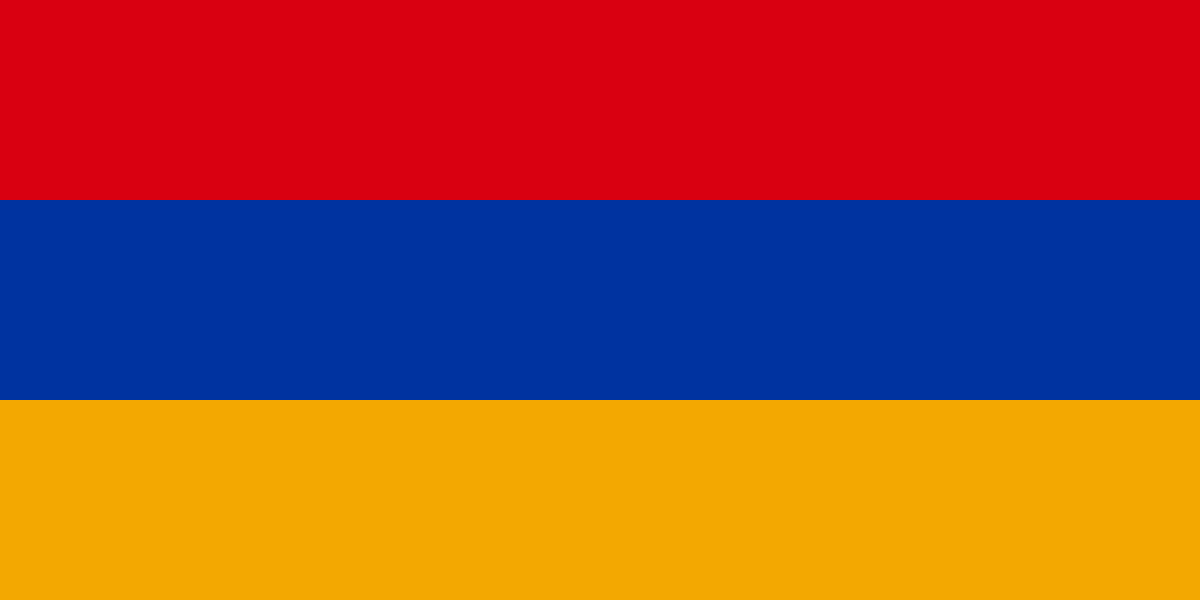
Three equal horizontal stripes of red, blue and orange, the flag of the First Republic of Armenia of 1918 restored in 1990 at the proportion 1:2. Parliament kept the orange in 1918 even though orange cloth was hard to find, and a 2006 law gives each colour its official meaning.
At a glance
- Adopted
- 1990
- Proportion
- 1:2
- Colours
- Earlier flags
- 6
- Designer
- 1
The colours
The colours of the flag of Armenia, in the order it has them
- 0133.5%
Red
կարմիրTop stripe
- HEX
#D90012- RGB
217 0 18- CMYK
0 100 100 0- Pantone
485 C
- 0232.9%
Blue
կապույտMiddle stripe
- HEX
#0033A0- RGB
0 51 160- CMYK
100 80 0 0- Pantone
286 C
- 0333.5%
Orange
նարնջագույնBottom stripe
- HEX
#F2A800- RGB
242 168 0- CMYK
0 35 100 0- Pantone
1235 C
No law gives these codes. HEX and RGB are the colour this site draws the flag in; CMYK, Pantone and RAL are the values most often published for it.
Construction
How the flag is drawn
Three horizontal stripes of equal width, red over blue over orange.
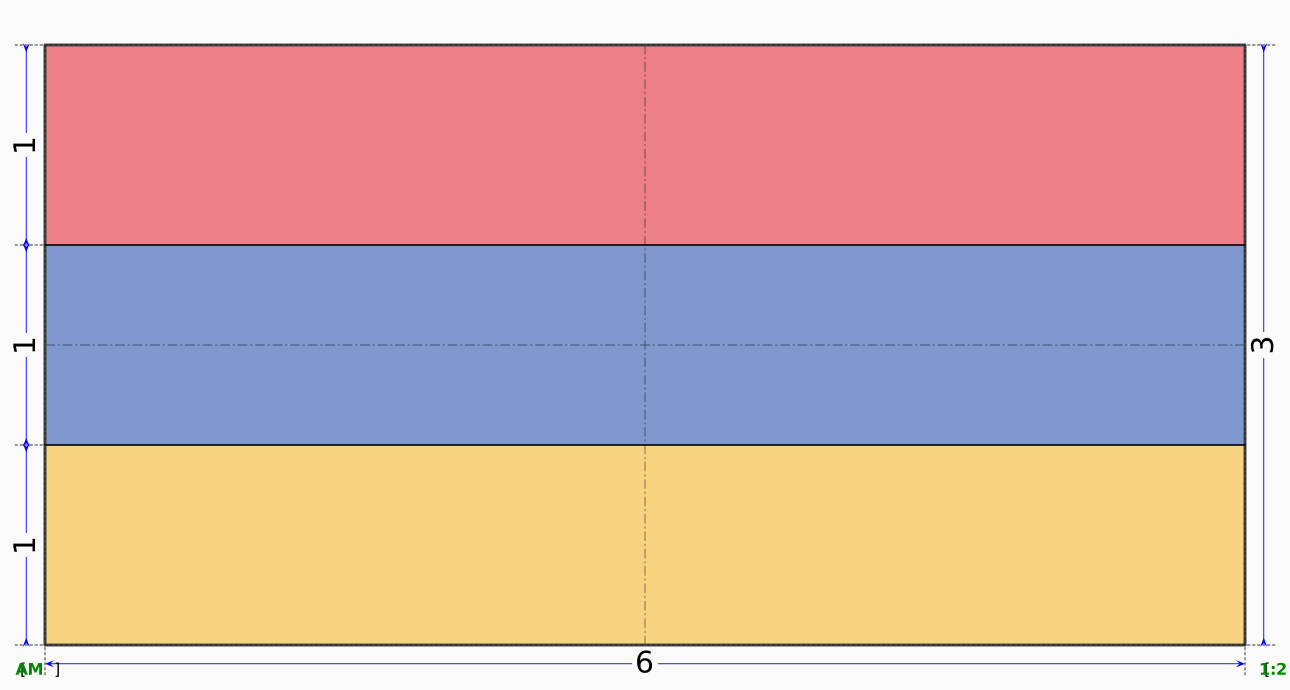
- Stripes
- Three, of equal width
- Size
- Any size, provided the ratio is kept
Other forms
- Vertical flag
- The flag turned through 90° anticlockwise.
- Presidential standard
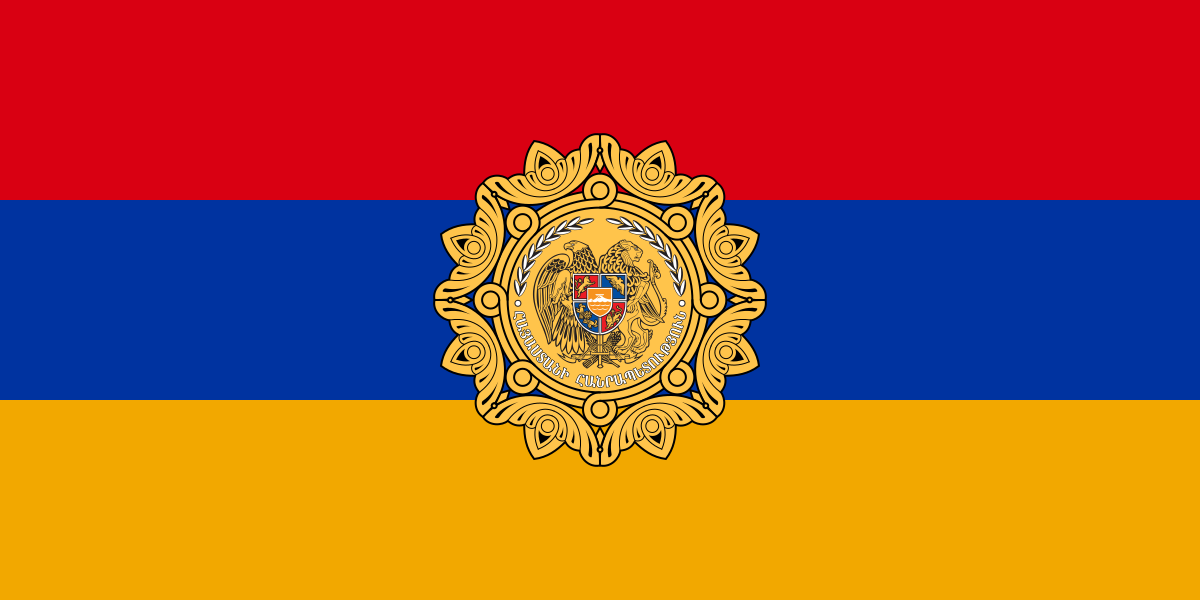
- The tricolour with the presidential seal at its centre, in the proportion 1:2.
Meaning
What each part stands for
- Red
- The Armenian Highland, and the Armenian people's continued struggle for survival, for the Christian faith and for the independence and freedom of Armenia
- Blue
- The will of the people of Armenia to live beneath peaceful skies
- Orange
- The creative talent and hard work of the people of Armenia. Often called apricot in informal description
- The three colours
- Said to come from the colours of the Rubenid kingdom of Cilicia in its last period
Who drew it
- Stepan Malkhasyants
- Philologist who proposed the red, blue and orange tricolour to the National Assembly on 1 August 1918
History
How the flag of Armenia got here
- 1885
Alishan's tricolour
1885 → 1918
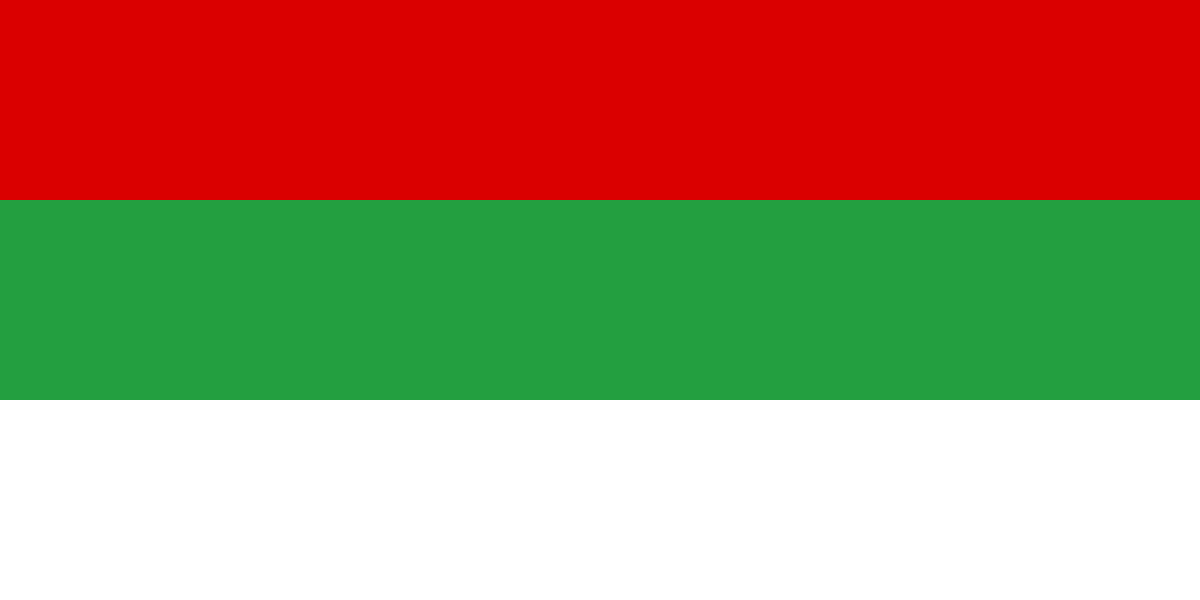
The priest Ghevont Alishan designed a flag for the Armenian Students Association of Paris to carry at the funeral of Victor Hugo: red for Red Sunday after Easter, green for Green Sunday, and white. A second design of his took the colours of the rainbow Noah saw on Ararat.
Image: Aivazovsky, CC BY-SA 3.0
- 1918
First Republic of Armenia
1 Aug 1918 → 29 Nov 1920
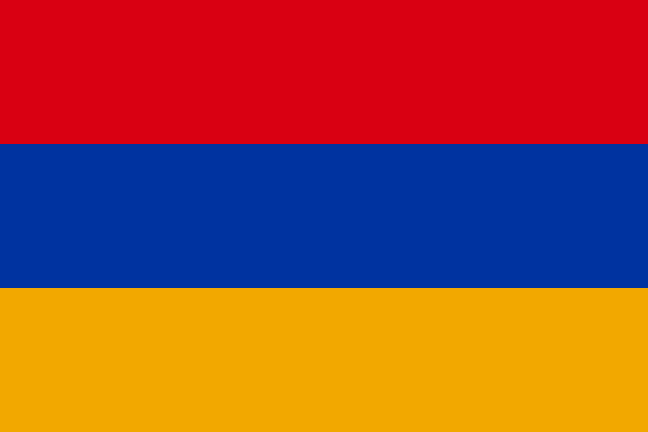
The National Assembly voted for a red, blue and orange tricolour at 2:3. Members asked for green in place of orange, which was hard to source, and in September 1918 institutions were told to use yellow. The flag was meant to be confirmed by a constituent assembly that never met.
- 1922

Armenian SSR
2 Feb 1922 → 1937
A red banner with gold Armenian letters for the republic's name in the upper hoist corner.
Image: Vectorization by Pacha Tchernof from The album of the RSFSR glags and foregn countires Flag_of_SSRA.png : Original uploader was Crzycheetah at en.wikipedia deri, CC BY-SA 2.5
- 1937
Hammer and sickle
1937 → 1940
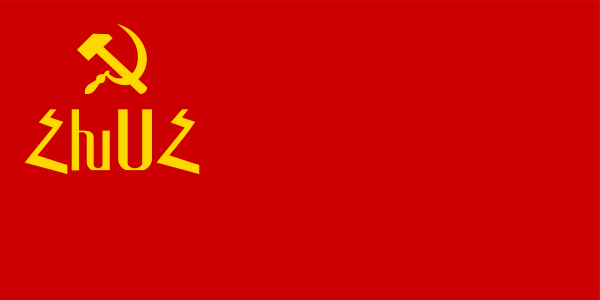
The new constitution added a gold hammer and sickle above the letters.
- 1940
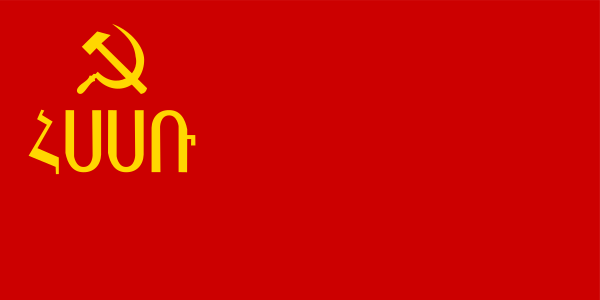
New lettering
1940 → 1952
The letters were changed to match the republic's new name.
- 1952
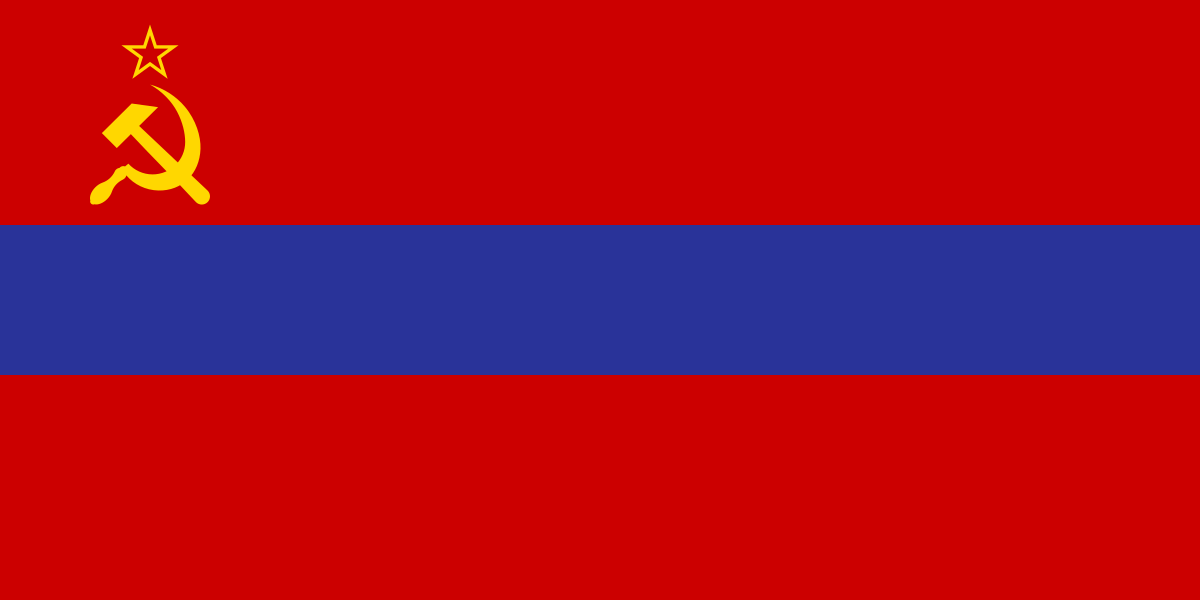
The blue stripe
1952 → 24 Aug 1990
A red field crossed by a horizontal blue stripe, with a gold hammer and sickle below a star in the canton on the obverse only. The tricolour, long banned, was allowed to fly in Yerevan again in May 1988.
- 1990
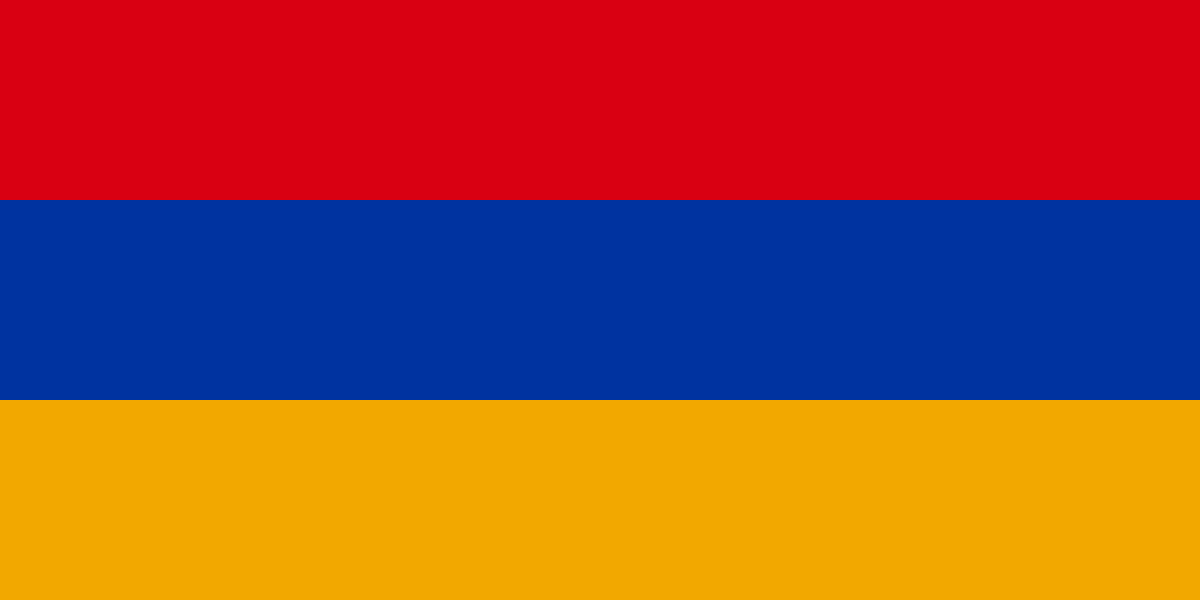
The tricolour restoredIn use
24 Aug 1990 → today
The Supreme Council restored the flag of the First Republic the day after declaring sovereignty, at 1:2 rather than 2:3. It has been the flag of an independent state since 1991.
The law
What defines it, and who flies it
- 24 August 1990
Law on the National Flag of the Republic of Armenia, No. C-0076-1
Adopted by the Supreme Council the day after the declaration of independence. Three equal horizontal stripes of red, blue and orange, in the proportion 1:2.
- 1995
Constitution of the Republic of Armenia, Article 13
A tricolour of three horizontal and equal stripes of red, blue and orange.
- 15 June 2006
Law No. 149 on the National Flag of the Republic of Armenia
Adopted after the constitutional reform of 2005. Gives the meaning of each colour, the ratio of 1:2, and where and how the flag is flown and lowered.
- 1 January 2013
State standard HST 50-2012, general characteristics of the national flag
Issued by the National Institute of Standards. Sets the construction and the colours.
In use
Flown permanently on the residence of the President, the National Assembly, the Government, the Constitutional Court and the courts, the Prosecutor's Office, the Central Bank and other state bodies
Hoisted at the opening of official championships and lowered at their close
Lowered to the middle of the staff on days of mourning, with a black ribbon as long as the flag attached above it
Covers the coffin at funerals with military honours, and is then presented to the relatives
Its lower edge must hang at least 2.5 m above the ground
National Flag Day is 15 June, the day the 2006 law was passed, and was first marked in 2010
Related flags
The flags it is confused with or comes from
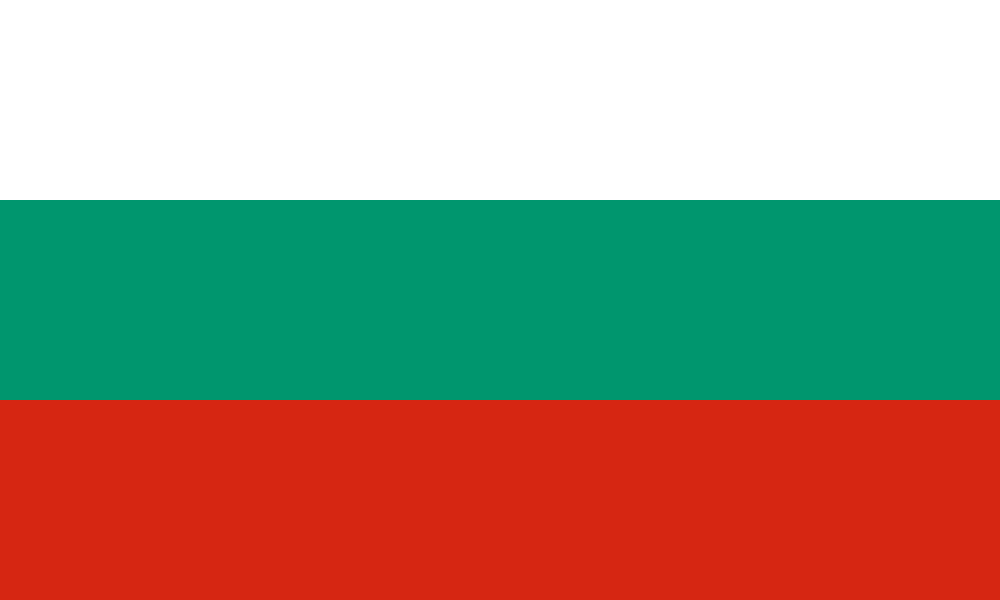 Bulgaria
- Alishan's red, green and white of 1885 resembles the Bulgarian flag turned upside down.
Coat of arms
The arms of Armenia