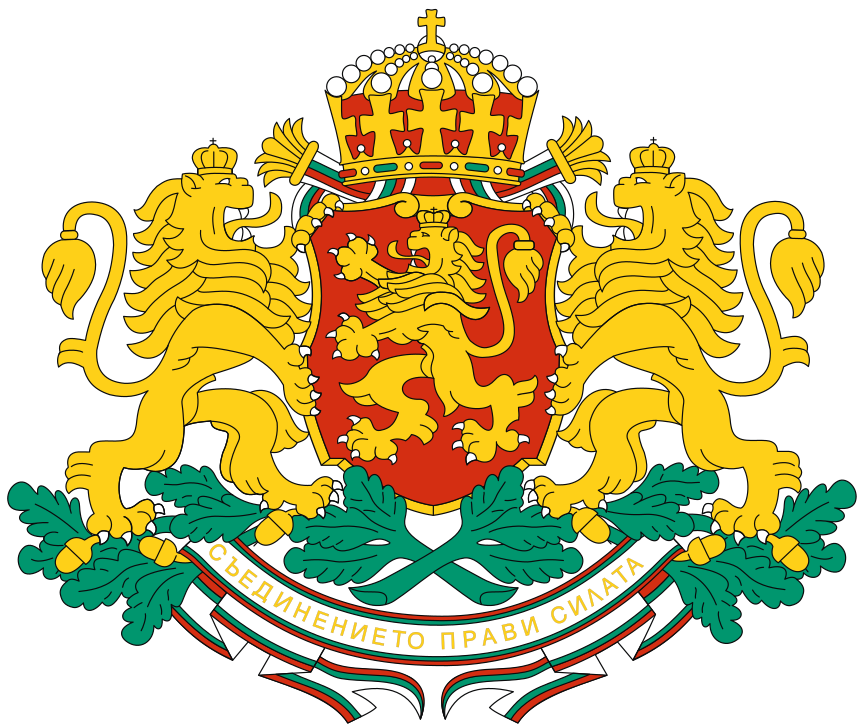
The flag of Bulgaria
Национално знаме на България · since 1990
 Back to Bulgaria
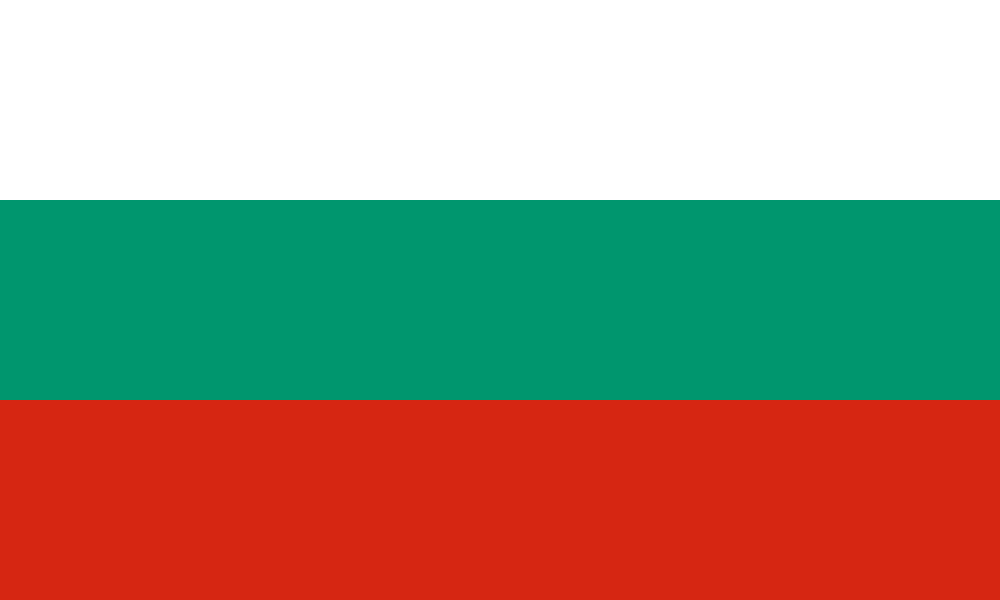
Three equal horizontal stripes of white, green and red at 3:5. The colours were carried in varying orders by the revolutionary bands of the 1860s and 1870s, and the Tarnovo Constitution fixed the present order in 1879. The communist state added its emblem to the white stripe in 1947; it was removed in 1990, and the law gives the colours as Pantone textile numbers.
At a glance
- Adopted
- 1990
- Proportion
- 3:5
- Colours
- Earlier flags
- 4
- Designer
- 1
The colours
The colours of the flag of Bulgaria, in the order it has them
- 0133.3%
White
бялTop stripe
- HEX
#FFFFFF- RGB
255 255 255- CMYK
0 0 0 0
- 0233.3%
Green
зеленMiddle stripe
- HEX
#00966E- RGB
0 150 110- CMYK
81 12 65 1- Pantone
17-5936 TCX
- 0333.3%
Red
червенBottom stripe
- HEX
#D62612- RGB
214 38 18- CMYK
11 98 93 2- Pantone
18-1664 TCX
No law gives these codes. HEX and RGB are the colour this site draws the flag in; CMYK, Pantone and RAL are the values most often published for it.
Construction
How the flag is drawn
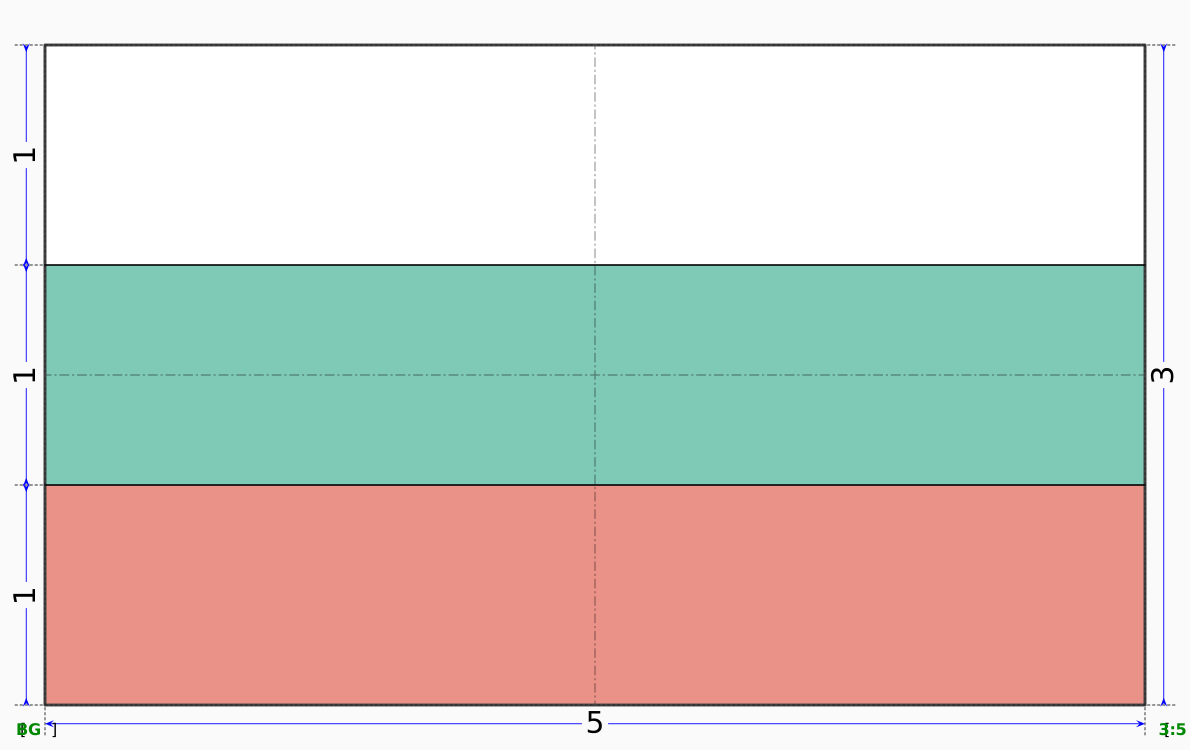
Three horizontal stripes of equal size, white over green over red.
- Stripes
- Three, equal in size, along the length of the flag
- Standard sizes
- 18 × 30 cm, 24 × 40 cm, 90 × 150 cm and 129 × 215 cm
- White
- A whiteness of at least 80%
- Print colours
- Green Pantone 347 U and red Pantone 032 U when printed on paper
Other forms
- Vertical flag
- Hung vertically, the colours run white, green, red from left to right as seen from the front. Hung from a crossbar it may be up to five widths long.
- Flag with the arms
- A popular version with the full coat of arms across the white and green stripes at the hoist. It has no official status.
Meaning
What each part stands for
- The flag
- Expresses the independence and sovereignty of the Bulgarian state, in the words of the flag law
Who drew it
- Stiliana Paraskevova
- Sewed the Braila tricolour in April 1877, the flag that most influenced the choice of the national flag
History
How the flag of Bulgaria got here
- 1861
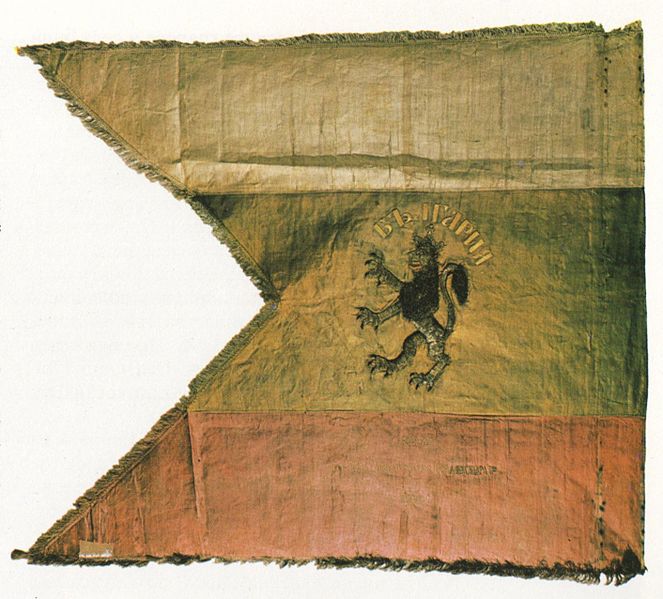
Flags of the national revival
1861 → 1878
Georgi Rakovski's Bulgarian Legions of 1861 to 1862 flew green, white and red; other bands and committees used the three colours in other orders. The Stara Zagora rebels of 1875 and the Vratsa committee of 1876 were the first to use today's order, and in April 1877 Stiliana Paraskevova sewed the square Braila tricolour with a lion and the word BULGARIA.
Image: Miko Stavrev, CC BY-SA 3.0
- 1879
The Tarnovo Constitution
16 Apr 1879 → 1947
After the liberation the first constitution made the flag white, green and red, placed horizontally. The Braila tricolour hung in the hall of the Constituent Assembly during the vote.
- 1947
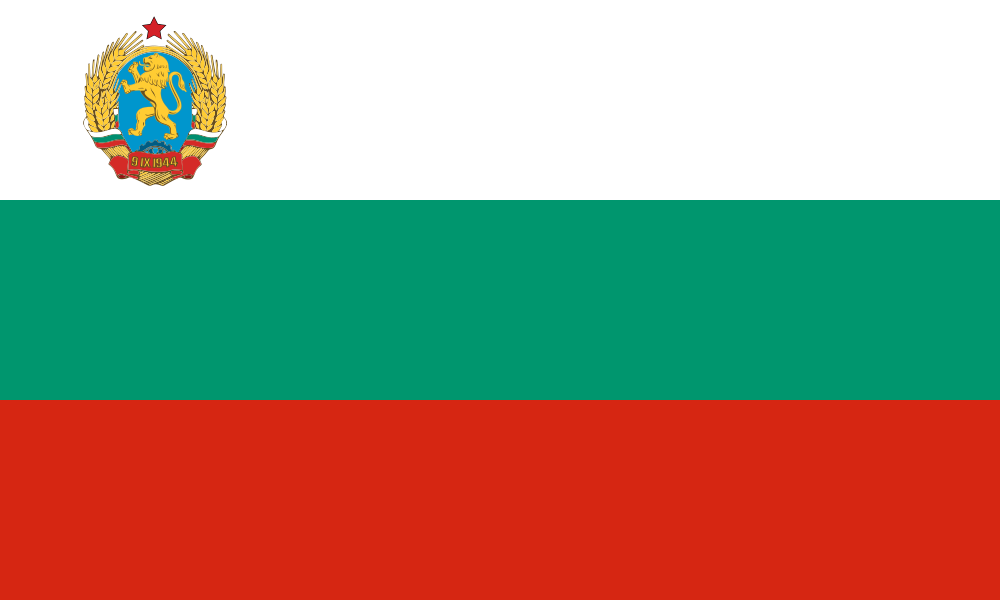
The emblem added
1947 → 1971
The Dimitrov Constitution kept the colours and their order and placed the emblem of the People's Republic on the white stripe at the hoist: a lion in a wreath of wheat under a red star, above a ribbon dated 9 September 1944.
Image: Scroch, CC BY-SA 4.0
- 1971
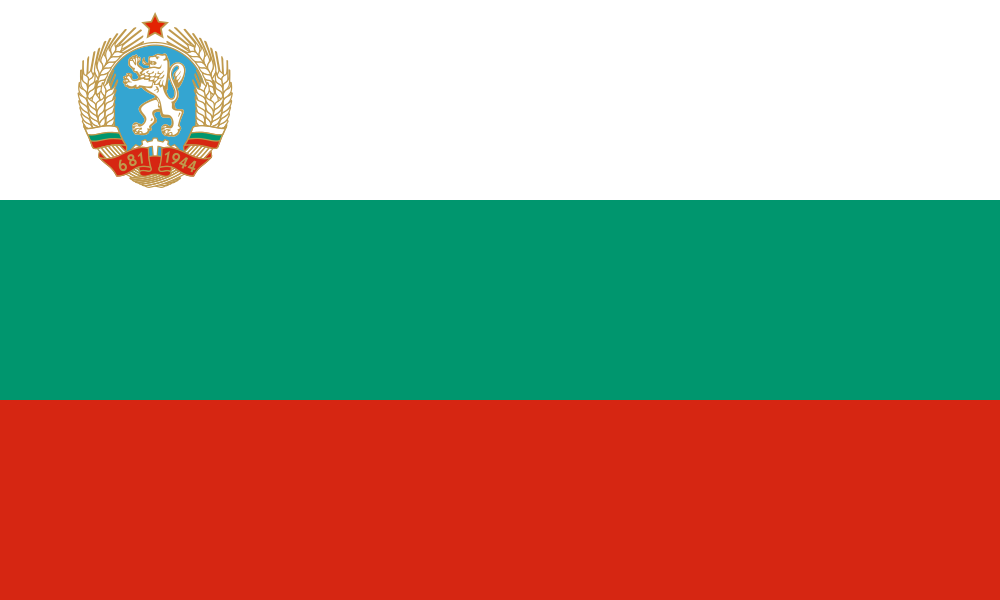
681 and 1944
1971 → 27 Nov 1990
The ribbon of the emblem was split in two and carried the years 681, the founding of the First Bulgarian Empire, and 1944.
Image: Scroch, CC BY-SA 3.0
- 1990
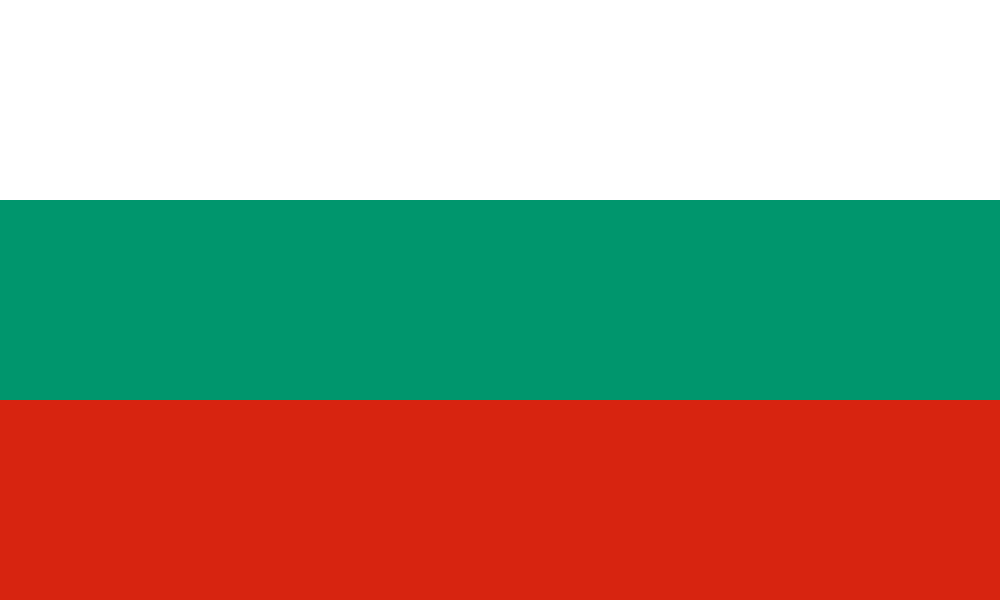
The plain tricolour restoredIn use
27 Nov 1990 → today
An amendment to the constitution removed the emblem, and the Constitution of 1991 confirmed the plain tricolour. The flag law of 1998 set its details.
The law
What defines it, and who flies it
- 16 April 1879
Tarnovo Constitution, Article 23
The Bulgarian people's flag is three-coloured, white, green and red, placed horizontally.
- 12 July 1991
Constitution of the Republic of Bulgaria, Article 166
The flag is a tricolour, white, green and red, placed horizontally from the top.
- 24 April 1998
Law on the State Seal and the National Flag of the Republic of Bulgaria, Article 15 and Appendix 2
Sets the ratio at 3:5, the vertical flag, the standard sizes and the colours for textile and for print. Standard samples are kept by the Committee for Standardisation and Metrology.
In use
Flown permanently on the National Assembly, the Presidency, the ministries and state institutions, the Constitutional Court, the courts, the Bulgarian National Bank, the national television and radio, municipal buildings and state and municipal schools
Flown permanently at border and customs checkpoints, ports, railway stations and airports, and on diplomatic and consular missions
Raised temporarily where the National Assembly or a municipal council sits, and at international conferences and national or international competitions
Carried on the front right of a vehicle and on the foremast of a vessel carrying the President, the Vice President, the Chair of the National Assembly or the Prime Minister
Coat of arms
The arms of Bulgaria