The Ukrainian hryvnia
Currency · UAH · ₴ · 1 country
On 2 September 1996 the hryvnia took over from the karbovanets, at 100,000 karbovanets to one hryvnia, and after a fortnight of overlap it became Ukraine's sole legal tender on 17 September. The National Bank of Ukraine issues it. The name goes back to the grivna of Kievan Rus', and the Ukrainian People's Republic had already used it in 1918.
The sign
The sign ₴ is a cursive Ukrainian letter he, г, crossed by two horizontal strokes, which stand for stability as the strokes of ¥ and € do. It was encoded as U+20B4 in Unicode 4.1, released in 2005. Where the sign is unavailable, Ukrainians write the abbreviation грн, hrn.
- ISO code
- UAH
- ISO number
- 980
- Subunit
- kopiika, 1/100
An amount, written out
₴1,234.50
- ₴1,234.50English
- 1 234,50 ₴UkrainianUkraine
In English the sign comes before the amount. Where the Ukrainian hryvnia is used, it comes after the amount in Ukraine.
The sign in code
HTML, CSS, JavaScript, UTF-8
- HTML
₴₴- CSS
content: "\20B4";- JavaScript
"\u20B4"- UTF-8
0xE2 0x82 0xB4- UTF-16
0x20B4- UTF-32
0x000020B4
Where the Ukrainian hryvnia is the official currency
Ukraine uses the hryvnia. In Crimea, after Russia's annexation, the administration there announced on 18 March 2014 that it would be dropped.
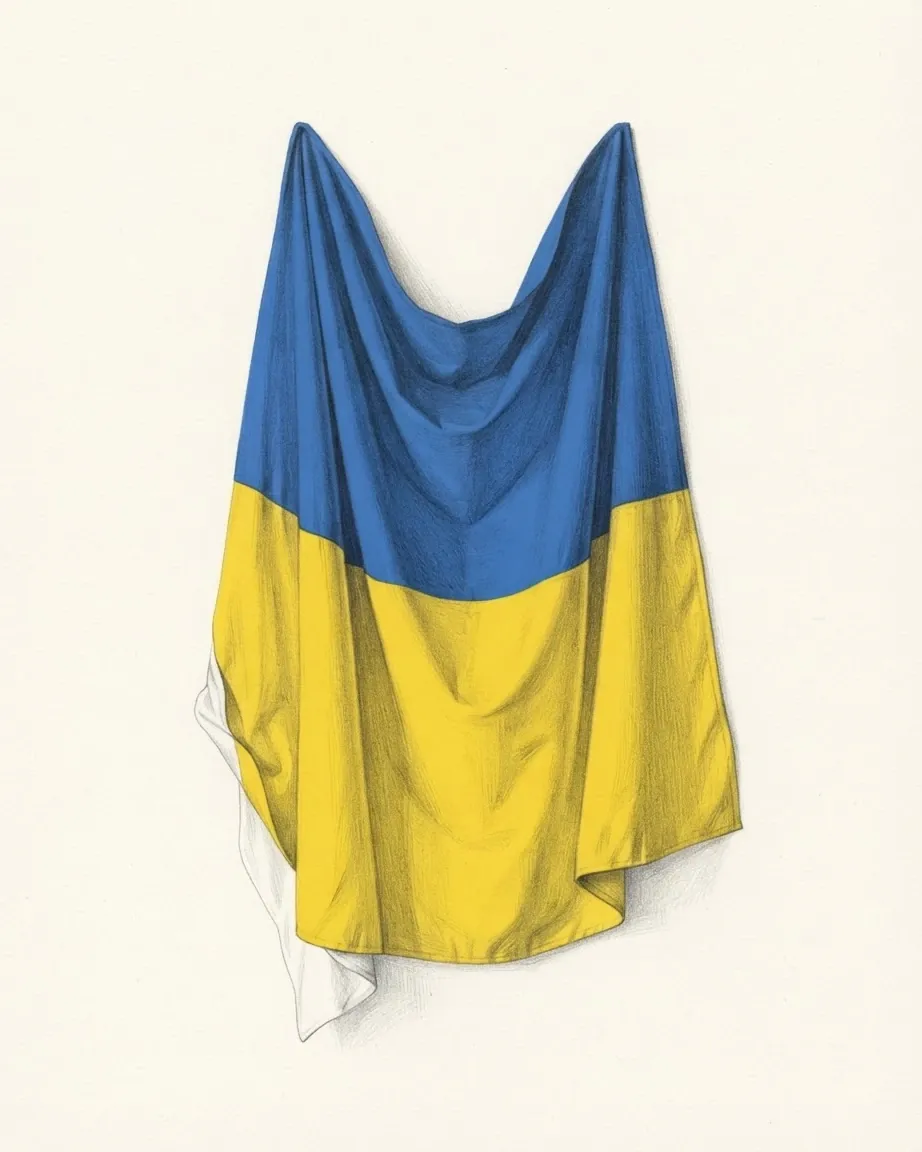
About the Ukrainian hryvnia
Where the name hryvnia comes from
The grivna was a measure of weight and the currency of Kievan Rus' in the eleventh century. The word is thought to come from the Slavic griva, a mane, and may once have meant a valuable ornament of silver or gold worn around the neck. When the Ukrainian People's Republic introduced its own hryvnia on 1 March 1918, divided into 100 shahs and worth half a karbovanets, it borrowed the old name. Heorhiy Narbut designed those notes. The karbovanets came back as the main currency that April.
Why the karbovanets came before it
After independence in 1991, the presidium of Ukraine's parliament approved hryvnia as the name of the national currency and made the kopiika its hundredth. The money itself had to wait. From January 1992 the National Bank of Ukraine put reusable coupons into circulation; they became the basis of the Ukrainian karbovanets, which replaced the ruble at par and from 12 November 1992 was the only means of payment in Ukraine.
Hyperinflation followed. Only in 1995 and the first half of 1996 did inflation slow and the karbovanets steady enough for a reform. The first hryvnia notes had been printed in 1992 by the Canadian Bank Note Company and were kept in Canada until prices were under control.
How the switch was done in two weeks
A presidential decree of 25 August 1996 set the reform for 2 September. From then until 16 September both currencies were legal tender, but change was given only in hryvnias and bank accounts were converted automatically. Of the 338.1 trillion karbovanets in circulation, the National Bank withdrew 327.9 trillion, or 97%, during the transition. After 16 September the remaining karbovanets could still be exchanged at banks.
Who makes the notes and coins
The first banknotes, designed by the artists Vasyl Lopata and Borys Maksymov, came from Canada and from De La Rue in Britain, and some coins were struck in Italy and at the Luhansk Machine-Tool Plant. Ukraine then built its own production. The Banknote Factory opened its first phase in March 1994, the Banknote Paper Factory followed in 1997 and the Mint in 1998. The National Bank's Banknote Printing and Minting Works now produces all hryvnia notes and coins, and since 2016 its paper factory has made banknote paper from flax instead of cotton.
Which notes have been added since
The first series ran from 1 to 100 hryvnias, with coins of 1 to 50 kopiikas; a 1 hryvnia coin followed in March 1997. Higher denominations followed: 200 hryvnias in 2001, 500 in 2006 and 1,000, with a portrait of the scientist Volodymyr Vernadsky, on 25 October 2019. A 2,000 hryvnia note entered circulation on 4 September 2026. It carries the poet and dissident Vasyl Stus, and on the back the Faculty of Philology of Donetsk National University, where he studied.
At the other end, minting of the 1 and 2 kopiika coins stopped after 2013, and on 1 October 2019 the 1, 2 and 5 kopiika coins ceased to be legal tender, though banks still exchange them.
Common questions
Questions about the Ukrainian hryvnia
What does the ₴ sign stand for?
It is a handwritten form of the Cyrillic letter г, the first letter of гривня, with a double horizontal stroke meant to symbolise stability. Unicode encoded it as U+20B4 in version 4.1, released in 2005. When the sign cannot be typed, amounts are written with the abbreviation грн.
Why did Ukraine replace the karbovanets with the hryvnia?
The karbovanets was only ever meant to bridge the gap. Ukraine had chosen the hryvnia as its currency's name soon after independence in 1991, but it had no mint or banknote plant of its own, and from 1992 it ran on coupons and then the karbovanets. Hyperinflation in the early 1990s made a new currency impossible until prices steadied in 1995 and the first half of 1996. The hryvnia notes, printed in Canada in 1992, waited there until then. The swap began on 2 September 1996, at 100,000 karbovanets to one hryvnia, and took two weeks.
What happened to the hryvnia in Crimea?
After Russia annexed Crimea, the administration there announced on 18 March 2014 that the hryvnia would be dropped. The Russian ruble replaced it on 21 March 2014, and hryvnia cash could be used until 1 June. In the parts of the Donbas held by the pro-Russian separatist authorities of Donetsk and Luhansk, low-denomination rubles were short, and the hryvnia remained the predominant currency until 2022.
Whose portrait is on the 2,000 hryvnia note?
Vasyl Stus, a poet, translator and human rights activist who died in a prison camp on 4 September 1985. The National Bank of Ukraine put the note into circulation on 4 September 2026, and its reverse shows the Faculty of Philology of Donetsk National University, where Stus studied.