The Hungarian forint
Currency · HUF · Ft · 1 country
Hungary brought in the forint on 1 August 1946, after hyperinflation had made the pengő worthless. The Magyar Nemzeti Bank issues it. Between 2014 and 2019 the bank redesigned the banknote series it had first put out in 1997, keeping a figure from Hungarian history on the front of each note and a place tied to him on the back.
The abbreviation
Ft abbreviates forint, a name that goes back to the gold fiorino d'oro minted in Florence from 1252 and to the florentinus Hungary struck from 1325. The hundredth, the fillér, has not been in circulation since 1999, so cash amounts are written in whole forints.
- ISO code
- HUF
- ISO number
- 348
- Decimals
- 2
An amount, written out
Ft 1,234
- Ft 1,234English
- 1234 FtHungarianHungary
In English the sign comes before the amount. Where the Hungarian forint is used, it comes after the amount in Hungary.
Where the Hungarian forint is the official currency
Hungary is the member, and it counts in whole forints: the fillér is gone, and cash totals round to the nearest 5 forints.
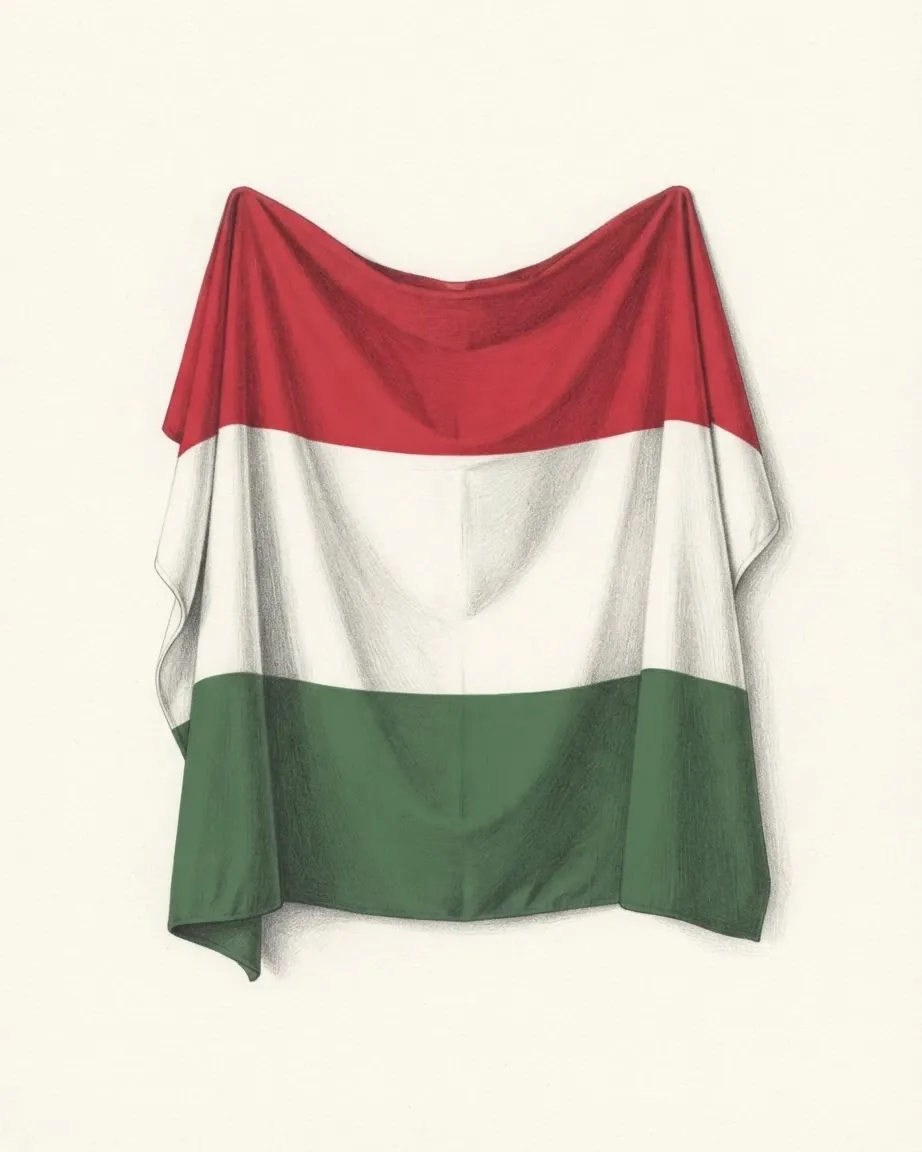
About the Hungarian forint
Why the name points to Florence
Florence minted gold coins called fiorino d'oro from 1252. Hungary took up a gold coin of its own under Charles Robert in 1325, first called the florentinus and later the forint. The name came back between 1868 and 1892 as the Hungarian word for the Austro-Hungarian gulden, which was divided into 100 krajcár.
How the forint replaced the pengő
Hyperinflation destroyed the pengő in 1945 and 1946. Wikipedia's account puts it down to heavy reparations owed to the Soviet Union, Soviet removal of Hungarian industry and the holding of Hungary's gold reserves in the United States. The coalition parties disagreed. The Smallholders and the Social Democrats wanted outside support. The Communist Party, backed by the Soviet Union, opposed Western loans and drew up a stabilisation built on domestic resources alone.
The forint arrived on 1 August 1946 with its value set in gold: 13,210 forints to one kilogram of fine gold. One forint equalled 200 million adópengő, a tax unit that circulated beside it until 30 September 1946. Against the pengő itself the theoretical rate was 4×10²⁹ to one. All the pengő notes still in circulation were worth less than 0.2 fillér together.
What the banknotes carry
The Hungarian National Bank issued 10 and 100 forint notes in 1946. A new series in seven denominations from 200 to 20,000 forints came in gradually between 1997 and 2001, each with a historical figure on the front and a related place or scene on the back. All share one size, 154 by 70 mm, on white cotton paper made by the Diósgyőr Paper Mill and printed by the Hungarian Banknote Printing Company.
The 200 forint note went in 2009. Inflation had eaten its value, and the portrait on it, meant as King Charles Robert, of whom no authentic likeness survives, turned out to show an acquaintance of the designer. A bimetal 200 forint coin replaced it on 15 June 2009.
The bank reissued the remaining six denominations in a redesign by György Pálinkás, from the 10,000 forint note in circulation on 1 December 2014 to the 500 on 1 February 2019. Ferenc Rákóczi II is on the 500, Matthias Corvinus on the 1,000, Gábor Bethlen on the 2,000, István Széchenyi on the 5,000, Saint Stephen on the 10,000 and Ferenc Deák on the 20,000. Worn notes are shredded and pressed into briquettes, which go to charities as heating fuel.
Where the fillér went
The hundredth of a forint, the fillér, is gone from circulation. Production of the 2 and 5 fillér coins stopped in 1992 and every fillér coin had been withdrawn by 1999. The 1 and 2 forint coins stayed legal tender until 29 February 2008. Since then shops round a cash total to the nearest 5 forints.
The Magyar Nemzeti Bank issued its current 5, 10, 20, 50 and 100 forint coins in 1993. A bicolour 100 forint replaced the first one in 1996, and from 1 October 2019 the Hungarian Mint has struck it in copper alloy instead of steel, with the design unchanged. Protected wildlife appears on several: a great egret on the 5, the Hungarian iris on the 20, a saker falcon on the 50. The 200 shows the Chain Bridge, which citizens voted for. Coins minted up to 2011 read Magyar Köztársaság and later ones Magyarország. Both are legal tender.
Common questions
Questions about the Hungarian forint
What does Ft stand for on Hungarian prices?
Ft is short for forint, the currency Hungary introduced on 1 August 1946. The name traces back to the gold florins of Florence, and Hungary struck a gold forint of its own as early as 1325, under Charles Robert. The ISO code is HUF.
Why are cash prices in Hungary rounded to 5 forints?
The 1 and 2 forint coins stopped being legal tender on 29 February 2008, and since then a cash total is rounded to the nearest multiple of 5 forints, ending in 0 or 5. The rule covers cash only. Coins now start at the 5 forint piece, a golden yellow copper alloy coin showing a great egret. Its hundredth, the fillér, disappeared even earlier: the last fillér coins were withdrawn in 1999, three years after the Magyar Nemzeti Bank had put a bicolour 100 forint coin into circulation.
What happened to the 200 forint banknote?
It was withdrawn in 2009 and replaced by a bimetal coin on 15 June that year. Inflation had worn down its value, and the note carried an embarrassment: its portrait, presented as King Charles Robert, turned out to be modelled on an acquaintance of the designer. The coin that took its place shows the Chain Bridge.