The flag of Puerto Rico
Bandera del Estado Libre Asociado de Puerto Rico · since 1895
 Back to Puerto Rico
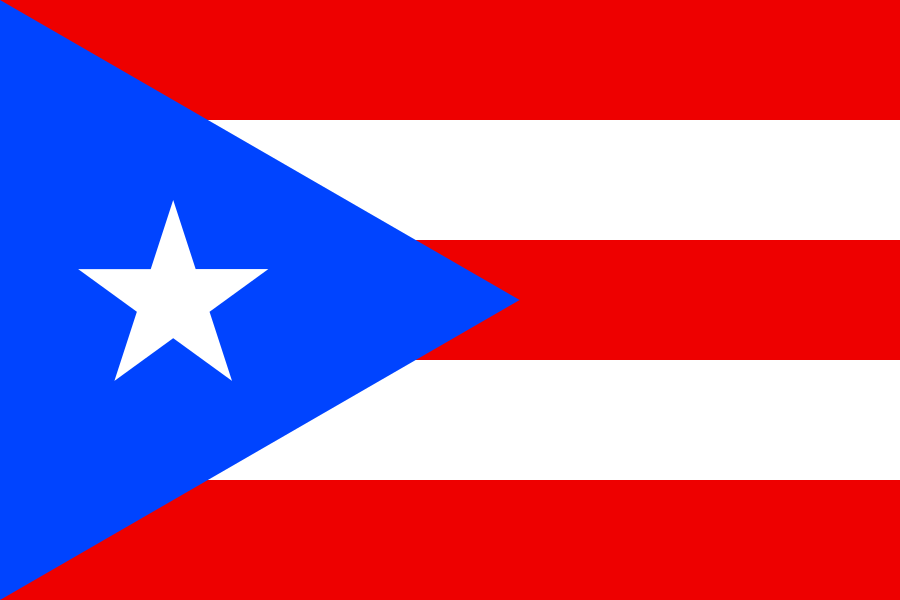
Five horizontal stripes, three red and two white, with a blue equilateral triangle at the hoist carrying a single white five-pointed star: the flag of Cuba with its colours inverted. Puerto Rican exiles in New York adopted it on 22 December 1895 as the flag of an independent Puerto Rico, and it became the official flag of the Commonwealth by the law of 24 July 1952. Neither that law nor the regulation of 1995 fixes a shade of blue, and the shade flown still varies.
At a glance
- Adopted
- 1952
- Proportion
- 2:3
- First hoisted
- 1896
- Colours
- Earlier flags
- 3
- Designers
- 3
The colours
The colours of the flag of Puerto Rico, in the order it has them
- 0145.1%
Red
rojoThree stripes, including the top and bottom
- HEX
#EE0000- RGB
238 0 0- CMYK
0 100 100 7- Pantone
2347 C
- 0228.1%
White
blancoTwo stripes and the star
- HEX
#FFFFFF- RGB
255 255 255- CMYK
0 0 0 0
- 0326.7%
Blue
azulThe triangle at the hoist, in the medium shade most used since 1995; no shade is official
- HEX
#0044FF- RGB
0 68 255- CMYK
100 73 0 0
No law gives these codes. HEX and RGB are the colour this site draws the flag in; CMYK, Pantone and RAL are the values most often published for it.
Construction
How the flag is drawn
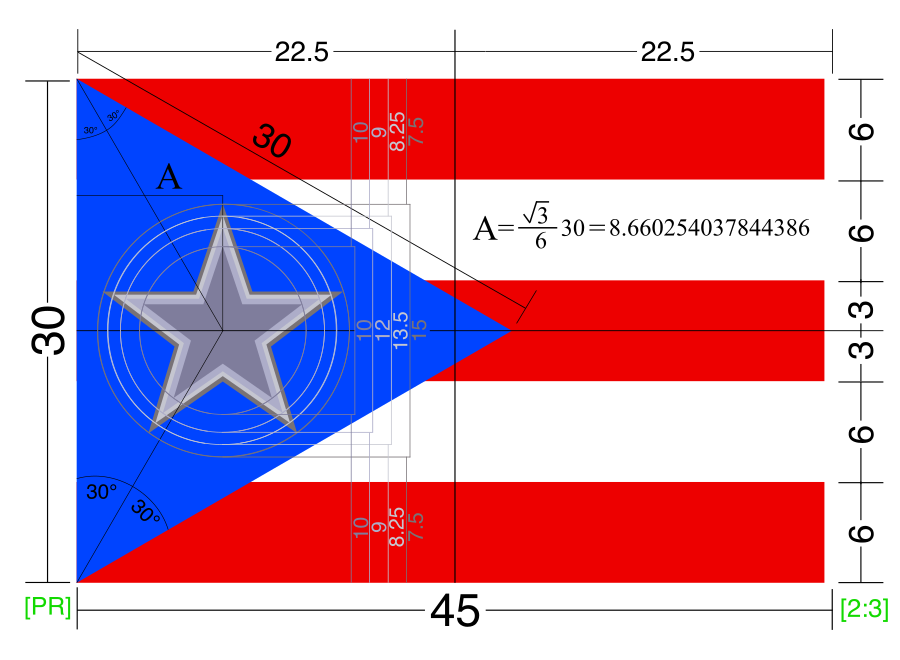
Five equal horizontal stripes, red, white, red, white, red; at the hoist a blue equilateral triangle whose vertical side covers the full height of the flag, with a large upright white five-pointed star at its centre.
- Stripes
- Five, each one-fifth of the flag's height, three red and two white, red at top and bottom
- Triangle
- Blue and equilateral, based on the hoist, its vertical side covering the full height of the flag
- Star
- White, five-pointed, upright and centred in the triangle, its diameter between one-third and one-half of the flag's height; one-third and two-fifths are the sizes most often used
Meaning
What each part stands for
- Star
- The Commonwealth, in the 1995 regulation; in the reading some historians give for 1895, the island of Puerto Rico
- Blue triangle
- Its three angles stand for the republican form of government and its three branches, legislative, executive and judicial, in the 1995 regulation; the revolutionary reading has the sky and the coastal waters
- Three red stripes
- The vital blood that nourishes the three branches of government, in the 1995 regulation; the blood of brave warriors, in the revolutionary reading
- Two white stripes
- Individual freedom and the rights of man, which keep the three branches in balance, in the 1995 regulation; victory and peace after independence, in the revolutionary reading
- Shade of blue
- Sometimes flown to show a position on political status: light blue for independence, dark blue for statehood and medium blue for the present territorial status
Who drew it
- Francisco Gonzalo Marín
- Credited by Juan de Mata Terreforte in a letter of 18 May 1923, which says Marín suggested the Cuban flag with inverted colours in a letter written from Jamaica
- Antonio Vélez Alvarado
- Vice-president of the Club Borinquen, named as the man who drew the flag by the historian Cayetano Coll Toste in 1922 and by the lawyer José Coll Cuchí in 1923; other historians dispute the attribution
- Manuel Besosa
- A director of the Puerto Rican section of the Cuban Revolutionary Party, named by other historians; his daughter María Manuela Besosa is said to have sewn the small flag presented at Chimney Corner Hall
History
How the flag of Puerto Rico got here
- 1868
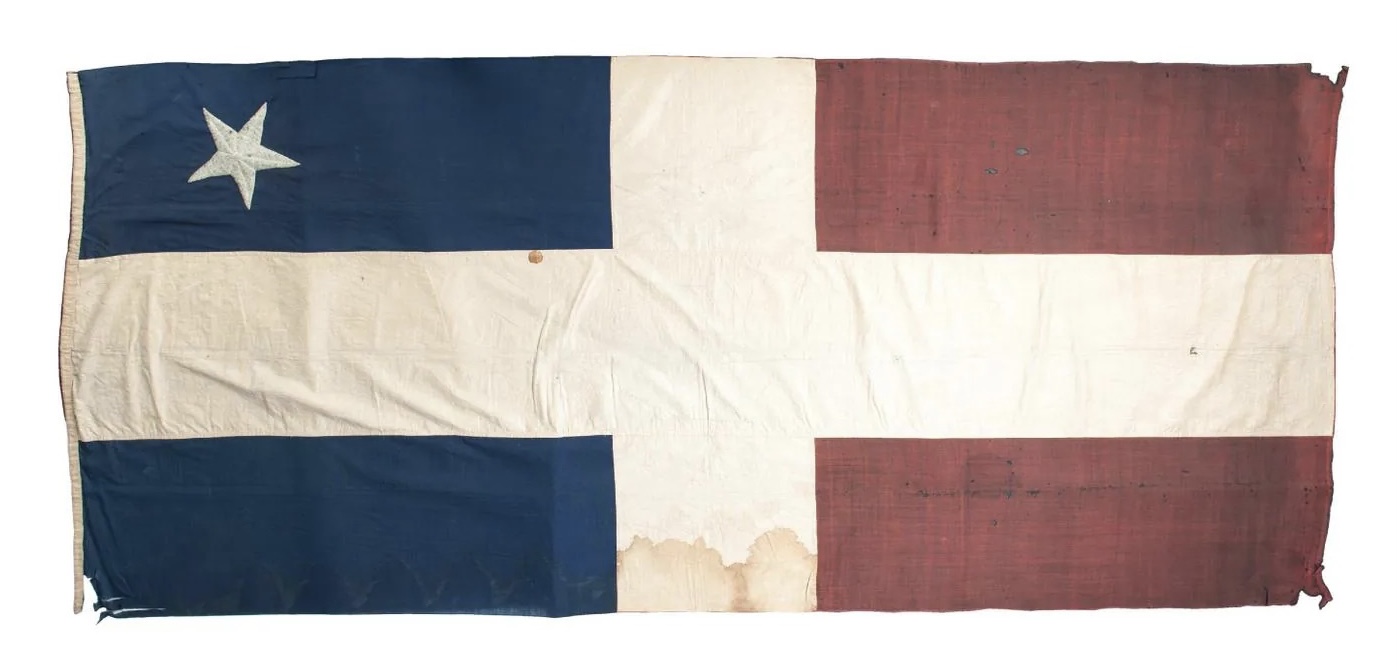
Flag of the Grito de Lares
Sept 1868 → 22 Dec 1895
The flag of the September 1868 revolt against Spanish rule, quartered by a white cross with two red squares on the fly and two dark blue squares at the hoist, the upper one bearing a white star. The only one authenticated by a written source of 1872 is kept in the Museum of the Army in Toledo.
Image: Museum of the Army in Toledo, Spain for El Nuevo Día, CC BY-SA 3.0
- 1895
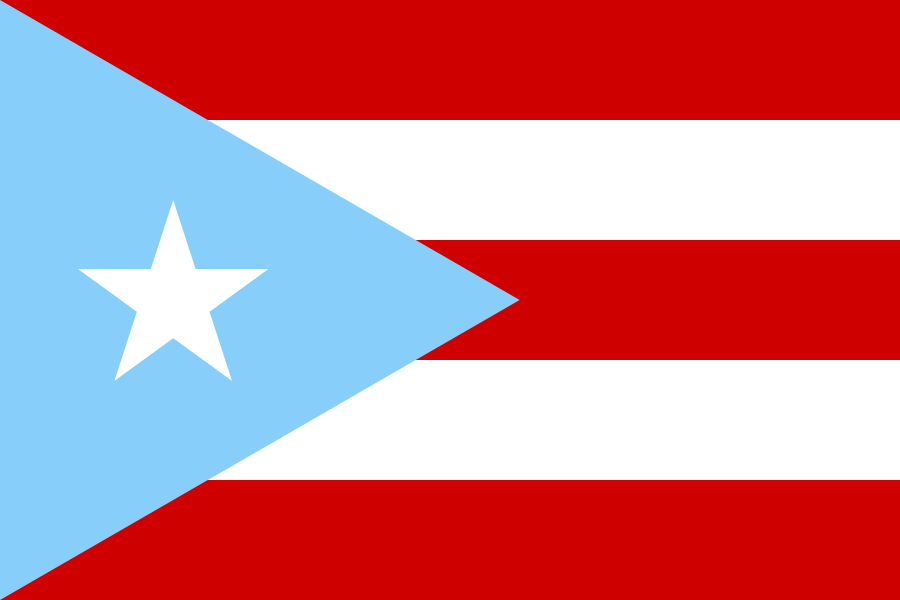
Revolutionary flag
22 Dec 1895 → 24 Jul 1952
Adopted unanimously at Chimney Corner Hall in Manhattan by the Puerto Rico Section of the Cuban Revolutionary Party, replacing the Lares flag. It was carried in the Intentona de Yauco of March 1897. Under United States rule its public display was outlawed, and the Gag Law of 1948 made owning or displaying it a crime. The committee named no shade of blue, and whether it was light or dark is still disputed.
- 1952
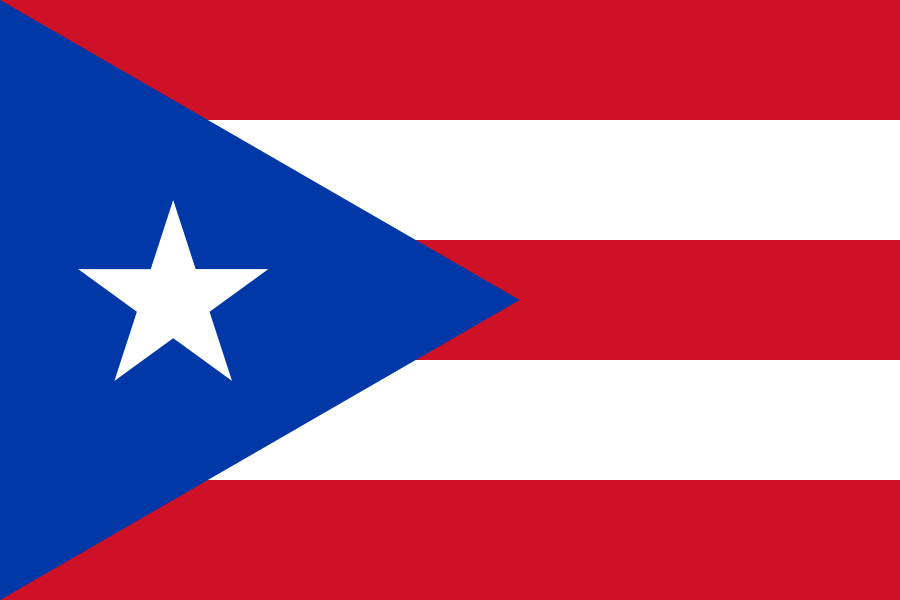
Official flag, dark blue
24 Jul 1952 → 3 Aug 1995
Made the official flag of the Commonwealth by the law of 24 July 1952, which named no shade. The government used a dark blue matching that of the United States flag, which became the shade in practice. The Gag Law was ruled unconstitutional and repealed in 1957.
- 1995
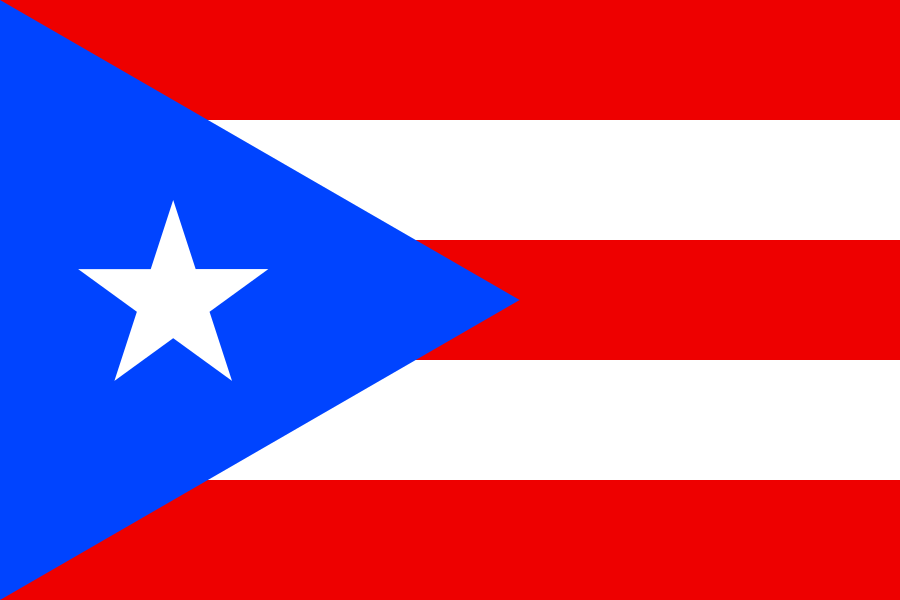
Official flag, medium blueIn use
3 Aug 1995 → today
The regulation of 3 August 1995 restated the flag without fixing a shade, and a medium or royal blue replaced dark blue as the one most used. A bill introduced in the Senate of Puerto Rico in August 2022 to make that royal blue official did not pass, so the shade remains unset in law.
The law
What defines it, and who flies it
- 24 July 1952
Ley del 24 de julio de 1952, Section 1
Made the flag traditionally known as the Puerto Rican flag the flag of the Commonwealth: five alternate horizontal stripes, three red and two white, and at the staff a blue equilateral triangle with a white five-pointed star, its vertical side running the full width of the flag. It names the colours and no shade.
- 3 August 1995
Reglamento sobre el Uso en Puerto Rico de la Bandera del Estado Libre Asociado de Puerto Rico (Regulation 5282), Article 3
Restates the 1952 description, gives the official meaning of the star, triangle and stripes, and sets the rules for flying and saluting the flag. It too specifies no shade.
In use
Flown on or near public buildings on working days, at polling places on election days and at schools during the school year, and on private homes by anyone who wishes
Flown outdoors only from sunrise to sunset unless the Governor decides otherwise, on a staff at least two and a half times the flag's length
Flown beside the flag of the United States at the same height and always to its left, hoisted after it and lowered before it, with no other flag between the two
Raised from the first note of La Borinqueña and reaching the top of the staff with its last notes
Never flown with the star's upper point down except as a signal of distress, and never used in commercial advertising or printed on a costume, uniform or dress
Saluted by standing and facing the flag with the right hand on the heart, and the official salute is recited after the Pledge of Allegiance to the flag of the United States
Related flags
The flags it is confused with or comes from
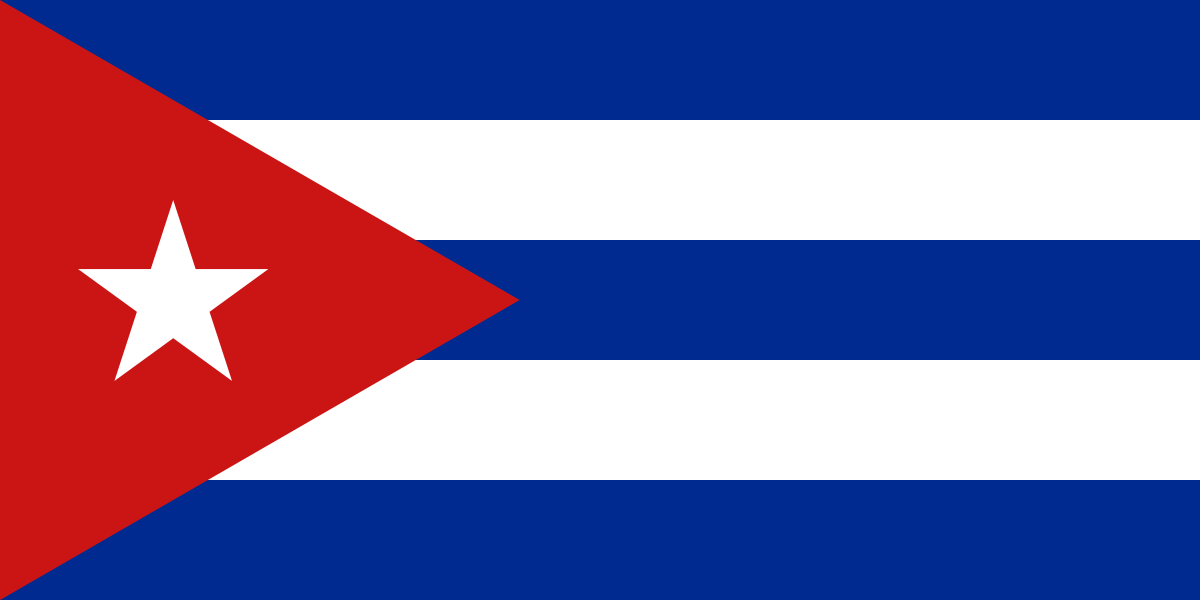 Cuba
Cuba- The flag of Cuba with the colours inverted: red stripes for blue and a blue triangle for red, adopted in 1895 to mark the shared struggle of Cuban and Puerto Rican revolutionaries against Spain.
Coat of arms
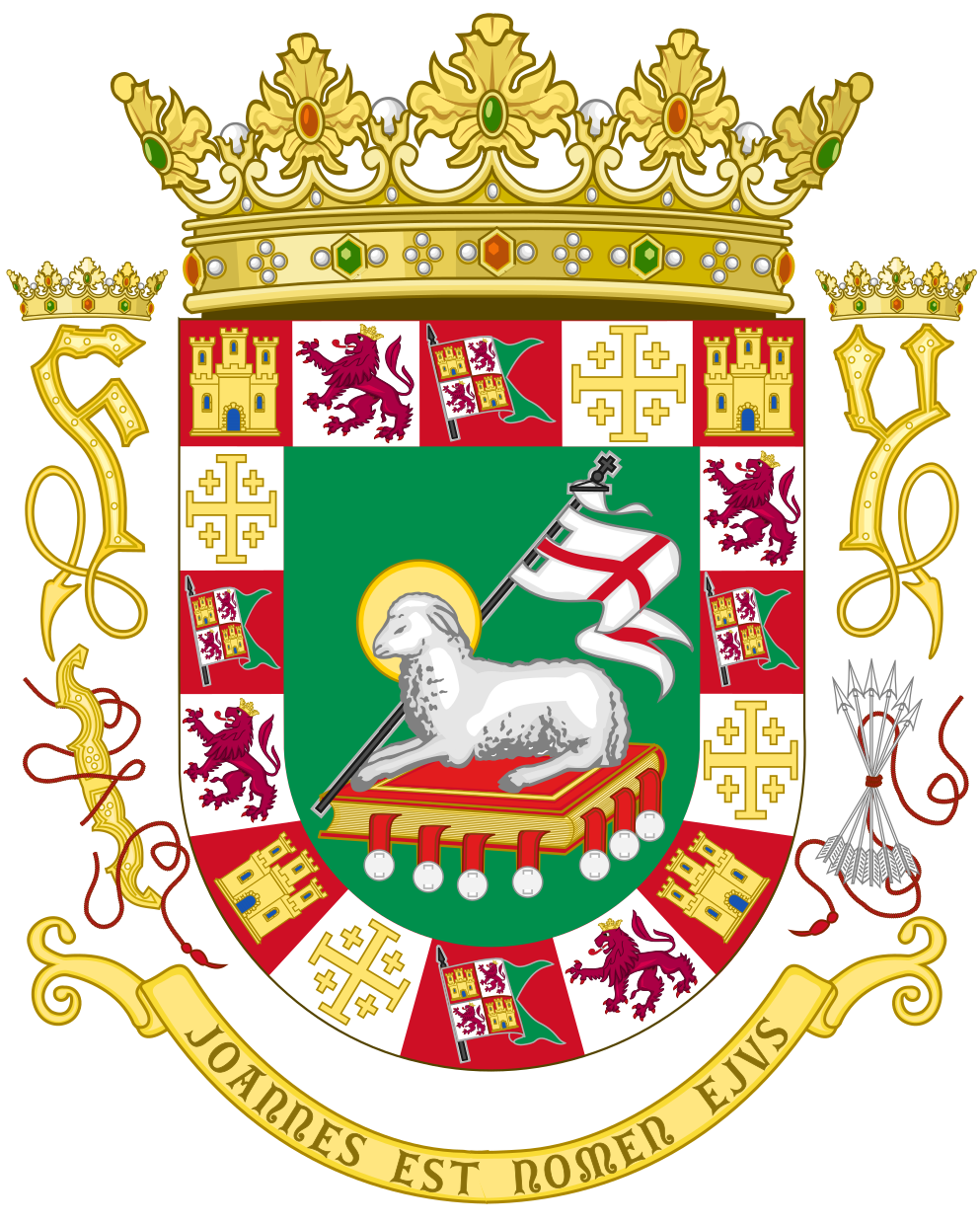
The arms of Puerto Rico