The flag of Nepal
नेपालको झण्डा · since 1962
 Back to Nepal
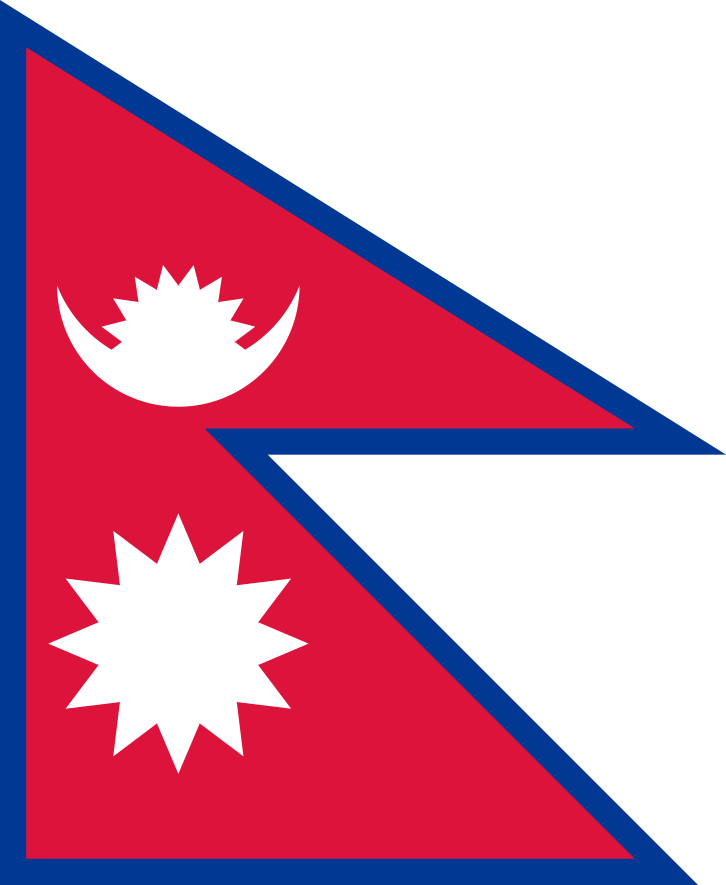
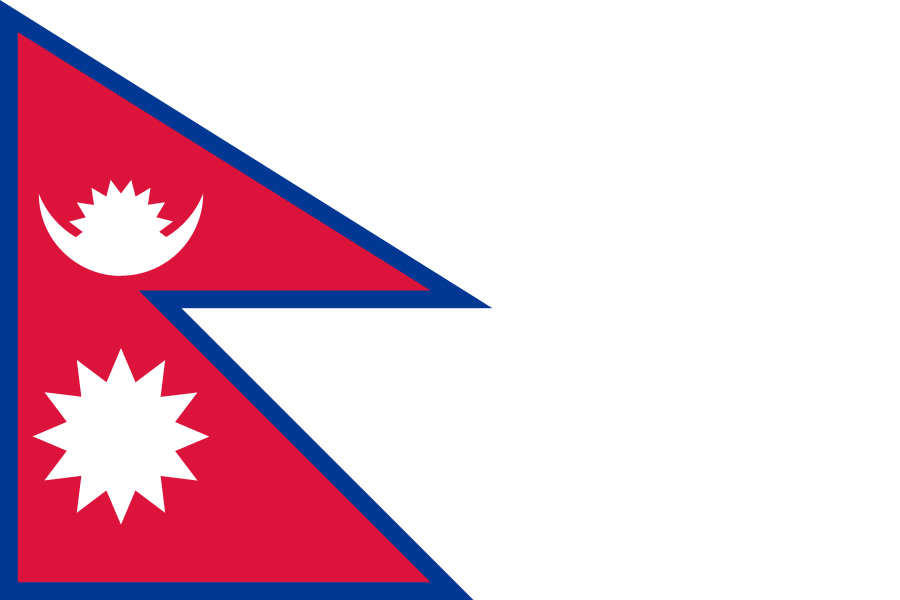
Two crimson pennants set one above the other inside a deep blue border, with a white crescent moon in the upper triangle and a white twelve-rayed sun in the lower. It is the one national flag that is not a rectangle, and it stands taller than it is wide. The present form dates from the constitution of 16 December 1962, which took the faces off the sun and moon, and the constitutions of 1990 and 2015 both set out its geometric construction in Schedule 1.
At a glance
- Adopted
- 1962
- Proportion
- 1.219:1
- Colours
- Earlier flags
- 2
- Designers
- 2
The colours
The colours of the flag of Nepal, in the order it has them
- 0163.2%
Crimson
The field of both pennants, and the national colour
- HEX
#DC143C- RGB
220 20 60- CMYK
0 100 80 5- Pantone
186 C- RAL
3028
- 0223.1%
Deep blue
The border on every side
- HEX
#003893- RGB
0 56 147- CMYK
100 81 0 23- Pantone
287 C- RAL
5005
- 0313.6%
White
The moon and the sun
- HEX
#FFFFFF- RGB
255 255 255
No law gives these codes. HEX and RGB are the colour this site draws the flag in; CMYK, Pantone and RAL are the values most often published for it.
Construction
How the flag is drawn
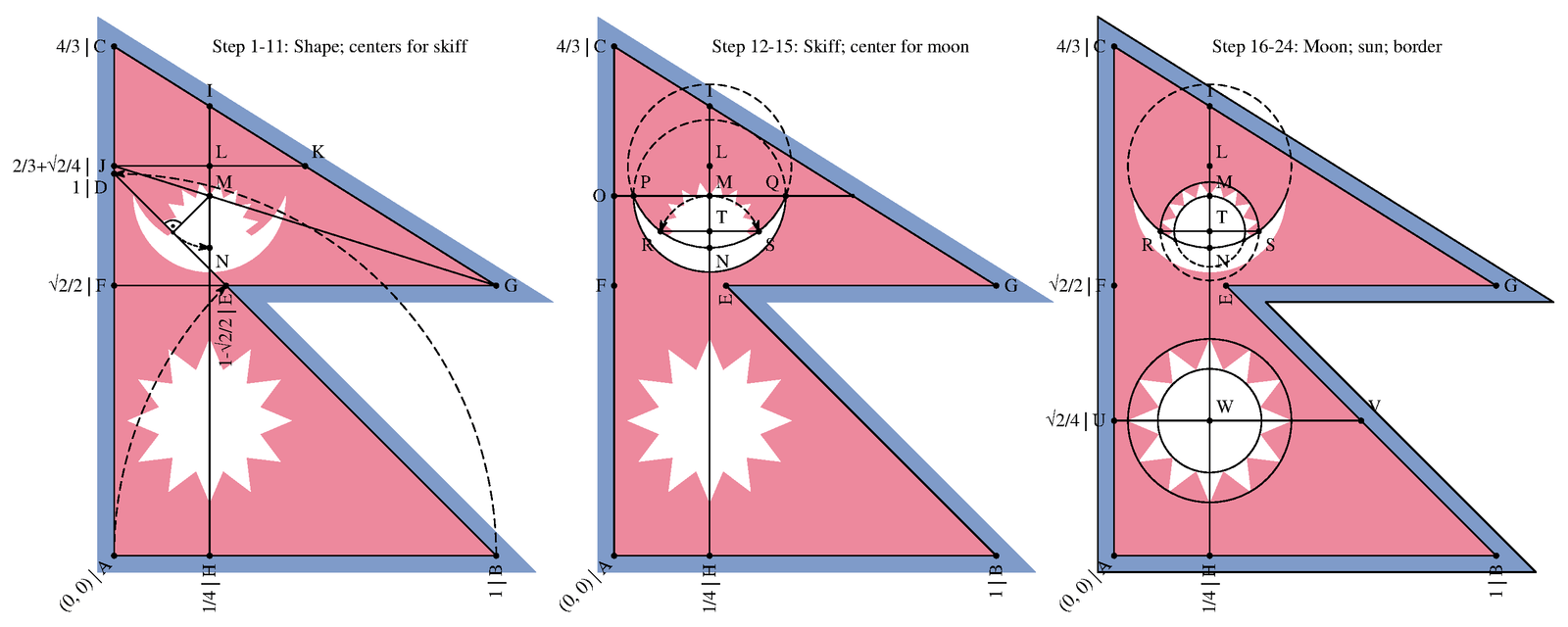
Two right-angled crimson pennants stacked on a common vertical hoist, the upper one shorter and more steeply cut than the lower, the whole outlined by a deep blue border of even width. A white crescent moon with eight triangular rays sits in the upper pennant and a white sun with twelve triangular rays in the lower.
- Base and hoist
- Draw the base AB along the bottom of a crimson cloth at any length. The hoist AC rises from A at a right angle and is AB plus one third of AB, so the red field alone fits a box of width 3 and height 4
- Lower pennant
- Mark D on the hoist with AD equal to AB and join BD, which gives the diagonal edge of the lower pennant
- Upper pennant
- Mark E on BD with BE equal to AB. Through E draw FG parallel to the base, from F on the hoist, with FG equal to AB. Join CG for the diagonal edge of the upper pennant
- Moon
- A vertical line HI stands a quarter of AB from the hoist. It meets the line drawn from J, the midpoint of CF, parallel to the base at L, and the line from J to G at M. Arcs struck from L, M and a point N below M form the crescent, and eight equal triangles fill the band between two further arcs struck from T above it
- Sun
- Its centre W is where HI meets the line drawn parallel to the base from the midpoint of AF. Two circles about W, of radius MN and LN, bound twelve equal triangles, two of whose tips touch HI
- Border
- Deep blue, as wide as the distance TN from the moon's construction, and carried round every side, with each outer angle equal to the inner angle it follows
- Hoisting
- The border as drawn is for a flag flown with a rope. On a pole, the border along the hoist may be widened as needed
- Imaginary lines
- The construction lines HI, RS, FE, ED, JG, OQ, JK and UV and every circle and arc except the crescent itself are not shown on the flag
Other forms
- White rectangular version
- The flag drawn at the hoist of a white 2:3 rectangle, used where every flag must be rectangular. It was common at the 2016 Summer Olympics. The Tokyo 2020 manual instead named Nepal as the only exception to its standard size and asked only that its flag match the others in height.
Meaning
What each part stands for
- Crimson
- Victory in war or courage in the official description, and the colour of the rhododendron, the national flower
- Blue border
- Peace, the wish of the Nepali people for it
- Moon and sun
- The hope that Nepal will last as long as the sun and the moon. The moon is also read as the calm of the people and the cool of the Himalaya, the sun as the fierce resolve of Nepali warriors and the heat of the Terai
- The two pennants
- Descended from the triangular Hindu banners called dhvaja and from the separate pennants of two rival branches of the ruling dynasty. A 1963 government booklet read the two triangles as the Himalaya and as Hinduism and Buddhism
Who drew it
- Prithvi Narayan Shah
- Credited in many accounts with the double pennant, which became the standard flag after he unified the small principalities of Nepal
- Shankar Nath Rimal
- Civil engineer who standardised the flag at the request of King Mahendra
History
How the flag of Nepal got here
- 1856
The double pennant with faces
1856 → 1930
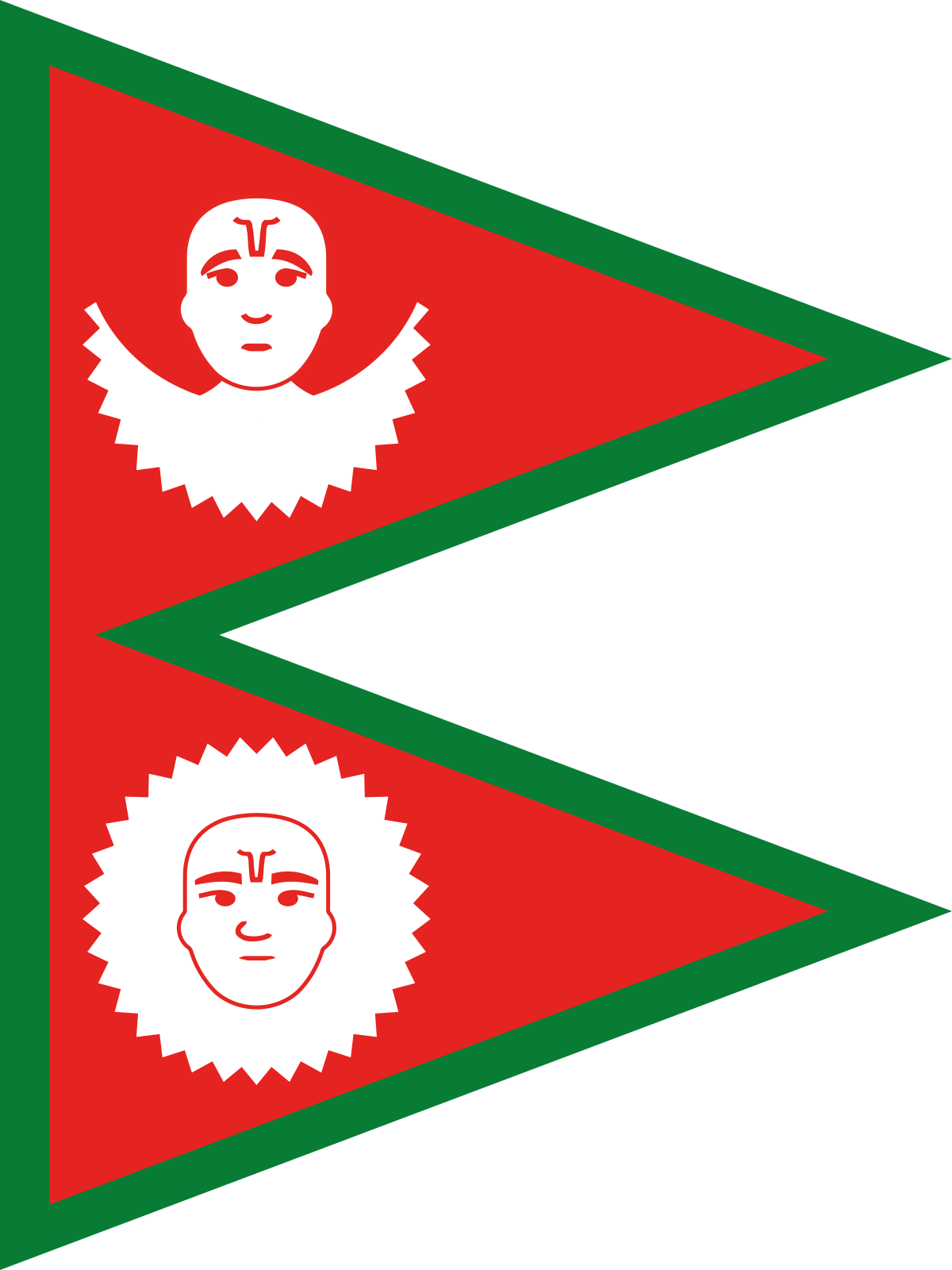
The two pennants carried a moon and a sun drawn with human faces, a change some historians credit to the Rana ruler Jung Bahadur. A book of 1928 by Perceval Landon shows the flag crimson with a green border. This pattern ran until about 1930.
Image: Germenfer, CC BY-SA 3.0
- 1930
The later flag with faces
1930 → 15 Dec 1962
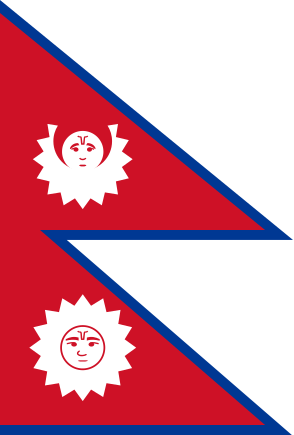
The double pennant with the moon and sun still drawn with faces, in use until the streamlined design of 1962.
Image: Orange Tuesday, CC BY-SA 3.0
- 1962
The constitutional flagIn use
16 Dec 1962 → today
Adopted with the constitution of 16 December 1962. Shankar Nath Rimal standardised the geometry, the faces were removed and the moon and sun reduced to plain white figures.
The law
What defines it, and who flies it
- 16 December 1962
Constitution of Nepal, 1962
Promulgated by King Mahendra with the panchayat system. The present flag was adopted under it, and it devoted a whole section to the size and shape of the flag because people were drawing it incorrectly.
- 9 November 1990
Constitution of the Kingdom of Nepal, 1990, Article 5 and Schedule 1
Described the flag as handed down by tradition and set out the method of drawing it in Schedule 1. Article 7 made crimson the national colour.
- 20 September 2015
Constitution of Nepal, 2015, Article 8 and Schedule 1
Article 8(1) defines the flag as two juxtaposed triangular figures with a crimson base and deep blue borders, a white crescent moon with eight rays visible out of sixteen in the upper part and a white twelve-rayed sun in the lower part. Schedule 1 repeats the construction of 1990. During the drafting, from May 2008, several parties asked for a new design on the ground that the flag stood for Hinduism and the monarchy, and the proposal was rejected.
In use
Serves as both the state flag and the civil flag
Olympic protocol from 2004 required every flag to be made as a 2:3 rectangle, and the shape has made the flag hard to fit into such large international uses
In 2018 officials in Janakpur flew a version with a thicker blue border and the wrong geometry, and the ministry asked for an explanation after protests on social media
Coat of arms
The arms of Nepal