The history of Japan: an emperor who almost never ruled and a country that twice rebuilt itself
2 015 words · 9 min · updated 2026-09-10
 Back to Japan
Japan has had the same imperial line for as long as it has kept records, and for most of the last thousand years that line has not governed anything. Power sat with regents, then with warriors, then with a shogunate, then with oligarchs acting in a teenage emperor's name, then with an occupying general. Twice, in 1868 and in 1945, the country dismantled its institutions and rebuilt them from foreign models within a single generation. The continuity is real and so is the discontinuity, and the two together are the shape of the whole history.
In short
- Imperial line
- Continuous through recorded history, rarely governing
- First shogunate
- Kamakura, from 1185
- Closed country
- Sakoku, from the 1630s to 1854
- Dutch trading post
- Dejima, Nagasaki, 1634 to 1854
- Edo literacy
- Around 30%
- Perry's arrival
- 1853
- Meiji Restoration
- 1868
- Meiji Constitution
- 1889, franchise 2%
- Occupation
- 1945 to 1952
- Current constitution
- Promulgated 3 November 1946
Where the state came from
Japan's recorded state begins with borrowing. The Kofun period, from around 250 to 538, produced the keyhole tombs that give it its name and the beginnings of a court in the Yamato plain. The Asuka period, from 538 to 710, brought the decisive imports: Buddhism, the Chinese writing system, and a Chinese model of centralised bureaucratic government.
What followed was a state built to a foreign specification. Capitals were laid out on the Chinese grid, first at Nara from 710 and then at Heian, modern Kyoto, from 794. Law codes, court ranks and taxation all followed continental practice.
The Heian period, 794 to 1185, is where the borrowing turned into something else. The court stopped sending embassies to China, the kana syllabaries were developed to write Japanese rather than Chinese, and a court literature emerged with no continental equivalent. It is also where the emperor's political authority quietly ended. The Fujiwara family governed through regencies, marrying daughters to emperors and ruling in the name of their infant grandsons, which established the pattern that would define Japanese government for the next eight hundred years: legitimate authority in one place, actual power in another.
Why the warriors took over
Provincial military families filled the vacuum the court left. In 1185 the Minamoto defeated the Taira and established a military government at Kamakura, and the emperor granted its head the title of shōgun.
The Kamakura shogunate, 1185 to 1333, and the Muromachi shogunate, 1333 to 1568, ruled while the imperial court continued in Kyoto with its ceremonies intact and its power gone. The second of these failed slowly, and its failure produced a century of general civil war among the daimyō, the provincial lords.
Unification came from three successive warlords in the Azuchi-Momoyama period, 1568 to 1600, and was completed at the battle that made Tokugawa Ieyasu master of the country. In 1603 the emperor declared him shōgun; two years later he abdicated in favour of his son, which was the point. The office was now hereditary.
What the closed country bought
The Edo period, 1600 to 1868, is the one that shaped modern Japan, and it did so under a policy of near-total isolation.
After the Christian-led Shimabara Rebellion of 1638, Christianity was outlawed outright. The third Tokugawa shōgun imposed sakoku, the closed country: Japanese people could not travel abroad, could not return if they had, and could not build ocean-going ships. The only Europeans permitted on Japanese soil were the Dutch, confined to a single trading post on the artificial island of Dejima at Nagasaki from 1634 to 1854. China and Korea were the only other trading partners, and most foreign books were banned.
Control at home was equally systematic. The alternate attendance system required every daimyō to spend every other year in Edo, which drained provincial treasuries and held families hostage. Penalties for minor offences ran to crucifixion and beheading. The emperor in Kyoto was funded lavishly and permitted no political power at all.
What that produced was a country getting quietly richer and better educated behind a closed border.
| Edo achievement | Figure |
|---|---|
| Population growth in the first century | Doubled, to about 30 million |
| Population living rurally | Almost 90% |
| Literacy | Around 30%, possibly the world's highest |
| Numeracy | Comparable to north-west Europe, near total by the 1800s |
| Publishing | Hundreds of new titles a year |
Roads were built, road and bridge tolls abolished, coinage standardised, and commerce expanded. Edo became the most populous city in the world. The merchant class grew rich and spent its money on the ukiyo, the floating world, which produced woodblock prints, popular novels, kabuki, bunraku puppet theatre and the haiku of Matsuo Bashō.
Those literacy and numeracy figures are the important ones. When Japan industrialised in a single generation after 1868, it did so with a population that could already read and calculate, and that is the part of the Meiji story that was built before the Meiji era began.
How Perry ended it
The shogunate was already weakening. Agricultural growth had stalled, the Tenpō famines of the 1830s were handled badly, revenues fell and samurai pay was cut. Dutch books had seeded a school of Western learning, rangaku, while a rival school of kokugaku or national learning attacked Chinese-derived Neo-Confucianism and emphasised the emperor's divine authority.
In 1853 Commodore Matthew Perry arrived with an American fleet and demanded that Japan open its ports. The shogunate had no defence against his gunboats and agreed. The unequal treaties that followed required Japan to admit foreign residents, forgo tariffs on their imports, and surrender jurisdiction over them in its own courts.
That humiliation destroyed the shogunate's legitimacy. Samurai of the southern domains of Chōshū and Satsuma, carrying the slogan sonnō jōi, revere the emperor and expel the barbarians, allied against it. In 1868 they persuaded the young Emperor Meiji to call for an end to Tokugawa rule, and the Boshin War of 1868 to 1869 ended the shogunate after 265 years.
What Meiji built in one generation
The emperor was restored to nominal supreme power and moved to Edo in 1869, which was renamed Tokyo, the eastern capital. He was fifteen. The men who actually governed were former Chōshū and Satsuma samurai, the Meiji oligarchs, and their objective was explicit: a modern nation-state able to stand equal to the Western powers.
They abolished the Edo class structure, replaced the feudal domains with prefectures, reformed taxation, lifted the ban on Christianity, and built railways, telegraphs and universal education. Hundreds of Western advisers were hired for education, mining, banking, law, the military and transport. The Gregorian calendar, Western dress and Western hairstyles came in.
The political settlement was deliberately partial. The Meiji Constitution of 1889 created an elected House of Representatives with restricted powers, an unelected House of Peers whose consent legislation required, and a franchise covering 2% of the population. The cabinet and the military answered to the emperor rather than to the legislature, which is the structural flaw that mattered most later. Alongside it, Shinto became the state religion and the emperor was declared a living god.
The economic transformation was as fast. The share of the population working in agriculture fell from 75% in 1872 to 50% by 1920, population rose from 34 million in 1872 to 52 million in 1915, and by the end of the period most exports were manufactured goods produced in part by family conglomerates, the zaibatsu.
Expansion followed immediately: Taiwan ceded after the First Sino-Japanese War of 1894 and 1895, victory over Russia in 1904 and 1905, Korea a protectorate in 1905 and annexed in 1910. The unequal treaties were renegotiated on the strength of that record.
Where the empire led
The constitutional flaw became decisive in the 1930s. Because the army answered to the emperor rather than the cabinet, it could act without permission and did.
In the Manchurian Incident of 1931 officers of the Kwantung Army staged a bombing, blamed China, invaded Manchuria and established a puppet state, with no authorisation from the government in Tokyo. International criticism led Japan out of the League of Nations. A prime minister who tried to restrain the army was assassinated in 1932, and he was the last party politician to govern before the war. A young officers' coup in February 1936 was suppressed after killing several moderates, and the military consolidated control regardless; parties were abolished into a single association in 1940.
The Second Sino-Japanese War began in 1937 and became a stalemate lasting until 1945. After the fall of Nanjing the Japanese military committed the massacre there. American sanctions intended to deny Japan the resources to continue led to the attack on Pearl Harbor on 7 December 1941 and a war across the Pacific.
The end was catastrophic on every side of it. Bombing destroyed over half the total area of Japan's major cities. Okinawa, fought between April and June 1945, left 115,000 soldiers and 150,000 Okinawan civilians dead. An atomic bomb killed over 70,000 people at Hiroshima on 6 August, the Soviet Union declared war on 9 August, and a second bomb killed around 40,000 at Nagasaki the same day. The surrender was broadcast on 15 August.
How that period is remembered remains contested. The Japanese government's position, set out by the foreign ministry, is that remorse and apology have been expressed consistently by post-war cabinets, in the Murayama Statement of 1995, the Koizumi Statement of 2005 and a cabinet-approved statement in 2015, and that reparations and claims were settled legally through the San Francisco Peace Treaty and subsequent bilateral agreements. Officials and emperors have made over fifty formal apologies since the 1950s. Politicians and campaigners in China and South Korea have repeatedly found them inadequate, and textbook revisions, denials of the Nanjing Massacre and visits to Yasukuni Shrine have reopened the argument at intervals for eighty years.
How the occupation rewrote the state
Japan was occupied by a foreign power for the first time in its history, from 1945 to 1952, and the central act of that occupation was a new constitution written in about a week.
The chronology is unusually well documented. The Potsdam Declaration was announced on 26 July 1945 and the surrender instrument signed on 2 September. MacArthur suggested constitutional revision to the Japanese government in October, and a Japanese committee produced a draft. A newspaper leaked it on 1 February 1946; it was too conservative. On 3 February MacArthur set out three basic points and ordered his own staff to draft a constitution, and on 13 February the Japanese government's proposal was refused and the American draft handed over instead. A revised text was announced on 6 March, rendered into ordinary language on 17 April, passed through the Imperial Diet, and promulgated on 3 November 1946.
It came into force in 1947. The cabinet became responsible to the elected Diet rather than to the emperor, who kept the throne and renounced his divinity. Civil liberties, labour rights and women's suffrage were guaranteed, and under Article 9 Japan renounced war as a sovereign right. The zaibatsu were broken up, land transferred from landlords to tenants, and war criminals tried.
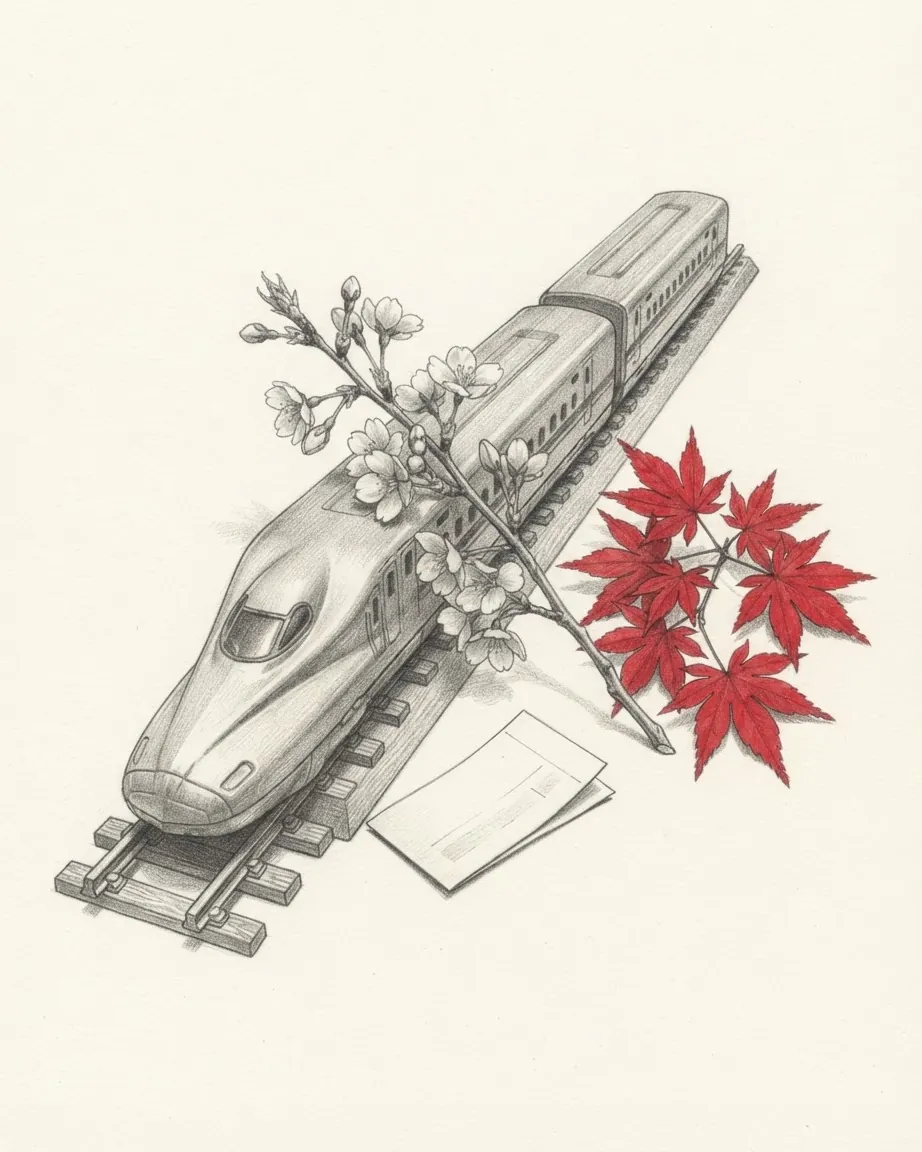
What followed was the growth that defines modern Japan. The economy passed pre-war levels by 1955 and grew at nearly 10% a year from 1956 until the 1973 oil crisis, then at just over 4% until 1991. Japan joined the United Nations in 1956, completed the first high-speed rail line and hosted the Tokyo Olympics in 1964, and by 1990 held a population of 123 million with a stock market whose capitalisation had passed New York's.
The bubble burst in 1989. Land and share prices collapsed, banks were left with unrecoverable debts, the birth rate fell below replacement, and the stock market took until February 2024 to regain its 1989 level. The population peaked at 128,083,960 in 2008 and has fallen since. On 11 March 2011 the Tōhoku earthquake and tsunami killed or disappeared nearly 26,000 people and caused a nuclear meltdown at Fukushima.
The pattern from the beginning holds at the end of it. Japan absorbs from outside in concentrated bursts, closes to digest what it took, and each reopening is forced by an outside power at a moment when the existing order has already run out of answers.
Timeline
The dates in order
- c. 250–538
- The Kofun period. A court forms in the Yamato plain.
- 538
- Buddhism, Chinese writing and Chinese administration arrive together.
- 794
- The capital moves to Heian. Court literature and the kana syllabaries follow.
- 1185
- The Minamoto establish military government at Kamakura.
- 1603
- Tokugawa Ieyasu is declared shōgun.
- 1638
- The Shimabara Rebellion ends in Christianity being outlawed.
- 1853
- Perry's fleet forces Japan open.
- 1868
- The Boshin War ends the shogunate after 265 years.
- 1889
- The Meiji Constitution places the army outside cabinet control.
- 1931
- The Kwantung Army invades Manchuria without government authorisation.
- 1945
- Hiroshima, Nagasaki, and surrender on 15 August.
- 1946
- The new constitution is promulgated on 3 November.
- 1964
- The first high-speed rail line and the Tokyo Olympics.
- 1989
- The bubble bursts.
- 2011
- The Tōhoku earthquake, tsunami and the Fukushima meltdown.
- 2024
- The stock market regains its 1989 level in February.
Common questions
Questions about Japan
Has Japan's emperor ever actually ruled?
Rarely, and not for most of recorded Japanese history. From the Heian period the Fujiwara governed through regencies in the name of infant emperors; from 1185 successive shogunates held power while the court kept its ceremonies in Kyoto; under the Tokugawa the emperor was funded lavishly and allowed no political power at all. Even after the Meiji Restoration of 1868 the government was run by former samurai oligarchs, with the emperor fifteen years old.
How long was Japan closed to the outside world?
Roughly two centuries. The sakoku policy was imposed by the third Tokugawa shōgun in the 1630s: Japanese people could not travel abroad, could not return if they had, and could not build ocean-going ships. The Dutch were confined to a single trading post at Dejima in Nagasaki from 1634 to 1854, and China and Korea were the only other trading partners.
What was the Meiji Restoration?
The overthrow of the Tokugawa shogunate in 1868 and the reconstruction of Japan as a modern state within about thirty years. The class structure was abolished, feudal domains became prefectures, railways, telegraphs and universal education were built, hundreds of Western advisers hired, and a constitution issued in 1889. It was carried out by former samurai from the Chōshū and Satsuma domains acting in the name of a teenage emperor.
Why did Japan's military take over the government in the 1930s?
Because the Meiji Constitution made the cabinet and the military responsible to the emperor rather than to the elected legislature. That allowed the Kwantung Army to invade Manchuria in 1931 without government authorisation. A prime minister who tried to restrain it was assassinated in 1932 and was the last party politician to govern before the war; parties were abolished into a single association in 1940.
Who wrote Japan's current constitution?
The occupation authorities drafted it. A Japanese committee's proposal was leaked in February 1946 and judged too conservative; MacArthur ordered his own staff to produce a draft, which was handed to the Japanese government on 13 February 1946. It was revised, put into ordinary language, passed through the Imperial Diet and promulgated on 3 November 1946. Under Article 9 Japan renounced war as a sovereign right.