The flag of Japan
日章旗 · since 1999
 Back to Japan
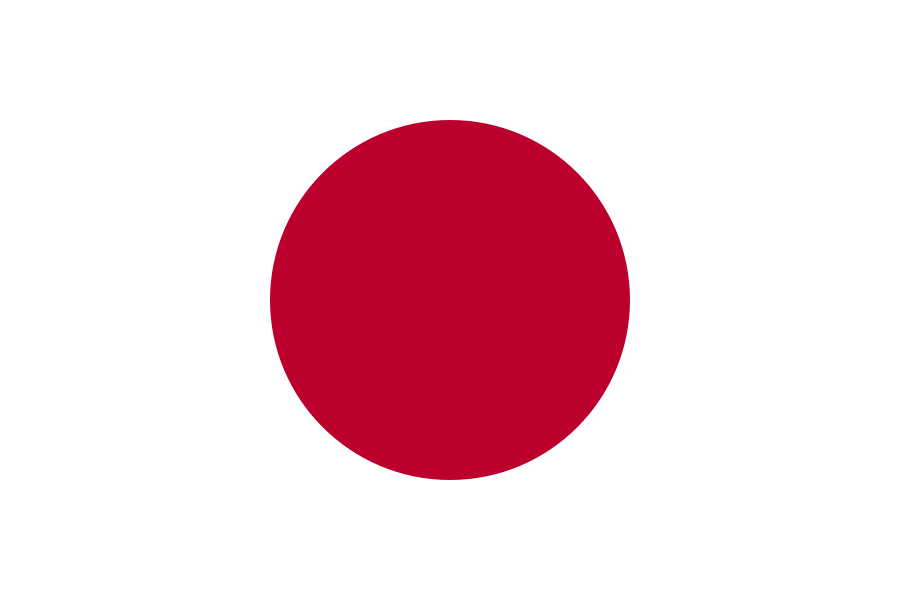
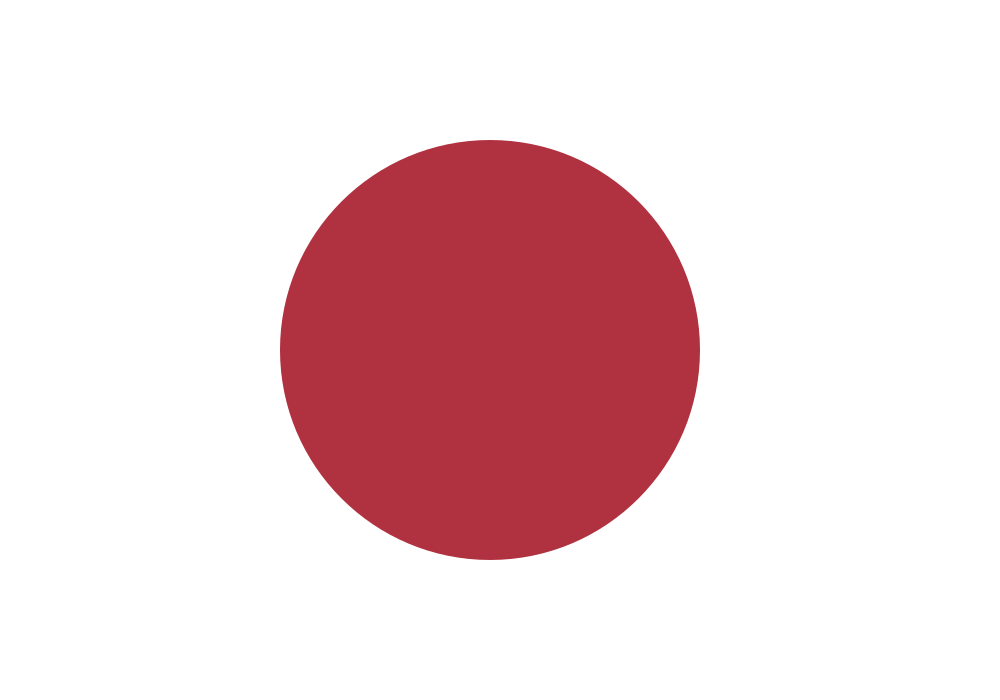
A white flag in the proportion 2:3 with a crimson disc at its centre, officially the Nisshōki and commonly the Hinomaru, the circle of the sun. It had served as the de facto national flag since the Meiji era, when an 1870 proclamation made it the flag of merchant ships, and it became the national flag in law only with the Act on National Flag and Anthem of 13 August 1999.
At a glance
- Adopted
- 1999
- Proportion
- 2:3
- Colours
- Earlier flags
- 2
The colours
The colours of the flag of Japan, in the order it has them
- 0181.4%
White
白色The field
- HEX
#FFFFFF- RGB
255 255 255
- 0218.6%
Crimson
紅色The sun disc
- HEX
#BC002D- RGB
188 0 45- Pantone
186 C
No law gives these codes. HEX and RGB are the colour this site draws the flag in; CMYK, Pantone and RAL are the values most often published for it.
Construction
How the flag is drawn
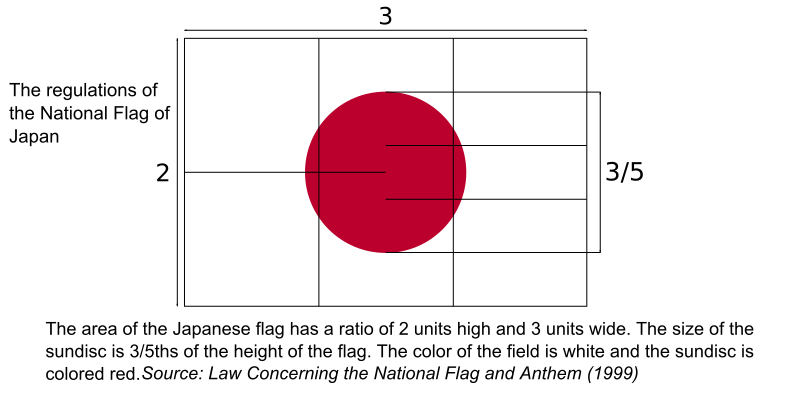
A white rectangle two units high and three long, with a single crimson disc whose diameter is three fifths of the height, centred on the centre of the flag.
- Sun disc
- Diameter three fifths of the height of the flag
- Position
- The centre of the disc is the centre of the flag, so the flag is symmetric top to bottom and left to right
- Colours
- White field, crimson (beni iro) disc. The act names the shades and does not define them
- Older pattern
- The 1870 merchant flag, still permitted for the time being, is 7:10 with the disc moved one hundredth of the length towards the hoist
Other forms
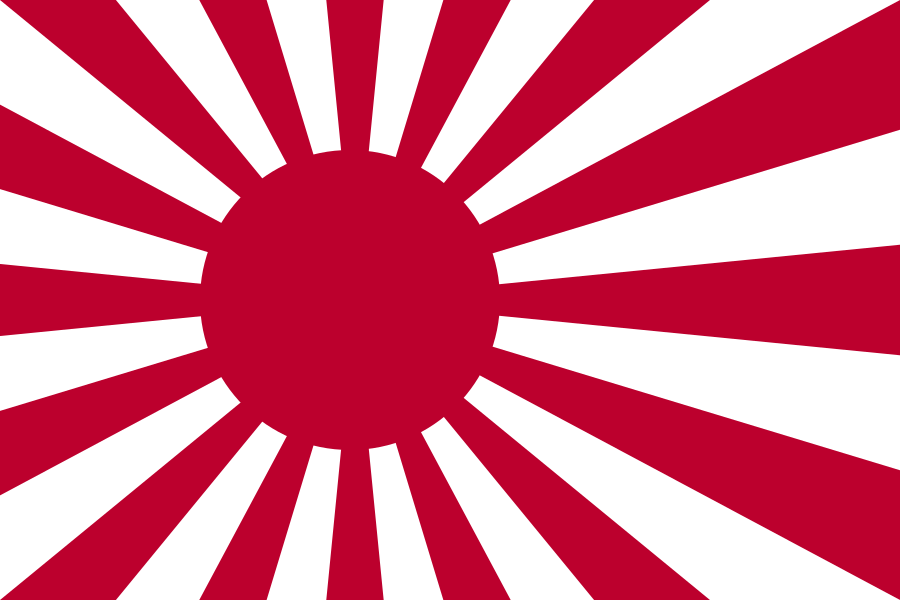
- Naval ensign
- The Rising Sun Flag: a red disc with sixteen red rays in a star running to the edges. First adopted as a war flag in 1870, used until 1945 and taken up again on 30 June 1954 by the Maritime and Ground Self-Defense Forces.
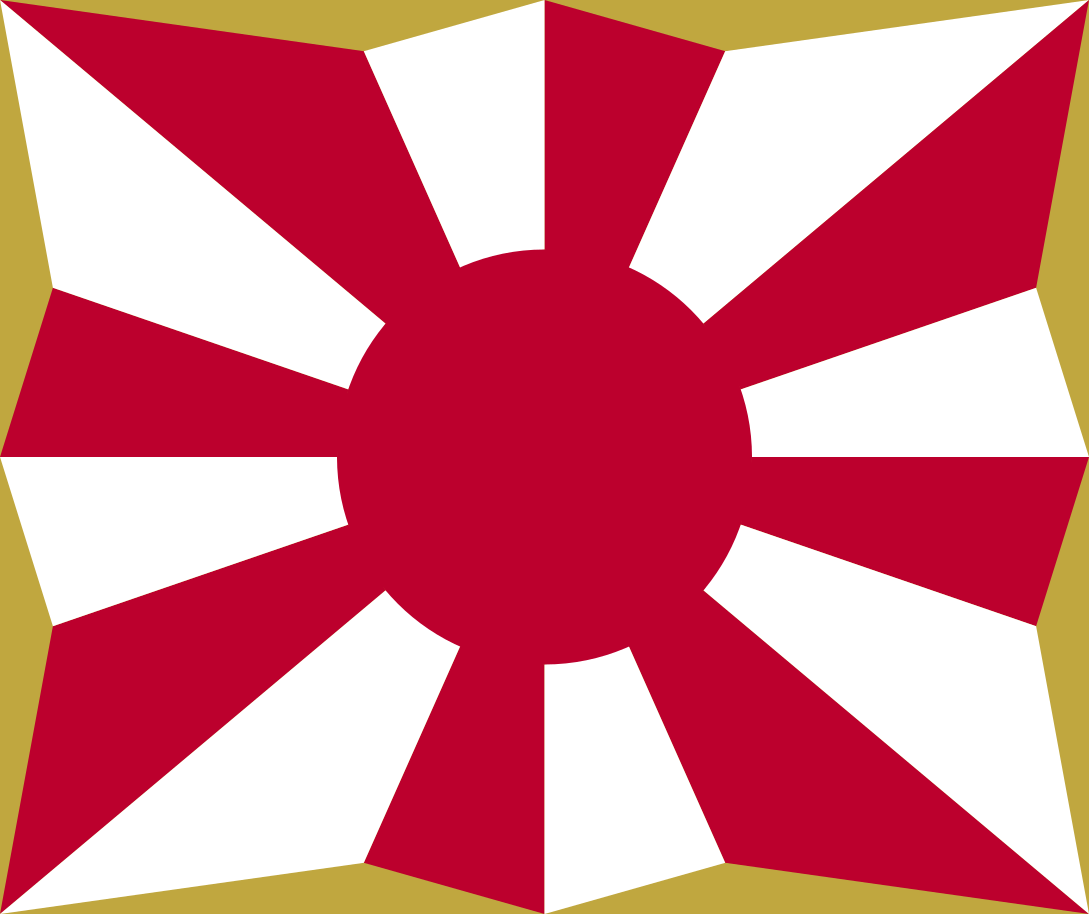
- Flag of the Self-Defense Forces
- A white field with a centred red disc and eight red rays reaching the edges, with a gold border along part of the edge.
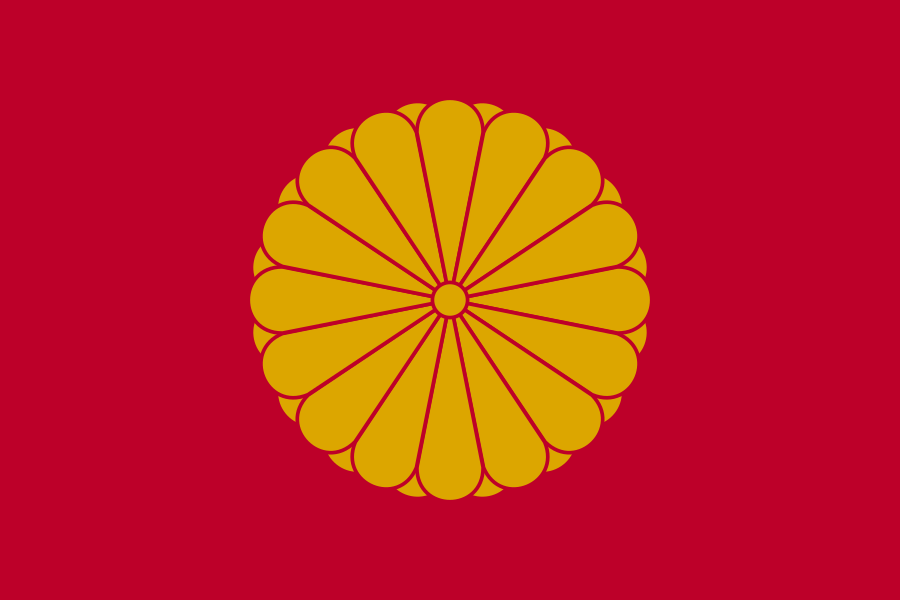
- Standard of the emperor
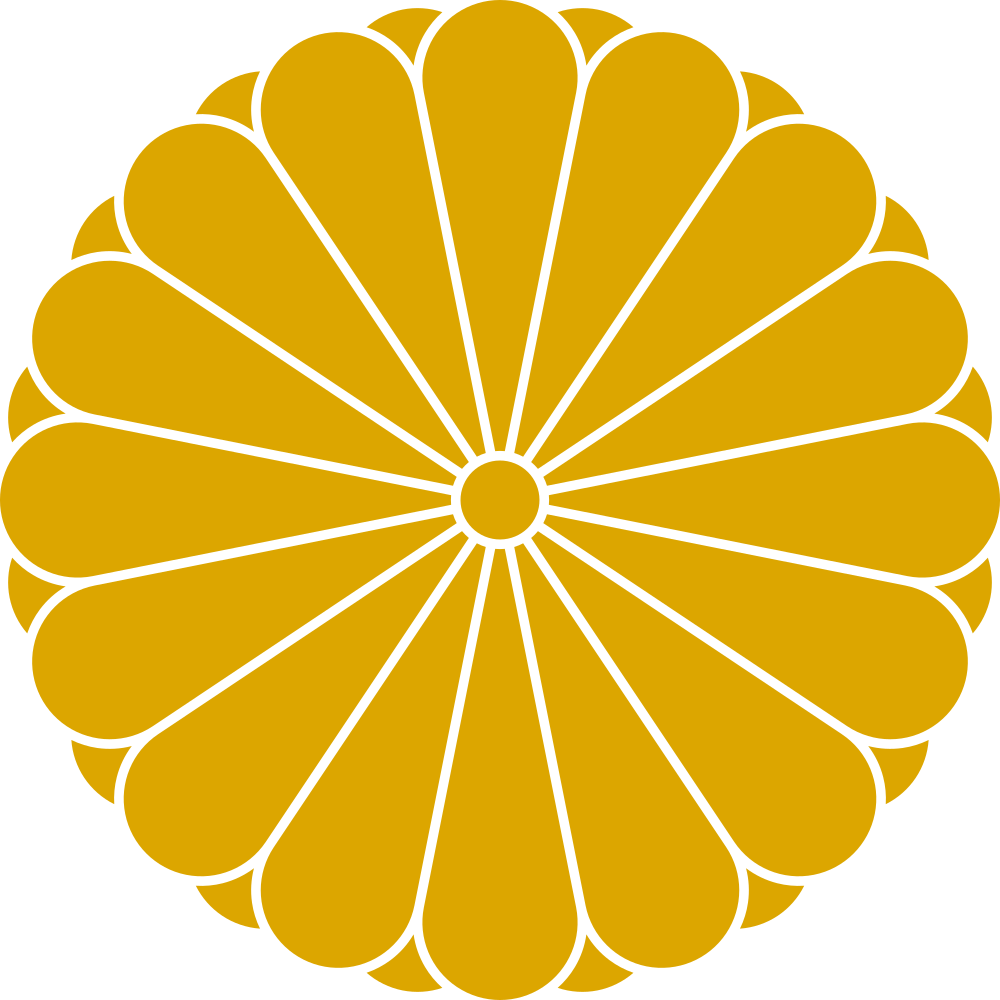
- A gold chrysanthemum of sixteen petals on a red field in the proportion 2:3, the pattern the imperial family has used since 1889.
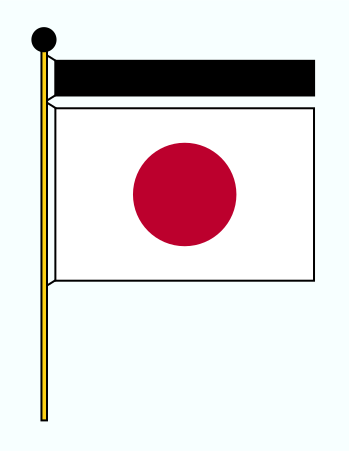
- Mourning flag
- The national flag with its ball finial wrapped in black cloth and a black ribbon above it, a style dating from the death of Emperor Meiji on 30 July 1912.
Meaning
What each part stands for
- The red disc
- The rising sun. Japan has called itself the land where the sun rises since a letter of 607 to the Sui court, and the country's name carries the same idea
- The sun and the throne
- Legend descends the imperial line from the sun goddess Amaterasu, and the sun has long been tied to the imperial family
- Red and white
- Traditional colours of celebration in Japan. The Japanese article records the reading of red as goodwill and vitality and white as sanctity and purity
History
How the flag of Japan got here
- 1854
The shogunate's ship flag
Aug 1854 → 27 Feb 1870
After the treaty of 1854 with the United States, the Tokugawa shogunate ordered Japanese ships to fly a white flag with the red sun so they could be told from foreign ships. The embassy of 1860 crossed the Pacific under it on the Kanrin Maru, and its display in New York is held to be the first time it flew abroad as the country's flag.
- 1870
The merchant flag of 1870
27 Feb 1870 → 12 Aug 1999
Proclamation No. 57 set the proportion at 7:10 with the disc a hundredth of the length towards the hoist. It served as the de facto national flag for more than a century with no law naming it one. The 1998 Nagano Olympics flew a version with the disc at two thirds of the height.
- 1999
The NisshōkiIn use
13 Aug 1999 → today
The Act on National Flag and Anthem fixed the proportion at 2:3 and moved the disc to the exact centre, keeping its size at three fifths of the hoist.
The law
What defines it, and who flies it
- 27 February 1870
Daijō-kan Proclamation No. 57 of Meiji 3, the merchant ship regulations
Made the sun disc flag the flag of Japanese merchant ships: proportion 7:10, disc three fifths of the hoist, set one hundredth of the length towards the hoist. Repealed by the 1999 act.
- 27 October 1870
Daijō-kan Proclamation No. 651 of Meiji 3
Set the flag for the navy in the proportion 2:3 with the disc at three fifths of the hoist and in the centre, the pattern the current flag follows.
- 13 August 1999
Act on National Flag and Anthem (Law No. 127 of 1999)
Designates the Nisshōki as the national flag and Kimigayo as the anthem. Passed by the House of Representatives on 22 July 1999 by 403 votes to 86 and by the House of Councillors on 9 August, then promulgated and in force on 13 August. A supplementary provision allows the 1870 merchant pattern to be used for the time being.
- 2026
Act on the Punishment of Damage to the National Flag
Passed by the House of Representatives on 30 June 2026 and the House of Councillors on 17 July 2026. Publicly damaging, removing or defacing the flag in a way that causes others significant discomfort can bring up to two years in prison or a fine of up to ¥200,000. Before it, Japan had no law punishing damage to its own flag.
In use
May be flown from sunrise to sunset; businesses and schools may fly it from opening to closing
Beside another country's flag in Japan it takes the place of honour, with the guest flag to its right, at the same height and the same size
With several foreign flags it is placed in the alphabetical order the United Nations uses
Flown at half-staff for mourning, or with a black-wrapped finial and a black ribbon; the Cabinet announces national half-staffing
Since the 1999 curriculum guideline, schools are to raise it at entrance and graduation ceremonies
The government encourages flying it on national holidays, and no law requires it; most homes and businesses do not
A flag no longer fit for use is customarily burned in private
Related flags
The flags it is confused with or comes from
 Palau
Palau- A disc on a plain field, set towards the hoist like the 1870 Japanese pattern. The Japanese article records its designer telling an interviewer in 2010 that it shows the moon of Palau and was not modelled on the Hinomaru.
 Bangladesh
- Its disc is also set slightly towards the hoist, the device of the 1870 Japanese merchant flag.
Coat of arms
The arms of Japan