The flag of Argentina
Bandera de la Argentina · since 1985
 Back to Argentina
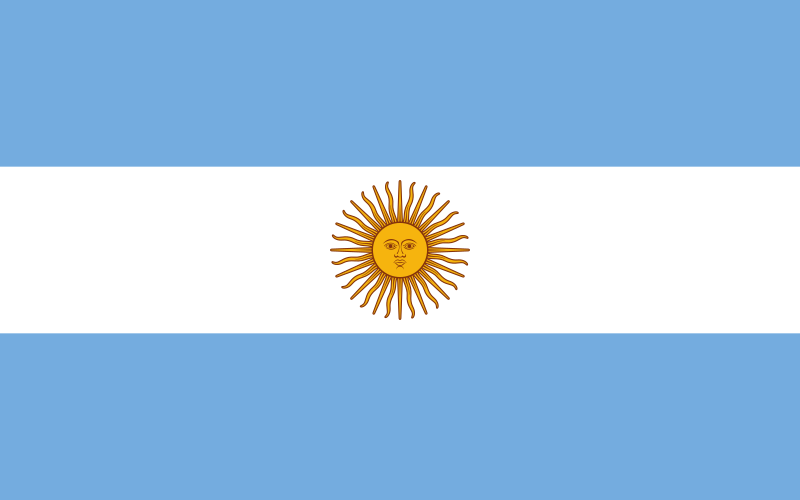
Three equal horizontal bands of light blue, white and light blue, with a golden Sun of May on the white band. Manuel Belgrano first raised a light blue and white flag at Rosario on 27 February 1812, the Congress of Tucumán recognised the colours in 1816, and the sun was added in 1818. Since 1985 every Argentine may fly the flag with the sun, and since 2010 its colours, proportion and sun have been fixed by decree.
At a glance
- Adopted
- 1818
- Proportion
- 5:8
- First hoisted
- 1812
- Colours
- Earlier flags
- 8
- Designers
- 2
The colours
The colours of the flag of Argentina, in the order it has them
- 0168.6%
Light blue
celesteTop and bottom bands
- HEX
#74ACDF- RGB
116 172 223- Pantone
284 C
- 0231.4%
White
blancoMiddle band, carrying the sun
- HEX
#FFFFFF- RGB
255 255 255- CMYK
0 0 0 0
- 03
Golden yellow
amarillo doradoThe Sun of May
- HEX
#F6B40E- RGB
246 180 14- CMYK
0 18 100 0- Pantone
1235 C
- 04
Chestnut brown
castañoThe outline and the features of the sun's face
- HEX
#85340A- RGB
133 52 10- Pantone
1685 C
No law gives these codes. HEX and RGB are the colour this site draws the flag in; CMYK, Pantone and RAL are the values most often published for it.
Construction
How the flag is drawn
Three horizontal bands of equal height, light blue over white over light blue, with the Sun of May centred on the white band: a golden disc with a human face surrounded by 32 rays, 16 straight and 16 wavy in alternation, its outline and features drawn in brown.
- Bands
- Three, of equal height
- Sun diameter
- Five sixths of the height of the white band, rays included
- Sun face
- One third of the height of the white band
- Rays
- 32, alternately straight and wavy
- Ceremonial flag
- 0.90 × 1.44 m under the IRAM standards, replacing the 0.90 × 1.40 m flag used indoors since 1895
- Earlier proportions
- 9:14 for indoor ceremonial flags from 1895, 1:2 on official buildings and schools, 2:3 at sea, until the IRAM standards set 5:8
Other forms
- Ornamental flag
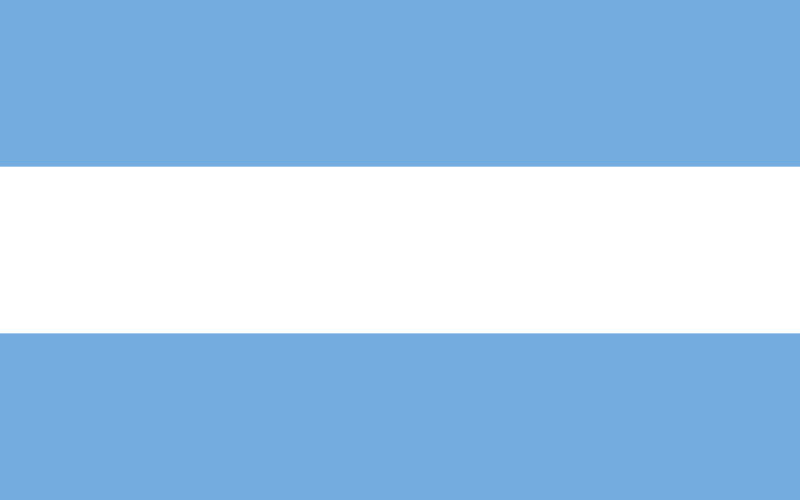
- The same three bands without the sun, the Bandera de Ornato. It is flown below the flag with the sun when both are used, and serves as an alternative civil flag and ensign; the Naval Prefecture recognised it for civil ships in 1987.
- Ceremonial carrying flag
- Carried on a pole of national wood 2.10 m tall with a silver point, tied with white ribbons and a cravat in the flag's colours, the sun embroidered in gold thread, and borne by a flag bearer in white gloves with at least two escorts.
Meaning
What each part stands for
- Light blue and white
- Taken from the national cockade of 1812. Popular belief reads them as the sky, the clouds and the sun; historians more often trace them to the House of Bourbon and the ribbon of the Order of Charles III, and other readings point to the unofficial arms of Buenos Aires or the plumes of the Patricios regiment
- White
- Read by some as silver, in allusion to the country's name
- Sun of May
- A copy of the sun engraved on the first Argentine coin, approved in 1813, and a reference to the May Revolution of 1810. The historian Diego Abad de Santillán read it as the Inca sun god Inti
Who drew it
- Manuel Belgrano
- General of the independence war, who proposed the flag on 26 February 1812 and raised it the next day in the colours of the national cockade
- María Catalina Echevarría de Vidal
- Sewed the first flag, according to local tradition in Rosario
History
How the flag of Argentina got here
- 1785
The Spanish flag
1785 → Jul 1816
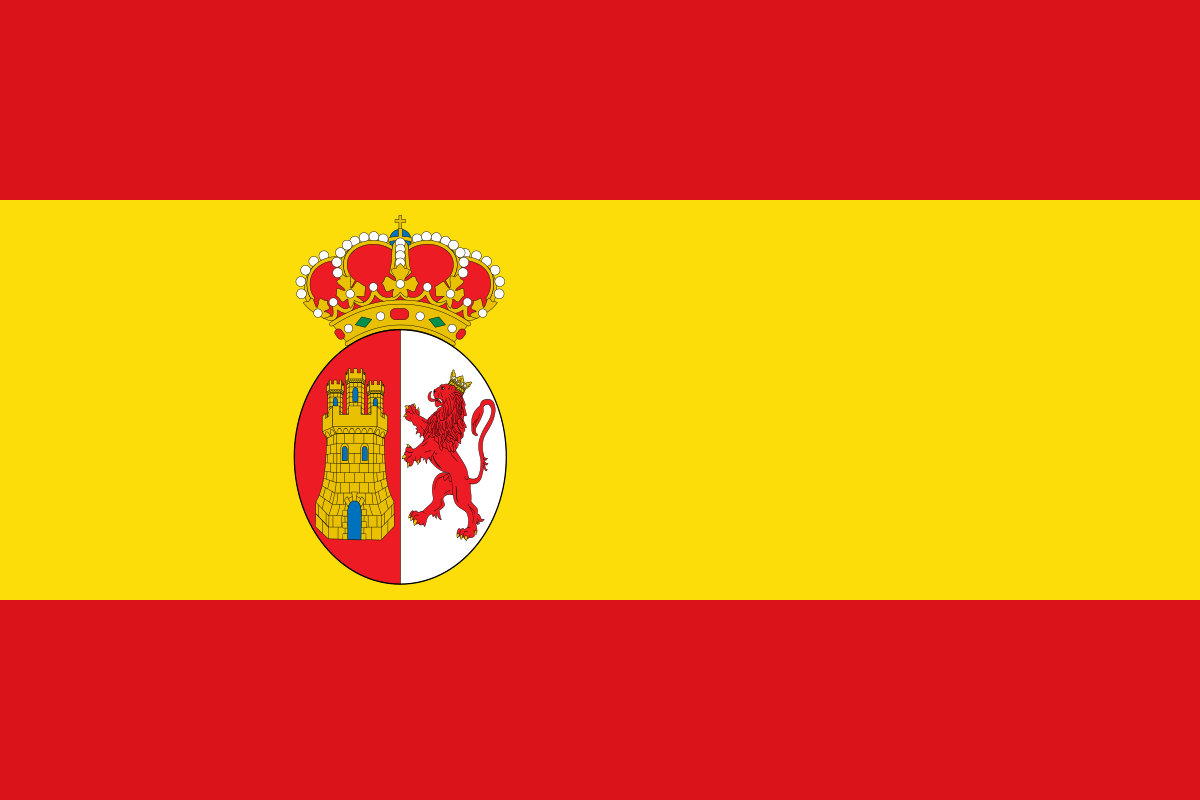
The red and yellow flag of Charles III stayed in use after the May Revolution of 1810, because the junta governed in the name of the captive Ferdinand VII. A version with three equal stripes that flew over the fort of Buenos Aires is kept in the National Historical Museum.
Image: previous version User:Ignaciogavira ; current version HansenBCN , designs from SanchoPanzaXXI, CC BY-SA 3.0
- 1812

Belgrano's first flag
27 Feb 1812 → 1812
Raised at the Independencia battery near Rosario in the colours of the new cockade. Its layout is disputed; some historians hold that it had two stripes, white over light blue.
- 1812
The light blue and white triband
1812 → 25 Feb 1818
Carried by Belgrano's Army of the North, blessed at Jujuy on 25 May 1812 and flown at the victories of Tucumán and Salta, despite the government's order to withdraw it. The Congress of Tucumán recognised it as the flag of the United Provinces in July 1816.
- 1818
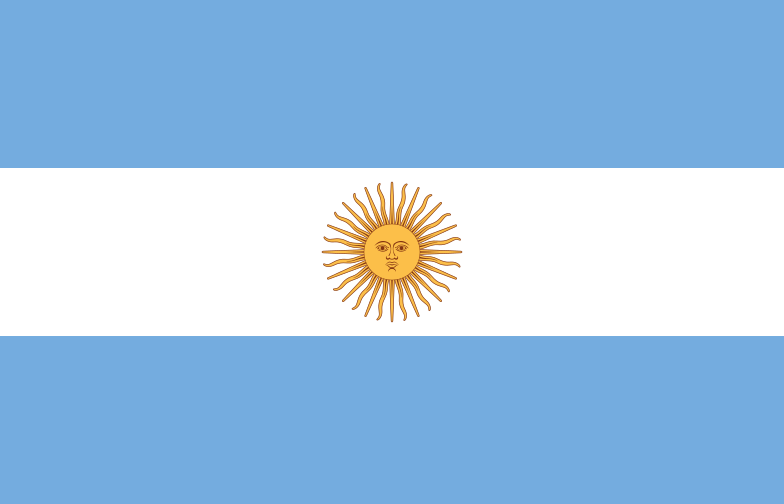
The Sun of May is added
25 Feb 1818 → 1829
The Congress added a golden sun to the white band of the war flag. The shade of blue moved between light blue and a darker heraldic blue in these years.
- 1829
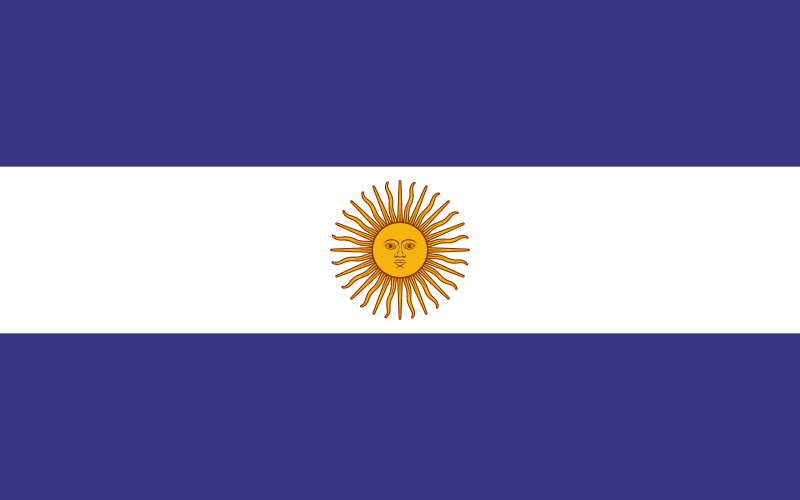
Turquoise under Rosas
1829 → 1835
Juan Manuel de Rosas darkened the blue to turquoise, partly to set the federalist flag apart from the lighter blue of his Unitarian opponents.
- 1836
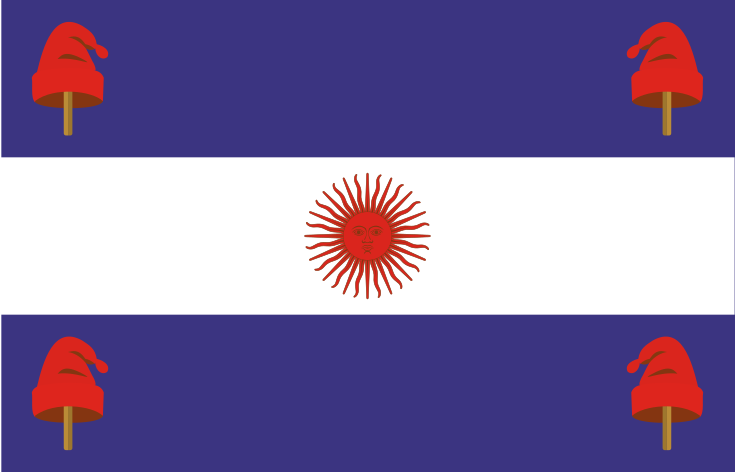
The Confederation flag
1836 → 1852
Rosas added a Phrygian cap in each corner and turned the sun red, the federalist colour. No law or decree recorded the change.
Image: Guilherme Paula, CC BY-SA 3.0
- 1852
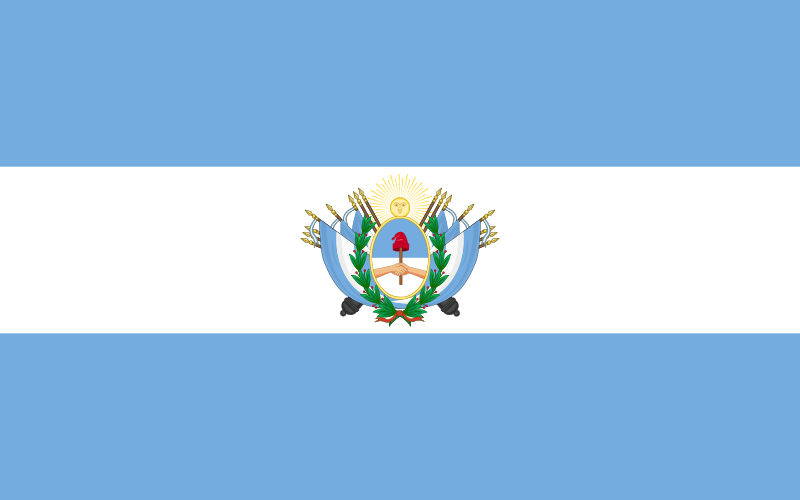
Two flags, Confederation and Buenos Aires
1852 → 1861
After Caseros the Confederation under Urquiza returned to light blue with a golden sun, while the seceded State of Buenos Aires flew light blue and white with the national coat of arms on the white band.
Image: Samhanin, CC BY-SA 3.0
- 1861
One flag, two versions
1861 → 16 Aug 1985
With reunification the light blue flag with the golden sun became the flag of the whole country. From 1884, and in law from 1944, the sun flag was reserved to the state, and private citizens flew the plain triband.
- 1985
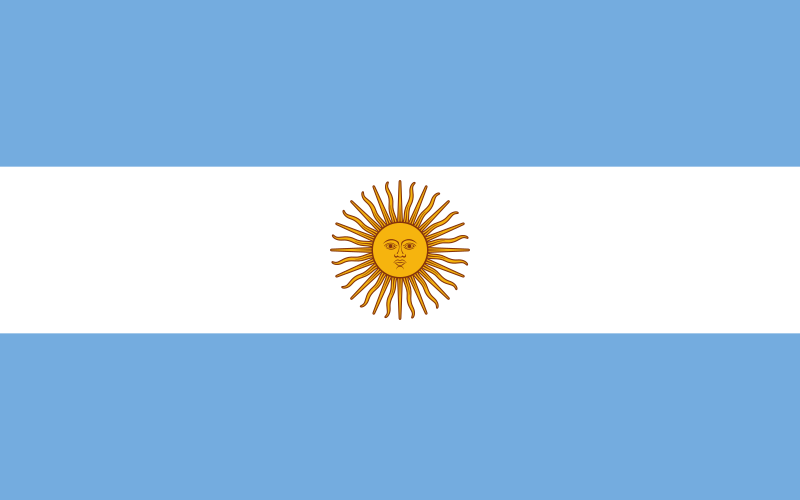
The flag of every ArgentineIn use
16 Aug 1985 → today
Law 23,208 opened the sun flag to all, and Decree 1650/2010 fixed its 5:8 proportion, its colours and the drawing of the sun from the IRAM standards.
The law
What defines it, and who flies it
- 25 July 1816
Decree of the Congress of Tucumán
Adopted the light blue and white flag as the flag of the United Provinces, after the declaration of independence.
- 25 February 1818
Resolution of the Congress, sitting in Buenos Aires
Added the Sun of May to the white band of the war flag.
- 24 April 1944
Decree No. 10,302/1944 on the national symbols
Declared the flag with the sun the Official Flag of the Nation and reserved it to the federal and provincial governments; private citizens flew it without the sun.
- 16 August 1985
Law No. 23,208
Gave every citizen and institution the right to fly the Official Flag of the Nation with the sun.
- 23 November 2010
Decree No. 1650/2010
Made the IRAM standards of 2002 to 2004 the official specification of the flag: proportion, colours and the design of the sun.
In use
Since Law 23,208 of 1985 the national, provincial and municipal governments, official bodies, institutions and private individuals may all fly the flag with the sun
At the Casa Rosada the Regiment of Horse Grenadiers has raised and lowered the flag on the Plaza de Mayo mast daily since 1907
Flag Day, 20 June, marks Belgrano's death in 1820 and has been a national holiday since Law 12,361 of 1938; ceremonies are held at the National Flag Memorial in Rosario, inaugurated in 1957
Displaying the flag on homes and buildings on national holidays was authorised in 1869, having previously been prohibited
Related flags
The flags it is confused with or comes from
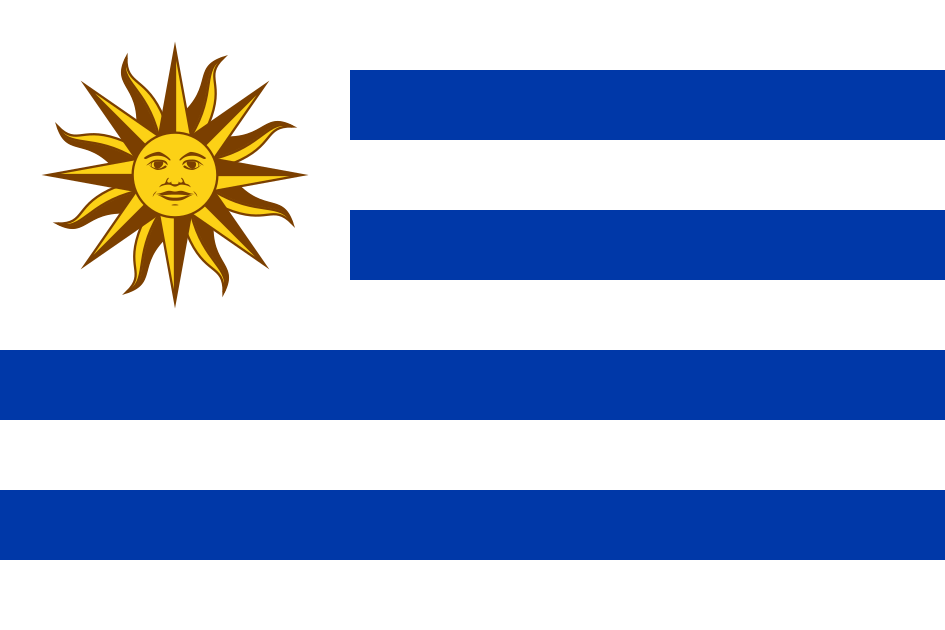 Uruguay
- José Artigas adapted Belgrano's flag for the League of the Free Peoples in 1814, in what is now Uruguay
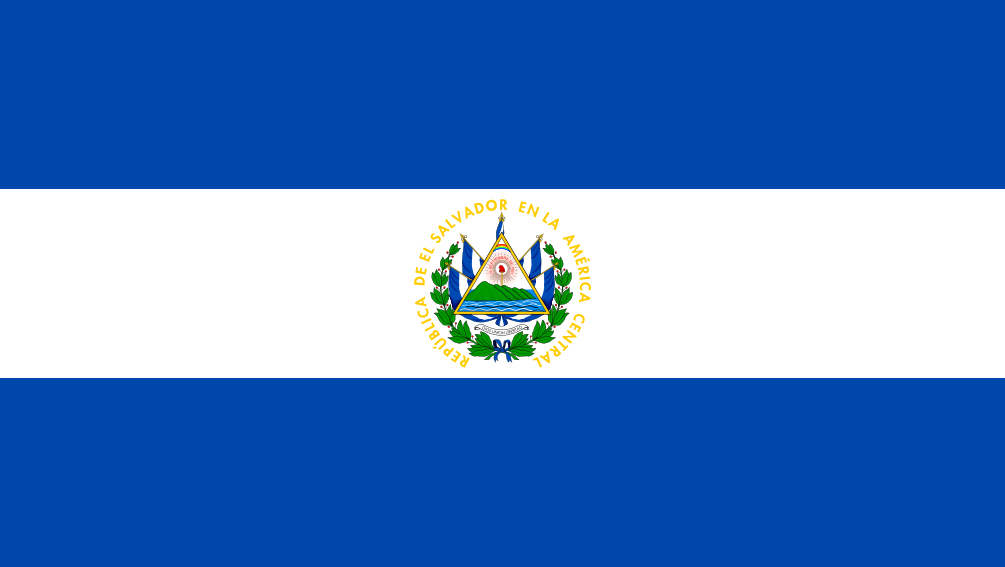 El Salvador
- Descends from the white and light blue flag Manuel José Arce had made in 1822, in the colours privateers of the United Provinces had flown on the Central American coast in 1819
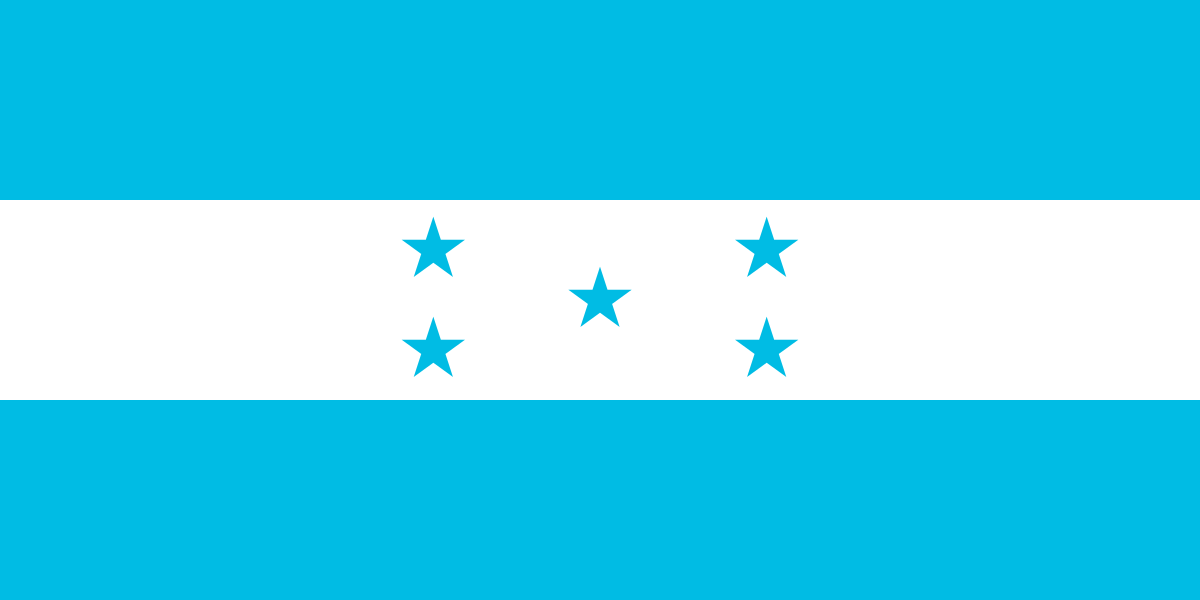 Honduras
- Blue and white bands from the same Central American federation
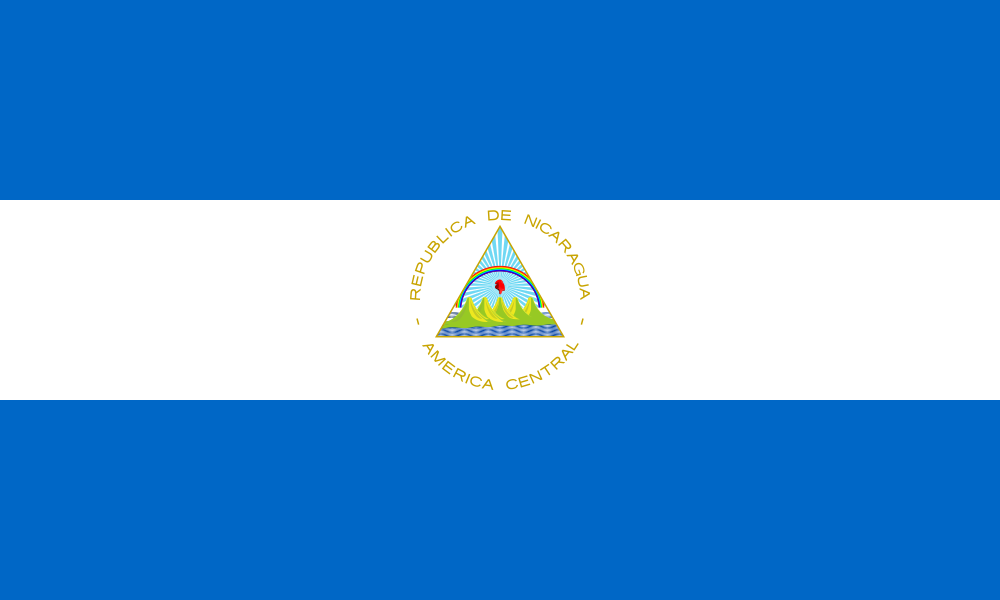 Nicaragua
- Blue and white bands from the same Central American federation
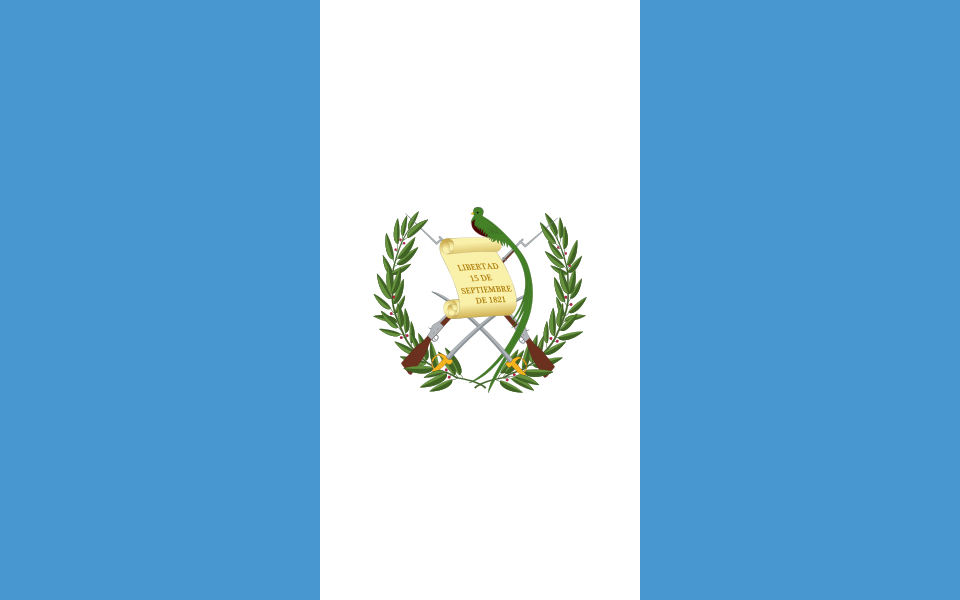 Guatemala
- Light blue and white from the same Central American federation, turned vertical
Coat of arms
The arms of Argentina
- Coat of arms
- On Wikimedia Commonsthe file has not been fetched