The flag of Angola
Bandeira Nacional da República de Angola · since 1975
 Back to Angola
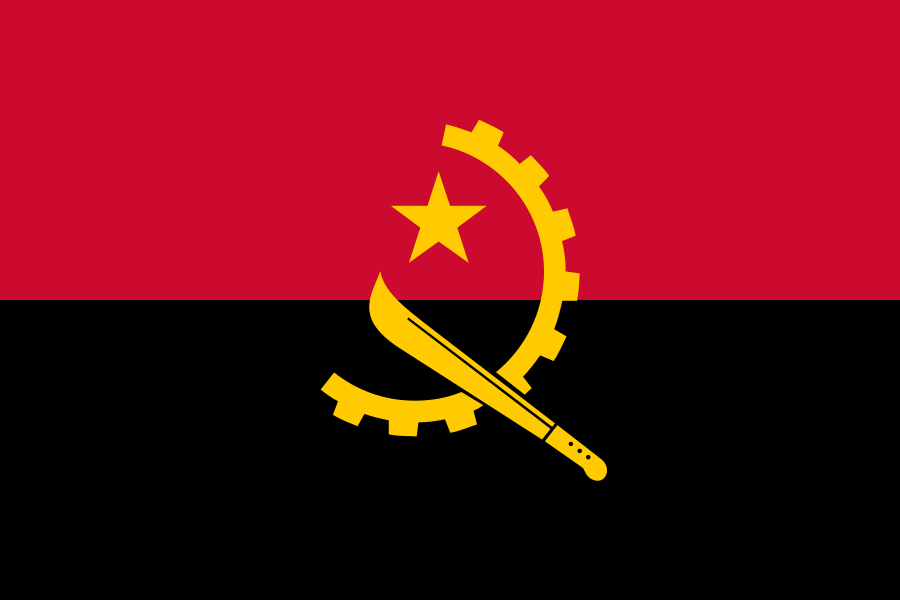
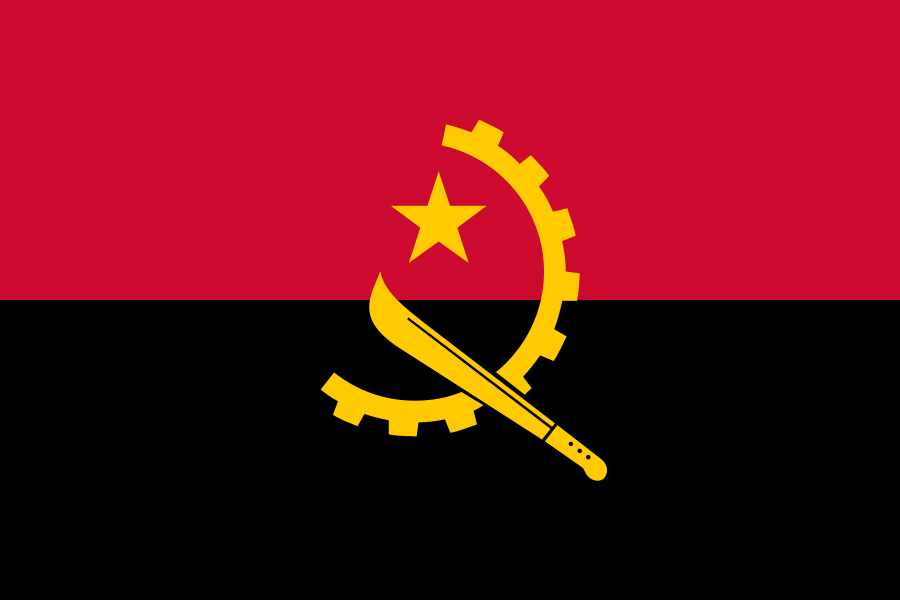
A red over black horizontal bicolour with a yellow emblem in the centre: half a cogwheel, a machete and a five-pointed star. It was adopted at independence on 11 November 1975 and is based on the flag of the MPLA, the movement that proclaimed independence in Luanda; a replacement proposed in 2003, after the civil war, was never adopted.
At a glance
- Adopted
- 1975
- Proportion
- 2:3
- First hoisted
- 1975
- Colours
- Earlier flags
- 1
- Designers
- 2
The colours
The colours of the flag of Angola, in the order it has them
- 0148.5%
Red
vermelhoUpper band
- HEX
#CC092F- RGB
204 9 47- CMYK
20 100 90 0- Pantone
186 C
- 0247.7%
Black
pretoLower band
- HEX
#000000- RGB
0 0 0- CMYK
10 10 10 100- Pantone
Black 6 C
- 033.8%
Yellow
amareloThe cogwheel, the machete and the star
- HEX
#FFCB00- RGB
255 203 0- CMYK
0 15 100 0- Pantone
116 C
No law gives these codes. HEX and RGB are the colour this site draws the flag in; CMYK, Pantone and RAL are the values most often published for it.
Construction
How the flag is drawn
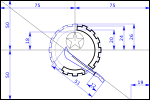
Two horizontal bands, red above and black below, with a yellow emblem in the centre: a half cogwheel crossed by a machete and crowned by a five-pointed star.
- Bands
- Two horizontal bands, red over black
- Emblem
- In the centre of the flag, its position and size as on the construction sheet in the government manual; any other arrangement counts as a distortion
- Standard sizes
- 0.51 × 0.80 m, 0.83 × 1.3 m and 1.4 × 2.2 m; any size is allowed at 2:3
- Border on screen
- On a coloured background or a photograph, a border twice the diameter of the star
Other forms
- Presidential standard
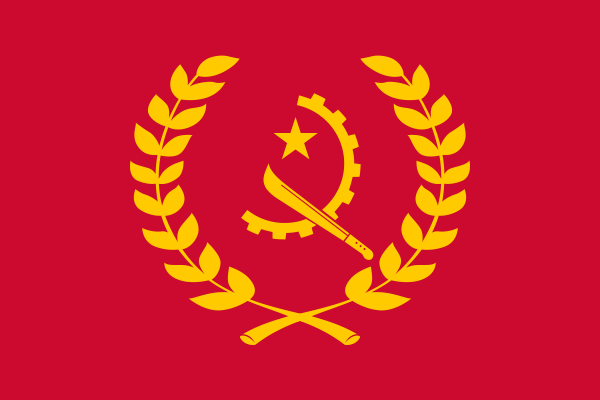
- A red field with the same yellow emblem and two yellow olive branches below it, at 2:3. It marks the president's presence, stands in the presidential palace and is always shown beside the national flag.
- Bandeira-Monumento
- A flag of 12 by 18 metres and 40 kilograms, first hoisted on 4 April 2013 on a 75-metre mast at the Fortress of São Miguel in Luanda, and raised on twelve dates a year.
- Flag of the MPLA
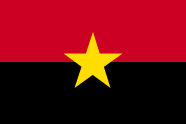
- Red over black with a yellow five-pointed star in the centre, the design on which the national flag is based.
- Proposal of 1996
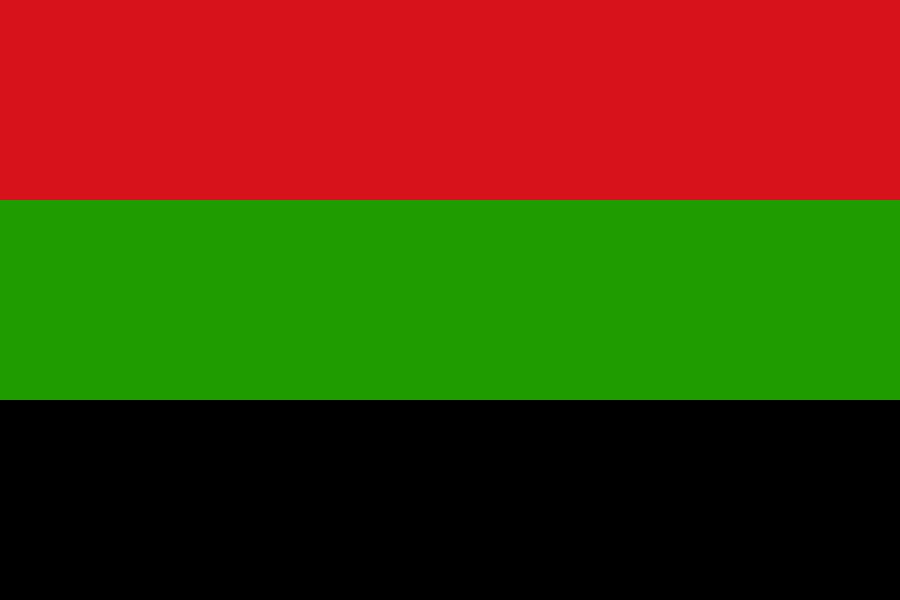
- A proposed flag of 1996, never adopted.
- Proposal of 2003
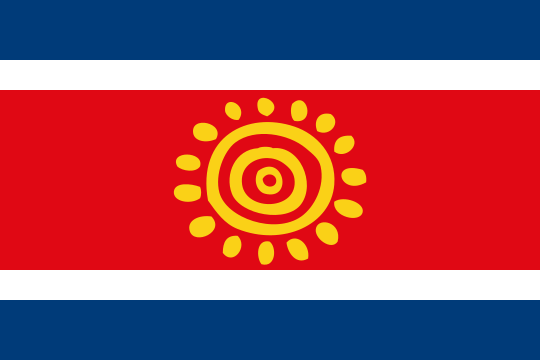
- Chosen in a public competition after the civil war: a red central stripe between thin white stripes and broad dark blue stripes, with a yellow sun of fifteen rays taken from the Tchitundu-Hulu rock paintings of Namibe. Presented on 28 August 2003 and never adopted.
Meaning
What each part stands for
- Red
- The blood shed by Angolans during colonial oppression, the struggle for national liberation and the defence of the country; in the 1975 text, the revolution
- Black
- The African continent
- Half cogwheel
- The workers and industrial production
- Machete
- The peasants, agricultural production and the armed struggle
- Star
- International solidarity and progress; in the 1975 text, internationalism
- Yellow
- The wealth of the country
Who drew it
- Henrique Onambwé
- Credited with the design; English sources name him Henrique de Carvalho Santos
- Joaquina Muteka, Ruth Lara and Cici Cabral
- Made the first flag, on 11 November 1975
History
How the flag of Angola got here
- Undated
The flag of Portugal
Undated → 10 Nov 1975
Angola flew the Portuguese flag through the colonial period. It was lowered in Luanda at noon on 10 November 1975, and António da Silva Cardoso, the Portuguese official overseeing the transition, left after transferring sovereignty to the Angolan people and to no particular movement.
- 1975
The flag of AngolaIn use
11 Nov 1975 → today
Adopted at independence and based on the MPLA's flag. In Huambo, where UNITA proclaimed a rival republic, the UNITA flag was raised in place of the Portuguese one, and UNITA flew its own flag in the territory it held until 2002. The constitutions of 1992 and 2010 kept the design, reinterpreting two of its meanings.
The law
What defines it, and who flies it
- 5 February 2010
Constitution of the Republic of Angola, Annex I
Describes the flag and gives the meaning of its colours and emblem.
- 25 August 1992
Constitutional Law of the Republic of Angola, Article 162
The same description of the flag, carried over from the independence constitution.
- 11 November 1975
Constitutional Law of the People's Republic of Angola, Article 54
The original text, in which red stood for the blood shed in the revolution and the star for internationalism.
- 2011
Símbolos Nacionais da República de Angola: Manual de Normas Gráficas e Protocolares
The government manual: construction sheet, standard sizes, colour codes and the rules for flying the flag.
In use
Any institution or person may fly it who observes the government manual; public institutions fly it outside their headquarters daily
Raised in general on Sundays, public holidays and days of official ceremonies, and on other days when the president, the National Assembly or the courts order it
Flown from 9 a.m. until sunset, and lit by projectors where possible when flown at night
Lowered to half-mast in national mourning, after first being raised to the top of the mast
Shown more prominently than other flags and never smaller than a flag beside it; on two masts it takes the left as seen by the observer, on three the middle
Improper use or handling of the flag is a criminal offence
Coat of arms
The arms of Angola