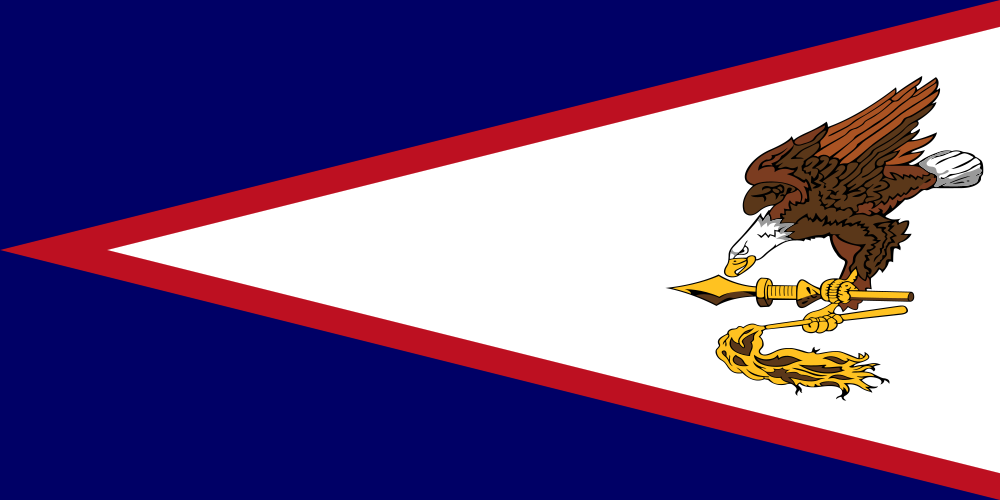
The flag of American Samoa
Fuʻa o Amerika Sāmoa · since 1960
 Back to American Samoa
A dark blue field divided by a white triangle edged in red, pointing to the hoist, on which a bald eagle holds two Samoan emblems of chiefly office, the war club and the fly-whisk. It replaced the flag of the United States as the territory's flag in April 1960, sixty years after the Tutuila chiefs' cession, and was designed by a student at Samoana High School. No legislation fixing its colours has been found.
At a glance
- Adopted
- 1960
- Proportion
- 1:2
- First hoisted
- 1960
- Colours
- Earlier flags
- 1
- Designers
- 2
The colours
The colours of the flag of American Samoa, in the order it has them
- 0155%
Blue
The field, in two triangles above and below
- HEX
#000066- RGB
0 0 102- CMYK
100 78 0 57- Pantone
281- RAL
5026
- 0235.1%
White
The triangle carrying the eagle
- HEX
#FFFFFF- RGB
255 255 255
- 039.9%
Red
The border of the triangle
- HEX
#BD1021- RGB
189 16 33- CMYK
0 90 76 0- Pantone
032- RAL
3020
No law gives these codes. HEX and RGB are the colour this site draws the flag in; CMYK, Pantone and RAL are the values most often published for it.
Construction
How the flag is drawn
A dark blue field with a white triangle, bordered in red, whose base lies along the fly and whose point reaches the middle of the hoist, splitting the blue into an upper and a lower triangle; on the white a bald eagle faces the hoist, holding a yellow war club (uatogi) and a fly-whisk (fue) in its claws.
- Triangle
- White, edged in red, based on the fly and reaching to the hoist
- Blue
- Two triangles, above and below the white
- Eagle
- On the white triangle, facing the hoist
Other forms
- Vertical flag
- In the version given by the Olympic flag manuals, the eagle's wings are on the left and the fly-whisk on the right.
Meaning
What each part stands for
- White triangle
- The Manuʻa District, according to the designer
- Two blue triangles
- The Eastern and Western Districts of Tutuila, according to the designer
- Red border
- The ocean between Tutuila and the Manuʻa Islands, according to the designer
- Bald eagle
- The United States and its ties with American Samoa; the bird does not live in the territory
- Uatogi, the war club
- The power of the government, and the Samoans' ability to defend themselves
- Fue, the fly-whisk
- The wisdom of traditional Samoan leaders, carried by talking chiefs, and the ability to compromise
- Red, white and blue
- Colours used traditionally by both the United States and Samoa
Who drew it
- Uinifareti Rapi Sotoa
- Student at Samoana High School whose design won the school's flag competition in 1959
- United States Army Institute of Heraldry
- Worked the design into the final flag with the territory's government leaders
History
How the flag of American Samoa got here
- 1900
Flag of the United States
17 Apr 1900 → 17 Apr 1960
Raised over Tutuila on 17 April 1900, the day the chiefs signed the Deed of Cession, and flown as the territory's only flag for sixty years, first with 48 stars and from 1959 with 49.
- 1960
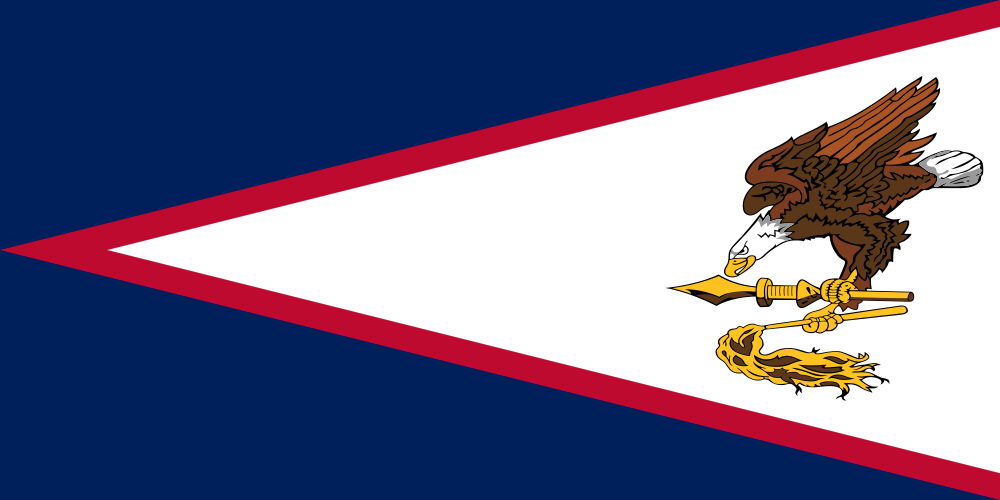
Flag of American SamoaIn use
17 Apr 1960 → today
The eagle over the red-edged white triangle, designed in a school competition in 1959, drawn up with the Army Institute of Heraldry and first raised on Flag Day 1960.
The law
What defines it, and who flies it
In use
Flag Day on 17 April, the date of the cession of 1900 and of the flag's first raising in 1960, is celebrated every year
A copy carried on Apollo missions between 1969 and 1971 is displayed at the Jean P. Haydon Museum in Pago Pago
Related flags
The flags it is confused with or comes from
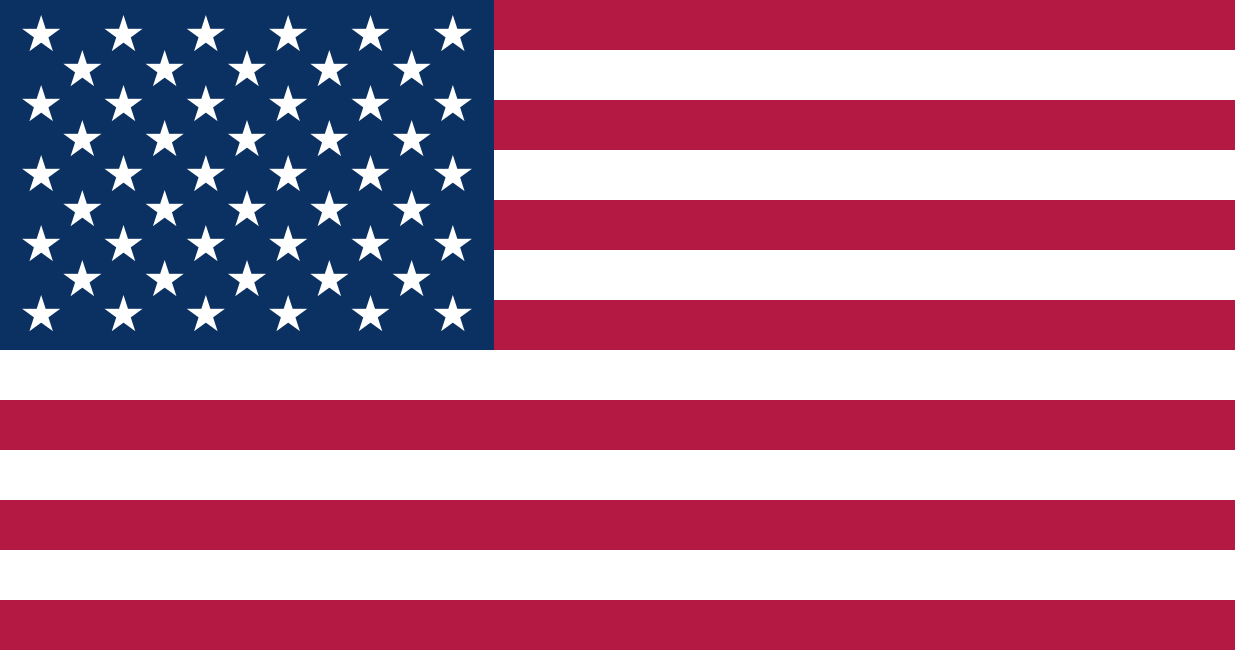 United States
- The eagle and the red, white and blue come from the United States, the sovereign power
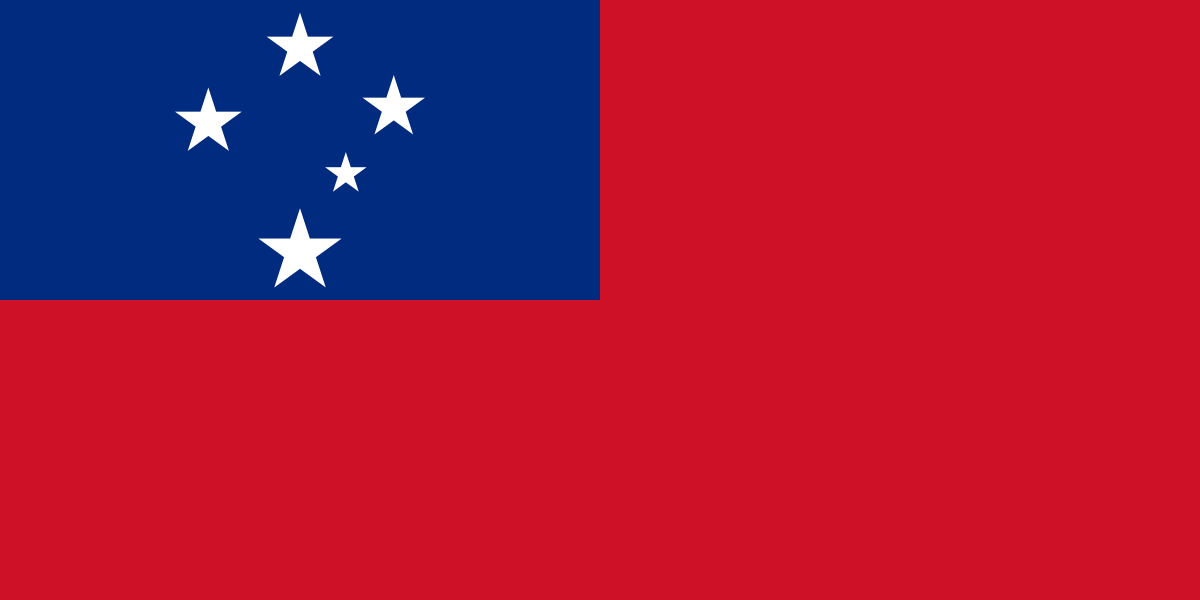 Samoa
Samoa- Independent Samoa shares the Samoan islands and their colours of red, white and blue
Coat of arms
The arms of American Samoa