Bolivarian Alliance for the Peoples of Our America
Political · ALBA
What was ALBA an alternative to? The Free Trade Area of the Americas, which the joint declaration signed at Havana on 14 December 2004 rejects by name and answers with special and differential treatment scaled to the size of each economy. The word alternative has since gone out of the title, the four letters have not moved, and six members joined from the Eastern Caribbean between 2008 and 2014.
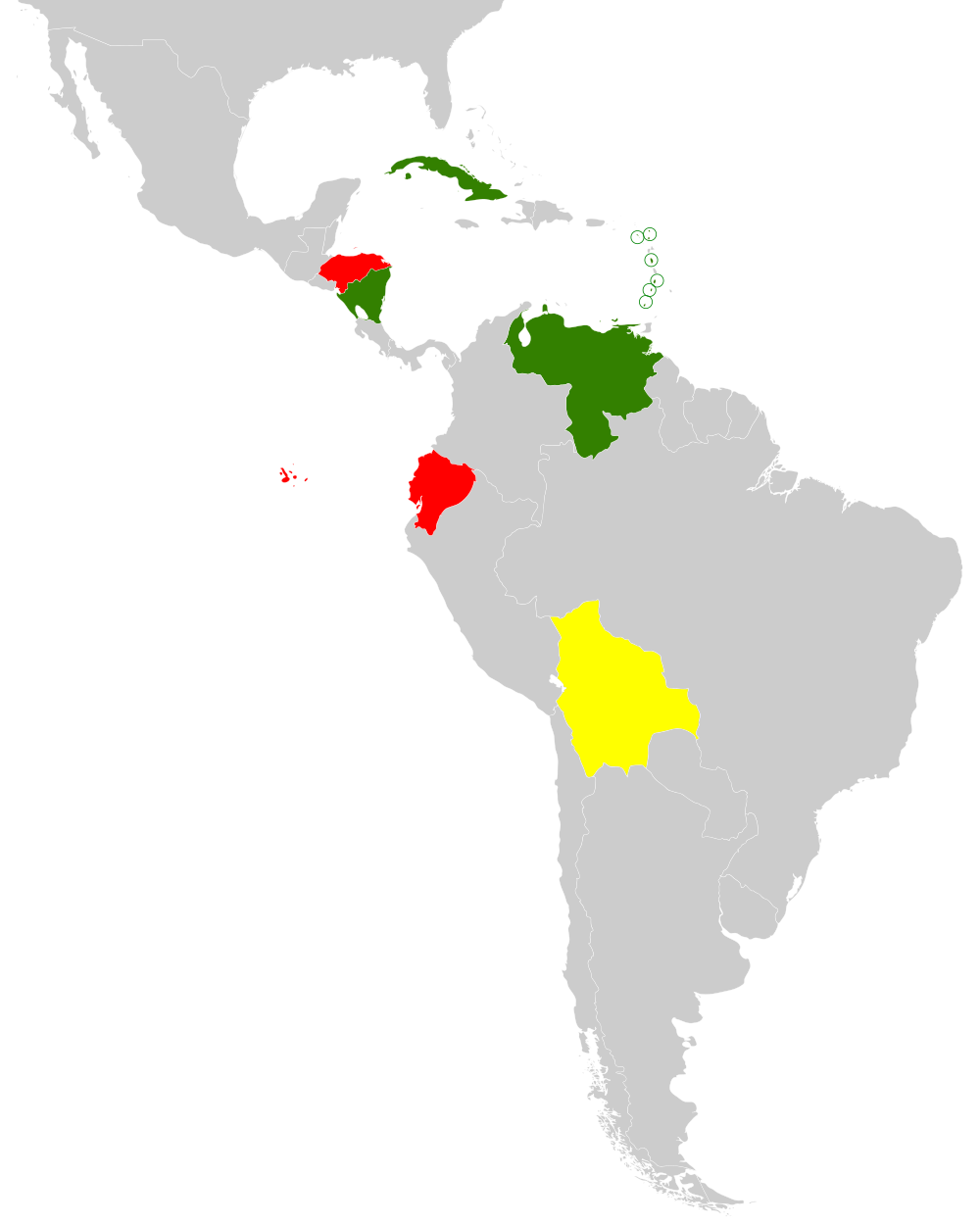
10 countries
Common questions
Questions about ALBA
Which countries are in ALBA?
Antigua and Barbuda, Bolivia, Cuba, Dominica, Grenada, Nicaragua, Saint Kitts and Nevis, Saint Lucia, Saint Vincent and the Grenadines and Venezuela, on the roster this catalogue applies, read from the alliance's own site on 2 September 2026. Cuba and Venezuela signed the founding declaration at Havana on 14 December 2004, Bolivia came in during 2006 and Nicaragua in 2007, and the six Eastern Caribbean members joined between 2008 and 2014.
What does ALBA stand for?
The four letters have outlasted two versions of the words behind them. The declaration of 14 December 2004 gives Alternativa Bolivariana para las Américas. The agreement signed at Havana on 28 and 29 April 2006 gives Alternativa Bolivariana para los Pueblos de Nuestra América, and adds the Tratado de Comercio de los Pueblos, the source of the TCP in ALBA-TCP. The treaty of 16 October 2009 calls its parties members of the Alianza Bolivariana.
Is the sucre a currency people can spend?
No. The treaty signed at Cochabamba on 16 October 2009 creates it as a common unit of account, issued only by the Regional Monetary Council and used to register, value, clear and settle trade passed through a central clearing house. There are no notes and no coins. ISO 4217 carries it as XSU, number 994, with no minor unit, and files it against the payment system rather than against any country.
Is there a treaty a country signs to join ALBA?
There is none. The founding instrument of 14 December 2004 is a joint declaration of shared views, with nothing to deposit and no accession clause, and no later text has replaced it with one. Admission happens at a summit and is recorded in the declaration that summit issues. The one treaty the alliance has produced, the payments treaty of 2009, binds its own parties and is a separate list from the membership.
Which countries have left ALBA?
Honduras and Ecuador. Honduras was welcomed at Tegucigalpa on 25 August 2008, and its Congress approved a withdrawal in January 2010 after the coup of 28 June 2009. Ecuador was welcomed at Maracay on 24 June 2009 and withdrew in August 2018. Both are still named among the parties to the payments treaty signed at Cochabamba in 2009. Bolivia announced a departure in November 2019 and resumed participation in November 2020.
Sources
- Declaración Conjunta entre Cuba y Venezuela, 14 de diciembre de 2004 · Government of Cuba. The founding declaration, its rejection of the Free Trade Area of the Americas, the guiding principles, and the proposal made at the Association of Caribbean States summit on Margarita Island in December 2001.
- Acuerdo para la aplicación de la Alternativa Bolivariana para los Pueblos de Nuestra América y el Tratado de Comercio de los Pueblos · Government of Cuba. The agreement made at Havana on 28 and 29 April 2006 by which Bolivia came in, and the text that puts the Tratado de Comercio de los Pueblos beside ALBA.
- Tratado Constitutivo del Sistema Unitario de Compensación Regional de Pagos (SUCRE), La Gaceta Diario Oficial No. 231 · Banco Central de Nicaragua. The full treaty text as published in the Nicaraguan official gazette: the framework agreement of Cumaná on 16 April 2009, the signature at Cochabamba on 16 October 2009, the six states party, the sucre as a unit of account, the Regional Monetary Council, and the clauses on entry into force, duration, reservations and denunciation.
- ISO 4217 Currency codes, Current currency and funds code list (List One) · SIX Group, maintenance agency for ISO 4217 on behalf of ISO. The sucre entered as XSU, number 994, with no minor unit, against the payment system rather than a country.
- ECCB Commemorates 50 Years of EC Dollar Fixed Exchange Rate · Eastern Caribbean Central Bank. The fixing of the East Caribbean dollar to the United States dollar at 2.70 to 1 on 7 July 1976 and the consultation that preceded it.
- Member States · Organisation of Eastern Caribbean States. The protocol members, and Montserrat's status as a United Kingdom overseas territory.
- Honduran Congress Approves Withdrawal From ALBA · Americas Quarterly. The congressional vote of January 2010.
- Ecuador leaves Venezuelan-run regional alliance · Associated Press, 24 August 2018. Ecuador's withdrawal.
- La ALBA suspende al futuro gobierno de Bolivia · Deutsche Welle, 25 October 2025. The communiqué of 24 October 2025 announcing the suspension of Bolivia's incoming government, and the membership the communiqué sets out.
- ALBA · The summit at which each member was welcomed, and the dates of the Bolivian departure of November 2019 and the resumption of November 2020.