The Gibraltar pound
Currency · GIP · £ · 1 country
The Government of Gibraltar has issued its own pound notes since 1927 and its own coins since 1988, and its Commissioner of Currency swaps them for sterling on demand, pound for pound. British coins and Bank of England notes circulate beside them and are accepted everywhere on the Rock. In the United Kingdom, Gibraltar's notes are not legal tender.
The sign
Gibraltar writes its pound with £, the same sign as sterling. The sign grew out of the letter L, set in blackletter until the seventeenth century, standing for libra, the Roman pound of silver. The hundredth is the penny, written p, as in Britain since decimalisation in 1971.
The same sign stands for 5 other currencies, among them the British pound and the Falkland Islands pound.
- ISO code
- GIP
- ISO number
- 292
- Subunit
- penny, 1/100
An amount, written out
£1,234.50
- £1,234.50English
The sign in code
HTML, CSS, JavaScript, UTF-8
- HTML
£££- CSS
content: "\00A3";- JavaScript
"\u00A3"- UTF-8
0xC2 0xA3- UTF-16
0x00A3- UTF-32
0x000000A3
Where the Gibraltar pound is the official currency
Gibraltar is the one place where these notes are legal tender, and British coins and Bank of England notes circulate on the Rock at the same value.
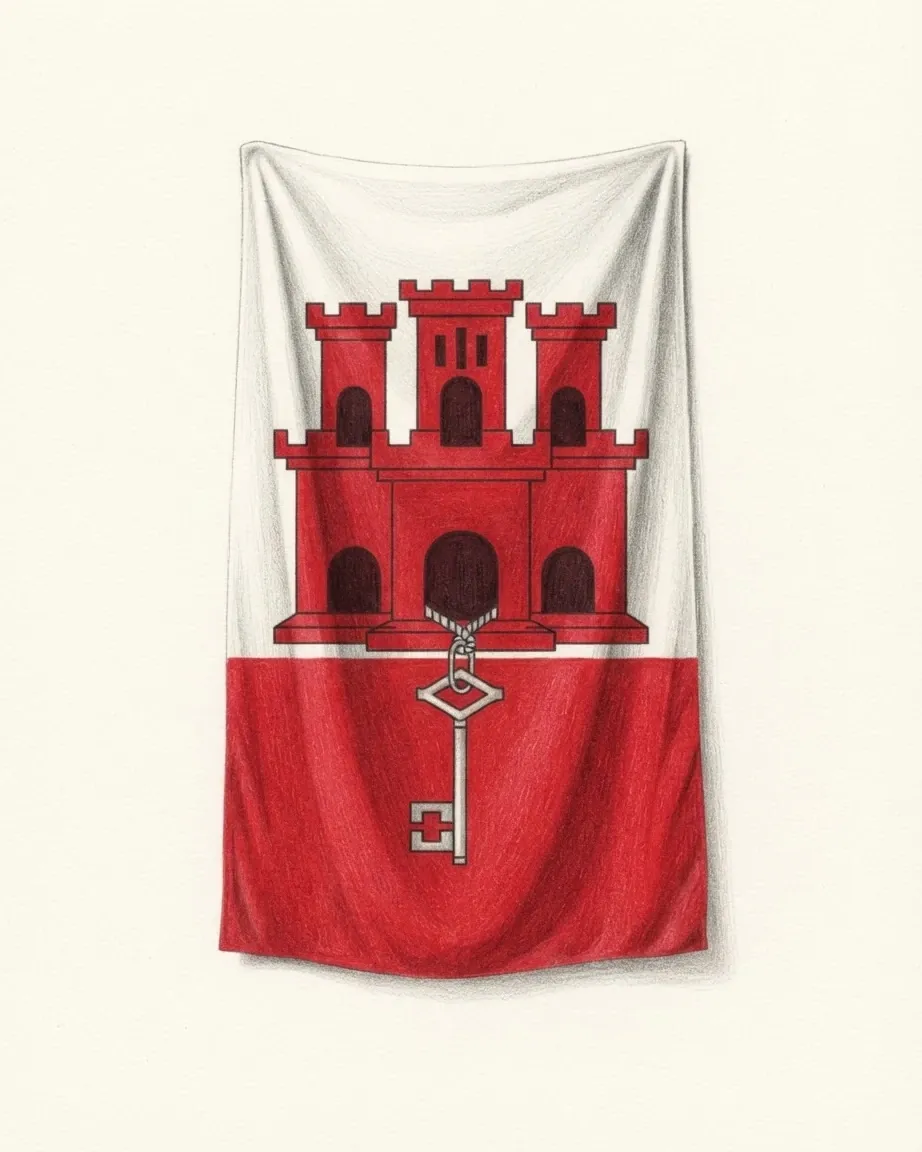
About the Gibraltar pound
How a Gibraltar note is backed by sterling
Under the Currency Notes Act 2011 the Financial Secretary acts as Commissioner of Currency and issues notes to anyone who lodges sterling, at one pound for one pound sterling, and pays sterling back for notes handed in. A commission of up to 1% may be charged, and the sterling paid in for each new note goes into a Note Security Fund, held in short-dated securities of the British or the Gibraltar government, and the fund pays for notes that come back.
The Commissioner may also issue notes against securities of the Gibraltar government. The notes are legal tender in Gibraltar for any amount, and their designs need the approval of the minister for finance, and a note may carry the monarch's image only with the monarch's consent.
Why British money works on the Rock
Gibraltar's coins match British coins in weight, size and metal and differ only in design. British coins and Bank of England notes are accepted throughout Gibraltar and are interchangeable with the local issue. Gibraltar notes are denominated in pounds sterling, yet the reverse does not hold: they are not legal tender anywhere in the United Kingdom, though Gibraltar coins do turn up in British change. Across the border some businesses in La Línea, in Spain, take Gibraltar pounds as well.
What Gibraltar spent before its own pound
Until 1872 Gibraltar reckoned in reales, with British, Spanish and local coins mixed together; from 1825 a Spanish dollar was set at four shillings and four pence. In 1872 Spanish money became the only legal tender, until the Spanish-American War of 1898 sent the peseta down. Sterling coin replaced it as sole legal tender that year, although pesetas kept circulating until the Spanish Civil War.
The first Gibraltar notes were an emergency measure. At the outbreak of the First World War, under Ordinance 10 of 1914, the colony issued notes so that it would not have to pay out sterling or gold. A regular series followed in 1927, and the Currency Notes Act 1934 gave the government the right to print its own. Gibraltar decimalised in 1971, at the same time as Britain.
How the notes and coins have changed
Notes of £10 and £20 arrived in 1975 and the £50 in 1986, and the £1 note ended in 1988, the year the coins came in. A series of 1995 was the first to say pounds sterling instead of pounds. In December 2021 the government began a smaller series, sized close to Bank of England notes, with a £5 printed by De La Rue and the Windsor Bridge on its reverse.
The coins of 1988 ran from one penny to one pound, and a £2 coin followed in 1999 with a new Labour of Hercules each year. A £5 coin of 2010 called Elizabeth II Queen of Gibraltar, which drew protest in Spain, where the title King of Gibraltar historically belongs to the Crown of Castile. The Gibraltar National Mint struck a twelve-sided £1 coin in 2025. Reports at the time said demand from collectors ran high.
Common questions
Questions about the Gibraltar pound
Can Gibraltar pounds be spent in the UK?
The notes cannot. Gibraltar's notes are denominated in pounds sterling but are not legal tender anywhere in the United Kingdom. Gibraltar's coins share the weight, size and metal of British coins and do turn up in circulation in Britain. Notes carried out of Gibraltar can be changed back in Gibraltar, where the Commissioner of Currency pays sterling for them pound for pound.
Is a Gibraltar pound worth the same as a British pound?
Yes. The Currency Notes Act 2011 obliges the Commissioner of Currency to swap Gibraltar notes and sterling at one pound for one pound on demand, with a commission of up to 1% allowed. British coins and Bank of England notes circulate on the Rock at the same value as the local ones.
Who issues Gibraltar's banknotes?
The Government of Gibraltar, through its Commissioner of Currency, an office held by the Financial Secretary. The right to print notes dates from the Currency Notes Act 1934, and the present law is the Currency Notes Act 2011. Every note issued for sterling is backed by a Note Security Fund held in short-dated British or Gibraltar government securities. The first notes of all were wartime emergency issues of 1914, and a regular series followed in 1927. The latest series, begun in 2021 with a £5 printed by De La Rue, is sized close to Bank of England notes.
Why did Spain object to a Gibraltar coin?
In 2010 Gibraltar issued a £5 coin inscribed Elizabeth II Queen of Gibraltar. The title King of Gibraltar historically belongs to the Crown of Castile, and the inscription drew protest in Spain for that reason. Gibraltar had already issued a £5 coin in 2005, with the Rock on it.