The pound sterling
Currency · GBP · £ · 4 countries and territories
The Bank of England, founded as a private bank in 1694 to act as banker to the Government, issues sterling's notes for England and Wales. Banks in Scotland and Northern Ireland print their own, and the Royal Mint strikes every British coin. Since 15 February 1971 the pound has held 100 pence; before that it held 240.
The sign
The £ grew from the letter L, for the Latin libra, a pound of money. The Bank of England holds a cheque dated January 1660 with a clear £ on it, and by 1694 the sign was in common use. The Bank's notes carry one crossbar; it calls the move from two a purely stylistic change.
The same sign stands for 5 other currencies, among them the Falkland Islands pound and the Gibraltar pound.
- ISO code
- GBP
- ISO number
- 826
- Subunit
- penny, 1/100
- ISO name
- Pound Sterling
An amount, written out
£1,234.50
- £1,234.50EnglishGuernsey, Isle of Man +2
The sign in code
HTML, CSS, JavaScript, UTF-8
- HTML
£££- CSS
content: "\00A3";- JavaScript
"\u00A3"- UTF-8
0xC2 0xA3- UTF-16
0x00A3- UTF-32
0x000000A3
Where the British pound is the official currency
The United Kingdom uses sterling, and so do the Crown Dependencies of Guernsey, Jersey and the Isle of Man, whose own notes stand at par but are legal tender only at home.
- GuernseyA Crown Dependency of 67,787 people as of 1 January 2024: its own laws, taxes and housing rules, with defence and immigration law left to the UK.
- Isle of Man84,523 people as of 1 January 2024, governed by Tynwald under the Crown as Lord of Mann, outside the United Kingdom and the EU, with laws of its own making.
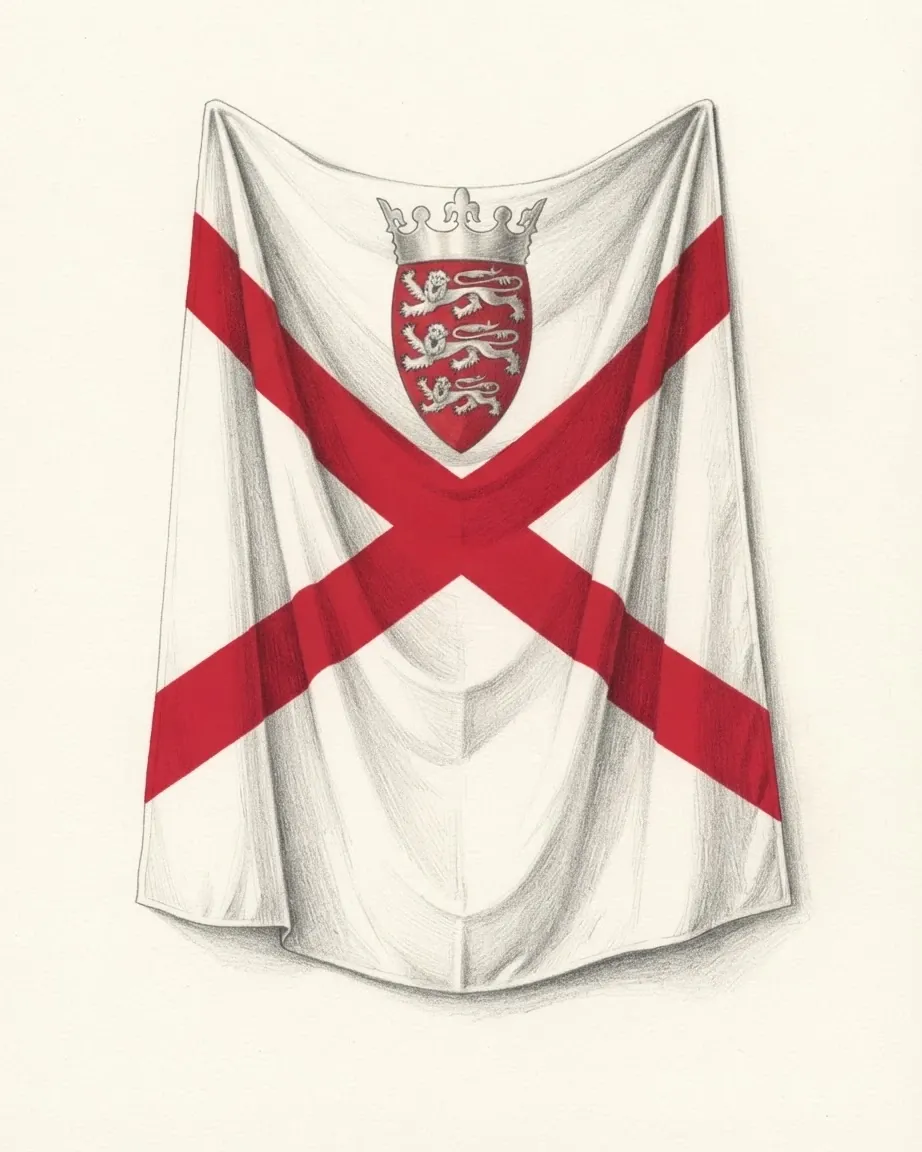
- Jersey103,267 people in 2021 on an island 22 km off Normandy, owing allegiance to the Crown and never part of England or the United Kingdom.
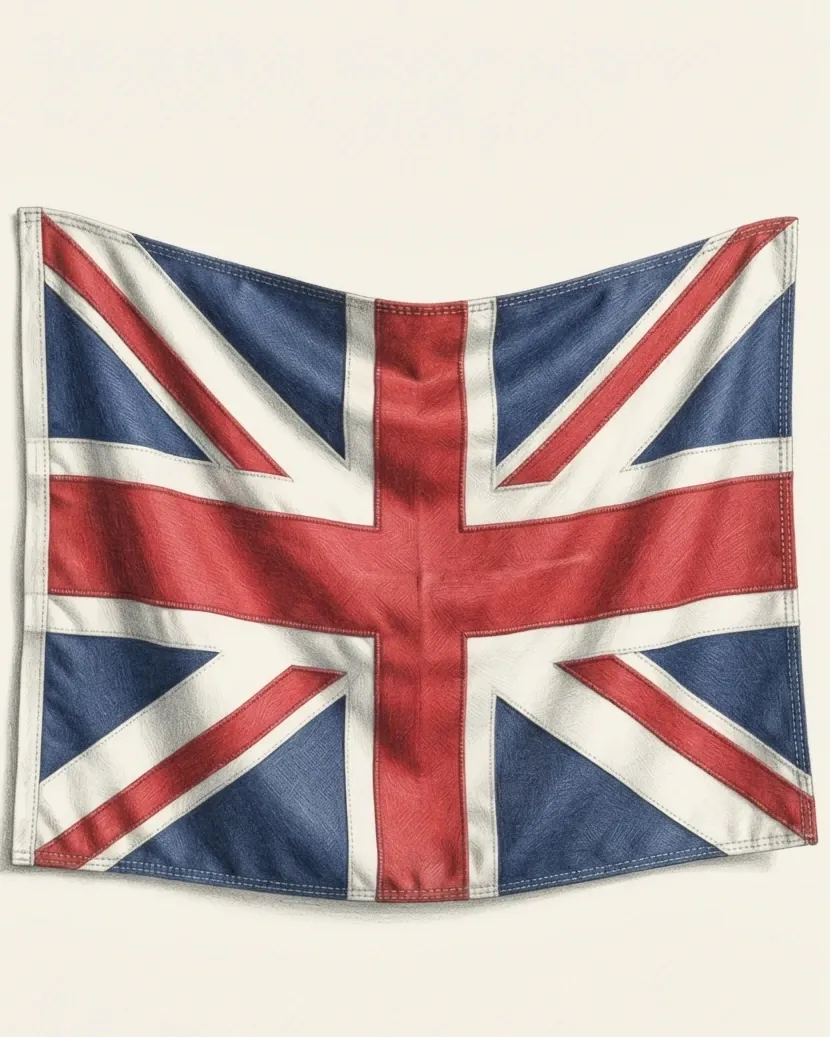
- United Kingdom67.3 million people across four countries on 242,495 square kilometres. An uncodified constitution, an economy four fifths services, and 35 World Heritage properties.
About the British pound
Who prints the notes and who strikes the coins
The Bank of England began as a private bank and passed into government ownership when it was nationalised in 1946. Its hold on the note issue is older than that. The Bank Charter Act of 1844 restricted every other bank, company or person in England and Wales that issued notes, and it stopped new banks from starting.
Scotland and Northern Ireland kept their own issuing banks. Bank of England notes are legal tender for any amount in England and Wales but not in either of those two places. What holds the northern notes to the pound sits inside the Bank of England's building: 'Giants', notes with a face value of £1 million each, first printed in 1968, and 'Titans' worth £100 million. They never leave it.
Coins come from one source. The Royal Mint, wholly owned by the Treasury, issues all British coins and strikes coins for other countries as well.
The notes changed monarch for the first time on 5 June 2024, when the Bank issued notes with the portrait of King Charles III. Queen Elizabeth II had appeared on them since 17 March 1960; before her, Britannia was the only figure the Bank's notes carried. The first polymer note, a £5, went out on 13 September 2016.
Why islands and territories count in pounds
Guernsey, Jersey and the Isle of Man are Crown Dependencies. Their currency is sterling or is pegged to it at par, and each issues notes that are legal tender only at home, because they are separate currencies set at parity with sterling. Merchants in England generally turn those notes down, although Manx notes are generally taken in Northern Ireland.
Saint Helena, Ascension and Tristan da Cunha also count in sterling or in a pound pegged to it at par. For Saint Helena the ISO 4217 list names the St Helena pound alone, so the island sits on that currency's page rather than this one.
How shillings and pence gave way to decimals
Until 1971 a pound was 20 shillings and a shilling was 12 pence. The shilling was written s., after the Latin solidus, and the penny d., from the French denier and the Latin denarius, so three shillings and sixpence appeared as 3/6.
The Government put a plan for decimal money into the Queen's Speech in 1966. Coins arrived ahead of the day: cupro-nickel 5p and 10p pieces in 1968, the same size as the shilling and the florin they matched, and a seven-sided 50p in 1969 that replaced the ten-shilling note. On 15 February 1971 the shilling and the old penny went, and the new penny was worth 2.4 old pence. The word "new" disappeared from coins minted after 1981. A decimal halfpenny lasted until 1984.
The round £1 coin stopped being legal tender on 15 October 2017, after a twelve-sided bimetallic coin was brought in that year to cut forgery.
Why nobody agrees where sterling got its name
The word turns up in the 11th and 12th centuries, possibly for the heavier penny the Normans introduced. The Oxford English Dictionary favours an Old English steorling, a coin with a star, because a pair of stars appeared on some Norman pennies. The numismatist Philip Grierson rejected that: the starred penny was struck only from 1077 to 1080 and made up a tiny share of Norman coinage. He proposed stēre, meaning stout or strong. An older theory credits the Easterlings, the Hanseatic merchants, and has been called untenable on historical and phonological grounds. A Dictionary of Economics, in its 2017 edition, still derives the name from the pound Easterling once used in trade with the Baltic.
Common questions
Questions about the British pound
Can Scottish banknotes be spent in England?
They can be offered, and merchants in England generally accept them, though some who are unfamiliar with the notes reject them. Nobody is obliged to take them. Bank of England notes are legal tender for any amount in England and Wales but not in Scotland or Northern Ireland, where the local banks issue their own. The Scottish and Northern Irish notes are backed by Bank of England notes of £1 million and £100 million that never leave the Bank's building.
Is a Jersey pound the same as a British pound?
It trades at parity, but the Channel Islands and the Isle of Man issue their own notes, which count as separate currencies and are legal tender only in their home jurisdictions. Merchants in England generally do not accept Jersey notes. Manx notes, by contrast, are generally taken in Northern Ireland.
What did d stand for in old British money?
The penny, from the French denier and the Latin denarius. The shilling was written s., after the Latin solidus, and the pound L or £, after libra, which is why the pre-decimal system was called £sd. Twelve pence made a shilling and twenty shillings a pound until 15 February 1971, when the pound was divided into 100 new pence instead. The new penny took the letter p, because reusing d would have confused the two units during the changeover.
Why does the pound sign sometimes have two bars?
Both forms are the same character; a font designer decides which to draw. The Bank of England used one bar and two bars side by side for long stretches, and it says the switch to a single crossbar on its notes was purely stylistic. The £20 note of 1970 was the first to carry the single bar.
When did the round pound coin stop being legal tender?
On 15 October 2017. A twelve-sided bimetallic £1 coin, harder to forge, was introduced that year, and the Royal Mint issues it as it issues every British coin. The round coin can no longer be used to settle a debt.