The flag of South Korea
태극기 (Taegeukgi) · since 2011
 Back to South Korea
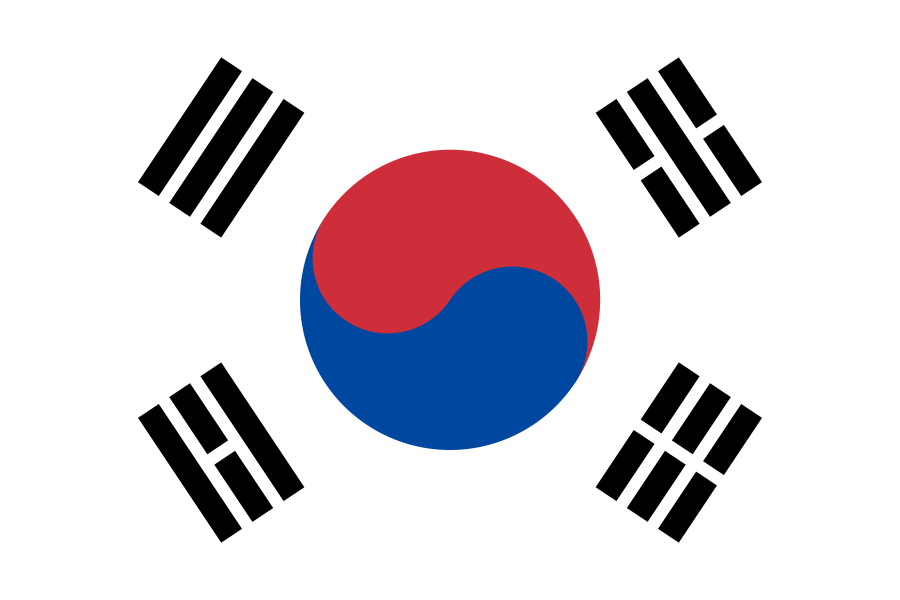
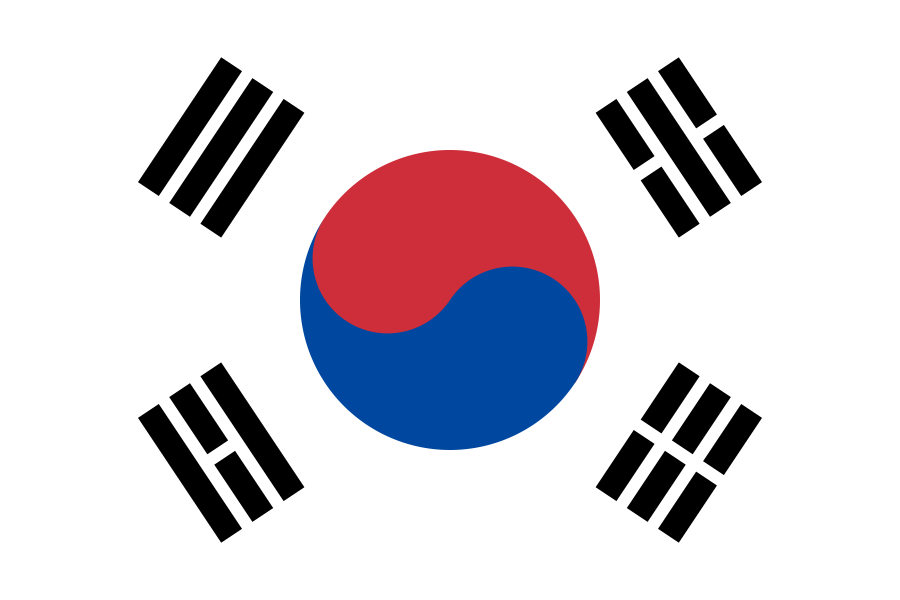
A white field with a red and blue taegeuk circle at the centre and a black trigram in each corner. The design goes back to the treaty diplomacy of 1882 and was made the flag of Joseon by royal order on 6 March 1883; it survived Japanese rule as the emblem of the independence movement, was adopted by the Constituent National Assembly on 12 July 1948, and its geometry has been fixed since 15 October 1949.
At a glance
- Adopted
- 1997
- Proportion
- 2:3
- First hoisted
- 1882
- Colours
- Earlier flags
- 7
- Designers
- 3
The colours
The colours of the flag of South Korea, in the order it has them
- 0180%
White
흰색The field
- HEX
#FFFFFF- RGB
255 255 255
- 026.5%
Red
빨간색Upper half of the taegeuk
- HEX
#CD2E3A- RGB
205 46 58- CMYK
14 100 79 4- Pantone
186 C
- 036.5%
Blue
파란색Lower half of the taegeuk
- HEX
#0047A0- RGB
0 71 160- CMYK
100 85 34 14- Pantone
294 C
- 047%
Black
검은색The four trigrams
- HEX
#000000- RGB
0 0 0
No law gives these codes. HEX and RGB are the colour this site draws the flag in; CMYK, Pantone and RAL are the values most often published for it.
Construction
How the flag is drawn
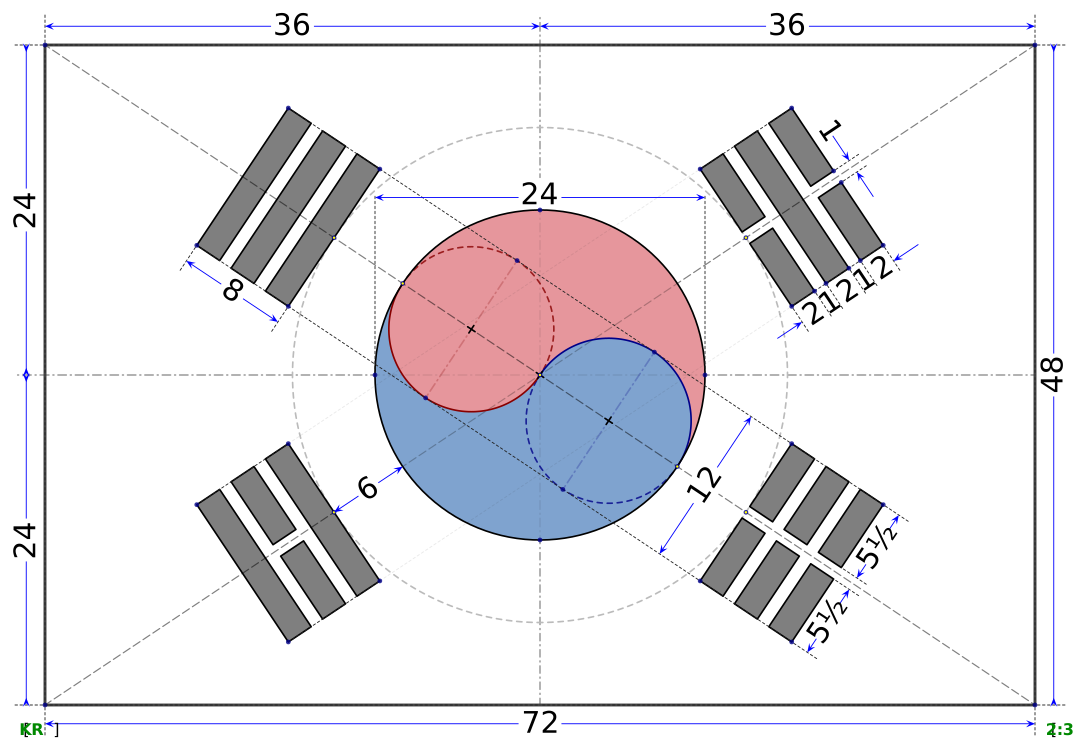
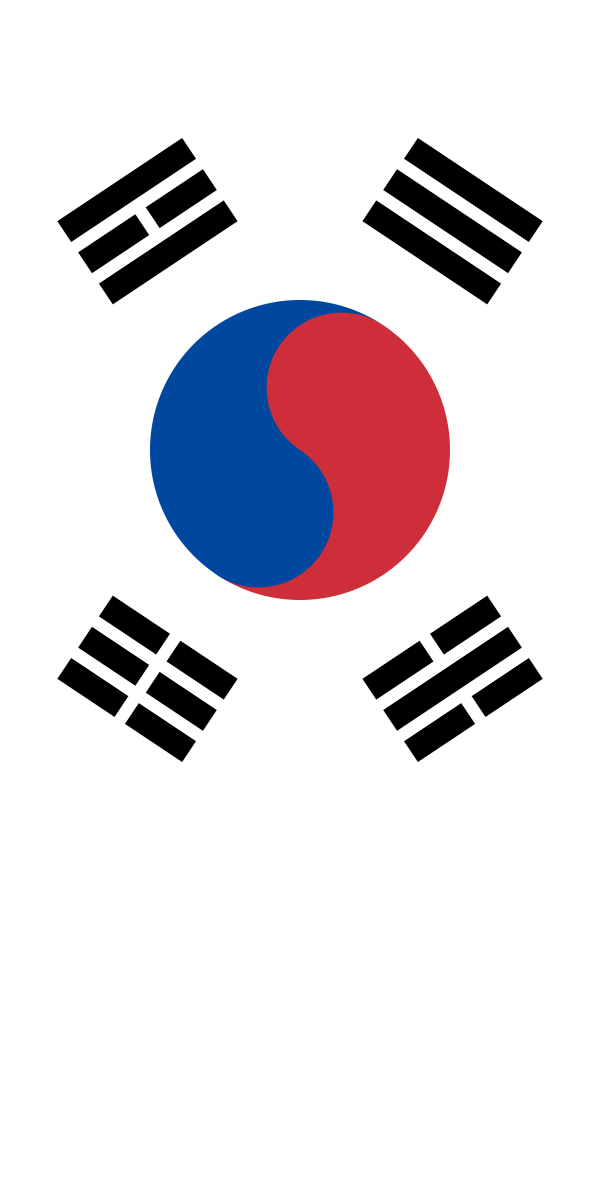
A white field, with a circle at the centre divided by an S-shaped line into a red upper half and a blue lower half, and four black trigrams of solid and broken bars, one in each corner: geon at the upper hoist, gon at the lower fly, gam at the upper fly and ri at the lower hoist.
- Taegeuk
- Diameter half the height of the flag, centred; red above, blue below
- Trigrams
- Each as wide as the radius of the taegeuk
- Spacing
- Half the radius of the taegeuk between the circle and each trigram
- Finial
- A gold bud of the rose of Sharon with five calyces, its diameter a tenth of the flag's width
- Pole
- White, silver white, yellowish green or similar
Other forms
- Vertical display
- Flown vertically, as on street light poles, the geon trigram goes at the top on the side away from the pole and the red of the taegeuk faces the same side; the 2:3 design itself is not altered. Beside another flag on one pole, the Taegeukgi takes the left.
- Naval jack
- A blue field with a white canton carrying the red and blue taegeuk over two crossed anchors.
- Government flag
- A white field with the government's logo at the centre.

Meaning
What each part stands for
- White field
- Brightness, purity and peace, in the government's description; white was the colour of everyday dress in the nineteenth century
- Taegeuk
- The harmony of the negative cosmic force, yin, in blue, and the positive force, yang, in red
- Four trigrams
- Geon the sky, gon the earth, gam water and ri fire, representing the movement and harmony of the two forces
- Colours in 1882
- One account holds that Gojong joined white for the people, blue for officials and red for the king, expressing a unity of ruler and people
Who drew it
- Lee Eung-jun
- Interpreter who drew a taegeuk flag aboard ship for the treaty with the United States in May 1882, at Kim Hong-jip's instruction
- Park Yeong-hyo
- Envoy to Japan who made the four-trigram version in September 1882, swapping the left and right trigrams of Lee's design
- Gojong
- King of Joseon, who ordered the flag made and proclaimed it the national flag in 1883
History
How the flag of South Korea got here
- 1882
A flag for the American treaty
May 1882 → Sept 1882
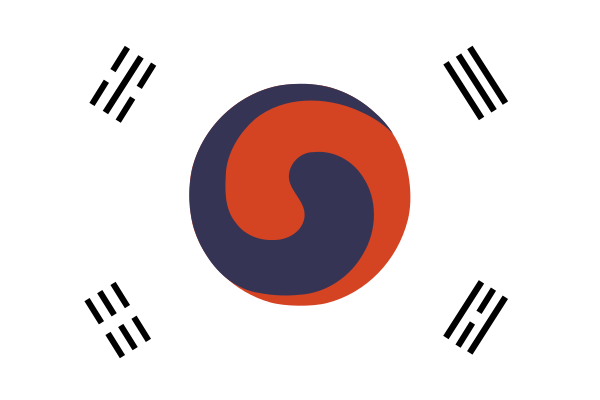
Asked by the American side for a national flag, Kim Hong-jip had the interpreter Lee Eung-jun draw a taegeuk flag aboard ship, and it was used at the signing of the treaty with the United States in May 1882.
- 1882
The four-trigram flag
25 Sept 1882 → 6 Mar 1883
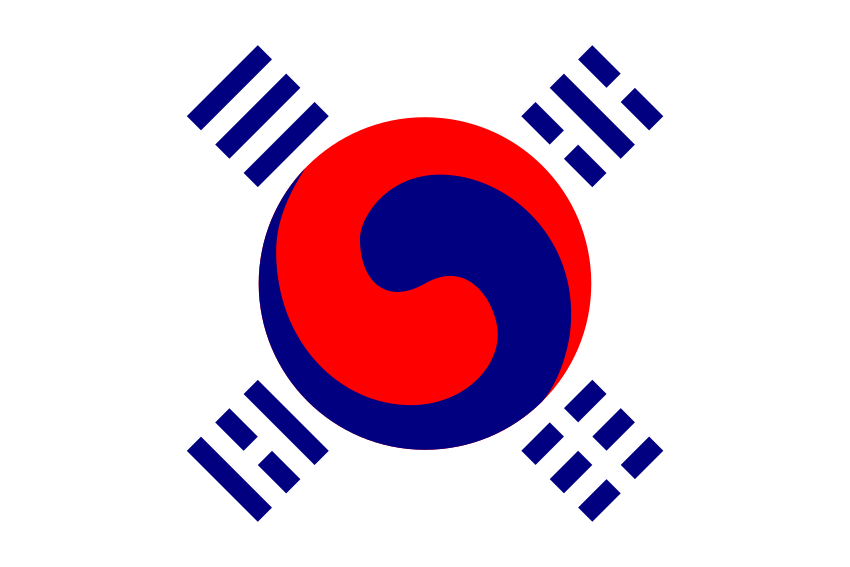
Park Yeong-hyo's mission to Japan used a version with the taegeuk and four trigrams, the left and right trigrams swapped from Lee's design.
- 1883
Flag of Joseon and the Korean Empire
6 Mar 1883 → 1910
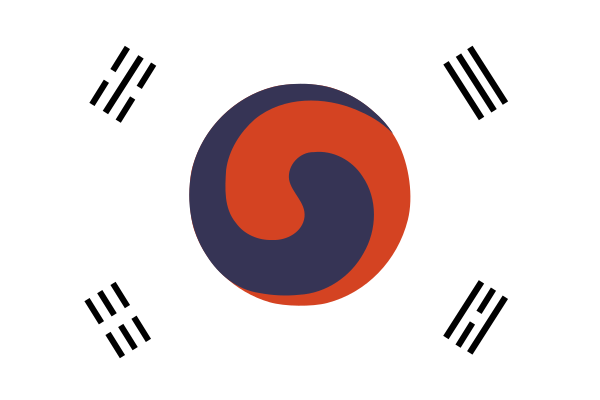
Proclaimed the national flag by royal order, without construction rules, so it was drawn in many forms. The Korean Empire kept it from 1897.
- 1910
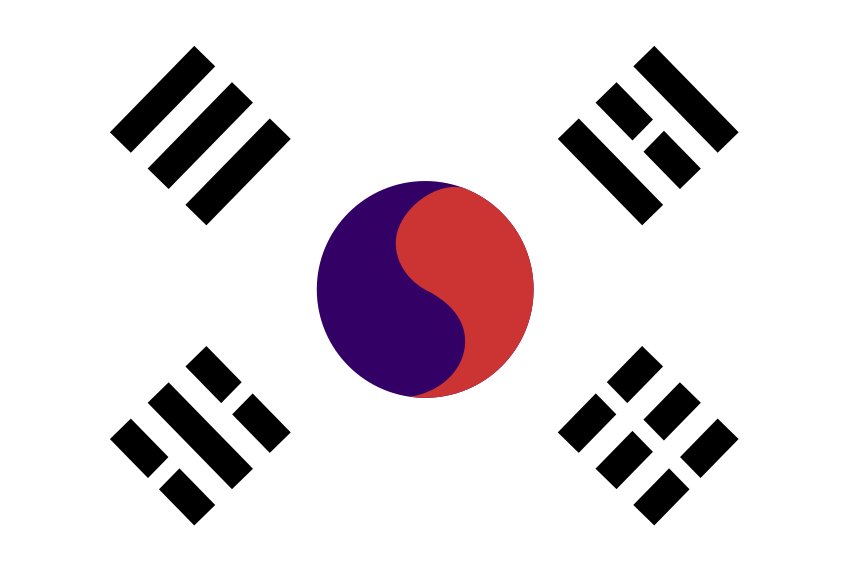
The flag of the independence movement
1910 → 15 Aug 1945
Banned under Japanese rule, it was carried in the March First Movement of 1919 and used by the Provisional Government in China, which began calling it the national flag in 1942 and issued a style guide on 29 June 1942.
- 1945
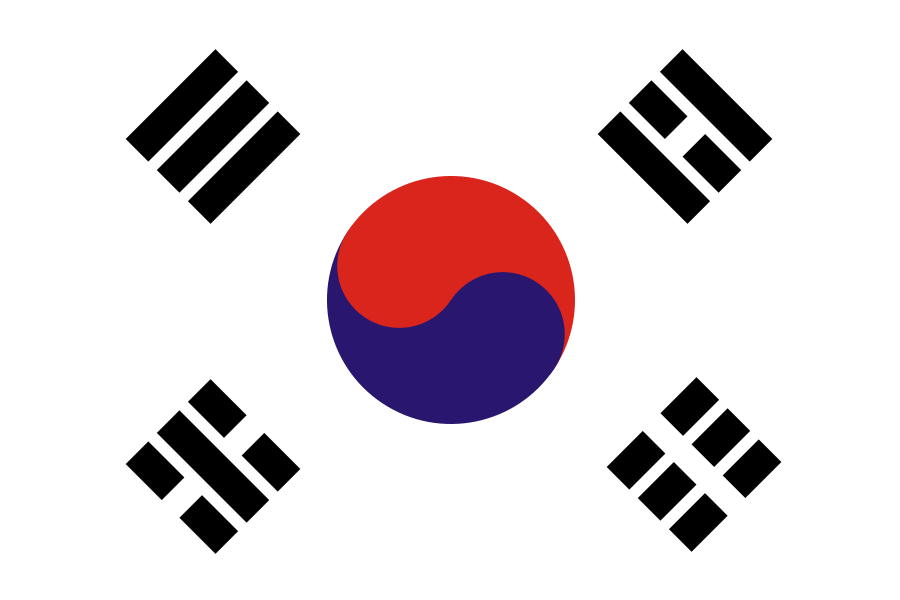
Liberation and occupation
15 Aug 1945 → 12 Jul 1948
Flown freely again after Japan's surrender and used by the US military government from 14 January 1946; North Korea replaced it with a new flag on 10 July 1948.
- 1948
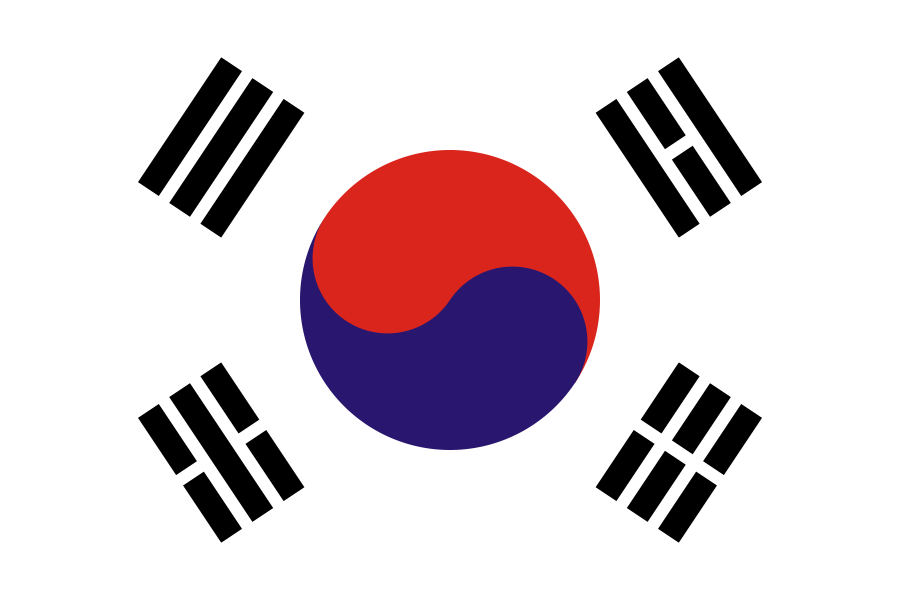
Adopted by the republic
12 Jul 1948 → 15 Oct 1949
Adopted by the Constituent National Assembly and flown at the proclamation of the Republic of Korea on 15 August 1948, still drawn to no fixed standard.
- 1949
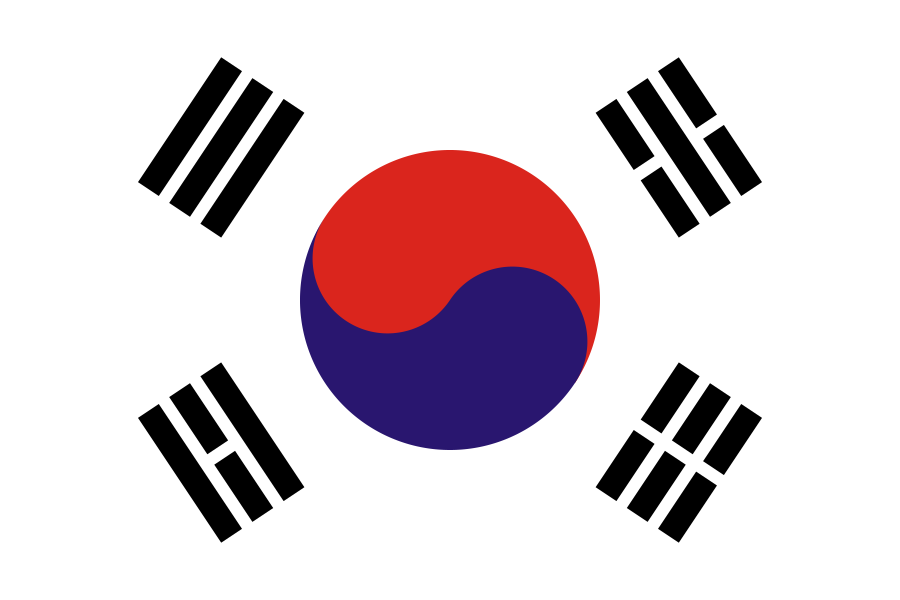
Standard geometry
15 Oct 1949 → 15 Oct 1997
The construction guidelines of 1949 fixed the geometry and changed the arrangement of the trigrams. Dimensions and etiquette were codified by decree on 21 February 1984; the colours were still unspecified, and flags of the period vary in shade.
- 1997
Standard coloursIn use
15 Oct 1997 → today
The colours were fixed in the Munsell and CIE systems, and the Act on the Flag of 2007 carried the specification into law.
The law
What defines it, and who flies it
- 6 March 1883
Royal order of King Gojong
Proclaimed the taegeuk and four-trigram flag the national flag of Joseon; the date is 27 January 1883 in the lunar calendar. No construction rules were set.
- 12 July 1948
Adoption by the Constituent National Assembly
Made the Taegeukgi the flag of the Republic of Korea, still without a common method of drawing it.
- 15 October 1949
Ministry of Education Notice No. 2, National Flag Construction Guidelines
Fixed the geometry still in use, on the proposal of the National Flag Correction Committee formed in January 1949.
- 21 February 1984
Regulations on the National Flag of the Republic of Korea (Presidential Decree No. 11361)
Merged the earlier rules on making and flying the flag and codified its dimensions.
- 15 October 1997
Notice No. 1997-61 on the standard colours of the Taegeukgi
Fixed the colours for the first time, in the Munsell and CIE systems.
- January 2007
Act on the Flag of the Republic of Korea
Names the flag, sets its design, finial and pole, and the days and manner of flying it. In force since 27 July 2007 with its Enforcement Decree, which carries the colours; amended by Act No. 10741 of 30 May 2011.
In use
Kept hoisted all year at every state and local government building and public institution, lit at night
Displayed on national holidays, on Memorial Day and Armed Forces Day and during a state funeral, and on days set by the government or a local council
Flown at half-mast on Memorial Day and during a state funeral, lowered by the width of the flag below the finial
Flown at schools and military units only in daylight, and not flown in heavy snow, rain or wind
Saluted with the right hand over the heart or with a hand salute; the pledge of allegiance was last revised on 27 July 2007
Related flags
The flags it is confused with or comes from
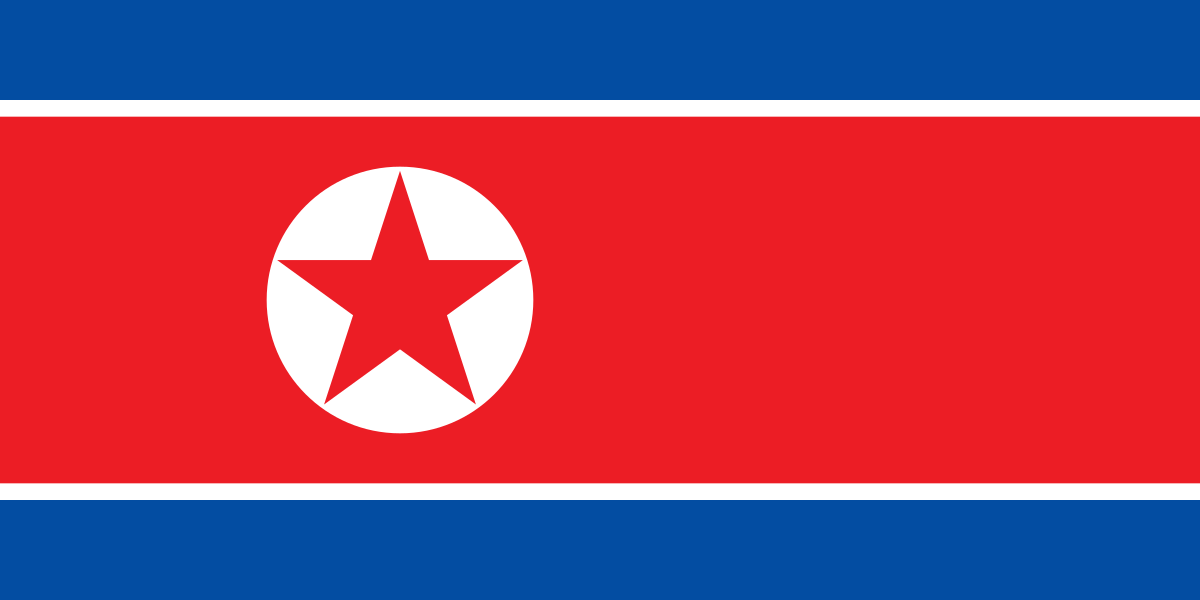 North Korea
- North Korea also flew the Taegeukgi after 1945 and abolished it on 10 July 1948, before proclaiming its own state.
Coat of arms
The arms of South Korea