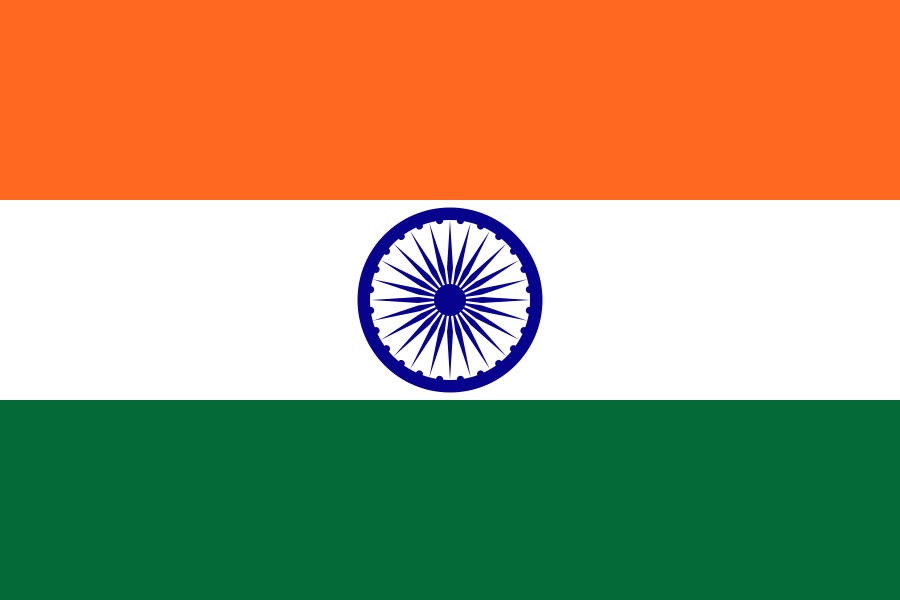
The flag of India
तिरंगा · since 1946
 Back to India
A horizontal tricolour of India saffron, white and India green in three equal bands, with a navy blue Ashoka Chakra of 24 spokes at the centre of the white. The Constituent Assembly adopted it on 22 July 1947 and it became the flag of the Dominion of India on 15 August 1947 and of the Republic from 26 January 1950. It descends from the Swaraj flag of the Indian National Congress, whose spinning wheel gave way to the wheel from the Lion Capital of Ashoka.
At a glance
- Adopted
- 1947
- Proportion
- 2:3
- Colours
- Earlier flags
- 4
- Designer
- 1
The colours
The colours of the flag of India, in the order it has them
- 0134.4%
India saffron
केसरियाThe top band
- HEX
#FF6820- RGB
255 104 32- CMYK
0 60 88 0- Pantone
165 C
- 0231.1%
White
श्वेतThe middle band, bearing the chakra
- HEX
#FFFFFF- RGB
255 255 255- CMYK
0 0 0 0
- 0334.4%
India green
हराThe bottom band
- HEX
#046A38- RGB
4 106 56- CMYK
96 0 47 58- Pantone
2258 C
- 04
Navy blue
The Ashoka Chakra
- HEX
#07038D- RGB
7 3 141- CMYK
96 98 0 45- Pantone
2735 C
No law gives these codes. HEX and RGB are the colour this site draws the flag in; CMYK, Pantone and RAL are the values most often published for it.
Construction
How the flag is drawn
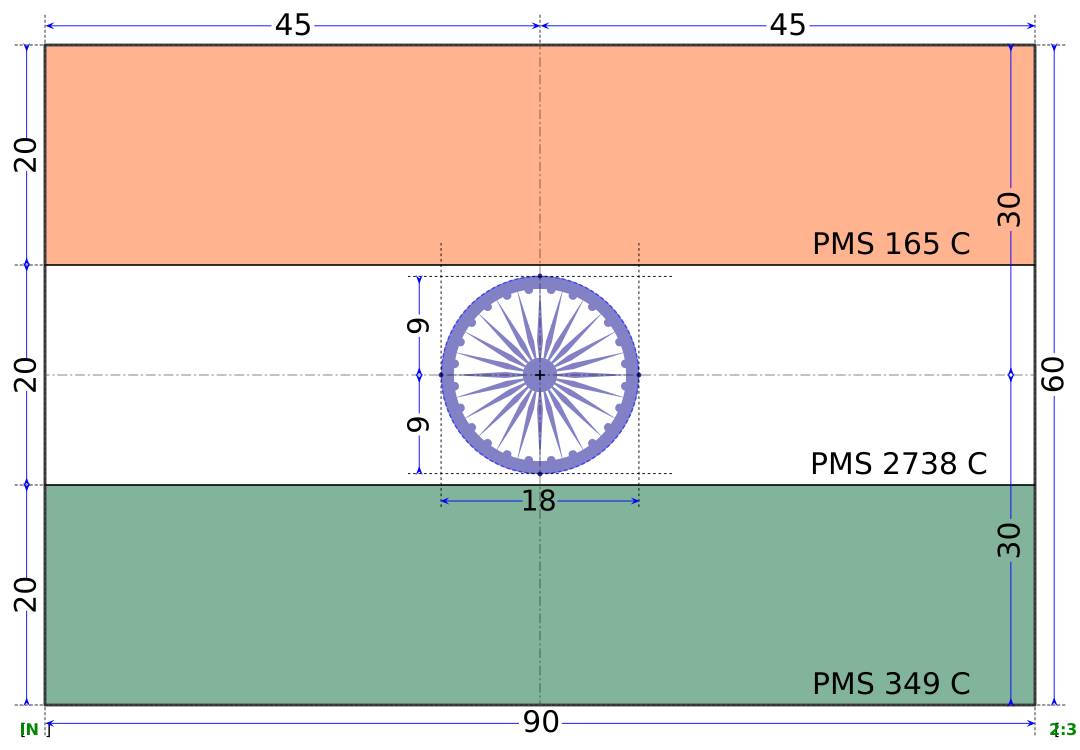
Three horizontal bands of equal width, India saffron at the top, white in the middle and India green at the bottom, with a navy blue wheel of 24 equally spaced spokes at the centre of the white band, visible on both sides.
- Bands
- Three rectangular panels of equal width: India saffron (kesari) on top, white in the middle, India green below
- Ashoka Chakra
- Navy blue, with 24 equally spaced spokes, in the centre of the white panel and completely visible on both sides, screen printed, printed, stencilled or embroidered
- Chakra size
- Set by IS 1 for each flag size: 1,295 mm across on the largest flag of 6,300 by 4,200 mm and 185 mm on a flag of 900 by 600 mm
- Standard sizes
- Nine sizes in the Flag Code, from 6,300 by 4,200 mm down to 150 by 100 mm for a table flag. The 450 by 300 mm size is for aircraft on VVIP flights and 225 by 150 mm for motor cars
- Cloth
- Hand-spun and handwoven khadi bunting of wool, cotton or silk, with the sleeve in khadi duck. Since December 2021 machine-made flags of polyester, non-khadi cotton or silk are also allowed
Other forms
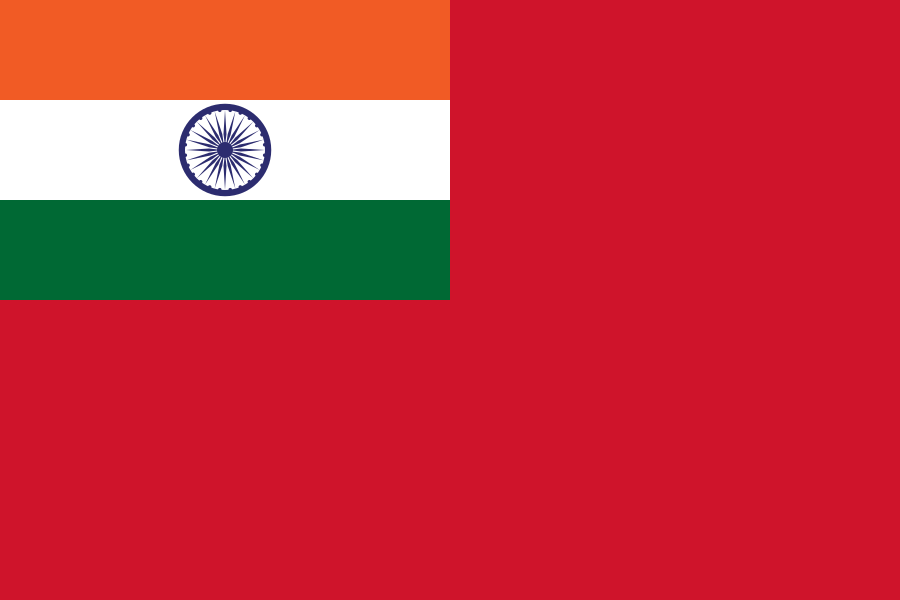
- Civil ensign
- A red ensign with the national flag in the canton.
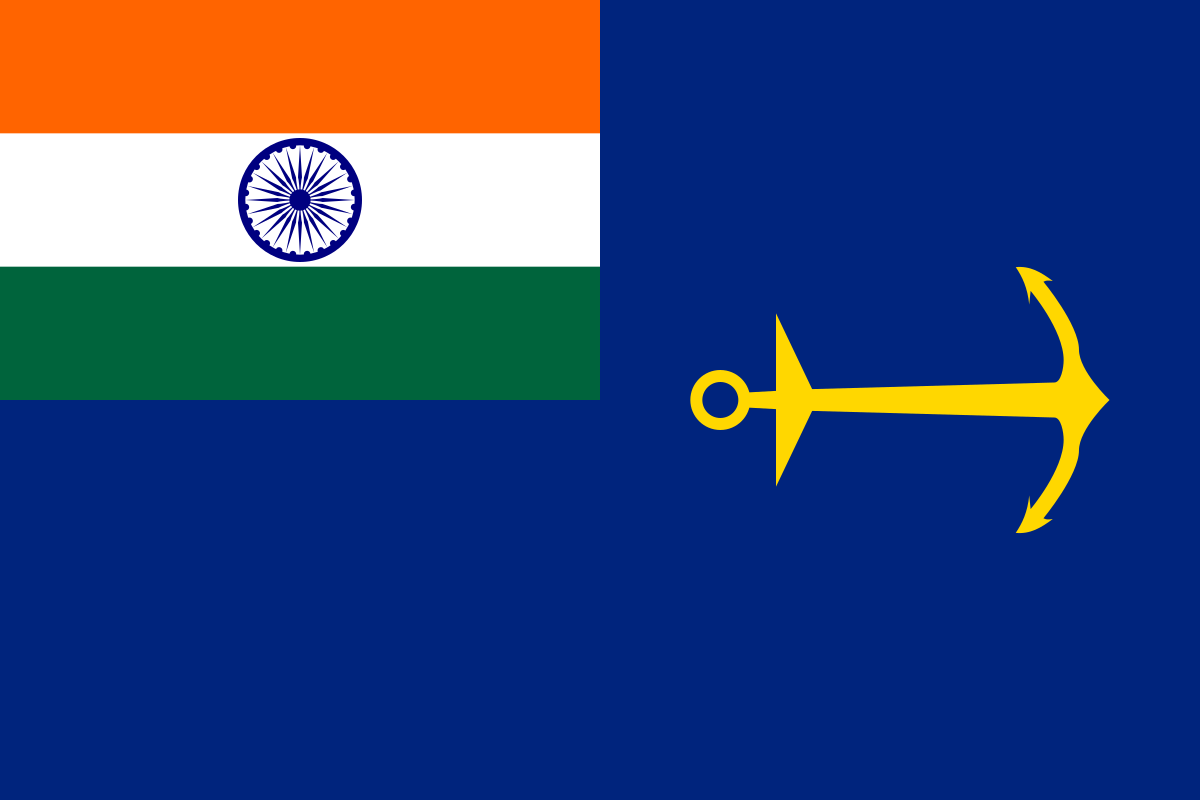
- State ensign
- A blue ensign with the national flag in the canton and a yellow anchor laid horizontally in the fly.
- Naval ensign
- A white ensign in the proportion 1:2 with the national flag in the canton and, in the fly, a blue octagon with gold borders framing the national emblem over an anchor and a shield with the naval motto in Devanagari. The present pattern dates from 2022.
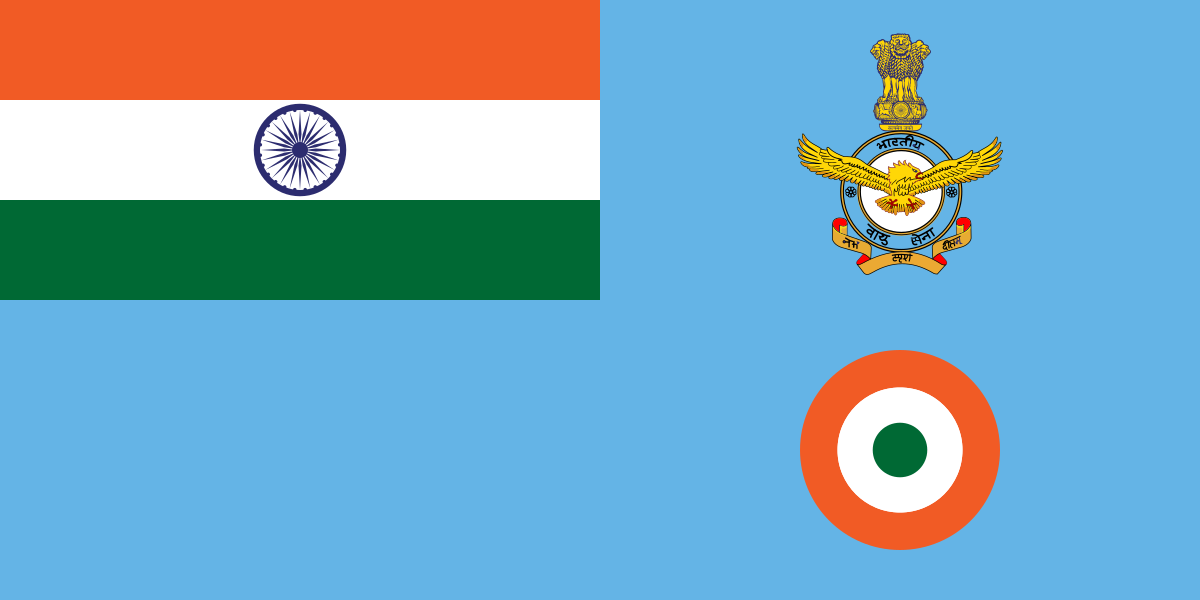
- Air Force ensign
- A sky blue ensign in the proportion 1:2 with the national flag in the canton and the Air Force roundel in the fly. The present pattern dates from 2023.
Meaning
What each part stands for
- Saffron
- Renunciation or disinterestedness, in the words of Sarvepalli Radhakrishnan to the Constituent Assembly: leaders indifferent to material gain. Other accounts give courage and sacrifice
- White
- Light, the path of truth to guide conduct. Other accounts give peace and truth, or purity
- Green
- The relation to the soil and to the plant life on which all other life depends
- Ashoka Chakra
- The wheel of the law of dharma, taken from the Lion Capital of Ashoka at Sarnath. Radhakrishnan also read it as motion: there is death in stagnation and life in movement. Nehru said the change from the spinning wheel was also practical, since the wheel looked the same from both sides
- No communal meaning
- The colours were first read as Hindus and Muslims with white for other faiths. Gandhi moved to a secular reading in 1929, and Nehru told the Assembly in 1947 that no communal significance was attached to the flag
Who drew it
- Pingali Venkayya
- Designed the spinning-wheel flag Gandhi commissioned in 1921 and is generally credited as the designer of the national flag, which adapts his design
History
How the flag of India got here
- 1880
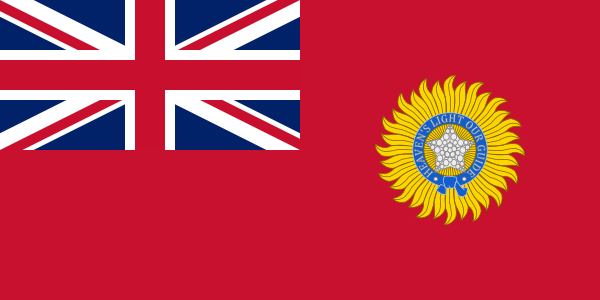
The Star of India ensign
1880 → 14 Aug 1947
A red field with the Union Jack in the upper hoist and the Star of India under the royal crown in the fly. It represented British India abroad and at home.
- 1907
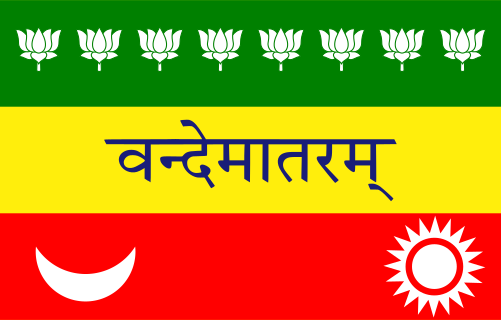
The Calcutta flag
22 Aug 1907 → Undated
A tricolour of green, saffron and red with eight lotuses for the provinces, a sun and crescent and the words Vande Mataram in Devanagari. Bhikaji Cama raised a version at the International Socialist Congress in Stuttgart on 22 August 1907.
Image: Sodacan This W3C-unspecified vector image was created with Inkscape ., CC BY-SA 4.0
- 1916
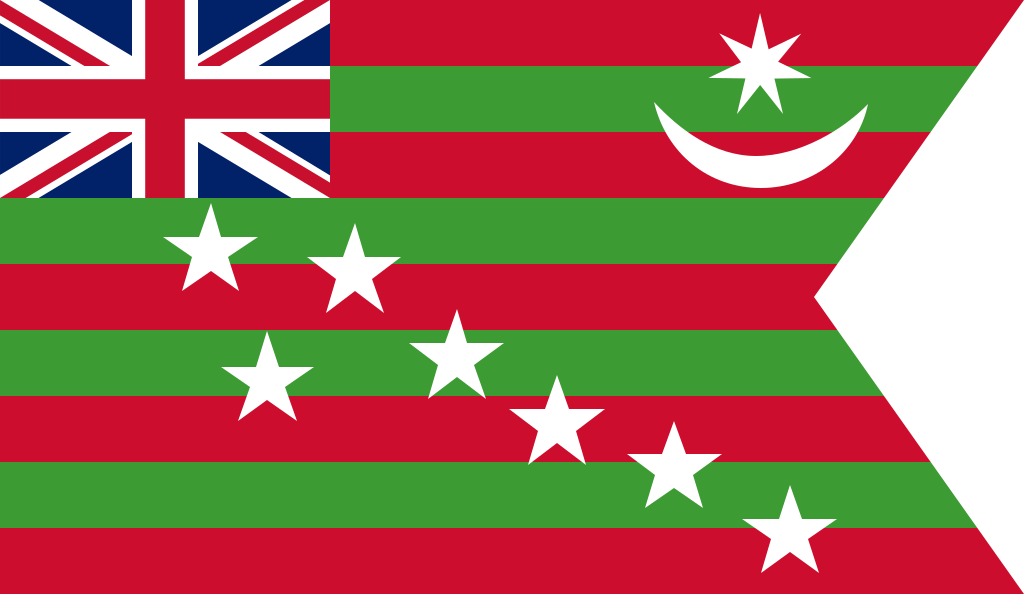
The Home Rule flag
1916 → Undated
Adopted by Annie Besant and Bal Gangadhar Tilak: five red and four green bands, the Union Jack in the canton, a star and crescent and seven stars. A magistrate in Coimbatore banned it.
- 1931
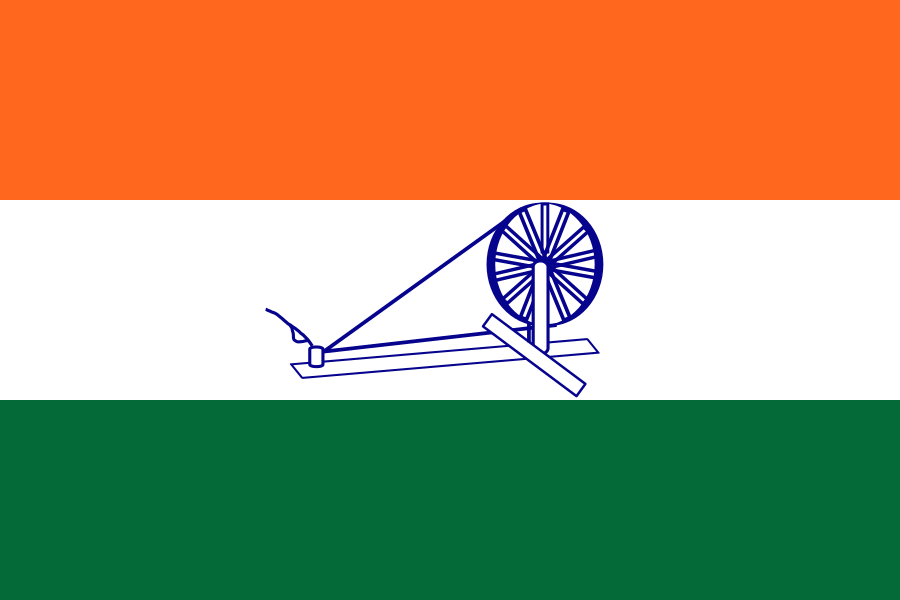
The Swaraj flag
1931 → 21 Jul 1947
Saffron, white and green with a spinning wheel across the white, grown from the red and green banner Pingali Venkayya drew for Gandhi in 1921. Hoisted in Nagpur in 1923 at the start of the Flag Satyagraha and made the official flag of the Congress in 1931.
- 1947
The national flagIn use
22 Jul 1947 → today
The Swaraj colours with the Ashoka Chakra in place of the spinning wheel, adopted by the Constituent Assembly on 22 July 1947. It flew for the Dominion from 15 August 1947 and for the Republic from 26 January 1950.
The law
What defines it, and who flies it
- 22 July 1947
Resolution of the Constituent Assembly
Moved by Jawaharlal Nehru, who presented two flags, one in khadi silk and one in khadi cotton. It defined a horizontal tricolour of deep saffron, white and dark green in equal proportions with the Ashoka Chakra in blue at the centre, and was approved unanimously.
- Undated
Emblems and Names (Prevention of Improper Use) Act, 1950
Lists the national flag as an emblem in its Schedule, so it may not be used for any trade, business, patent or trade mark without the permission of the Central Government.
- 17 August 1968
IS 1: Specification for the National Flag of India (Cotton Khadi)
The Bureau of Indian Standards specification, first published in 1951, revised into metric measure in 1964 and adopted in its second revision in 1968. It sets the 3:2 proportion, hand-spun and handwoven cotton khadi bunting, the sizes of flag and chakra, and colours matched in daylight to a sealed standard flag held at Kanpur.
- Undated
Prevention of Insults to National Honour Act, 1971
Makes it an offence to burn, mutilate, deface, trample or otherwise bring the flag into contempt in public view, punishable by up to three years in prison, a fine or both. Criticism of the flag or a call to change it by lawful means is not an offence.
- 26 January 2002
Flag Code of India, 2002
Gathers the laws, conventions and instructions on the flag in three parts and replaced the earlier code. Part I describes the flag; Part II lets members of the public, private bodies and schools fly it on all days. It was amended in 2005 to allow some use on clothing and in December 2021 to allow machine-made flags and polyester, non-khadi cotton or silk.
In use
Members of the public, private organisations and schools may fly the flag on all days, a right won after the industrialist Naveen Jindal took his case to the Supreme Court and the code was changed from 26 January 2002
The saffron band is always uppermost; hung vertically, the saffron is on the left of an onlooker. The flag is never dipped in salute, never used as drapery and carries no lettering
The President decides on half-mast. It is flown nationwide at half-mast on the death of the President, Vice-President or Prime Minister, but never on 26 January, 15 August or 2 October, except over the building where the body lies
Only a short list of office-holders may fly it on a car, among them governors, chief ministers, union ministers, members of Parliament and of state legislatures and judges of the Supreme Court and High Courts
Damaged flags are destroyed whole and in private, preferably by burning
Coat of arms
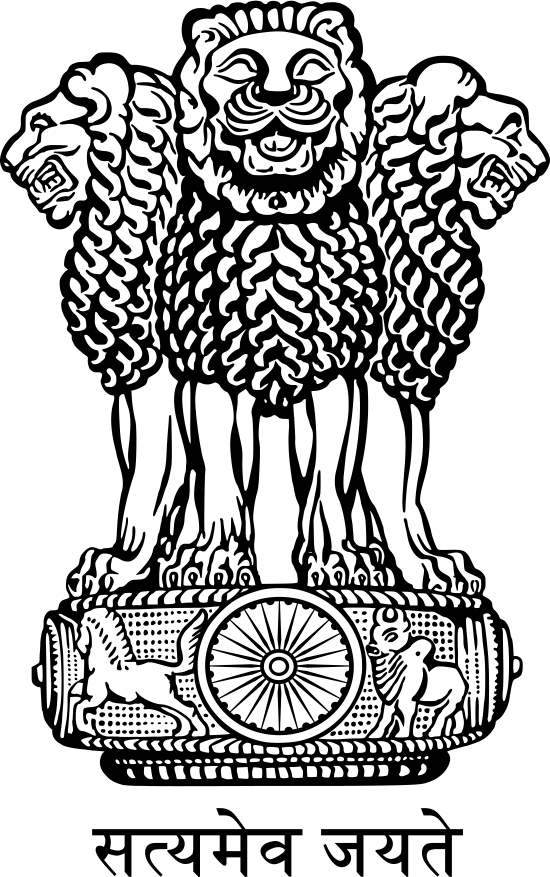
The arms of India