The flag of Ethiopia
የኢትዮጵያ ሰንደቅ ዓላማ · since 1996
 Back to Ethiopia
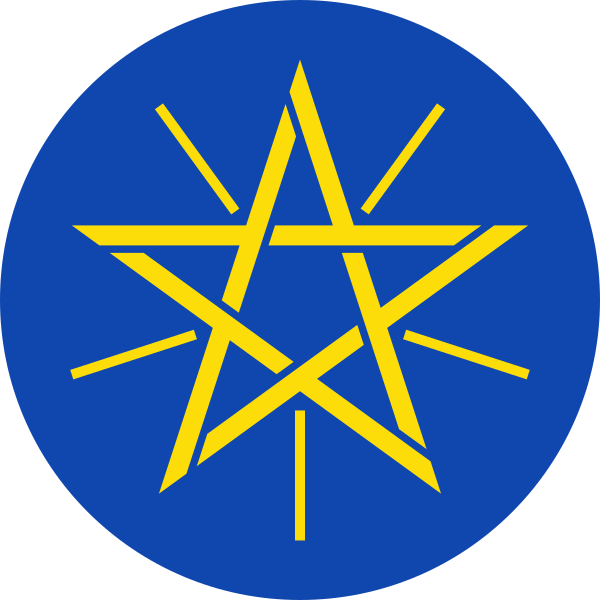
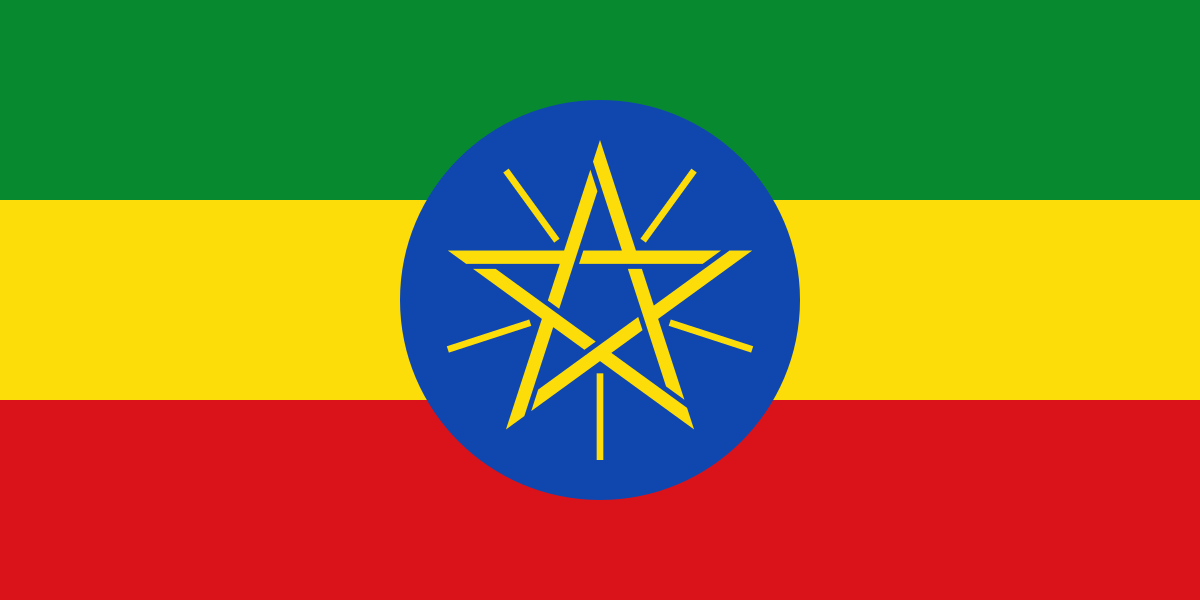
Three equal horizontal stripes of green, yellow and red, twice as long as they are high, with the national emblem at the centre: a yellow star of straight interlaced lines, sending out yellow rays, on a blue disc. Menelik II made the colours a rectangular flag in 1897, a year after the victory at Adwa; the emblem was added on 6 February 1996, and a proclamation of 2009 darkened the blue and banned the plain tricolour.
At a glance
- Adopted
- 1996
- Proportion
- 1:2
- Colours
- Earlier flags
- 8
- Designers
- 2
The colours
The colours of the flag of Ethiopia, in the order it has them
- 0130.8%
Green
አረንጓዴThe top stripe
- HEX
#078930- RGB
7 137 48- CMYK
84 12 100 1- Pantone
355 C
- 0224.6%
Yellow
ቢጫThe middle stripe, and the star and rays of the emblem
- HEX
#FCDD09- RGB
252 221 9- CMYK
3 9 92 0- Pantone
Yellow C
- 0330.7%
Red
ቀይThe bottom stripe
- HEX
#DA121A- RGB
218 18 26- CMYK
14 100 79 4- Pantone
186 C
- 0413.9%
Blue
ሰማያዊThe disc of the national emblem
- HEX
#0F47AF- RGB
15 71 175
No law gives these codes. HEX and RGB are the colour this site draws the flag in; CMYK, Pantone and RAL are the values most often published for it.
Construction
How the flag is drawn
A rectangle twice as long as it is high, divided into three horizontal stripes of equal height, green at the top, yellow in the middle and red at the bottom, with a blue disc at the centre whose edge reaches the middle of the green and red stripes, carrying a yellow star of straight equal lines and yellow rays between its points.
- Stripes
- Three horizontal stripes of the same size: green at the top, yellow in the middle, red at the bottom
- Emblem
- Set at the centre, with its circumference reaching the mid-point of the width of both the green and the red stripes
- Star
- Straight, equal yellow lines that join each other to form a star, with yellow rays radiating from the joints
- Colours
- The law asks for bright, basic colours and prints no shades
Other forms
- Plain tricolour
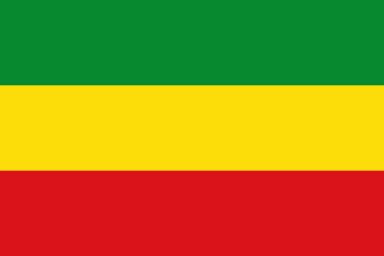
- Green, yellow and red without the emblem, the civil flag until the 2009 proclamation outlawed it. It is still used by the diaspora at community events, by opposition groups and during Orthodox Christian holidays, often at 2:3.
- Vertical flag
- The horizontal flag turned 90 degrees anticlockwise.
Meaning
What each part stands for
- Green
- Hope, fertility and wealth, in the reading the Amharic sources give; an earlier government text named the fertility of the country
- Yellow
- Flower and fruit in the Amharic reading; the government text named the religious freedom found in the country
- Red
- Sacrifice and heroism, the lives given in defence of the nation
- The star
- Built of equal intersecting lines to show the unity and equality of the nations, nationalities and peoples, and of creed and gender
- The rays
- Equidistant, and read as a bright future for the country
- The blue disc
- Peace and democracy
- The colours in the Church
- Before they were the colours of the state, the Ethiopian Orthodox Church used them: red for faith and power, yellow for the church and peace, green for natural wealth. Two French travellers of the nineteenth century called them the main colours of manuscript illumination
- Pan-African colours
- Several African countries took up green, yellow and red on independence in homage to Ethiopia's resistance to colonial rule, and the three became known as the Pan-African colours
Who drew it
- Ali Abdi
- Member of the Transitional Government Council for the Somali Region who, in an account published by The Reporter, sketched the star on a sheet of paper and later proposed the rays from its points
- Mesfin Habtemariam
- Artist and poet who, in the same account, gave the emblem its final form, including the blue circular background
History
How the flag of Ethiopia got here
- 1270
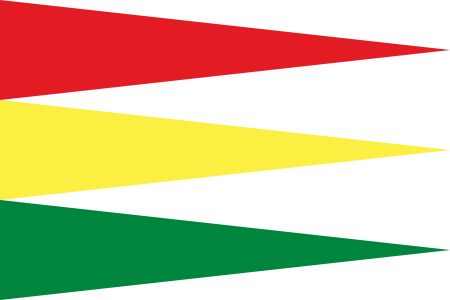
Pennants of the empire
1270 → Oct 1897
Three separate pennants of red, yellow and green, with red at the top. The colours were shown on war flags and by the Church before there was an official state flag.
- 1897
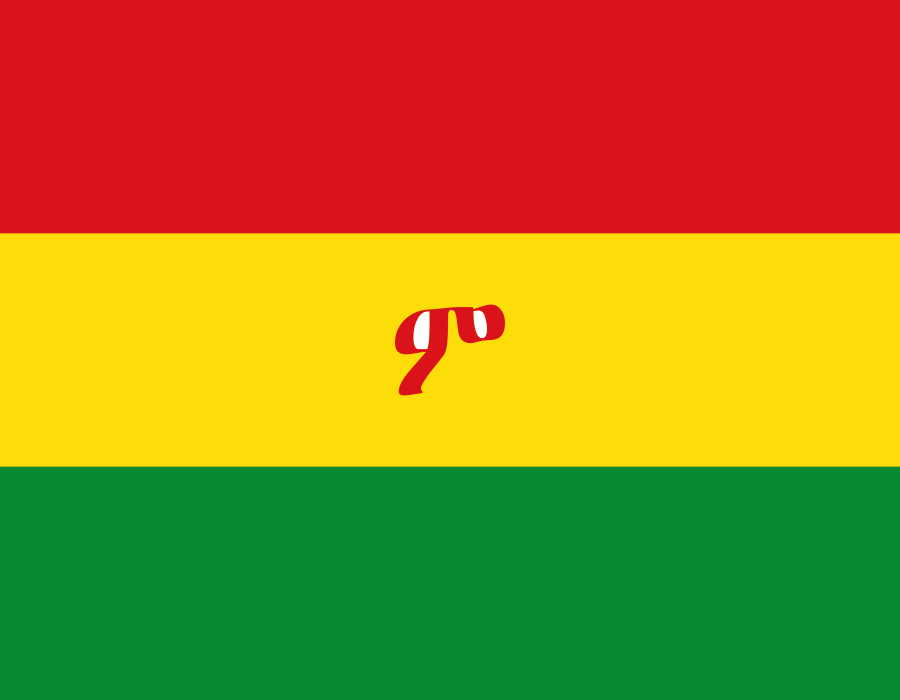
Menelik's tricolour
Oct 1897 → 1914
A year after the Battle of Adwa, Menelik II ordered the three pennants joined in one rectangle, red, yellow and green from top to bottom, with ም, the first Amharic letter of his name, on the middle stripe. The letter was removed after his death in 1913.
- 1914
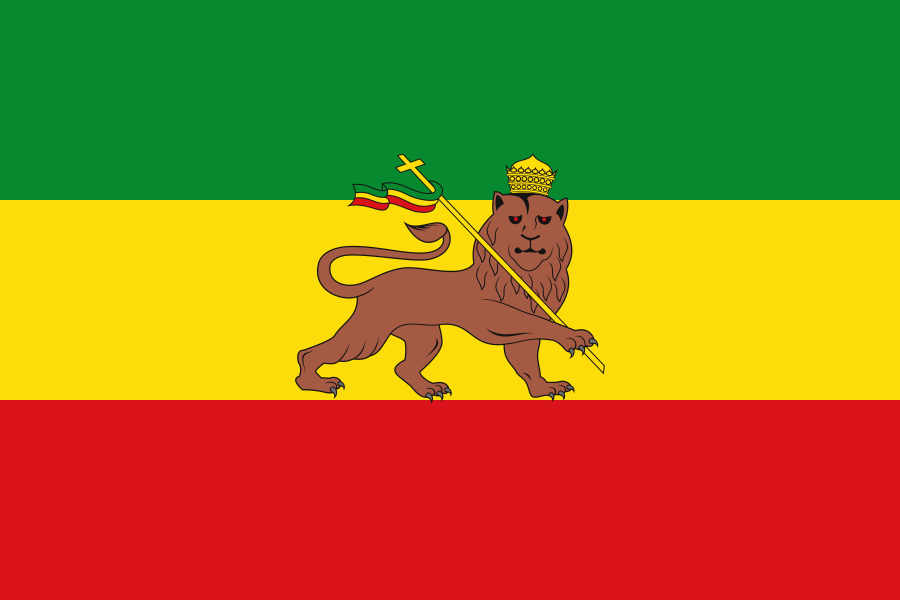
The Lion of Judah
1914 → 1974
The order turned to green at the top and red at the bottom, for reasons nobody recorded, and the imperial flag carried a crowned lion holding a processional cross on the yellow stripe, a symbol of the Solomonic dynasty. It was out of use during the Italian occupation from 1936 to 1941 and is still popular with the Rastafari movement.
- 1974
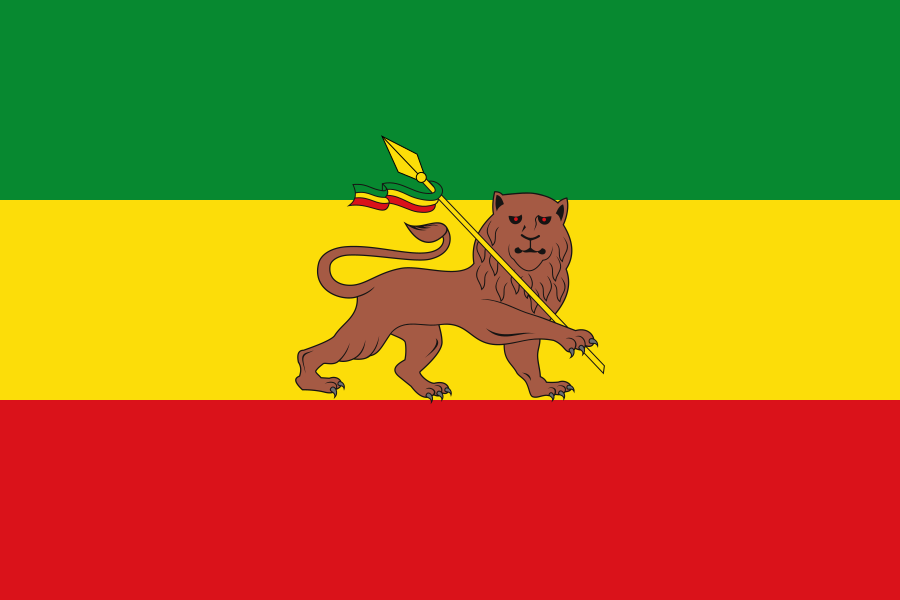
The lion without a crown
1974 → 1975
After Haile Selassie was deposed, the crown was taken off the lion's head and the tip of its cross changed to a spear point.
- 1975
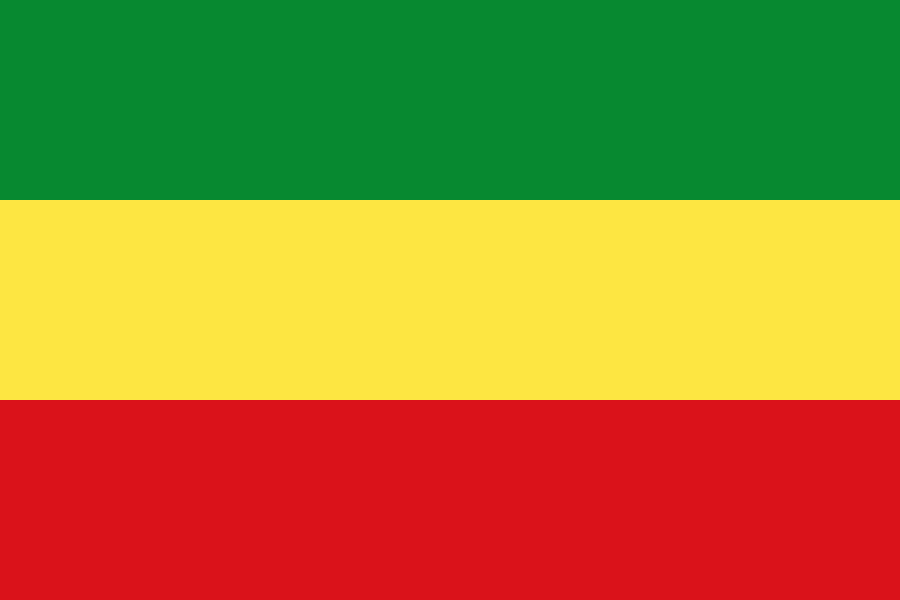
The Derg
1975 → 1987
The military government dropped the lion. The plain tricolour served as the civil flag, and the state flag carried revolutionary emblems.
- 1987
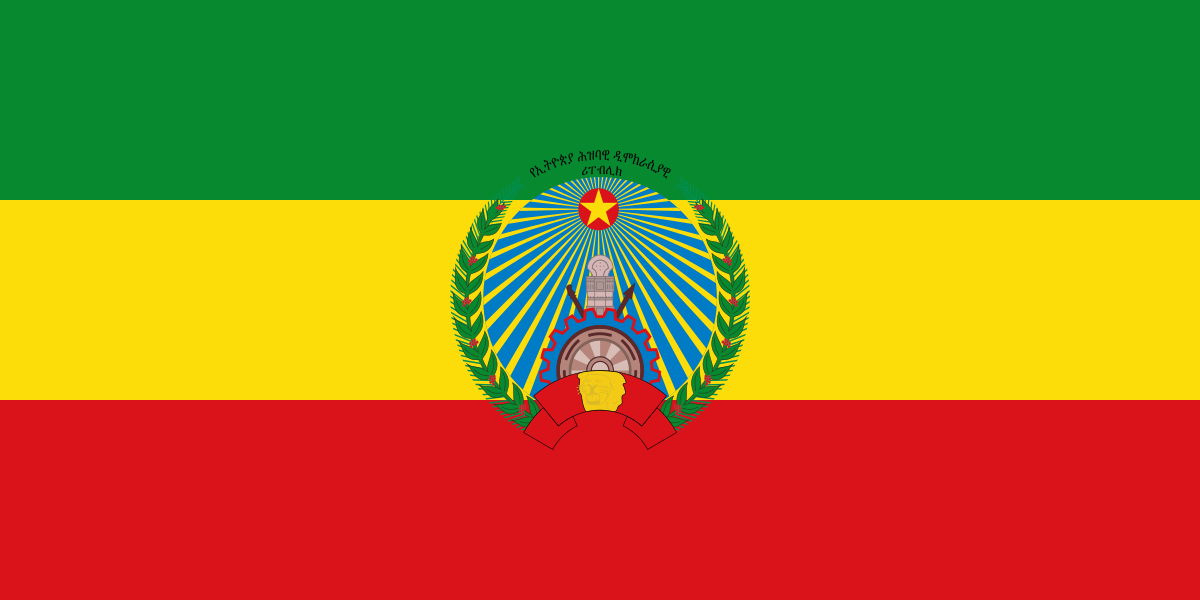
People's Democratic Republic
1987 → 1991
The flag of the socialist republic introduced the proportion 1:2. Its emblem showed a red five-pointed star above a cogwheel, a wreath of crops and the rays of a rising sun.
Image: TRAJAN 117 This W3C-unspecified vector image was created with Inkscape ., CC BY-SA 3.0
- 1991
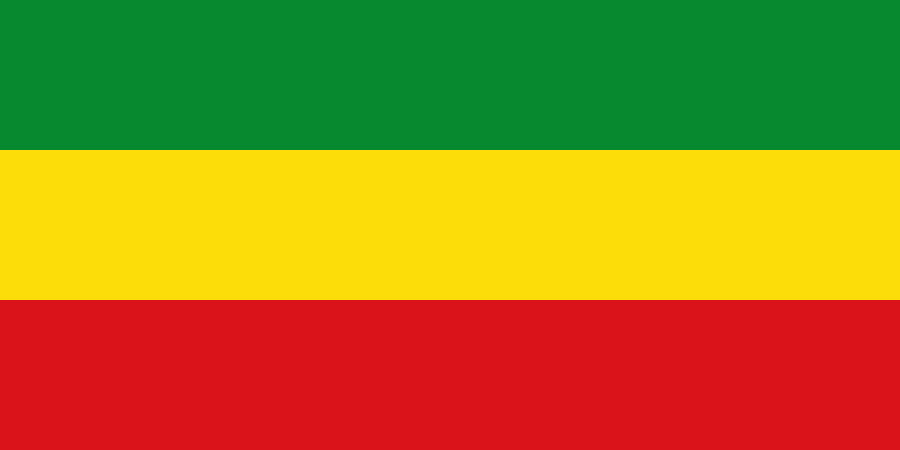
Transitional Government
1991 → 6 Feb 1996
The plain tricolour at 1:2 served as the civil flag. A separate state flag was adopted on 28 May 1992.
- 1996
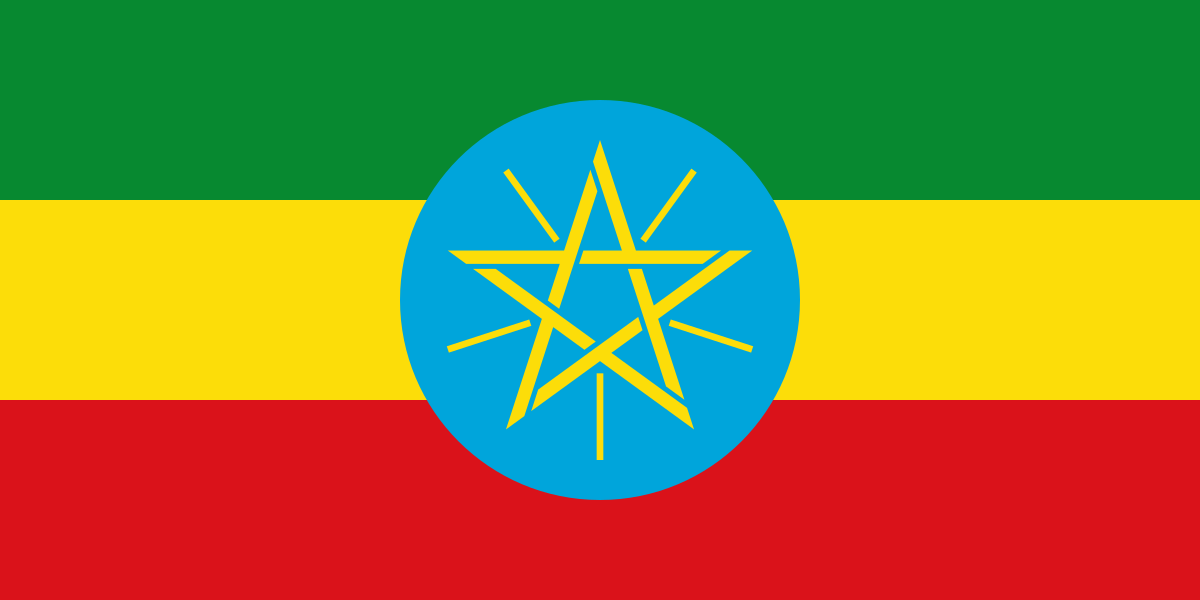
The first federal flag
6 Feb 1996 → Aug 2009
The emblem of the Federal Democratic Republic entered the flag on a light blue disc, smaller than today's.
- 2009
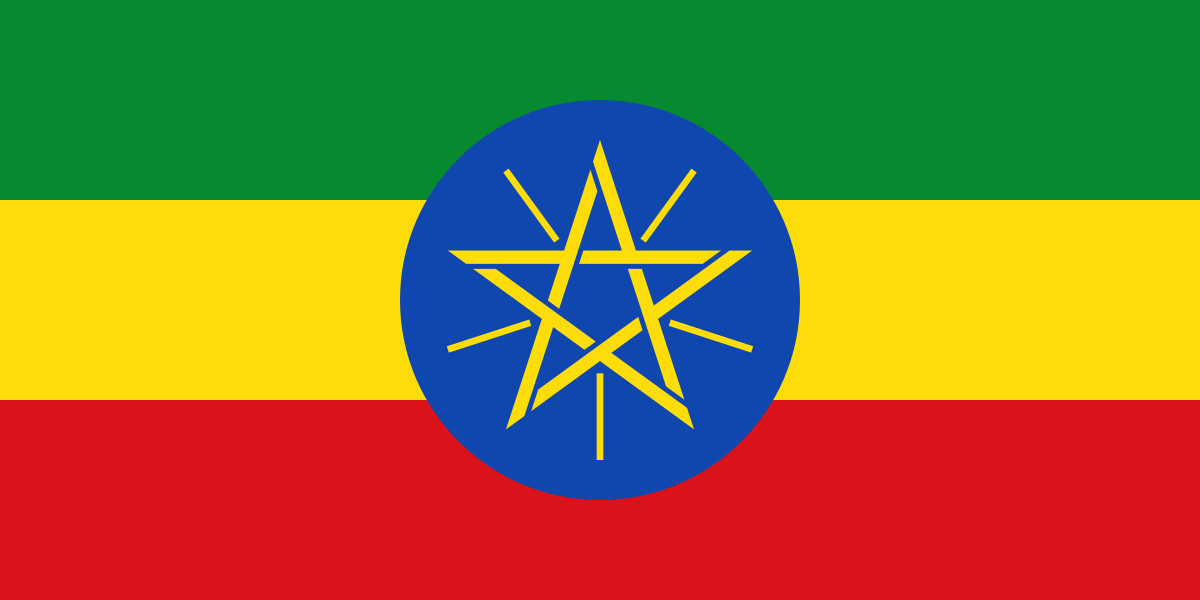
The current flagIn use
Aug 2009 → today
The Federal Flag Proclamation of 2009 set a darker blue for the disc and made the emblem compulsory, outlawing the plain tricolour.
The law
What defines it, and who flies it
- Undated
Constitution of the Federal Democratic Republic of Ethiopia, Article 3
Defines the flag as three horizontal bands of equal size, green uppermost, yellow in the middle and red at the bottom, with a national emblem that reflects the equality of the nations, nationalities, peoples and religions of Ethiopia. Each member state of the federation may have its own flag and emblem.
- Undated
Flag and Emblem Proclamation No. 16/1996
Described and illustrated the flag, with a light blue disc.
- 31 October 1996
Proclamation No. 48/1996
Published in the Federal Negarit Gazette, amending the Flag and Emblem Proclamation No. 16/1996.
- 28 August 2009
Federal Flag Proclamation No. 654/2009, Article 6
Replaced the 1996 proclamation and set a darker blue for the disc. It forbids using the flag without its emblem, defacing it with writing, signs or pictures, and making it in the wrong order of colours or size. Using the flag without the emblem carries a fine of 5000 birr or up to one year and six months of rigorous imprisonment; most other offences 3000 birr or up to one year. Article 16 makes the flag it specifies the only one.
In use
The national flag and ensign
Flag Day, marking the adoption of 1897, falls on the first Monday of the month of Tikimt, in September or October
Under the 2009 proclamation the flag may not be used without its emblem, and the plain tricolour is no longer a legal civil flag
Coat of arms
The arms of Ethiopia