The Central African Republic's history: a federation's name kept by one territory
3 159 words · 14 min · updated 2026-10-25
 Back to Central African Republic
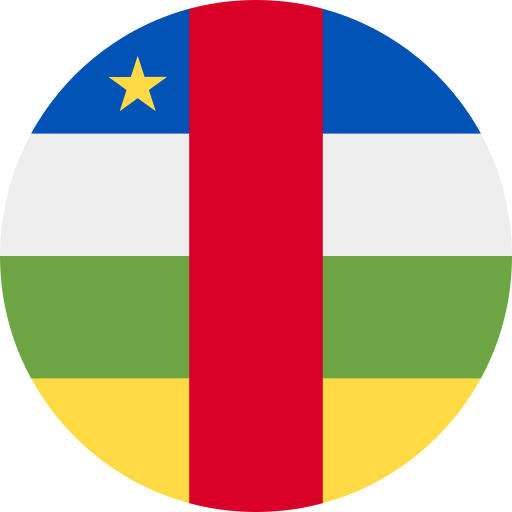
Barthélemy Boganda drew a flag in 1957 for a federation he called the United States of Latin Africa, and when the other three territories of French Equatorial Africa declined to join, Ubangi-Shari alone took the flag and the name Central African Republic on 1 December 1958. Boganda told the assembly that its colours stood for the four territories and for France, so the country flies a design drawn for a union it never became. The land under that name had been put together by France from two river basins, stripped of nearly 300,000 square kilometres in 1911 and handed for decades to concession companies. Since independence on 13 August 1960 it has changed rulers by coup or armed seizure five times, and by 2015, on Wikipedia's account, the government held little ground outside Bangui.
In short
- Colony of Ubangi-Shari
- 29 December 1903, from the Upper Ubangi and Upper Shari
- Ceded to Germany
- Nearly 300,000 km² in 1911, retaken after 1918
- Kongo-Wara rebellion
- 1928 to 1931
- United States of Latin Africa
- Proposed by Boganda in 1957, declined by the other three territories
- Name and flag adopted
- 1 December 1958
- Independence
- 13 August 1960
- Central African Empire
- 4 December 1976 to 21 September 1979
- Seizures of power since 1960
- 1965, 1979, 1981, 2003, 2013
Who lived between the Ubangi and the Chari
People were living here long before France named the colony after its two rivers. Diamond prospectors have turned up polished flint and quartz tools that Britannica dates to at least 8,000 years ago. Around 10,000 years ago desertification pushed hunter-gatherers south into the Sahel, where some groups settled and began farming white yam, then millet and sorghum, and later the oil palm.
Near Bouar in the west stand megaliths weighing several tons each, and their age depends on which reference is read. Britannica puts them at about 2,500 years old. The main Wikipedia article on the country gives the late Neolithic, about 3500 to 2700 BCE, and Wikipedia's history of the country gives about 3500 to 1700 BC. Britannica reads the cooperation needed to raise them as the work of fairly large social units.
Iron arrived around 1000 BC. At Gbabiri a reduction furnace and a blacksmith's workshop have been dated to 896 to 173 BC and 907 to 196 BC; earlier dates of about 2,000 BC proposed for Oboui are disputed by some archaeologists.
During the Bantu migrations, from about 1000 BC to AD 1000, Ubangian speakers spread east from Cameroon towards Sudan, Bantu speakers settled the south-west and Central Sudanic speakers settled along the Ubangi. From at least the 7th century the region lay at the edge of states based around Lake Chad and the Upper Nile: Kanem-Bornu, Ouaddai, Baguirmi and Darfur. In the 18th century the Bandia-Nzakara founded the Bangassou Kingdom on the Ubangi, and migrations through the 18th and 19th centuries brought the Zande, the Banda and the Baya-Mandjia.
How the slave trade emptied the east
Britannica dates the region's direct connection to outside trade routes to the 17th century, when Arabic-speaking slave traders pushed the trans-Saharan and Nile routes south into it; Wikipedia puts the first raids in the 16th century. Captives went north to Egypt and Turkey, or down the Ubangi and the Congo to ships bound for the Americas. In the mid 19th century the Bobangi of the Ubangi became slave traders themselves and raided the Baya and the Mandjia. In the north the raiding went on until 1912, when the slave state of Dar al-Kuti fell.
Colonial rule first made it worse. Between about 1900 and 1910 local rulers used their treaties with France to buy more weapons and capture more people, and much of the eastern half of the territory was depopulated. Britannica traces a lasting resentment to this period: the ruling elite has tended to come from riverine groups akin to the Bobangi.
How France assembled Ubangi-Shari from two rivers
The colony was built in pieces, and the pieces kept moving. Europeans arrived in 1885. A convention of 1887 with the Congo Free State gave France the right bank of the Ubangi, and in 1889 France set up an outpost at Bangui, at the head of navigation on the river. Savorgnan de Brazza then sent expeditions up the Sangha, north towards Lake Chad and east towards the Nile, hoping to join the French Congo to France's other African holdings. The border with Sudan was fixed along the Congo-Nile divide in 1899, which left France without the outlet on the Nile it had wanted.
Rabih az-Zubayr, the Sudanese sultan who governed the Upper Ubangi in 1875, was defeated by the French at Kousséri in 1900. On 29 December 1903 the Upper Ubangi and the Upper Shari were joined as the colony of Ubangi-Shari, named after the two rivers along which it had been colonised.
| Date | What happened to the territory |
|---|---|
| 9 December 1891 | Upper Ubangi set up as part of the French Congo |
| 13 July 1894 | Upper Ubangi made a separate colony, until 10 December 1899 |
| 5 September 1900 | Upper Shari set up as part of the French Congo |
| 29 December 1903 | The two joined as the colony of Ubangi-Shari |
| 11 February 1906 | Merged with the French posts around Lake Chad as Ubangi-Shari-Chad |
| 15 January 1910 | Made one of the four territories of French Equatorial Africa |
| 1911 | Sangha and Lobaye basins, nearly 300,000 km², ceded to Germany at the Treaty of Fez |
| 12 April 1916 | A separate colony again |
| 1920 | Loses the territory around Lake Chad |
| 30 June 1934 | Folded back into French Equatorial Africa |
| 1 December 1958 | Renamed the Central African Republic, autonomous |
| 13 August 1960 | Independent under the same name |
In 1911 France gave Germany the Sangha and Lobaye basins in the south-west in return for a free hand in Morocco and a smaller area in present-day Chad. Measured against the 622,984 square kilometres in the country's record, that was close to half. Western Ubangi-Shari stayed German until the First World War, after which France took it back with Central African troops.
What the concession companies took from the colony
France wanted to avoid paying for its new possession. Encouraged by reports of the profits Leopold II's companies were making in the Congo Free State, the government leased the territory to private firms: 27 concessionary companies across the Ubangi and Ouham basins, and in 1900 a single one, the Company of the Upper Ubangi Sultanates, took over 140,000 km² of the Upper Ubangi. They promised rent to the colony and, in their concessions, customs posts, telegraph lines and rubber plantations.
What they did, according to Britannica, was force men and women to gather wild rubber, hunt ivory and skins and work on plantations. People unable to farm their own fields went hungry, and moving them into unfamiliar country exposed them to sleeping sickness and new strains of malaria, so the death rate rose. The main Wikipedia article adds that families were held hostage until quotas were met. The colonial administration levied taxes and demanded unpaid labour of its own, and French officials who reported abuses almost never saw anyone held to account.
André Gide travelled through Ubangi-Shari and was told of mutilations, executions and the burning of children. His Voyage au Congo named the Forestry Company of Sangha-Ubangi among the employers responsible and had, Wikipedia records, an important effect on the anticolonial movement in France. The number of people who died under the concession system in Ubangi-Shari and the rest of French Equatorial Africa has never been established.
The 1920s and 1930s brought roads, mobile clinics against sleeping sickness, Protestant missions and compulsory cotton growing. They also brought conscription for the Congo-Ocean Railway, built in southern Congo to reach Pointe-Noire, on which deaths among all the workers up to 1934 are estimated at more than 17,000. In the 1930s cotton companies were granted purchasing monopolies that let them fix the price paid to growers, and diamond and gold mining began in earnest.
Why the Kongo-Wara rising was kept quiet
Opposition to railway recruitment and forced rubber tapping began peacefully in the mid 1920s. In 1928 it became an armed rising in the west and south-west, the Kongo-Wara rebellion, known as the war of the hoe handle, and Wikipedia gives the number who took part as more than 350,000. Its leader, Karnou, was killed in December 1928. The fighting went on until 1931.
Britannica records what followed: the leaders were imprisoned and executed, and whole populations were moved into villages the administration designated so that they could be supervised. Wikipedia adds that the scale of the rising was kept from the French public, because it was evidence of strong opposition to forced labour.
What Boganda meant by a Central African Republic
Ubangi-Shari stayed loyal to Vichy from 16 June to 29 August 1940 and then went over to Free France. General Leclerc set up his headquarters in Bangui, and Britannica counts 3,000 people from the region who answered de Gaulle's call in 1940 and came home, in its words, with a national identity in place of an ethnic one.
The constitution of 1946 made the inhabitants of French Equatorial Africa French citizens and gave each territory an assembly. In November 1946 Barthélemy Boganda, a Catholic priest, was elected to the French National Assembly with 9,000 votes, the first Central African to sit there. He left the priesthood and in 1950 founded the Movement for the Social Evolution of Black Africa, MESAN. In the territorial election of 1957 MESAN took 347,000 of the 356,000 votes cast and every seat, and Boganda became president of the Grand Council of French Equatorial Africa.
Which territories turned down Boganda's federation
Boganda proposed in 1957 a United States of Latin Africa. Britannica describes the aim as a single nation formed from Chad, Gabon, the Middle Congo and Ubangi-Shari. The others turned it down, and Boganda, in Britannica's word reluctantly, accepted the constitution France offered Ubangi-Shari alone.
The French referendum of September 1958 dissolved French Equatorial Africa. On 1 December 1958 the assembly in Bangui declared the autonomous Central African Republic, inside the French Community, with Boganda at its head. Wikipedia's account of the name is that he preferred it to Ubangi-Shari reportedly because he still had a larger union in mind. The same day the deputies adopted his flag by acclamation. Boganda told them, in the text Flags of the World reproduces, that its colours symbolised the four territories constituting French Equatorial Africa and also metropolitan France, the guide territory, and that they "came out of my heart". The red stripe crossing the four colours, he said, was the symbol of their blood.
The territory's postage stamp of 1959 shows Boganda flanked by that flag. He died in a plane crash on 29 March 1959. David Dacko took over, described by Wikipedia as his cousin and by Britannica as a government member who claimed a family relationship. France agreed to full independence on 12 July 1960, and the Central African Republic became independent on 13 August 1960, the date its Independence Day still marks.
How Bokassa turned the republic into an empire
Dacko forced his rival Abel Goumba into exile in France, had suppressed every opposition party by November 1962 and stood alone in the presidential election of 5 January 1964. He also ended the concession companies' monopoly on diamond mining, decreed that any Central African could dig, and had a diamond-cutting factory built in Bangui. By late 1965 the country faced bankruptcy and a threatened general strike, and on 31 December 1965, in the Saint-Sylvestre coup, the army commander Jean-Bédel Bokassa took power.
Bokassa had joined the French army in 1939, fought in Indochina and reached the rank of captain by 1961, and he left it at Dacko's request to command the new national army. Once in power he abolished the constitution, dissolved the National Assembly and took all legislative and executive authority into the presidency. He became president for life on 4 March 1972. In 1975 he appointed Elisabeth Domitien prime minister, the only act Britannica credits as forward-looking.
In 1976 he considered replacing Boganda's flag with one carrying a crescent and star, after a brief conversion to Islam. The idea lasted a few months. On 4 December 1976, at a MESAN congress, he proclaimed the Central African Empire, and the imperial constitution of that day kept the flag. He was crowned Emperor Bokassa I a year later, on 4 December 1977, in a ceremony modelled on Napoleon's. Wikipedia estimates its cost at about US$20 million, a third of the national budget and all of France's aid for that year; Britannica says more than US$20 million, financed largely by France.
How the empire ended
In January 1979 riots in Bangui ended in a massacre of civilians. Between 17 and 19 April 1979 schoolchildren who had protested against a decree obliging pupils to buy uniforms from a company owned by one of Bokassa's wives were arrested and killed in Ngaragba prison. The two references disagree on how many: Wikipedia gives an estimated 100, Britannica more than 50, killed by the imperial guard.
On the night of 20 September 1979, while Bokassa was in Libya, French troops landed at Bangui airport in Operation Barracuda and flew Dacko in from Paris. At 12:30 on 21 September he proclaimed the end of the empire, and the country took back the name Central African Republic. The veteran French diplomat Jacques Foccart called it France's last colonial expedition.
Bokassa was sentenced to death in absentia in 1980, came back voluntarily in 1986, was found guilty of murder in 1987 and acquitted of cannibalism, saw the sentence commuted and was freed in 1993. He died in Bangui on 3 November 1996 and was pardoned posthumously in 2010, for the fiftieth anniversary of independence.
Why power kept changing hands by force
Dacko's restoration rested on French paratroops. Strikes and bombings followed, and in September 1981 General André Kolingba removed him in a bloodless coup; Wikipedia's two articles disagree on the day, giving 1 September in one and 20 September in the other.
| Year | Who lost power | How |
|---|---|---|
| 1965 | David Dacko | Army coup on 31 December, led by Jean-Bédel Bokassa |
| 1979 | Bokassa I | French troops restore Dacko on 20 and 21 September |
| 1981 | David Dacko | Bloodless coup by General André Kolingba in September |
| 1993 | André Kolingba | Election, after he suspended the results of 1992 |
| 2003 | Ange-Félix Patassé | Rebels under François Bozizé take Bangui on 15 March |
| 2013 | François Bozizé | Séléka rebels take Bangui on 24 March |
| 2014 | Michel Djotodia | Resigns on 10 January under regional pressure |
Kolingba ruled through a military committee until 1985. A constitution approved by referendum in 1986 created a National Assembly of 52 deputies, elected in July 1987, but power stayed with him. In May 1990, 253 prominent citizens signed a letter asking for a national conference, and in 1991 riots broke out after civil servants had gone unpaid for more than eight months. Under pressure from a group of donors and agencies known as GIBAFOR, he agreed to elections in 1992, suspended the results, and allowed them to be held again in 1993. Ange-Félix Patassé won the second round with 53% against 45.6% for Goumba, ending what the BBC counts as 12 years of military rule.
Unpaid soldiers mutinied three times in 1996 and Bangui was repeatedly looted. The Bangui Accords of January 1997 brought in an inter-African force, and in October 1997 France withdrew its troops and closed its base at Bouar, leaving peacekeeping to the UN mission MINURCA until February 2000. A coup attempt on 28 May 2001 failed, with Libyan troops and Congolese fighters of Jean-Pierre Bemba holding the capital for Patassé. The next one, led by his former army chief François Bozizé, succeeded on 15 March 2003. A new constitution followed in 2004 and Bozizé won the election of 2005, while a rebellion in the north-east grew into the Bush War. A peace agreement with its main rebel group, the UFDR, was signed at Birao on 13 April 2007.
How the state came to hold little beyond Bangui
A new rebel coalition, Séléka, swept through the north and centre in late 2012, accusing Bozizé of ignoring the 2007 agreement. A ceasefire signed at Libreville on 11 January 2013 held for about two months. On 24 March 2013 Séléka took Bangui, Bozizé fled, and its leader Michel Djotodia declared himself president, suspended the constitution and dissolved the National Assembly. The African Union suspended the country.
Djotodia disbanded Séléka on 13 September 2013, but its fighters kept their arms. Mainly Christian communities formed militias called anti-balaka, which Britannica glosses from Sango as anti-machete, against the mainly Muslim rebels, and the violence turned on civilians of both faiths. By the end of 2013 more than 800,000 people had been displaced and almost half the population needed aid. Djotodia resigned at a regional summit on 10 January 2014, and Catherine Samba-Panza, the mayor of Bangui, took over as interim president on 23 January. In 2014 the UN Security Council authorised a force of 12,000, and the UN mission MINUSCA took over from African and French troops in September. In March 2015 the United States ambassador to the UN said 417 of the country's 436 mosques had been destroyed.
By the end of 2014 the country was partitioned in practice, anti-balaka holding the south and west and ex-Séléka groups the north and east. On 14 December 2015 one Séléka leader, Noureddine Adam, declared an autonomous Republic of Logone in the north, which no state recognised. A new constitution passed by referendum on 13 December 2015 with about 93% of the vote, and the presidential runoff of 14 February 2016 was won by a former prime minister. Wikipedia counts more than 14 armed groups by 2017, with four factions holding about 60% of the territory, and Britannica estimates that by early 2018 a fifth to a quarter of the population had been displaced.
What the peace agreements have changed
An accord between the government and 14 armed groups, negotiated in Khartoum and signed in February 2019, was the eighth since the war began in 2012. On 19 December 2020 six rebel groups, which together controlled two-thirds of the territory, formed the Coalition of Patriots for Change and announced they would advance on the capital before the election that month, in which about 800 polling stations, 14% of the total, stayed shut. Rwanda sent troops, and Russia said on 20 December 2020 that it had sent 300 military instructors. Fighters of the Russian Wagner Group pushed the rebels back from January 2021, and Wikipedia records accusations against them, among them the killing of at least 65 civilians at Aïgbado and Yanga in January 2022. France suspended aid and military cooperation in May 2021.
On 30 July 2023 a referendum approved a new constitution with 960,660 votes to 50,235, 95.03% of the valid votes, according to IFES. It removed the two-term limit and lengthened the presidential term from five years to seven, and opposition parties had called for a boycott. In July 2025, Wikipedia records, the rebel groups 3R and the UPC disarmed and dissolved themselves in a public ceremony.
Timeline
The dates in order
- 1889
- French outpost founded at Bangui, at the head of navigation on the Ubangi.
- 1903
- Upper Ubangi and Upper Shari joined as the colony of Ubangi-Shari on 29 December.
- 1910
- Ubangi-Shari becomes one of the four territories of French Equatorial Africa.
- 1911
- Sangha and Lobaye basins ceded to Germany at the Treaty of Fez.
- 1928
- Kongo-Wara rebellion breaks out; its leader Karnou is killed in December.
- 1946
- Barthélemy Boganda elected to the French National Assembly in November.
- 1957
- MESAN wins every seat; Boganda proposes the United States of Latin Africa.
- 1958
- Autonomous Central African Republic declared and its flag adopted on 1 December.
- 1959
- Boganda killed in a plane crash on 29 March.
- 1960
- Independence on 13 August.
- 1965
- Saint-Sylvestre coup on 31 December brings Bokassa to power.
- 1976
- Central African Empire proclaimed on 4 December.
- 1979
- Ngaragba prison killings in April; French troops restore Dacko on 20 and 21 September.
- 1981
- General André Kolingba takes power in a bloodless coup in September.
- 1993
- Ange-Félix Patassé wins the presidential runoff with 53%.
- 2003
- François Bozizé's rebels take Bangui on 15 March.
- 2013
- Séléka takes Bangui on 24 March.
- 2014
- UN mission MINUSCA takes over peacekeeping in September.
- 2019
- Khartoum accord with 14 armed groups signed in February.
- 2023
- Referendum of 30 July approves a constitution without a two-term limit.
- 2025
- 3R and the UPC disarm and dissolve in July.
Common questions
Questions about Central African Republic
Why is it called the Central African Republic?
The colonial name, Ubangi-Shari, came from the two rivers along which France colonised the territory. Barthélemy Boganda preferred Central African Republic, and Wikipedia records that he reportedly chose it because he envisioned a larger union of states in Central Africa. When the territory became autonomous on 1 December 1958 it took that name, and kept it except between 1976 and 1979.
What do the stripes on Boganda's flag stand for?
Boganda told the Legislative Assembly on 1 December 1958 that the four colours symbolised the four territories of French Equatorial Africa and also France, and that the red band crossing them was the symbol of the people's blood. He had first proposed the design in 1957 for the United States of Latin Africa. The flag was kept through the Central African Empire and is unchanged.
How many schoolchildren were killed at Ngaragba prison in 1979?
The sources differ. Wikipedia's article on the Central African Empire gives an estimated 100 killed between 17 and 19 April 1979, after students protested against compulsory uniforms sold by a company owned by one of Bokassa's wives. Britannica gives more than 50, killed by the imperial guard. Both agree that the international outcry over the deaths opened the way for the French operation that removed Bokassa that September.
What was the Kongo-Wara rebellion?
An armed rising against forced labour, concession companies and recruitment for the Congo-Ocean Railway in western and south-western Ubangi-Shari, from 1928 to 1931. Its leader Karnou was killed in December 1928. Afterwards, Britannica records, leaders were executed and populations moved into supervised villages.
Did France remove Bokassa?
Yes. On the night of 20 September 1979, while Bokassa was in Libya, French troops landed at Bangui airport in Operation Barracuda and brought David Dacko back from Paris. Dacko proclaimed the fall of the empire at 12:30 on 21 September 1979 and restored the name Central African Republic. Jacques Foccart called the operation France's last colonial expedition.